
In the modern landscape of athletics, the line between physical prowess and technological innovation has blurred. When one asks, “What is paddleball?” the answer no longer refers simply to a wooden racket and a rubber ball. Instead, it defines a sophisticated ecosystem of materials science, digital integration, and data-driven performance. From the composition of the paddles to the AI-powered analytics used to track player movements, paddleball has become a flagship for how technology can revitalize and transform traditional sports.
The Engineering Frontier: Advanced Materials and Paddle Tech
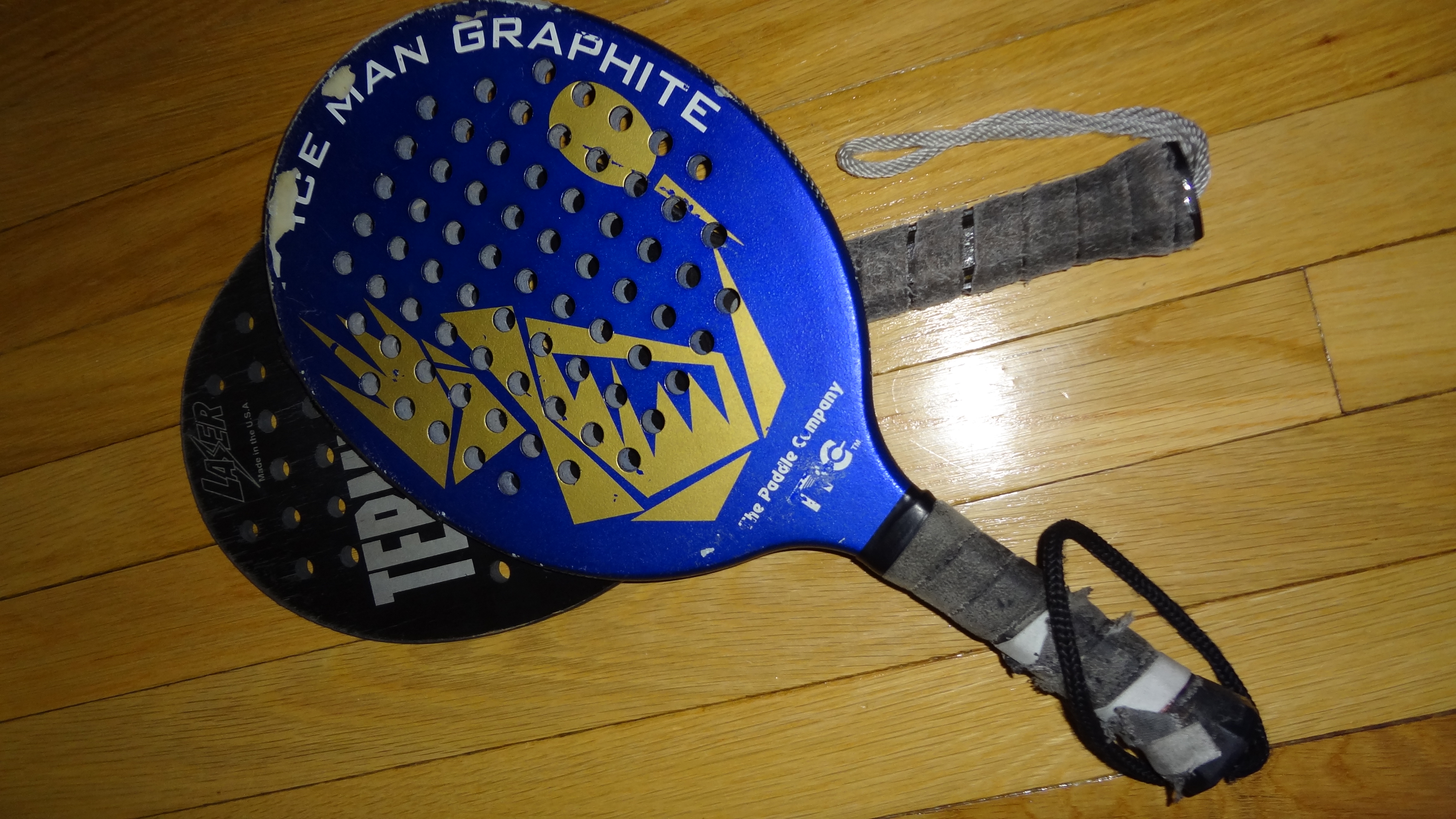
At its core, paddleball is defined by the instrument used to play it. The transition from early 20th-century wooden planks to today’s high-tech implements represents a massive leap in aerospace engineering and polymer chemistry. The “paddle” in modern paddleball is a marvel of industrial design, engineered to maximize power while maintaining a weight that prevents repetitive strain injuries.
Carbon Fiber and Core Composition
The most significant tech shift in paddleball is the move toward composite materials. Modern paddles utilize a “sandwich” construction, typically featuring a honeycomb core made of polypropylene or aramid fibers. This geometry is chosen for its strength-to-weight ratio, allowing for a stiff structure that doesn’t add bulk.
On the surface, manufacturers apply layers of carbon fiber or fiberglass. Tech-focused brands are now experimenting with “T700 Raw Carbon Fiber,” a material frequently used in the automotive and aerospace industries for its tensile strength. This allows for a “friction-enhanced” surface that enables players to impart more spin on the ball. The physics here is precise: the microscopic texture of the carbon weave interacts with the ball’s surface at the millisecond of impact, a feat of engineering that was impossible with legacy materials.
Aerodynamics and Surface Texture Engineering
Technology has also redefined the shape of the paddle. Using Computational Fluid Dynamics (CFD), designers now create “edgeless” or “vented” paddles. These designs reduce wind resistance during high-speed swings, increasing the “head speed” of the paddle without requiring more physical force from the player.
Furthermore, the introduction of UV-printed textures and grit-surfacing technologies has turned the paddle face into a high-performance interface. By using digital printing techniques to apply precise, grit-like patterns, engineers can control the “dwell time”—the amount of time the ball stays in contact with the paddle—giving players unprecedented control over shot placement and velocity.
The Digital Ecosystem: Apps, Platforms, and Connectivity
Beyond the physical equipment, paddleball has integrated deeply with the digital world. The “What is paddleball?” question now encompasses a vast array of Software-as-a-Service (SaaS) platforms and mobile applications designed to optimize the user experience, from court booking to global rankings.
Matchmaking Algorithms and Community Software
The rise of paddleball has been fueled by social-connectivity apps that use complex algorithms to pair players of similar skill levels. These platforms function similarly to Elo-rating systems found in competitive online gaming (like League of Legends or Chess.com). By tracking wins, losses, and the strength of opponents, these apps create a dynamic “Digital Player Profile.”
This tech-driven approach solves the “fragmented community” problem. Instead of looking for players at a local park, enthusiasts use GPS-enabled apps to find active games in real-time. These platforms often integrate secure payment gateways for court fees, demonstrating a seamless merge of fintech and sports management software.
IoT Integration in Modern Court Systems
The courts themselves are becoming “smart.” The integration of the Internet of Things (IoT) has led to the development of connected court systems. These facilities utilize smart lighting and climate control that can be managed via a centralized dashboard.
More impressively, some high-end paddleball installations now feature automated video capture systems. These IoT-connected cameras are triggered by motion sensors or mobile app check-ins, allowing players to record their sessions and have the footage automatically uploaded to a cloud server for later review. This integration of hardware and cloud storage is a prime example of how digital security and data management have become central to the sporting experience.

AI and Performance Analytics: The Future of Training
As artificial intelligence continues to permeate every industry, paddleball has not been left behind. The sport is currently seeing a surge in AI-driven tools that analyze player mechanics with a level of detail previously reserved for professional athletes in the MLB or NBA.
Computer Vision in Stroke Analysis
One of the most exciting developments is the use of computer vision. By using a smartphone camera and a dedicated AI app, players can record their swing. The software then uses skeletal tracking—a branch of AI that identifies joints and limb positions—to provide a frame-by-frame breakdown of the player’s form.
The AI can identify “kinetic leaks”—areas where a player is losing power due to poor footwork or an inefficient backswing. By comparing a user’s data against a database of “optimal” movements generated by professional players, these AI tools provide personalized coaching at a fraction of the cost of a human instructor. This democratization of high-level coaching through software is a hallmark of the current tech era.
Wearable Integration for Biometric Tracking
Paddleball is an anaerobic-heavy sport, requiring short bursts of high-intensity movement. This makes it a perfect candidate for wearable tech. Modern players often sync their heart rate monitors, Oura rings, or Apple Watches with paddleball-specific software to track “strain” and “recovery.”
Advanced sensors can now be embedded directly into the handle of the paddle. These sensors track the “force of impact,” “swing arc,” and “number of hits.” The data is transmitted via Bluetooth to a mobile device, providing a dashboard of metrics that help players understand their physical output. This data-driven approach allows for “load management,” using tech to predict when a player is at a higher risk of injury based on their biometric trends.
The Virtual Shift: Paddleball in the Metaverse and VR
The final frontier in answering “What is paddleball?” lies in the digital realm. Virtual Reality (VR) and Augmented Reality (AR) are creating new ways to experience the sport without stepping onto a physical court.
Haptic Feedback and Physical Simulation
VR developers have created highly realistic paddleball simulations on platforms like the Meta Quest and HTC Vive. The challenge here was one of “latency” and “physics engines.” To make a VR paddleball game feel real, the software must calculate the ball’s trajectory and the paddle’s impact in less than 20 milliseconds to avoid motion sickness and “immersion break.”
Furthermore, haptic feedback technology in VR controllers has been refined to simulate the “pop” of a paddle hitting a ball. By using variable vibration patterns, the tech mimics the sensation of a “sweet spot” hit versus a “miss-hit” off the edge. This allows for effective training in a virtual environment, where players can practice their reflexes and strategic positioning in a 360-degree digital space.
eSports and the Competitive Digital Landscape
The convergence of paddleball and tech has also birthed a nascent eSports scene. Digital versions of the sport allow for global tournaments where players compete from different continents. This has led to the development of spectator software—tools that allow viewers to watch games in VR with real-time data overlays showing ball speed and player stats.
This digital expansion ensures that paddleball is no longer tethered to geographical locations. As long as there is high-speed internet and a VR headset, the sport is accessible. This shift toward a “software-defined sport” marks the ultimate evolution of paddleball from a simple pastime to a tech-centric global phenomenon.

Conclusion
When we examine “What is paddleball?” through the lens of technology, we see a sport that is perfectly aligned with the digital age. It is a game defined by material science in its paddles, community-driven by sophisticated software platforms, optimized by artificial intelligence, and expanded by virtual reality.
For the modern tech enthusiast, paddleball offers more than just physical exercise; it offers an engagement with cutting-edge gadgets and data analytics. As materials become lighter, AI becomes smarter, and VR becomes more immersive, the sport of paddleball will continue to evolve, proving that even the most straightforward concepts can be reimagined through the power of technology. Whether you are a software developer looking at the algorithms of matchmaking or an engineer admiring the carbon fiber weave of a new paddle, it is clear that the future of paddleball is high-tech.
aViewFromTheCave is a participant in the Amazon Services LLC Associates Program, an affiliate advertising program designed to provide a means for sites to earn advertising fees by advertising and linking to Amazon.com. Amazon, the Amazon logo, AmazonSupply, and the AmazonSupply logo are trademarks of Amazon.com, Inc. or its affiliates. As an Amazon Associate we earn affiliate commissions from qualifying purchases.