
In the complex landscape of business finance and corporate law, information is the most valuable currency. When financial disputes arise—whether they involve breach of contract, partnership dissolutions, or debt collection—the clarity of financial records can determine the survival of an enterprise. Central to this process is a legal mechanism known as “interrogatories.” While the term sounds purely legalistic, it is a foundational tool in the “Money” niche, serving as a critical phase of discovery that uncovers hidden assets, clarifies financial liabilities, and establishes the economic facts of a case.
Understanding interrogatories is essential for business owners, investors, and financial professionals who may find themselves embroiled in litigation. This article explores the mechanics of interrogatories through a financial lens, examining how they function as a catalyst for asset recovery and risk management.

The Financial Anatomy of Interrogatories
At its core, an interrogatory is a set of formal, written questions submitted by one party in a lawsuit to another. These are not mere inquiries; they are legal instruments that require responses under oath, carrying the same weight as testimony given in a courtroom. In the context of business finance, interrogatories are the primary means of “following the money” before a trial even begins.
Defining the Written Discovery Process
Interrogatories are part of the broader “discovery” phase of litigation. Unlike depositions, which are oral interviews, interrogatories allow for a structured, deliberate exchange of information. For financial professionals, this structure is advantageous. It provides the time necessary to audit records, consult with chief financial officers (CFOs), and ensure that the figures provided are precise.
In a financial dispute, interrogatories often target the “who, what, where, and when” of monetary transactions. A typical question might ask a defendant to list all bank accounts held within the last five years or to detail the distribution of dividends to shareholders during a specific fiscal quarter. Because these answers are provided under the penalty of perjury, they form a reliable financial baseline for the remainder of the litigation.
The Role of Sworn Statements in Asset Identification
For creditors and investors, the primary utility of interrogatories is asset identification. When a business entity claims it cannot meet its financial obligations, interrogatories are used to pierce the veil of corporate claims.
Attorneys specializing in financial recovery use these written questions to force a disclosure of:
- Real estate holdings and lease agreements.
- Investment portfolios, including stocks, bonds, and cryptocurrency.
- Intellectual property valuations.
- Accounts receivable and pending contracts.
By securing these details in a sworn statement, the moving party can prevent the “disappearance” of assets during a trial. If a party later tries to hide a bank account that was not disclosed in an interrogatory response, the financial and legal repercussions are severe, often leading to a total loss of credibility in the eyes of the court.
Leveraging Interrogatories for Corporate Risk Management
For a corporation, the receipt of a set of interrogatories is a high-stakes event that requires meticulous coordination between the legal and finance departments. From a risk management perspective, the way a company responds to these questions can impact its valuation, creditworthiness, and long-term financial stability.
Quantifying Damages in Contractual Disputes
In many business lawsuits, the disagreement isn’t about whether a contract was breached, but about the financial “damages” resulting from that breach. Interrogatories are the primary tool used to quantify these losses.
A plaintiff might use interrogatories to ask a defendant for specific profit-and-loss statements or to explain the methodology used to calculate overhead costs. Conversely, a defendant might use them to challenge the plaintiff’s claim of lost profits by asking for detailed historical revenue data. This exchange of data allows both sides to place a “price tag” on the litigation, which often leads to more informed settlement negotiations. By quantifying the financial exposure early, businesses can set aside appropriate reserves and manage their balance sheets more effectively.
Uncovering Hidden Liabilities and Off-Balance Sheet Activity
Interrogatories are also instrumental in uncovering “financial ghosts”—liabilities that do not appear on standard balance sheets. In complex corporate litigation, such as cases involving mergers and acquisitions (M&A) or shareholder derivative suits, interrogatories can be used to probe:
- Indemnification agreements.
- Pending or threatened litigation against the company.
- Unfunded pension liabilities.
- Guarantees made on behalf of subsidiaries.
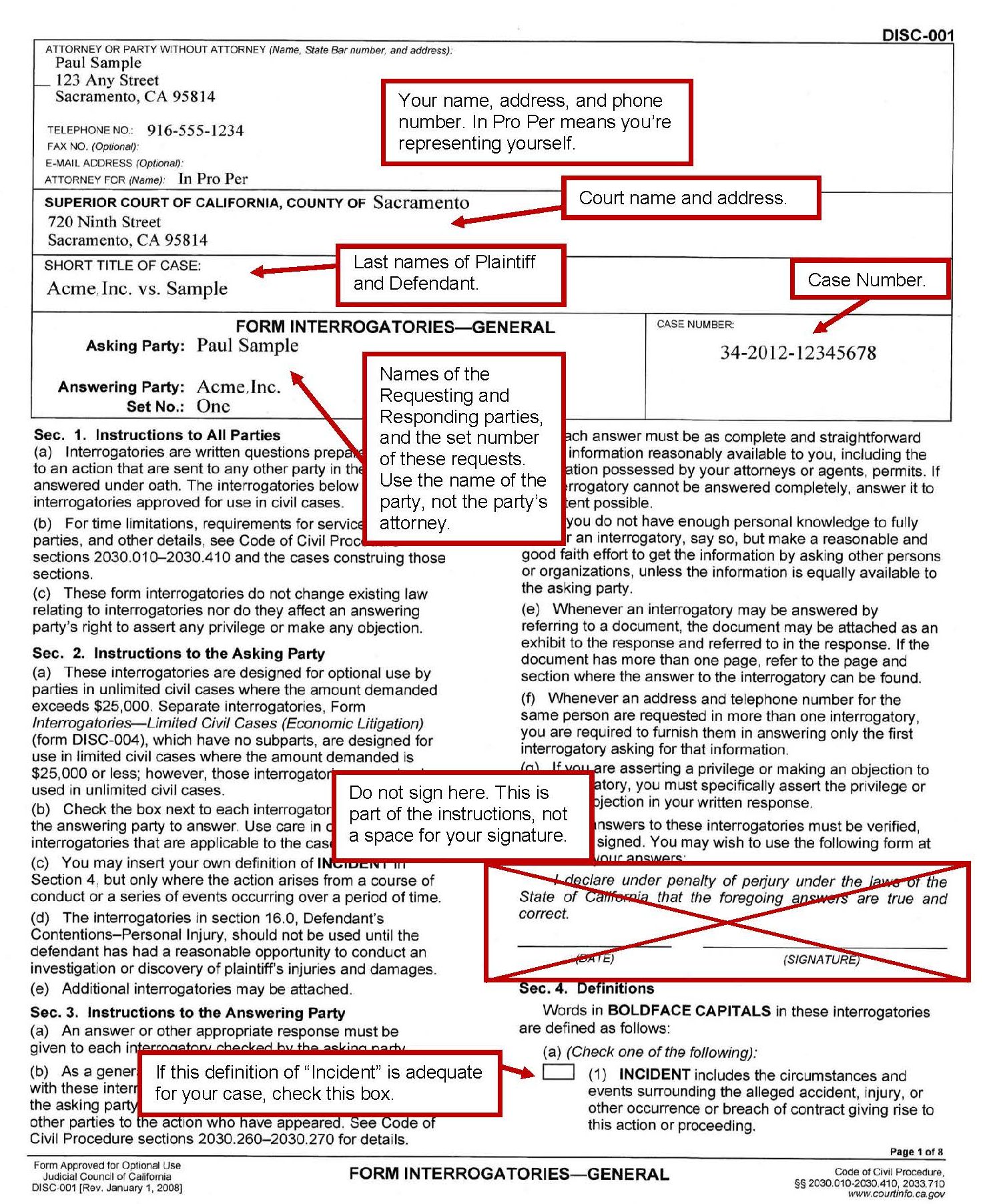
Uncovering these liabilities via interrogatories is crucial for any party involved in a financial restructuring or a high-value buyout. It ensures that the “money” being discussed is based on the actual health of the company rather than a curated financial narrative.
The Cost of Non-Compliance: Financial Penalties and Sanctions
In the world of personal and business finance, efficiency is key. However, the interrogatory process is often characterized by “discovery battles,” where one party is reluctant to turn over sensitive financial data. The financial consequences of failing to respond adequately—or attempting to obfuscate financial truths—can be more expensive than the original lawsuit itself.
Attorney Fees and Litigation Costs
Courts do not take kindly to “evasive or incomplete” answers in interrogatories. If a party fails to provide the requested financial information, the opposing side can file a “Motion to Compel.” If the court grants this motion, the non-compliant party is often ordered to pay the opposing party’s attorney fees for the time spent chasing the information.
In high-stakes corporate litigation, these sanctions can reach tens of thousands of dollars. From a business finance standpoint, this is an “unforced error” that drains cash flow and offers no return on investment. Efficiently managing the interrogatory process is therefore a form of cost containment.
Default Judgments and Their Impact on Corporate Valuation
The ultimate “financial death penalty” in litigation is the default judgment. If a party repeatedly fails to answer interrogatories or provides fraudulent financial data, the judge may rule in favor of the opponent without a trial.
A default judgment for a significant sum can be catastrophic. It can trigger debt covenants, lead to the seizure of assets, and cause a sharp decline in shareholder confidence. For publicly traded companies, the disclosure of such legal failures in SEC filings can result in a massive loss of market capitalization. Thus, the humble interrogatory is not just a piece of paper; it is a gatekeeper of corporate value.
Best Practices for Managing Interrogatories in High-Stakes Finance
Given the weight these documents carry, how should a financially-minded organization approach them? The goal is to be truthful and compliant while protecting proprietary financial strategies and competitive advantages.
Strategic Information Control
While honesty is required, businesses are not obligated to provide more information than is requested. Strategic response drafting involves answering the specific question asked without volunteering extra data that could be used to widen the scope of the audit.
For example, if an interrogatory asks for “gross revenue for 2023,” providing a full, audited financial statement that includes 2020–2022 might be over-sharing. Financial officers must work closely with legal counsel to ensure that the data provided is accurate but strictly tailored to the request. This prevents the “fishing expedition” where an opponent looks for unrelated financial weaknesses to exploit.
Using Financial Experts to Draft Precise Questions
When a company is on the offensive—seeking to recover funds or prove a loss—the quality of the interrogatories sent determines the quality of the evidence received. This is where the intersection of money and law is most visible.
Sophisticated firms employ forensic accountants to help draft interrogatories. Instead of asking a general question like “How much money do you have?”, a forensic-backed interrogatory will ask for “a schedule of all transfers exceeding $5,000 made to offshore entities or third-party trusts within the 180 days preceding the filing of this action.” Precision in questioning leads to precision in recovery.
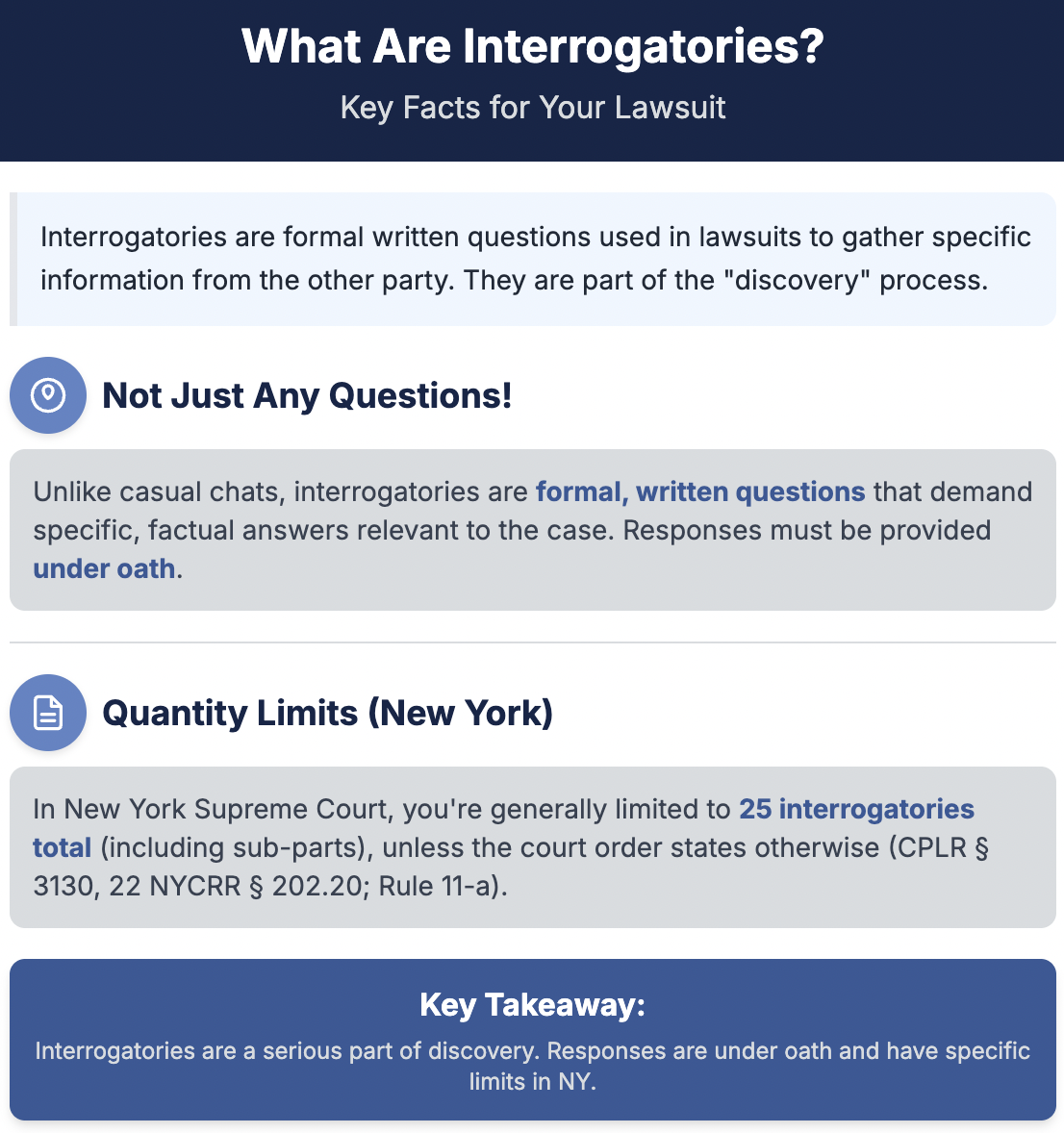
Conclusion: The Strategic Value of Financial Discovery
Interrogatories are far more than a legal formality; they are a vital instrument in the machinery of modern finance. In an era where digital transactions and complex corporate structures can obscure the truth, these written questions serve as a powerful flashlight. They allow litigants to map out the financial reality of a dispute, quantify risks, and protect assets.
Whether you are a business owner seeking to recover a debt or a corporate executive defending against a claim, understanding the power of interrogatories is essential. By treating this process as a strategic financial exercise rather than a mere legal burden, organizations can better navigate the turbulent waters of litigation, ensuring that their financial integrity remains intact even under the pressure of a lawsuit. In the end, the answers provided in an interrogatory don’t just fill out a legal file—they define the economic outcome of the case.
aViewFromTheCave is a participant in the Amazon Services LLC Associates Program, an affiliate advertising program designed to provide a means for sites to earn advertising fees by advertising and linking to Amazon.com. Amazon, the Amazon logo, AmazonSupply, and the AmazonSupply logo are trademarks of Amazon.com, Inc. or its affiliates. As an Amazon Associate we earn affiliate commissions from qualifying purchases.