
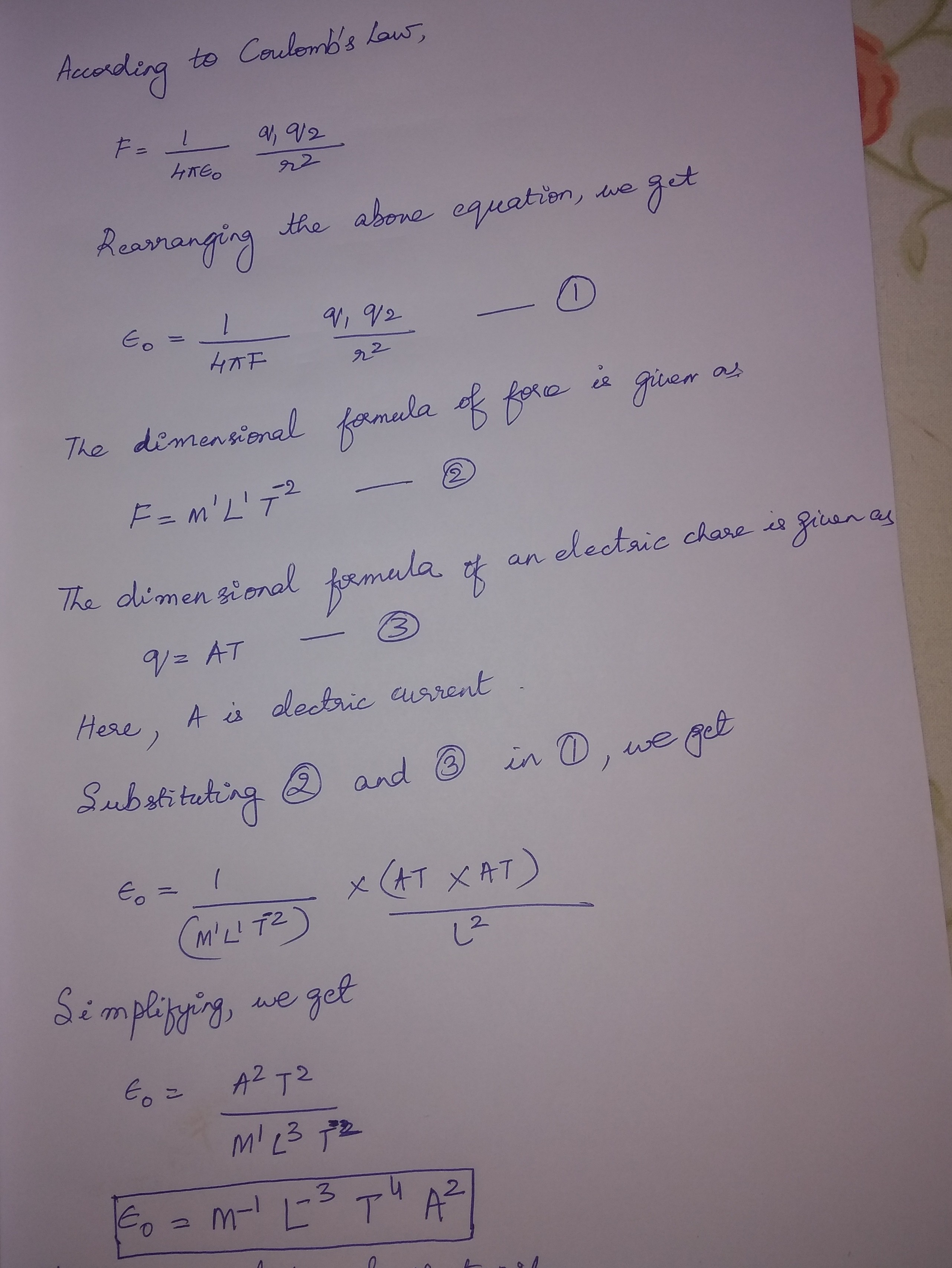
In the realm of theoretical physics, $epsilon_0$ (epsilon naught), also known as the vacuum permittivity or the permittivity of free space, is a constant that defines the capability of a vacuum to permit electric field lines. While it may appear to be a dry, academic value found in the back of textbooks—approximately $8.854 times 10^{-12}$ Farads per meter—it is, in fact, the invisible architect of the digital age.
From the semiconductors in your smartphone to the fiber-optic cables spanning the Atlantic, $epsilon_0$ dictates the limits of how we process, store, and transmit information. In this exploration, we will dive into why this specific physical constant is the cornerstone of modern technology and how its manipulation drives the next generation of hardware innovation.

Understanding the Foundation: The Role of $epsilon_0$ in Electromagnetism
To understand modern tech, one must first understand the medium through which all electronic signals travel. In physics, $epsilon_0$ represents the absolute minimum “resistance” a vacuum offers to the formation of an electric field. It is a baseline—a universal yardstick against which all other materials are measured.
The Definition of Vacuum Permittivity
Vacuum permittivity is a physical constant that describes how an electric field affects, and is affected by, a vacuum. It appears in Coulomb’s Law, which determines the force between two charges, and more importantly, in Maxwell’s equations. These equations are the “operating system” of the universe, governing everything from electricity to magnetism and light.
The Mathematical Link to the Speed of Light
One of the most profound realizations in technology history was the discovery that $epsilon0$ is inextricably linked to the speed of light ($c$). Through the formula $c = 1 / sqrt{mu0 epsilon0}$ (where $mu0$ is the permeability of free space), physicists realized that light itself is an electromagnetic wave. For the tech industry, this meant that the speed of data transmission—whether via radio waves, Wi-Fi, or satellite—is fundamentally capped by the value of $epsilon_0$.
$epsilon_0$ and the Evolution of Semiconductor Technology
The tech industry is currently defined by the race for “smaller, faster, and more efficient” chips. At the heart of this race is the capacitor, a fundamental component that stores energy. The performance of these components is directly tied to $epsilon_0$.
Dielectric Constants and Chip Miniaturization
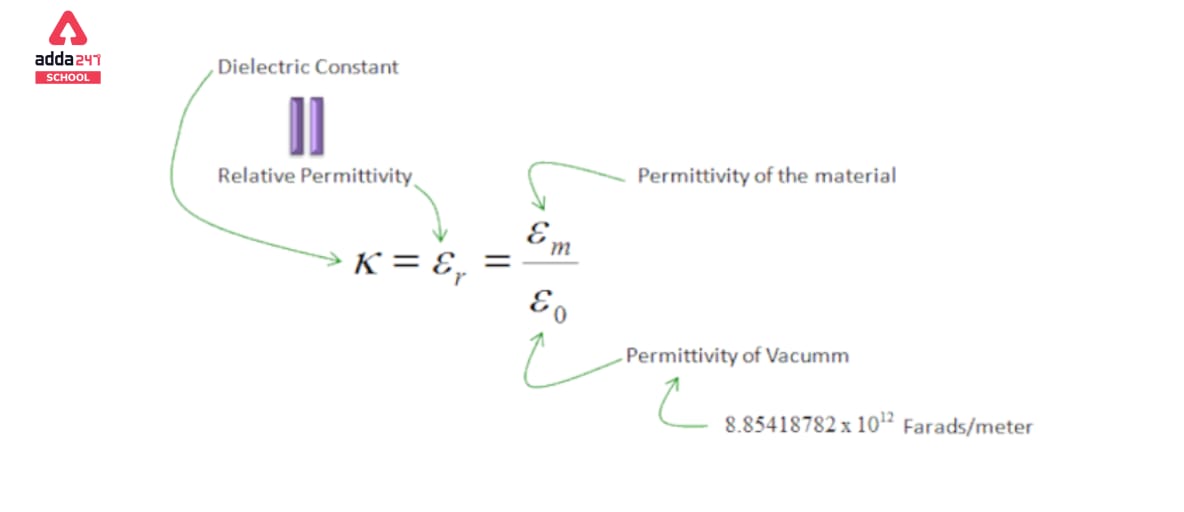
In a transistor, a dielectric material is used to separate the gate from the channel. The capacitance ($C$) of this setup is calculated using the formula $C = kappa epsilon_0 (A/d)$, where $kappa$ (kappa) is the dielectric constant of the material, $A$ is the area, and $d$ is the distance.
As we follow Moore’s Law and shrink transistors to the nanometer scale, the distance ($d$) becomes incredibly small. If we relied solely on the vacuum permittivity ($epsilon0$), the leakage of electricity would be too high, and the chip would melt. This has forced tech giants like Intel and TSMC to develop materials with specific ratios relative to $epsilon0$ to maintain control over electron flow.
Overcoming Leakage: From $epsilon_0$ to High-k Dielectrics
For decades, silicon dioxide was the standard insulator in tech. However, as chips reached the 45nm node and beyond, silicon dioxide’s permittivity was no longer enough to prevent “tunneling”—where electrons jump across the barrier. This led to the “High-k” revolution. By using materials like hafnium oxide, which have a much higher permittivity than $epsilon_0$, engineers could create thicker insulating layers that still held a high charge, allowing for the sub-5nm chips that power today’s AI-capable gadgets.
The Physics of Connectivity: Wireless and Fiber Optics
The modern world is interconnected through a web of invisible signals. Whether you are using a 5G network or a Wi-Fi 6 router, the hardware providing that connection is designed around the constraints of vacuum permittivity.
Calculating Signal Integrity in Antenna Design
Every antenna, from the massive towers in 5G arrays to the tiny traces on a smartphone’s PCB (Printed Circuit Board), must be tuned to specific frequencies. The permittivity of the environment affects the wavelength of the signal. Engineers must account for $epsilon_0$ when calculating the impedance and resonance of these systems. If the calculations are off by even a fraction, signal reflection occurs, leading to dropped calls and slow data speeds.
Fiber Optics and Data Transmission
While fiber optics use light rather than pure electrical charge, the refractive index of the glass core is determined by its permittivity relative to $epsilon_0$. High-speed internet depends on the ability to pulse light through these cables with minimal dispersion. By manipulating the ratio of the material’s permittivity to that of free space, tech companies can ensure that data travels thousands of miles with near-zero loss, maintaining the integrity of the global cloud infrastructure.
$epsilon_0$ in the Age of AI and Quantum Computing
As we move into the era of Artificial Intelligence and Quantum Computing, the importance of fundamental constants like $epsilon_0$ has shifted from general engineering to extreme precision.
Hardware for AI Training: Managing Capacitance
AI models like GPT-4 require massive GPU clusters to train. These GPUs consume enormous amounts of power, and much of that power is lost to parasitic capacitance—unwanted charge storage between components. Engineers at companies like NVIDIA spend billions of dollars designing chip architectures that minimize these “$epsilon_0$-driven” inefficiencies. By optimizing the spatial arrangement of transistors, they reduce the capacitive load, allowing AI chips to run faster without overheating.
Quantum Bits and Electrostatic Control
In the burgeoning field of quantum computing, specifically with superconducting qubits, the environment must be controlled at a near-vacuum level. Here, $epsilon_0$ is the primary factor in determining how qubits interact with their control lines. Because quantum states are incredibly fragile, even a slight fluctuation in the local electric field—governed by the permittivity of the surrounding materials—can cause “decoherence,” where the quantum computer loses its data. Mastering the vacuum permittivity of the cryogenically cooled hardware is the “Holy Grail” for companies like IBM and Google.
The Future of Hardware Engineering and Digital Security
The influence of $epsilon_0$ extends beyond performance; it also touches on how we interact with devices and how we protect them.
Next-Gen Sensors and the IoT
The Internet of Things (IoT) relies on billions of sensors. Many of these are capacitive sensors—the same technology that allows your smartphone to detect your finger without a physical button. These sensors work by detecting a change in permittivity when your finger (which has a different dielectric constant than air) enters the electric field defined by $epsilon0$. As we move toward “smart skins” and more advanced wearables, the ability to calibrate sensors to the baseline of $epsilon0$ will enable unprecedented levels of sensitivity, allowing devices to “feel” their environment in high definition.
Physical Layer Security and Electromagnetic Shielding
In digital security, “Side-Channel Attacks” are a major threat. Hackers can sometimes determine what a processor is doing by measuring the electromagnetic leaks it produces. These leaks are a direct consequence of the electric fields governed by $epsilon_0$. Tech companies are now using this knowledge to develop better electromagnetic shielding. By using materials that “clamp” the permittivity around sensitive components, they can prevent data from leaking out of the hardware via electromagnetic waves, creating a physical “firewall” at the atomic level.
Conclusion: The Invisible Standard
While $epsilon_0$ may seem like a niche concept reserved for physics laboratories, it is the silent pulse of the tech industry. It defines the speed of our internet, the efficiency of our processors, and the sensitivity of our touchscreens.
As we push toward the limits of physics—whether through the miniaturization of silicon or the development of quantum processors—our progress is essentially a series of clever hacks to work around, or with, the value of vacuum permittivity. In the world of technology, understanding $epsilon_0$ is not just about passing a physics exam; it is about understanding the fundamental boundaries of what hardware can achieve. As we look to the future, the materials that allow us to manipulate this constant will be the ones that define the next decade of digital innovation.
aViewFromTheCave is a participant in the Amazon Services LLC Associates Program, an affiliate advertising program designed to provide a means for sites to earn advertising fees by advertising and linking to Amazon.com. Amazon, the Amazon logo, AmazonSupply, and the AmazonSupply logo are trademarks of Amazon.com, Inc. or its affiliates. As an Amazon Associate we earn affiliate commissions from qualifying purchases.