
In the landscape of personal finance, few events are as disruptive as a major car accident. Beyond the immediate concerns of safety and recovery, a secondary financial crisis often emerges: the determination that a vehicle is a “total loss.” For most consumers, a car is one of their largest depreciating assets. When an insurance company declares a vehicle “totaled,” it is not merely a mechanical judgment but a calculated financial decision that can have significant implications for a person’s net worth, debt-to-income ratio, and future budgeting.

Understanding what is considered a totaled vehicle through the lens of finance is essential for any vehicle owner. It requires a grasp of valuation methodologies, an awareness of state-specific financial thresholds, and a strategic approach to insurance negotiations. This guide explores the economic mechanisms behind total loss declarations and how to manage the resulting financial fallout.
Defining the Total Loss Threshold: The Financial Formulas Behind the Decision
To the layperson, a “totaled” car is one that is crushed beyond recognition. However, in the realm of insurance and business finance, a vehicle can look perfectly functional and still be declared a total loss. The decision is driven by a comparison between the cost of restoration and the current market value of the asset.
Actual Cash Value (ACV) vs. Replacement Cost
The cornerstone of any total loss determination is the Actual Cash Value (ACV). Unlike “Replacement Cost” coverage—which is common in homeowners insurance but rare in auto insurance—ACV accounts for depreciation. The ACV is the amount your vehicle was worth the millisecond before the accident occurred.
Insurance companies arrive at this figure by analyzing the local market for comparable vehicles (year, make, model, mileage, and condition). From a financial perspective, this is often a point of contention. Owners frequently overestimate the value of their vehicles based on emotional attachment or the cost of recent maintenance, while insurers view the car strictly as a commodity with a specific market price.
The Total Loss Formula (TLF) vs. Statutory Thresholds
Insurers generally use one of two methods to decide if a car is totaled. The first is a simple percentage threshold dictated by state law. For example, in many jurisdictions, if the cost of repairs exceeds 75% or 80% of the ACV, the car must be declared a total loss.
The second method is the Total Loss Formula (TLF). The math for the TLF is:
Cost of Repair + Salvage Value > Actual Cash Value.
If the sum of the repair estimates and the amount the insurer could get by selling the car’s parts (salvage value) exceeds the car’s pre-accident value, the insurance company will choose the most “economically efficient” route, which is to pay out the ACV and take possession of the vehicle.
The Economic Impact of a Totaled Car on Personal Finance
When a vehicle is totaled, the financial ripple effects extend far beyond the loss of transportation. It forces an immediate liquidation of an asset, often at a time when the owner is not prepared to re-enter the car market.
The Gap Insurance Factor: Protecting Your Liability
One of the most precarious positions in personal finance is “being underwater” or having “negative equity” on a vehicle loan. This occurs when the outstanding balance of the car loan is higher than the ACV of the vehicle.
If a car is totaled while the owner is underwater, the insurance payout will only cover the ACV, leaving the owner responsible for the remaining balance of the loan. For example, if you owe $20,000 on a car that the insurer values at $15,000, you are legally obligated to pay the lender the $5,000 difference for a car you can no longer drive. This is where “Gap Insurance” serves as a vital financial tool, covering that “gap” and preventing a sudden, unmanageable debt spike.
Depreciation and the “Sunk Cost” Fallacy in Auto Repairs
From an investment standpoint, vehicles are notoriously poor stores of value. However, many owners fall into the “sunk cost” trap—the belief that because they recently spent $2,000 on new tires and a transmission flush, the car is “worth” more.
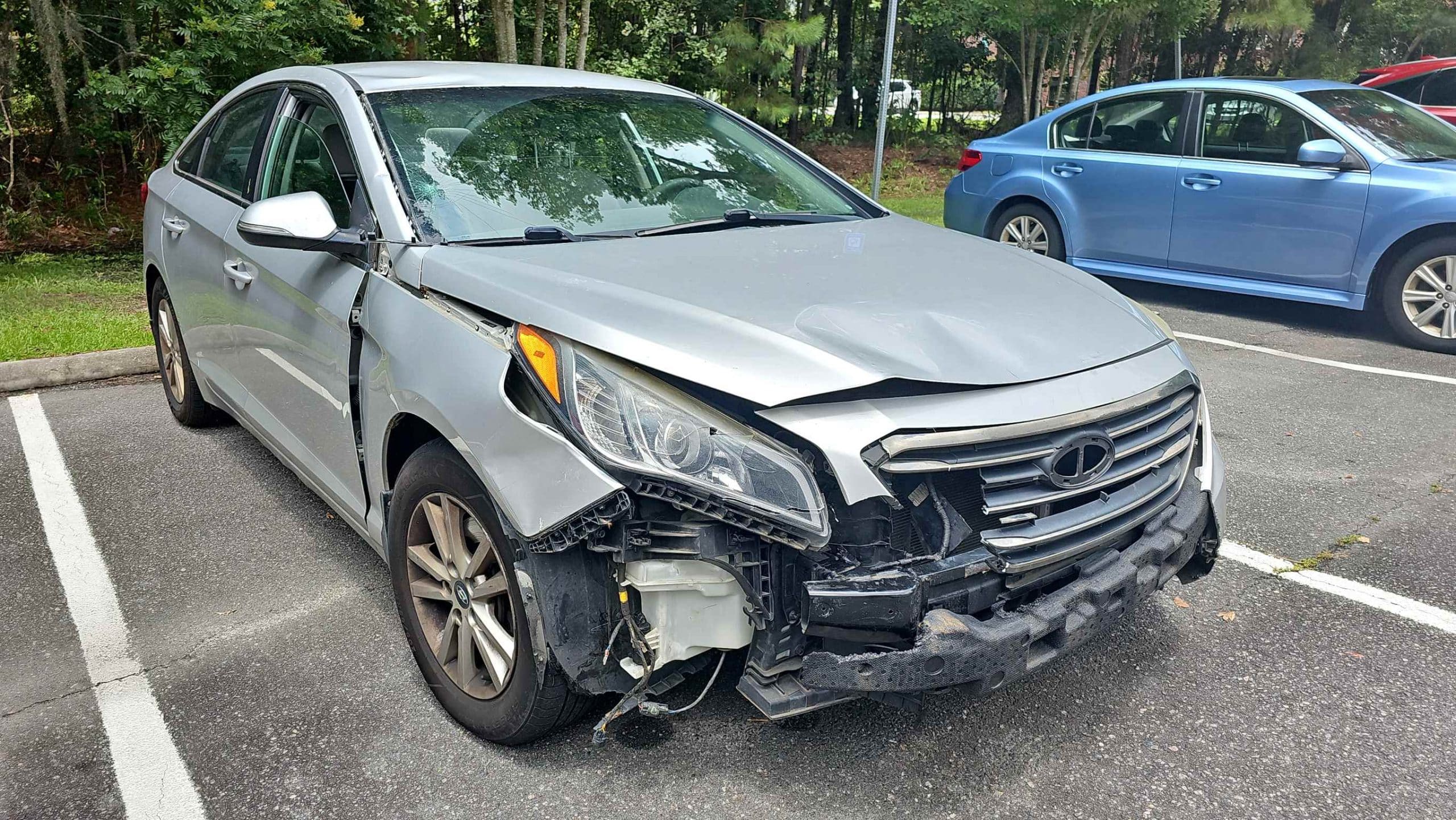
In reality, routine maintenance does not increase the ACV; it merely maintains it. When an adjuster totals a vehicle, they are looking at the market’s willingness to pay, not the owner’s recent investments. Understanding this distinction is crucial for maintaining a professional, objective mindset during the settlement process, allowing the owner to focus on the next financial move rather than mourning unrecoverable maintenance costs.
Strategic Decision-Making: To Retain or Relinquish the Salvage Title?
Once a vehicle is declared a total loss, the owner is presented with a choice: accept the full settlement and hand over the car, or “buy back” the vehicle from the insurance company.
Evaluating the Financial Viability of Owner Retention
Choosing to keep a totaled vehicle—known as owner retention—involves the insurer deducting the salvage value from your settlement. For instance, if the ACV is $10,000 and the salvage value is $2,000, the insurer gives you $8,000 and the car.
This can be a savvy financial move if the damage is purely cosmetic (such as hail damage) and doesn’t affect the safety or functionality of the vehicle. By keeping the car and forgoing repairs, the owner effectively “cashes out” the car’s value while maintaining its utility. However, this must be balanced against the cost of future insurance and the difficulty of eventually selling a car with a branded title.
The Hidden Costs of Rebuilt Titles and Resale Value
If you choose to repair a totaled vehicle, it will receive a “Rebuilt” or “Salvage” title. From a business finance perspective, this title significantly devalues the asset—often by 30% to 50% compared to a “Clean” title.
Furthermore, many insurance companies refuse to provide comprehensive or collision coverage for rebuilt vehicles, as it is difficult to determine if new damage occurred before or after the “total loss” event. Before deciding to keep a totaled car, one must calculate the long-term cost of limited insurance options and the virtual disappearance of resale value.
Navigating the Payout: Maximizing Your Insurance Settlement
The initial offer from an insurance company is rarely their final offer. Much like negotiating a salary or a business contract, the total loss settlement is a negotiation based on data.
Preparing a Comparable Market Analysis
To ensure you receive a fair ACV, you should conduct your own market research. This involves finding at least three to five local listings for vehicles of the same year, make, model, and trim level, with similar mileage.
If your car had premium upgrades (e.g., leather interior, advanced tech packages, or aftermarket performance parts) that the adjuster missed, providing receipts and proof of these features can increase the valuation. Treating the claim like a business audit—complete with documentation and evidence—is the most effective way to protect your financial interests.
Tax Implications and Fees in Total Loss Payouts
In many states, the insurance settlement must also include sales tax, title, and registration fees for a replacement vehicle. This is a frequently overlooked aspect of the payout. If you live in a state with a 7% sales tax and your car is valued at $20,000, that is an additional $1,400 that the insurance company may be obligated to pay.
Ensuring these figures are included in the final check is essential for a “whole” financial recovery. The goal of the settlement is to return the policyholder to the same financial position they were in before the loss—no better, but certainly no worse.

Conclusion
A totaled vehicle is a significant financial event that requires a disciplined, analytical approach. By understanding that “totaled” is a mathematical threshold rather than a physical one, owners can better navigate the complexities of ACV, salvage values, and loan obligations. Whether it’s utilizing Gap Insurance to protect against negative equity or negotiating a settlement based on rigorous market data, the key to managing a total loss is to view the vehicle not as a beloved possession, but as a line item on a balance sheet that requires careful management. Through informed decision-making, the transition from a totaled car to a new asset can be a calculated step in a broader financial strategy rather than a derailment of one’s economic goals.
aViewFromTheCave is a participant in the Amazon Services LLC Associates Program, an affiliate advertising program designed to provide a means for sites to earn advertising fees by advertising and linking to Amazon.com. Amazon, the Amazon logo, AmazonSupply, and the AmazonSupply logo are trademarks of Amazon.com, Inc. or its affiliates. As an Amazon Associate we earn affiliate commissions from qualifying purchases.