
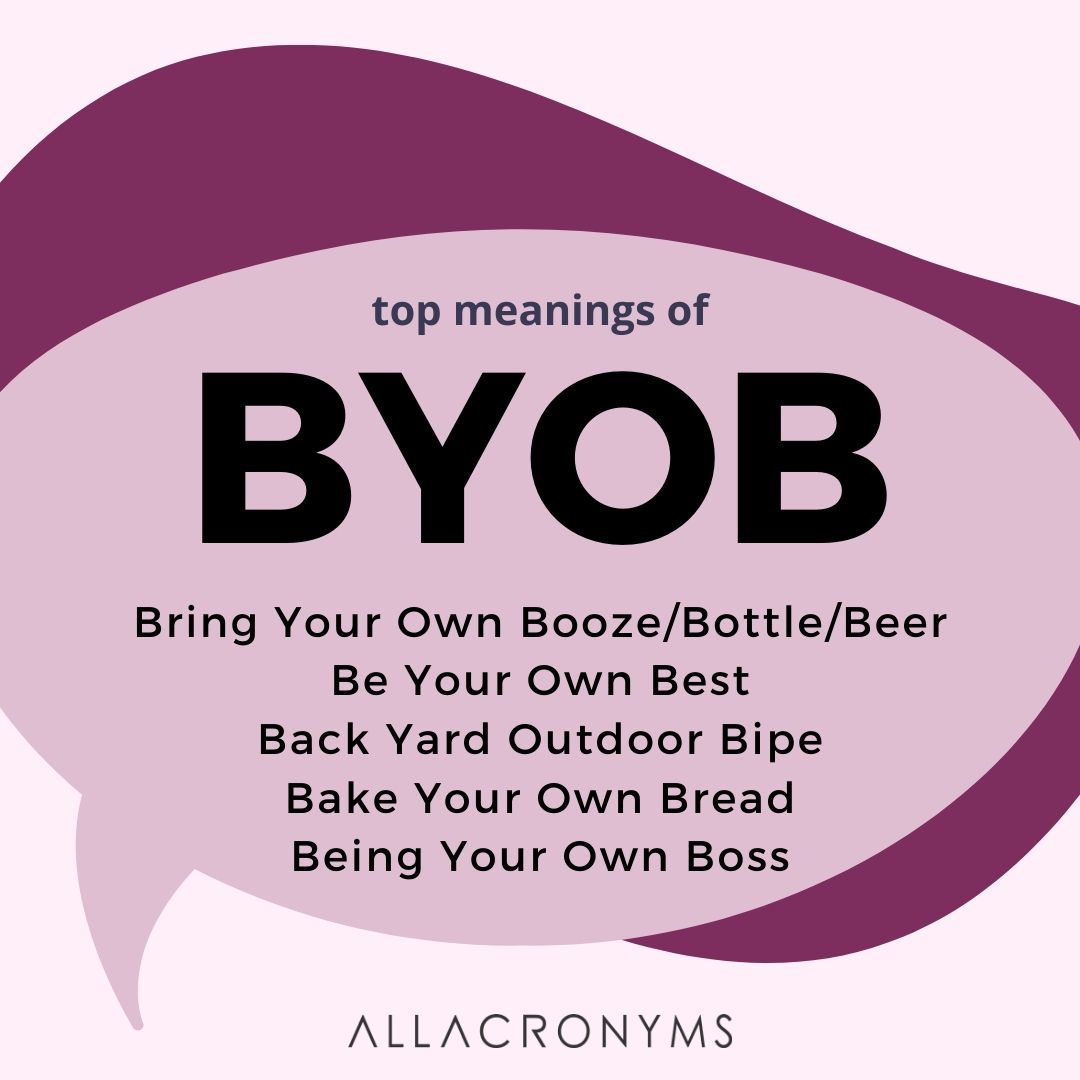
In the traditional sense, the acronym BYOB has long been a staple of social invitations, standing for “Bring Your Own Beverage” or “Bring Your Own Beer.” However, as the global economy undergoes a seismic shift toward decentralization, digital entrepreneurship, and the gig economy, the term has taken on a far more powerful meaning in the world of finance and professional development: Be Your Own Boss.
In today’s financial landscape, BYOB represents a movement toward self-reliance, financial autonomy, and the rejection of the traditional 9-to-5 corporate structure. For many, it is no longer just a catchy phrase but a strategic blueprint for achieving long-term wealth. This transition from being a cog in a corporate machine to becoming the architect of one’s own financial future requires a deep understanding of market trends, risk management, and the diverse avenues available for generating income in the 21st century.

The Evolution of BYOB: From Beverage to Business
The shift from traditional employment to the “Be Your Own Boss” philosophy has been accelerated by technological advancements and a changing cultural perspective on what constitutes a “stable” career. For decades, the gold standard of financial security was a long-term position at a reputable firm with a steady salary and a pension. Today, that stability is often viewed as an illusion, leading many to seek control over their own destiny.
The Shift from Traditional Employment
The modern worker is increasingly prioritizing flexibility and ownership over a steady paycheck. The rise of the “Great Resignation” and the subsequent “Quiet Quitting” trends highlighted a fundamental dissatisfaction with the trade-off between time and money in corporate environments. People have begun to realize that in a traditional job, their earning potential is often capped by a salary range or a manager’s discretion.
In the BYOB model, the ceiling is removed. By transitioning into self-employment, individuals are essentially betting on their own productivity and market value. While this removes the “safety net” of a guaranteed salary, it replaces it with the potential for exponential income growth. Financial independence is no longer about saving enough to retire at 65; it is about building systems that allow for freedom of time and location much earlier in life.
Decoding the “Be Your Own Boss” Philosophy
At its core, the BYOB movement is about asset ownership. When you work for a company, you are helping to build someone else’s asset. When you are your own boss, every hour spent working is an investment in your own brand, your own intellectual property, and your own equity.
This philosophy demands a mindset shift from “employee” to “entrepreneur.” An employee asks, “What tasks do I need to complete today?” An entrepreneur asks, “What value can I create that the market will pay for?” This distinction is the cornerstone of the money-centric interpretation of BYOB. It requires a proactive approach to financial literacy, as the individual becomes responsible for their own payroll, benefits, and long-term investment strategies.
The Financial Landscape of the BYOB Movement
Entering the world of self-employment is not merely a lifestyle choice; it is a sophisticated financial maneuver. To succeed, one must navigate the various ways the modern economy allows individuals to monetize their skills and capital without the intervention of a traditional employer.
Monetizing Skills in the Gig Economy
The “gig economy” was once seen as a way to make extra pocket money, but it has evolved into a multi-trillion-dollar sector where professionals offer high-value services on their own terms. From freelance software development and digital marketing to fractional CFO services, the ability to sell “work-units” to multiple clients rather than “time” to one employer is a hallmark of the BYOB strategy.
The financial benefit here is diversification. In a traditional job, you have a single point of failure: your employer. If the company struggles or decides to downsize, 100% of your income vanishes. A self-employed professional with ten clients has significantly more financial security; losing one client only results in a 10% dip in revenue. This diversification of income streams is a fundamental principle of modern personal finance.
Passive Income Streams and Financial Autonomy
A crucial component of the BYOB lifestyle is the transition from active income (trading time for money) to passive income (making money while you sleep). True financial independence is achieved when your passive investments or automated business systems cover your living expenses.
Under the BYOB umbrella, this often involves:
- Digital Products: Creating courses, e-books, or software that can be sold repeatedly with minimal overhead.
- Affiliate Marketing: Leveraging a personal platform to generate commissions on third-party products.
- Content Monetization: Building an audience through blogs, podcasts, or video platforms that generate ad revenue and sponsorships.
By focusing on scalable income models, the “Be Your Own Boss” practitioner can decouple their earnings from their physical presence, which is the ultimate level of financial freedom.
Strategic Planning for Aspiring Solopreneurs
The transition to a BYOB model is fraught with financial risks if not managed with professional rigor. Moving from a world of tax-withholding and employer-sponsored health insurance to total self-reliance requires a robust strategic plan.
Building an Emergency Fund and Financial Buffer
Before taking the leap into being your own boss, a significant capital reserve is required. Financial experts typically recommend a “runway” of six to twelve months of living expenses. This is not just for survival; it is a psychological tool. Having a substantial cash buffer allows a new business owner to make rational, long-term decisions rather than desperate, short-term ones.
This buffer also serves as the initial “seed capital” for the business. Whether it is purchasing equipment, investing in software, or funding a marketing campaign, the initial phase of the BYOB journey is often cash-intensive. Without a solid foundation of personal finance, the venture is likely to fail before it reaches the break-even point.
Managing Taxes and Retirement as a Self-Employed Individual
One of the most significant shocks for new entrepreneurs is the complexity of self-employment taxes. In the US, for example, being your own boss means paying both the employer and employee portions of Social Security and Medicare taxes.
Professional financial management in the BYOB space involves:
- Tax Planning: Understanding deductible business expenses to lower taxable income.
- Business Structure: Deciding between a Sole Proprietorship, LLC, or S-Corp to optimize tax efficiency.
- Retirement Vehicles: Utilizing tools like the SEP-IRA or Solo 401(k), which often allow for much higher contribution limits than traditional employer-led plans.
By taking control of these financial levers, the self-employed individual can often build wealth more efficiently than a corporate employee, despite the lack of a “matching” contribution from a boss.
Overcoming the Challenges of Financial Independence
While the BYOB movement offers unparalleled freedom, it also introduces volatility that must be managed through disciplined financial practices. There is no guaranteed paycheck on the 1st and 15th of the month, and the responsibility for every financial outcome rests solely on the individual.
Navigating Market Volatility
In a traditional role, the company absorbs the fluctuations of the market. In a BYOB scenario, you are the company. If the market for your specific skill set dips, or if a global economic downturn occurs, you must be prepared to pivot. This requires “financial agility”—the ability to quickly reduce overhead and shift resources toward more profitable avenues.
Insightful entrepreneurs maintain a “variable” lifestyle cost. When business is booming, they increase their investment contributions rather than their luxury spending. When business slows, they have a lean operational model that allows them to weather the storm without depleting their core assets.
The Importance of Diversification
Just as a professional investor never puts all their capital into a single stock, a BYOB professional should never rely on a single income source. The most successful “bosses” are those who have created a “portfolio of income.”
This might include a mix of:
- High-ticket consulting (Active income)
- A subscription-based service (Recurring income)
- Dividend-paying stocks or real estate (Investment income)
This multi-pronged approach ensures that if one sector of their personal economy fails, the others provide the necessary support to keep the overall financial structure intact.
Conclusion: The New Definition of Success
So, what does BYOB mean in the context of the modern world? It means the democratization of the “boss” role. It means that the tools of production—once owned only by massive corporations—are now available to anyone with a laptop, a skillset, and the financial discipline to manage their own career.
Being your own boss is the ultimate expression of personal finance. It is a commitment to taking 100% responsibility for your income, your taxes, your retirement, and your growth. While it requires more effort and higher risk-tolerance than traditional employment, the rewards—financial autonomy, time freedom, and uncapped earning potential—make it the most compelling “Money” trend of our time. In the new economy, the most valuable brand you can invest in is yourself.
aViewFromTheCave is a participant in the Amazon Services LLC Associates Program, an affiliate advertising program designed to provide a means for sites to earn advertising fees by advertising and linking to Amazon.com. Amazon, the Amazon logo, AmazonSupply, and the AmazonSupply logo are trademarks of Amazon.com, Inc. or its affiliates. As an Amazon Associate we earn affiliate commissions from qualifying purchases.