
In the landscape of personal finance, we often obsess over interest rates, stock market fluctuations, and tax brackets. However, one of the most significant recurring expenses in a modern household budget is often overlooked or relegated to a “miscellaneous” category: the cost of transportation. At the heart of this expense lies a singular, vital metric—average MPG (Miles Per Gallon).
Understanding average MPG is not merely a task for automotive enthusiasts or environmentalists; it is a fundamental requirement for anyone looking to master their personal cash flow. For the average driver, the difference between a vehicle that gets 20 MPG and one that gets 35 MPG represents thousands of dollars in lost opportunity costs over the lifespan of vehicle ownership. This article explores the financial intricacies of fuel efficiency, how to calculate its impact on your wealth, and how to make data-driven decisions at the dealership and the pump.
Decoding MPG as a Personal Finance Metric
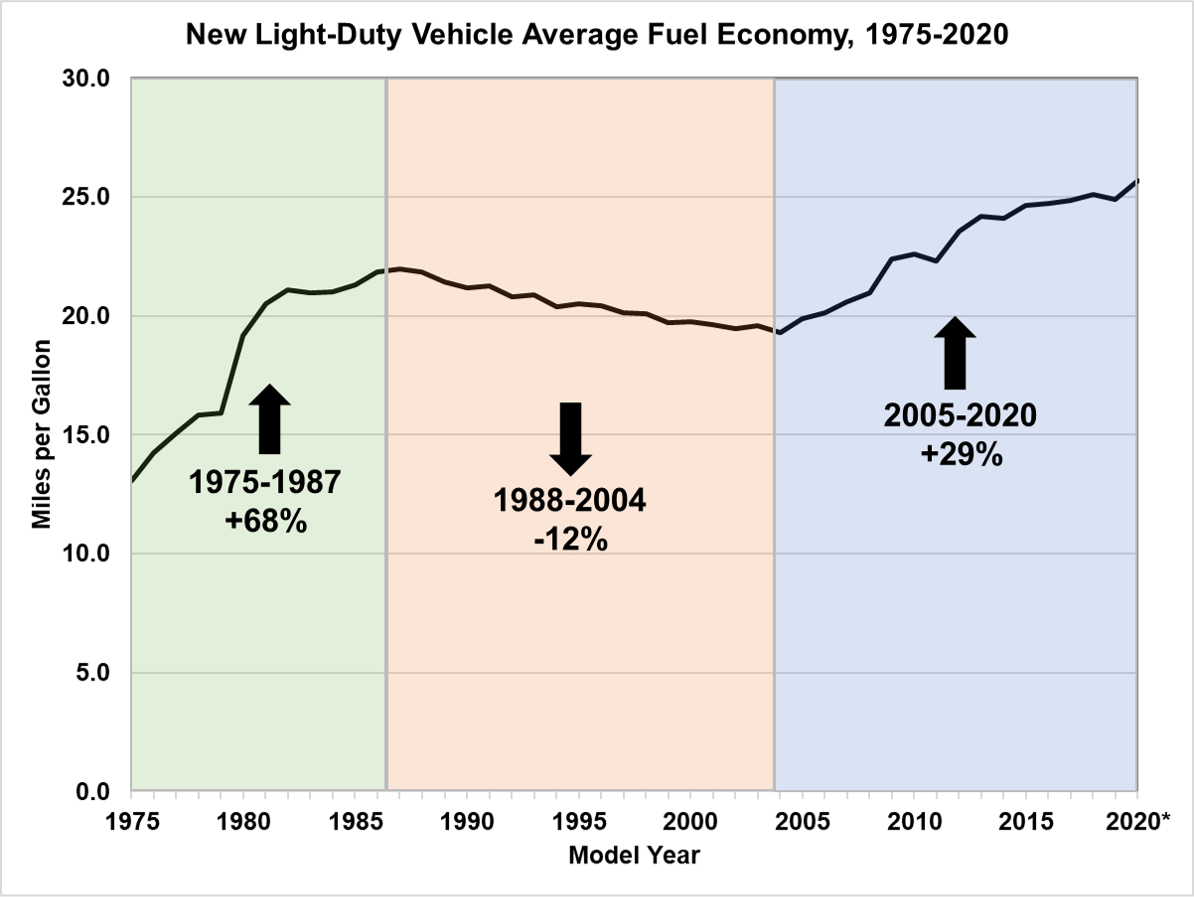
To the casual observer, MPG is a number on a window sticker. To the financially savvy, it is a variable in a wealth-building equation. Average MPG represents the fuel efficiency of a vehicle, calculated by the number of miles a vehicle can travel using one gallon of fuel. While the Environmental Protection Agency (EPA) provides “Combined,” “City,” and “Highway” ratings, your actual average MPG is the only figure that truly impacts your bank account.
The Direct Correlation Between MPG and Monthly Cash Flow
Transportation is typically the second-largest expense for American households, trailing only housing. When we discuss average MPG, we are discussing the efficiency of your capital deployment. Every mile you drive costs a specific amount of money. If fuel is priced at $4.00 per gallon and your car averages 20 MPG, you are paying $0.20 per mile. If your car averages 40 MPG, that cost drops to $0.10.
While ten cents may seem negligible, consider the average American commute of 15,000 miles per year. The 20 MPG driver spends $3,000 annually, while the 40 MPG driver spends $1,500. Over a five-year ownership period, that is a $7,500 difference—a sum that, if invested in a diversified index fund with a 7% return, could grow significantly toward retirement.
How Manufacturers Calculate Average MPG (And Why Your Reality Differs)
It is crucial for financial planning to understand that the “Average MPG” advertised by manufacturers is often achieved under laboratory conditions. These tests use specific drive cycles that may not reflect your hilly commute, stop-and-go traffic, or aggressive driving style.
From a budgetary perspective, relying solely on the sticker price can lead to underestimating monthly expenses. A wise financial move is to research “real-world” MPG data from consumer databases to build a more accurate cash flow forecast. Understanding the gap between theoretical and actual MPG allows for more precise budgeting and prevents “lifestyle creep” in your fuel spending.
The Opportunity Cost of Low MPG Vehicles
When purchasing a vehicle, consumers often focus on the monthly loan payment while ignoring the “total cost of ownership” (TCO). A vehicle with a lower purchase price but poor average MPG can actually be more expensive over time than a higher-priced, fuel-efficient alternative. This is the essence of opportunity cost in personal finance.
Depreciation vs. Fuel Savings: The Long-Term ROI
Vehicles are depreciating assets. However, the rate of depreciation can be influenced by fuel efficiency. Historically, during periods of high oil prices, fuel-efficient vehicles retain their resale value much better than gas-guzzling SUVs and trucks.
When you choose a vehicle with high average MPG, you are effectively buying a hedge against energy inflation. While a hybrid might cost $3,000 more upfront, the “Break-Even Point” (the moment where fuel savings equal the extra upfront cost) is often reached within three to four years. Beyond that point, the fuel savings become pure profit—money that stays in your pocket rather than going into your gas tank. This Return on Investment (ROI) is often higher and more guaranteed than many traditional market investments.
Hidden Costs: Insurance and Maintenance of Performance vs. Economy Vehicles
Average MPG is often a proxy for other financial metrics. High-performance vehicles that require premium gasoline and have low MPG often come with higher insurance premiums and more expensive maintenance schedules (specialized tires, higher-capacity oil changes, etc.).
Conversely, vehicles designed for high average MPG are frequently engineered for reliability and lower operating costs. By opting for a vehicle with better efficiency, you aren’t just saving at the pump; you are often lowering your overall insurance risk profile and decreasing the frequency of high-cost mechanical repairs. In the world of business finance, this is known as operational efficiency.

Strategizing for Volatile Fuel Markets
One of the greatest risks to a stable household budget is volatility. Fuel prices are notoriously unstable, influenced by geopolitical events, supply chain disruptions, and global demand. A vehicle with low average MPG makes your personal budget highly vulnerable to these external shocks.
Budgeting for the Pump: Fixed vs. Variable Transportation Costs
In financial planning, we distinguish between fixed costs (your car loan) and variable costs (fuel and maintenance). A vehicle with high average MPG effectively turns a portion of your variable costs into a more “fixed” and predictable expense.
For example, if gas prices jump from $3.00 to $5.00 per gallon:
- The driver of a 15 MPG truck sees their cost per 100 miles rise from $20.00 to $33.33 (a $13.33 increase).
- The driver of a 50 MPG hybrid sees their cost per 100 miles rise from $6.00 to $10.00 (only a $4.00 increase).
High MPG acts as a financial shock absorber, ensuring that market volatility doesn’t force you to dip into your emergency fund or cut back on other essential investments.
Tax Incentives and Financial Rebates for High-Efficiency Choices
The pursuit of high average MPG often qualifies consumers for government-sponsored financial benefits. From federal tax credits for plug-in hybrids to state-level rebates and high-occupancy vehicle (HOV) lane access (which saves time, and “time is money”), the fiscal advantages are significant.
When calculating the true cost of a vehicle, these incentives must be subtracted from the purchase price. In many cases, these credits can bridge the gap between a standard internal combustion engine and a high-efficiency alternative, making the “green” choice the most profitable one from a pure business perspective.
Smart Financial Tools and Habits to Optimize MPG
Maximizing your average MPG is a form of “side hustle.” If you can reduce your fuel consumption by 20% through better habits and tracking, you are essentially giving yourself a tax-free raise.
Telematics and Apps: Tracking Your Cost Per Mile
In the digital age, “what gets measured gets managed.” Financial tools and smartphone apps now allow drivers to track their actual average MPG in real-time. By linking these apps to your fuel receipts, you can calculate your exact “Cost Per Mile.”
Sophisticated users treat their vehicle like a small business. They analyze which routes are the most cost-effective and which fuel stations offer the best value (considering both price and distance to the station). Using telematics to monitor driving behavior—such as avoiding rapid acceleration and excessive idling—can improve average MPG by up to 15-30%. This is a direct injection of liquidity back into your monthly budget.
Behavioral Finance: Driving Habits That Save Hundreds Annually
Personal finance is often more about behavior than math. The same applies to MPG. “Hypermiling” techniques—habits designed to maximize fuel efficiency—are essentially financial disciplines.
Maintaining proper tire pressure is a prime example. According to the Department of Energy, under-inflated tires can lower average MPG by 0.2% for every 1 psi drop in all four tires. While that sounds small, it represents a recurring “leak” in your finances. Similarly, removing unnecessary weight from the trunk or avoiding high speeds on the highway are low-effort, high-reward financial decisions. When you view every mile driven as a transaction, your behavior naturally shifts toward conservation and capital preservation.
Conclusion: MPG as a Pillar of Financial Wellness
In conclusion, “What is average MPG?” is a question that belongs in the same category as “What is my credit score?” or “What is my debt-to-income ratio?” It is a vital sign of your financial health. By prioritizing fuel efficiency, you are not just choosing a vehicle; you are choosing a more resilient and profitable lifestyle.
The transition from viewing a car as a status symbol to viewing it as a financial tool is a hallmark of wealth building. By understanding the mathematics of MPG, accounting for the total cost of ownership, and leveraging technology to track expenses, you can turn a mundane daily necessity into a powerful engine for savings. In the long run, the miles you save are the dollars you earn. Every gallon not burned is capital that can be deployed toward your future, making average MPG one of the most important numbers in your financial portfolio.
aViewFromTheCave is a participant in the Amazon Services LLC Associates Program, an affiliate advertising program designed to provide a means for sites to earn advertising fees by advertising and linking to Amazon.com. Amazon, the Amazon logo, AmazonSupply, and the AmazonSupply logo are trademarks of Amazon.com, Inc. or its affiliates. As an Amazon Associate we earn affiliate commissions from qualifying purchases.