
In the modern era, connectivity is no longer a luxury—it is a functional necessity. Whether for professional obligations, real-time navigation, or maintaining social ties, the ability to access high-speed data while crossing borders is a cornerstone of the digital lifestyle. For AT&T subscribers, the primary technological solution to the challenge of global roaming is the International Day Pass (IDP). This service represents a shift in how telecommunications companies handle the complex infrastructure of international roaming, moving away from pay-per-use models toward an integrated, automated digital experience.
Understanding the Mechanics of the International Day Pass
The AT&T International Day Pass is a software-driven feature that allows users to bring their domestic plan’s data, talk, and text capabilities to over 210 destinations worldwide. Rather than billing for every kilobyte or minute of airtime, the IDP utilizes a 24-hour access window triggered by the device’s interaction with a foreign cellular network.
The Automated Activation Trigger
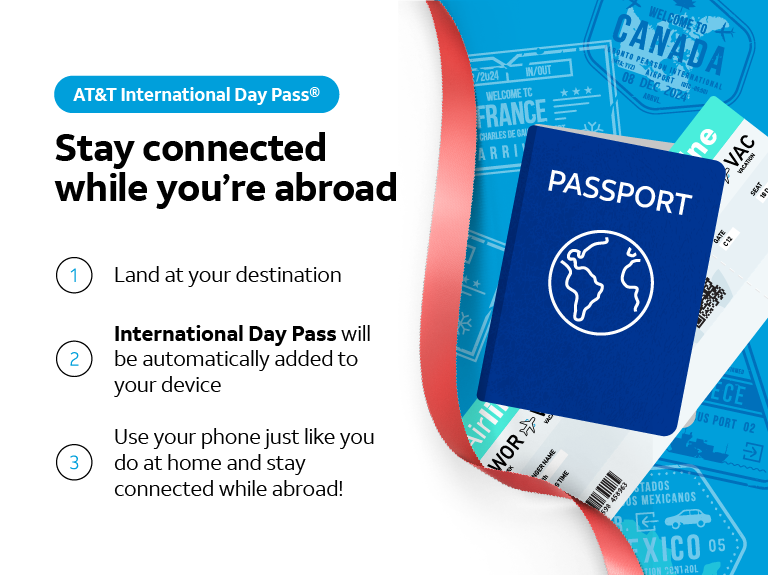
The most significant technological advantage of the International Day Pass is its automation. Once the feature is added to a user’s account, it remains dormant until the device connects to a supported international network. The moment the phone performs a “handshake” with a roaming partner’s tower—whether through an incoming text, an automated app update, or a cellular call—the 24-hour timer begins. This eliminates the need for manual configuration or the entering of specific access codes upon arrival in a new country.
The 24-Hour Digital Clock
The IDP operates on a rigid 24-hour cycle. This is monitored on the backend by AT&T’s billing and network management systems. From a technical perspective, the system tracks the first instance of data transmission or voice activity and grants full access to the user’s domestic plan limits for exactly 1,440 minutes. If the user continues to use data or make calls after that window expires, a new 24-hour session is automatically initiated. For the tech-savvy user, understanding this timing is crucial for optimizing data usage and managing the digital footprint during short layovers.
Multi-Line Integration and Shared Data
For those traveling with multiple devices or on a family plan, the IDP software is designed to recognize secondary lines. While the primary line is charged a full daily rate, additional lines on the same account traveling at the same time are billed at a significantly reduced rate. This synchronization requires sophisticated real-time tracking of various SIM IDs (ICCIDs) across different global cell sites, ensuring that the account is billed accurately based on the concurrent usage of multiple hardware units.
Compatibility and Network Architecture
The efficacy of the International Day Pass is largely dependent on the underlying hardware of the smartphone and the roaming agreements between AT&T and foreign carriers. Not all devices are created equal when it comes to global frequency bands, and understanding the tech specs of your device is essential.
LTE and 5G Roaming Standards
AT&T has expanded its International Day Pass to include 5G access in a growing number of countries. This transition from 4G LTE to 5G roaming involves complex tunneling protocols. When a user roams, their data is often routed back to the home network’s core (AT&T’s servers in the US) through a process known as “Home Routed” roaming. This allows the user to access the internet as if they were in the United States, maintaining access to region-locked apps and services, though it can introduce slightly higher latency compared to a local connection.
Frequency Band Optimization
A smartphone’s ability to utilize the IDP effectively depends on its internal modem and the bands it supports. For instance, while North American carriers frequently use Bands 2, 4, 12, and 66, European and Asian carriers might rely on Bands 1, 3, 7, and 20. High-end flagship devices (such as the latest iPhone or Samsung Galaxy models) are typically “World Phones,” containing modems that support a wide spectrum of Global System for Mobile Communications (GSM) and Long-Term Evolution (LTE) frequencies. Users with older or budget-oriented hardware may find that while the IDP is active, their connection speeds are limited by the physical limitations of their device’s antenna array.
eSIM vs. Physical SIM Functionality
The rise of eSIM technology has simplified how travelers interact with services like the IDP. Because the IDP is tied to the subscriber’s digital profile rather than the physical plastic card, it works seamlessly with eSIM-enabled devices. This allows users to keep their AT&T line active via eSIM for calls and texts while potentially using a physical slot for a secondary local data SIM, or vice versa. However, the IDP’s strength lies in its “single-SIM” simplicity, allowing the user to maintain their primary identity without swapping hardware.
Managing the Experience via the AT&T Digital Ecosystem
To provide transparency and control, AT&T integrates the International Day Pass into its broader software ecosystem. This ensures that users are not flying blind when it comes to their data consumption and connectivity status.
The myAT&T Mobile App
The myAT&T app serves as the command center for the International Day Pass. Through the app’s interface, users can verify that the IDP is active on their line before they leave the country. The app also provides a historical view of data usage, which is critical because the IDP uses the user’s domestic data bucket. If a user has a capped domestic plan, the IDP does not provide unlimited data; it merely allows them to use their existing data allotment abroad. Monitoring this via the app prevents unexpected throttling or overage charges.
Real-Time Network Notifications
A key software feature of the IDP is the automated SMS notification system. Upon landing in a foreign country and establishing a connection, the network pushes a notification to the device confirming that the International Day Pass is active. This serves as a digital receipt and a reminder of the 24-hour cycle. These messages are generated by the network’s Home Location Register (HLR) and Visitor Location Register (VLR), which communicate the user’s location and plan status across international borders.
Data Throttling and Fair Usage Policies
While the IDP provides a “domestic-like” experience, it is still subject to the technological constraints of the host network. If a user is on an “Unlimited” plan that includes a high-speed data cap (e.g., 50GB before deprioritization), the data used while on the International Day Pass counts toward that total. Furthermore, the host carrier in the foreign country may implement its own Fair Usage Policy (FUP). AT&T’s software must negotiate these priorities, and in some cases, users may experience reduced speeds if the local network is congested, regardless of their domestic plan status.
Comparison with Digital Alternatives and Competitors
In the tech landscape, the International Day Pass exists alongside several other connectivity solutions. Each has its own technical trade-offs regarding speed, convenience, and functionality.
Local SIMs and the “Burner” Approach
The traditional tech-savvy approach to international travel was purchasing a local SIM card at the destination airport. From a technical standpoint, this provides the lowest latency because the data is “Local Breakout,” meaning it goes directly to the local internet rather than being routed back to the US. However, this method requires the user to have an unlocked device and results in the loss of their primary phone number for the duration of the trip. The IDP solves this by maintaining the user’s digital identity at the cost of the daily fee.
Travel eSIM Applications
Apps like Airalo or Holafly have emerged as significant competitors. These apps utilize eSIM technology to sell data-only packages. While these are often more cost-effective for data-heavy users, they lack the integrated voice and SMS functionality of the AT&T IDP. For a user who needs their actual phone number for two-factor authentication (2FA) or professional voice calls, the IDP’s integration of the existing cellular “stack” (Voice, SMS, Data) is a superior technical solution.
Wi-Fi Calling Technology
Another alternative is Wi-Fi Calling, a protocol that allows a phone to route cellular traffic over a wireless internet connection. When a user is on Wi-Fi, they can often make calls to the US for free without triggering the IDP. However, the moment the Wi-Fi signal drops and the phone switches to a cellular tower (handover), the IDP 24-hour clock will trigger. Managing this transition requires a deep understanding of the device’s “Cellular Data Switching” settings.
Maximizing Performance: Best Practices for Tech-Savvy Travelers
To get the most out of the AT&T International Day Pass, users should implement several technical optimizations on their devices to ensure consistent performance and battery longevity.
Background Data Management
Because the IDP utilizes the domestic data plan, background processes can quickly consume a user’s high-speed allotment. Users should navigate to their device settings to restrict background app refresh for non-essential applications. On iOS, this is found under “Settings > General > Background App Refresh,” and on Android, it is under “Data Usage > Background Data.” Restricting these processes ensures that the bandwidth provided by the roaming partner is reserved for active tasks like navigation or communication.
Offline Maps and Content Preloading
Even with a robust connection, roaming networks can be unpredictable. Utilizing the “Offline Maps” feature in Google Maps or Apple Maps allows the device to navigate using GPS satellites—which do not require cellular data—while the IDP provides the necessary data for real-time traffic updates. Similarly, pre-downloading media from streaming services over hotel Wi-Fi reduces the load on the cellular roaming connection, preserving the high-speed data bucket for when it is truly needed.
Security and VPN Usage
When roaming on foreign networks via the IDP, security remains a paramount concern. While cellular connections are generally more secure than public Wi-Fi, using a Virtual Private Network (VPN) adds an extra layer of encryption. For users of the AT&T International Day Pass, a VPN can also help mitigate some of the latency issues associated with home-routed data by choosing a server closer to the user’s physical location, although this depends heavily on the VPN provider’s infrastructure.
Battery Optimization in Roaming Environments
Roaming is notoriously taxing on a smartphone’s battery. This is because the device’s modem is constantly scanning for the most compatible bands among various local carriers. To mitigate this, users can manually select a network carrier in their phone settings rather than leaving it on “Automatic.” By locking the phone to a single carrier with a strong signal, the modem stops “hunting,” thereby extending the device’s battery life during long days of travel.
In conclusion, the AT&T International Day Pass is more than just a billing feature; it is a sophisticated integration of global networking protocols, automated billing software, and user-facing digital tools. By understanding the underlying technology—from frequency bands to data routing—travelers can ensure they remain connected, secure, and efficient regardless of where their journey takes them.
aViewFromTheCave is a participant in the Amazon Services LLC Associates Program, an affiliate advertising program designed to provide a means for sites to earn advertising fees by advertising and linking to Amazon.com. Amazon, the Amazon logo, AmazonSupply, and the AmazonSupply logo are trademarks of Amazon.com, Inc. or its affiliates. As an Amazon Associate we earn affiliate commissions from qualifying purchases.