
Amyotrophic Lateral Sclerosis (ALS), a progressive neurodegenerative disease, has historically been defined by a daunting statistic: a life expectancy of two to five years following diagnosis. However, as we move further into the decade, the narrative surrounding this prognosis is shifting. This change isn’t merely the result of biological breakthroughs, but rather a profound integration of cutting-edge technology into the fields of diagnostics, patient care, and drug discovery.
From the application of artificial intelligence (AI) in early detection to the development of sophisticated brain-computer interfaces (BCIs), technology is actively extending the functional “life expectancy” and quality of life for those living with ALS. By examining the intersection of technology and neurology, we can see how software, hardware, and data science are rewriting the timeline of a once-unpredictable disease.

Predictive Analytics and AI in ALS Diagnostics
The traditional path to an ALS diagnosis is often long and arduous, frequently taking 12 to 14 months from the onset of first symptoms. This delay is critical because early intervention is the most significant factor in extending life expectancy. Technology is now stepping in to close this gap through predictive analytics and machine learning.
Machine Learning Algorithms for Early Detection
Data scientists are now training machine learning models on vast datasets of electronic health records (EHRs) and electromyography (EMG) results. These algorithms are designed to identify subtle patterns that human clinicians might overlook in the early stages of muscle atrophy. By analyzing the “noise” in neurological signals, AI can flag potential ALS markers months before clinical symptoms become debilitating. This technological “early warning system” allows patients to begin neuroprotective therapies sooner, which is statistically linked to improved survival rates.
Digital Biomarkers and Remote Monitoring
The rise of digital biomarkers—data collected via smartphones and wearables—is revolutionizing how we track disease progression. Software tools that analyze speech patterns (detecting early dysarthria) or gait stability can provide a continuous stream of objective data to neurologists. Unlike sporadic in-person clinic visits, these digital tools offer a high-resolution view of the disease’s trajectory. By using AI to process this data, clinicians can adjust treatment plans in real-time, preventing acute respiratory or nutritional crises that often lead to a shortened life expectancy.
Assistive Technology: Enhancing Quality of Life and Longevity
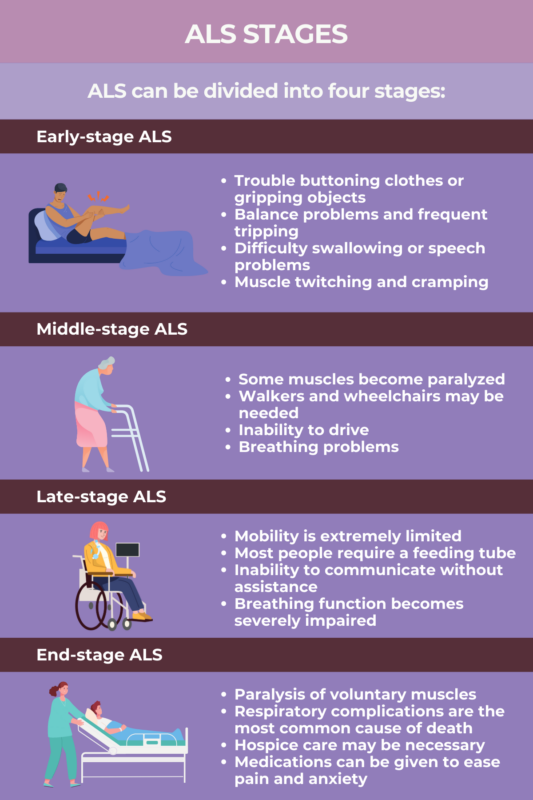
In ALS, “life expectancy” is often limited by the failure of secondary systems, such as the ability to communicate or breathe independently. Technology has transitioned from simple mechanical aids to sophisticated digital life-support systems that keep patients engaged and biologically stable for much longer than previously possible.
Brain-Computer Interfaces (BCI): Connecting Mind to Machine
Perhaps the most “sci-fi” advancement in the ALS tech space is the Brain-Computer Interface (BCI). For patients in the advanced stages of ALS who may be “locked-in,” BCIs offer a way to bypass the damaged motor neurons entirely. Sensors implanted on or in the brain translate neural signals into digital commands. Companies like Synchron and Neuralink are testing devices that allow users to control computers, send emails, and even operate smart home devices using only their thoughts. By maintaining a patient’s ability to interact with the world, these technologies significantly mitigate the psychological decline and social isolation that can accelerate physiological failure.
Eye-Tracking Software and Synthetic Speech
For many years, the inability to communicate was a hallmark of ALS. Today, advanced eye-tracking software—integrated into robust tablets—allows patients to type and speak using only their eye movements. Modern software now includes “voice banking,” where individuals can record their own voice in the early stages of the disease. AI then uses these samples to create a personalized synthetic voice for their communication device. This tech-driven preservation of identity and agency has a profound impact on a patient’s will to pursue life-extending measures, such as permanent ventilation.
The Role of Precision Medicine and Computational Biology
The search for a cure—or at least a way to halt progression—has moved from the laboratory bench to the supercomputer. Computational biology is the engine driving the next generation of ALS therapeutics, which are essential for fundamentally altering the life expectancy of the disease.
High-Throughput Screening and Virtual Modeling
Traditionally, testing new drugs for ALS took decades and billions of dollars. Now, high-throughput screening powered by AI allows researchers to test thousands of chemical compounds against digital models of ALS-affected motor neurons in a fraction of the time. These “virtual labs” use software to simulate how a specific protein-folding mutation—common in ALS—will react to a new molecular structure. This digital-first approach to pharmacology is accelerating the pipeline of drugs designed to slow the degeneration of the central nervous system.
Genetic Mapping and CRISPR Innovations
Technological advancements in genomic sequencing have identified numerous genetic mutations (such as SOD1 and C9orf72) that contribute to familial ALS. Software tools used in CRISPR-Cas9 gene-editing technology are now being leveraged to explore “silencing” these toxic genes. By using bioinformatic tools to map the human genome with precision, tech-driven medicine is moving toward a future where ALS is not a monolithic diagnosis, but a series of treatable genetic conditions. Tailoring the “tech” of the drug to the “code” of the patient’s DNA is the ultimate goal of precision medicine.
Telemedicine and the Virtual Clinic Model
A significant factor in ALS life expectancy is the accessibility of multidisciplinary care. Patients who live in rural areas or have limited mobility often struggle to reach the specialized “ALS Centers of Excellence” that provide the best outcomes. Technology is bridging this geographic divide.
Specialized Cloud-Based Platforms for Neurological Care
Telemedicine has evolved far beyond a simple video call. New cloud-based platforms are designed specifically for neurological monitoring, allowing for the remote calibration of ventilators and the digital adjustment of feeding pump settings. These platforms allow a team of specialists—including pulmonologists, physical therapists, and neurologists—to collaborate on a patient’s data in real-time from different locations. This “virtual clinic” model ensures that every patient, regardless of location, has access to the high-level care that is proven to extend life.
Wearable IoT Devices for Respiratory Support
The most common cause of death in ALS is respiratory failure. Internet of Things (IoT) enabled non-invasive ventilators (BiPAP) now allow for remote monitoring by respiratory therapists. If the device detects a change in the patient’s breathing patterns or a leak in the mask, it can send an automated alert to the healthcare provider’s dashboard. This proactive technological oversight prevents emergency hospitalizations and allows for adjustments to be made before a respiratory crisis occurs, directly contributing to a longer lifespan.
The Convergence of Tech and Hope
While the biological mystery of ALS has not yet been fully solved, the technological infrastructure surrounding the disease has reached a tipping point. We are no longer looking at a static “life expectancy” of two to five years. Instead, we are looking at a variable timeline that is being extended by the day through the power of software, AI, and hardware engineering.
The integration of technology into the ALS journey does more than just track a decline; it provides the tools for resistance. AI speeds up the diagnosis, BCIs restore the voice, and computational biology hunts for the cure. As these technologies continue to iterate and improve, the focus is shifting from “how long” a patient can live with ALS to “how well” they can live. In the tech-driven landscape of modern medicine, the prognosis for ALS is no longer a fixed number—it is a challenge that we are increasingly equipped to meet.
aViewFromTheCave is a participant in the Amazon Services LLC Associates Program, an affiliate advertising program designed to provide a means for sites to earn advertising fees by advertising and linking to Amazon.com. Amazon, the Amazon logo, AmazonSupply, and the AmazonSupply logo are trademarks of Amazon.com, Inc. or its affiliates. As an Amazon Associate we earn affiliate commissions from qualifying purchases.