
In the landscape of modern architecture and smart building design, the invisible systems that regulate our environment are often the most technologically advanced. Among these, the Variable Air Volume (VAV) unit stands as a cornerstone of contemporary climate control. As buildings become more intelligent and energy-conscious, understanding the mechanics, integration, and technological evolution of VAV units is essential for anyone interested in the intersection of mechanical engineering and smart technology.
At its simplest, a VAV unit—often called a VAV box—is a piece of hardware within an HVAC (Heating, Ventilation, and Air Conditioning) system that regulates the volume of air reaching a specific zone. Unlike older systems that deliver a constant stream of air regardless of need, VAV technology allows for precise, localized control, making it the “brain” of zone-based climate management.
Understanding the Mechanics of Variable Air Volume (VAV) Systems
To appreciate the VAV unit, one must first understand the problem it solves. In a large commercial building, different rooms have different thermal loads. A server room requires constant cooling, while a sun-drenched corner office might need more air than a shaded interior hallway. The VAV unit is the technological solution to these varying demands.
How a VAV Box Functions
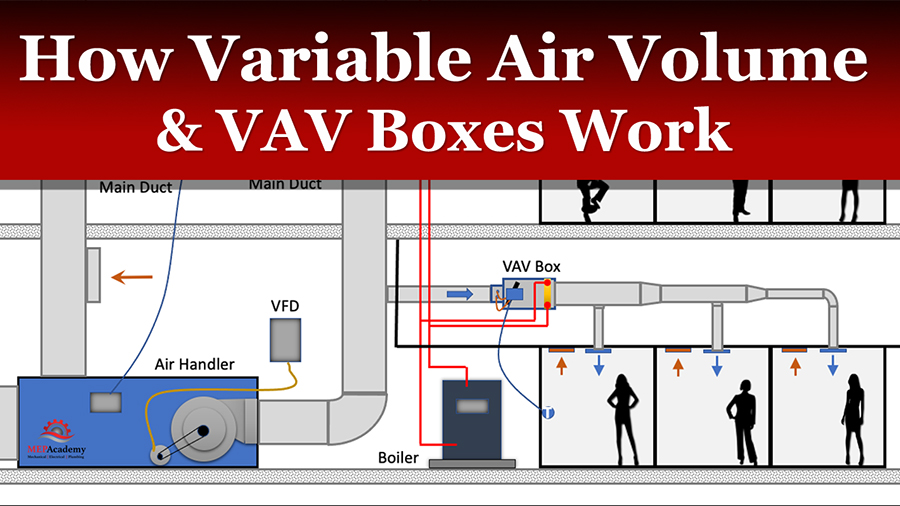
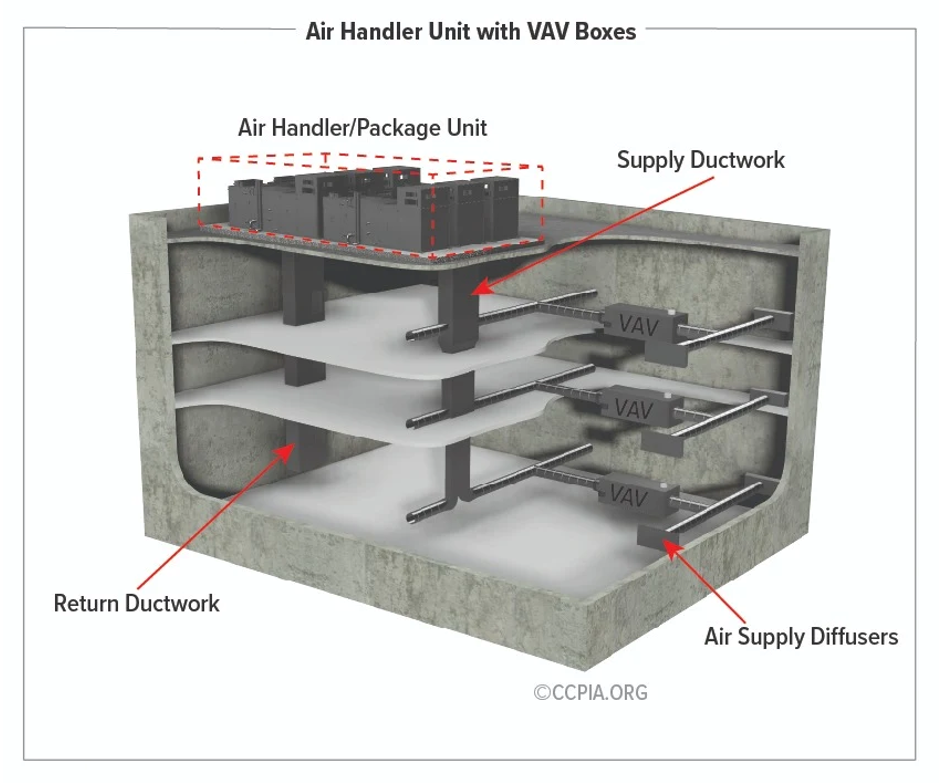
A VAV unit acts as a localized gatekeeper. It is typically installed in the ductwork above the ceiling of the room or zone it serves. The unit receives air from a central Air Handling Unit (AHU) at a constant temperature. Its primary job is to adjust the volume of that air to maintain the temperature setpoint of the specific room.
When the thermostat in a room detects that the temperature is rising above the desired level, it sends a signal to the VAV unit’s controller. The controller then instructs a motorized damper to open wider, allowing more cool air into the space. Conversely, if the room is too cold, the damper closes to restrict airflow. This modulation is what gives the system its name: “Variable” Air Volume.
Components: Dampers, Actuators, and Controllers
The VAV unit is an assembly of several high-precision components. The damper is the physical blade that rotates to block or allow airflow. The actuator is the motor that moves the damper; in modern tech-driven buildings, these are high-torque, electronic components capable of minute adjustments.
Crucially, the VAV controller is the microprocessor that governs the operation. It uses feedback loops, often employing Proportional-Integral-Derivative (PID) algorithms, to ensure the damper moves smoothly rather than “hunting” back and forth, which would cause unnecessary wear and inconsistent temperatures.
The Evolution of Smart Climate Control: VAV vs. CAV Technology
The transition from Constant Air Volume (CAV) to Variable Air Volume (VAV) represents a significant leap in environmental technology, moving from “on/off” logic to sophisticated modulation.
Constant Air Volume (CAV): The Predecessor
In the early days of industrial HVAC, CAV systems were the standard. These systems supplied a steady flow of air at all times. To change the temperature, the system had to change the temperature of the air itself or use “reheat” coils to warm up cold air that was being pumped in at a constant rate. This was immensely inefficient; it is the equivalent of driving a car at full throttle and using the brakes to control your speed.
Precision and Modulation in Modern VAV Units
VAV technology changed this paradigm by focusing on volume rather than just temperature. By utilizing Variable Frequency Drives (VFDs) on the central fans in conjunction with VAV units, the entire system can “rev down” when demand is low.
From a tech perspective, this modulation allows for “load shedding.” If only 20% of a building is occupied, the VAV units in unoccupied zones close, and the central system sensors detect the rise in static pressure. The system then slows down the main fans, resulting in massive energy savings. This precision is the hallmark of modern green building technology.
Integration with Building Automation Systems (BAS)
In the current era of the Internet of Things (IoT), a VAV unit is rarely an isolated device. It is a node in a vast, interconnected network known as a Building Automation System (BAS) or Building Management System (BMS).

The Role of IoT and Smart Sensors
Modern VAV units are equipped with smart sensors that go beyond simple thermometers. Many now include CO2 sensors to monitor air quality. If CO2 levels rise in a packed conference room, the VAV unit can override the temperature setting to bring in more fresh air, ensuring occupant cognitive performance and health.
These units communicate via standardized protocols like BACnet or Modbus. This allows the VAV unit to “talk” to the central plant. For example, if all VAV units on a floor are 100% open and the rooms are still too warm, the BAS can automatically command the central chiller to lower the supply air temperature.
Data-Driven HVAC Management
Because VAV units are connected to a central network, they generate a wealth of data. Facility managers can use dashboards to monitor the “damper position” of every unit in a skyscraper. If a specific VAV unit is always 100% open, it suggests a mechanical failure or an undersized cooling capacity for that room. This “tech-first” approach to maintenance is known as Continuous Commissioning, where software constantly analyzes VAV performance to optimize energy use in real-time.
Types of VAV Units and Their Technological Applications
Not all VAV units are created equal. Depending on the specific technological requirements of a space—such as a laboratory, a hospital, or a high-tech office—different configurations are utilized.
Single-Duct VAV Units
The most common type is the single-duct VAV. It is a simple cooling-only or cooling-with-reheat box. In tech offices, these are the workhorses that maintain steady temperatures. If a room requires heat, some units feature electric or hot-water reheat coils that warm the air after the volume has been reduced to its minimum setpoint.
Fan-Powered VAV Terminal Units
Fan-powered boxes contain their own small internal fan. These are used to maintain air circulation even when the central system’s airflow is low. There are two subtypes:
- Series Fan-Powered: The fan runs constantly, mixing primary air from the AHU with plenum air from above the ceiling. This is ideal for spaces requiring constant white noise or high ventilation rates.
- Parallel Fan-Powered: The fan only turns on when heating is required, pushing warm ceiling air back into the room. This is a highly efficient way to recycle heat generated by lights and computers.
Dual-Duct and Induction VAV Systems
For specialized environments, dual-duct VAVs receive both a cold air stream and a hot air stream, mixing them to reach the perfect temperature. While more complex and expensive to install, they provide the ultimate level of precision for environments where temperature fluctuations could interfere with sensitive electronic equipment or laboratory experiments.
Future Trends in HVAC Technology: AI and VAV Optimization
As we look toward the future of smart cities and net-zero architecture, VAV technology is being further refined by Artificial Intelligence (AI) and Machine Learning (ML).
Predictive Maintenance through Machine Learning
The next generation of VAV units will not just report their current state; they will predict their own failure. By analyzing the “signature” of the actuator motor, AI algorithms can detect if a damper is becoming sticky or if a motor is nearing the end of its lifecycle. This allows technicians to replace a $200 part during scheduled hours rather than dealing with an emergency system failure during a heatwave.
Sustainability and Net-Zero Energy Goals
VAV units are essential to achieving LEED (Leadership in Energy and Environmental Design) certification. By minimizing the amount of air that needs to be moved, cooled, and heated, VAV technology directly reduces a building’s carbon footprint.
Future VAV tech is moving toward “energy harvesting” and wireless communication. Imagine a VAV unit that requires no control wiring because it communicates via a mesh network and generates its own power from the airflow moving through the duct. While this sounds like science fiction, the trend toward decentralized, autonomous building components is well underway.
Conclusion
The VAV unit may be hidden behind drywall and ceiling tiles, but it is one of the most vital technologies in the modern built environment. It represents a perfect marriage of mechanical logic and digital precision. By shifting from the brute-force cooling of the past to the intelligent, modulated airflow of the present, VAV units enable the massive, high-tech glass towers of our modern cities to exist sustainably.
For tech professionals and building owners alike, the VAV unit is a reminder that “smart technology” isn’t just about the devices in our pockets—it’s about the very air we breathe and the sophisticated systems that manage it with surgical precision. As AI and IoT continue to evolve, the humble VAV box will remain at the forefront of the quest for the perfectly optimized, energy-efficient workspace.
aViewFromTheCave is a participant in the Amazon Services LLC Associates Program, an affiliate advertising program designed to provide a means for sites to earn advertising fees by advertising and linking to Amazon.com. Amazon, the Amazon logo, AmazonSupply, and the AmazonSupply logo are trademarks of Amazon.com, Inc. or its affiliates. As an Amazon Associate we earn affiliate commissions from qualifying purchases.