
In the traditional landscape of global economics, the lines between the “for-profit” sector and the “non-profit” sector were once clearly demarcated. For-profit entities focused on maximizing shareholder wealth, while non-profits focused on social welfare, relying heavily on philanthropy and government grants. However, a third pillar has emerged that challenges this binary view: the social enterprise.
To define a social enterprise within the context of business finance and the “Money” niche, one must look beyond the altruistic goals and examine the specific financial architecture that allows these organizations to operate. At its core, a social enterprise is a revenue-generating business whose primary objective is to achieve a social or environmental mission, with profits being systematically reinvested back into that mission rather than being distributed solely to external shareholders.

The Financial Architecture of Social Enterprises
The fundamental distinction of a social enterprise lies in its business model. Unlike a traditional charity, which may spend a significant portion of its time on fundraising and grant writing, a social enterprise operates as a market participant.
Revenue Models vs. Traditional Non-Profits
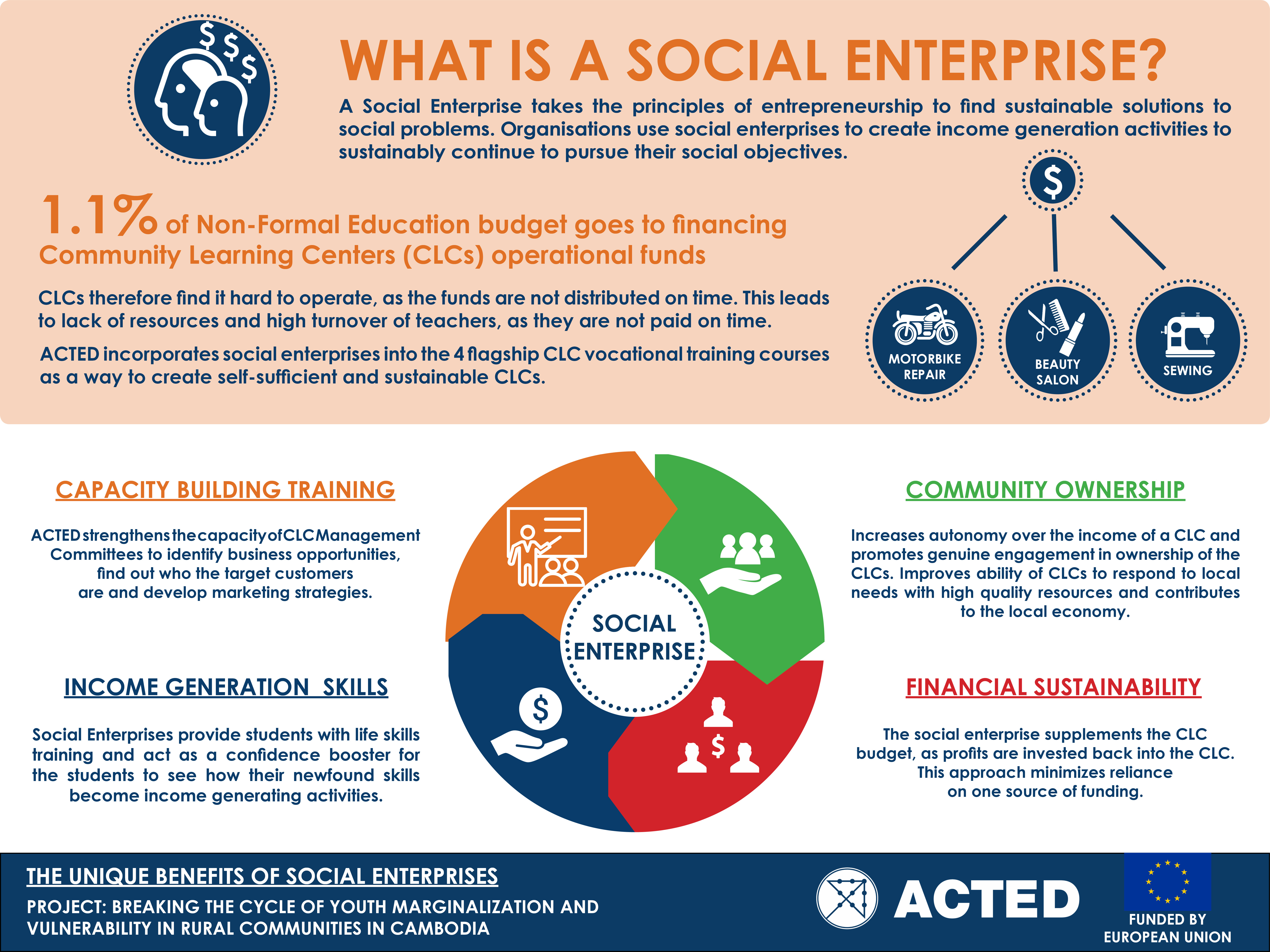
The primary financial characteristic of a social enterprise is its reliance on earned income. In the world of business finance, this is known as “trading for a purpose.” While a non-profit might provide services for free and seek donations to cover the costs, a social enterprise sells products or services in the open market. This shift from “donor-dependence” to “market-independence” provides a level of financial sustainability that is often elusive for traditional NGOs. By generating their own cash flow, social enterprises can hedge against the volatility of the philanthropic market and the shifting priorities of government funding.
The Double and Triple Bottom Line
From a financial reporting perspective, social enterprises utilize the “Triple Bottom Line” (TBL) framework: Profit, People, and Planet. In standard corporate finance, the bottom line refers to the net income or the “residual” after all expenses are paid. In a social enterprise, the “profit” line is not the end-goal but a means to an end. Financial success is measured by the ability of the organization to sustain itself (Profit), while simultaneously creating measurable social change (People) and ecological restoration (Planet). For investors and financial analysts, this requires a more complex valuation model than traditional Price-to-Earnings (P/E) ratios, as it incorporates the “social return on investment” (SROI).
Profit for Purpose: Navigating the Business Finance Aspect
A common misconception is that social enterprises do not make a profit. In reality, profit is vital for their survival and growth. The difference lies in the “capital allocation” strategy—how that money is used once it is earned.
Retained Earnings and Social Reinvestment
In a traditional corporate structure, a significant portion of net profit is often distributed to shareholders via dividends or used for stock buybacks to increase share value. In contrast, the financial governing documents of a social enterprise—such as a “lock on assets” or a specific “community interest” clause—mandate that a majority of profits be reinvested. This reinvestment might go toward expanding the program’s reach, hiring individuals from marginalized communities at higher-than-market wages, or subsidizing services for those who cannot afford them. From a wealth-management perspective, this turns “profit” into “working capital for impact.”
Scalability and Financial Sustainability
For any business to be viable, it must achieve a break-even point where revenue meets or exceeds operating expenses. Social enterprises face the unique financial challenge of managing “mission drift.” This occurs when the pressure to generate revenue (to ensure financial sustainability) begins to overshadow the social mission. High-performing social enterprises employ rigorous financial auditing to ensure that their commercial activities remain aligned with their social goals. For instance, if a social enterprise sells eco-friendly products, its procurement finance must prioritize ethical sourcing even if it lowers the gross margin, necessitating a highly efficient lean-management approach to maintain overall profitability.
Investment Landscapes: Funding Your Social Venture
The way social enterprises access capital is fundamentally different from both traditional startups and charities. This has led to the rise of “impact investing,” a segment of the financial market that has grown into a multi-billion-dollar industry.
Impact Investing and Venture Philanthropy
Social enterprises often look for “patient capital.” Unlike traditional venture capital, which typically seeks a 10x return within a 5–7 year window, impact investors are willing to accept lower or slower financial returns in exchange for high social impact. This is often referred to as “blended value.” Venture philanthropy takes this a step further by applying the rigors of venture capital—strategic oversight, performance metrics, and financial auditing—to the social sector. For the social entrepreneur, this means the “Money” aspect of their business involves pitching to investors who are as interested in their carbon offset data as they are in their Year-over-Year (YoY) revenue growth.
Grants, Debt, and Equity: The Hybrid Capital Stack
One of the most sophisticated aspects of social enterprise finance is the “hybrid capital stack.” Because these organizations occupy a middle ground, they can often access a diverse range of funding sources that traditional businesses cannot. This might include:
- Recoverable Grants: Money that is given like a grant but must be repaid if the organization hits certain financial milestones.
- Program-Related Investments (PRIs): Loans or equity investments made by foundations that count toward their mandatory distribution requirements.
- Social Impact Bonds (SIBs): A “pay-for-success” financial instrument where the government pays private investors back with interest only if the social enterprise achieves a specific, pre-agreed social outcome (e.g., reducing recidivism or improving literacy rates).
Economic Impact and Global Market Trends
The rise of the social enterprise is not just a trend; it is a response to a global shift in how consumers and investors view the purpose of money. We are witnessing the birth of the “Purpose Economy,” where financial value is increasingly tied to ethical integrity.
The Rise of the “Purpose Economy”
Current market data suggests that younger demographics—Millennials and Gen Z—are more likely to spend their money with brands that demonstrate social responsibility. From a marketing and sales finance perspective, this means that having a “social enterprise” status can lower Customer Acquisition Costs (CAC) and increase Customer Lifetime Value (CLV). Consumers are often willing to pay a premium for products that they know are contributing to a greater good, effectively turning “social impact” into a competitive financial advantage.
Regulatory Frameworks and Tax Implications
As the sector matures, governments are creating specific legal and financial structures to accommodate social enterprises. In the United Kingdom, the Community Interest Company (CIC) is a popular model. In the United States, the Benefit Corporation (B-Corp) and the L3C (Low-Profit Limited Liability Company) offer frameworks that protect directors from being sued by shareholders for prioritizing social goals over maximum profit. From a tax planning perspective, these entities often navigate a complex web of regulations. While they generally pay corporate taxes on their profits like any other business, certain jurisdictions offer tax credits or “social investment tax relief” to encourage the flow of private capital into social ventures.

The Future of Money and Social Good
The definition of a social enterprise ultimately boils down to a fundamental question of financial intent: Is the money working for the mission, or is the mission working for the money?
As we look toward the future of global finance, the social enterprise model offers a blueprint for a more resilient and equitable economy. By integrating market mechanisms with social goals, these organizations prove that financial profitability and social progress are not mutually exclusive. For the modern investor or entrepreneur, understanding the financial nuances of social enterprises is no longer optional—it is a prerequisite for navigating a market where “value” is being redefined in both dollars and lives changed.
In conclusion, a social enterprise is a business that employs a commercial strategy to maximize improvements in human and environmental well-being. Its financial identity is defined by its revenue-driven sustainability, its reinvestment of profits for impact, and its participation in a burgeoning ecosystem of impact-focused capital. By mastering the “Money” side of the equation, social enterprises ensure that their “Mission” has the fuel it needs to drive lasting change.
aViewFromTheCave is a participant in the Amazon Services LLC Associates Program, an affiliate advertising program designed to provide a means for sites to earn advertising fees by advertising and linking to Amazon.com. Amazon, the Amazon logo, AmazonSupply, and the AmazonSupply logo are trademarks of Amazon.com, Inc. or its affiliates. As an Amazon Associate we earn affiliate commissions from qualifying purchases.