
In the traditional landscape of physics, fluids were long categorized by a simple, linear relationship between the stress applied to them and how they flowed. This concept, established by Sir Isaac Newton, described fluids like water or alcohol—substances with a constant viscosity regardless of the force acting upon them. However, as we push the boundaries of materials science, hardware engineering, and soft robotics, the tech industry has become increasingly obsessed with the “exceptions” to this rule: Non-Newtonian fluids.
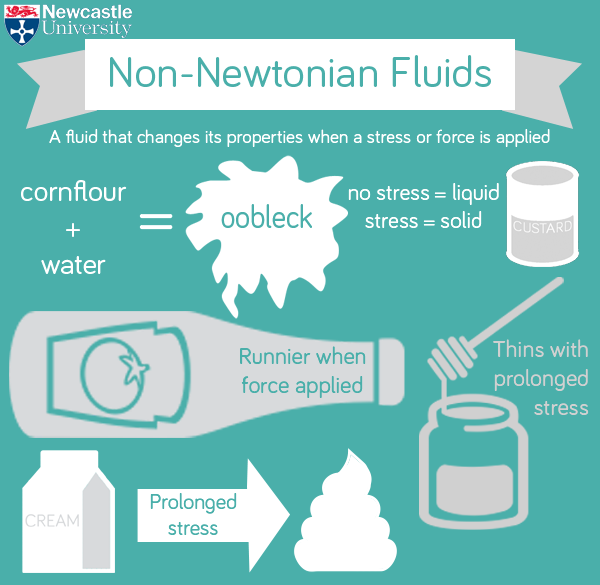
A Non-Newtonian fluid is a substance whose viscosity changes under force or stress. Unlike water, which flows the same way whether you stir it slowly or vigorously, a Non-Newtonian fluid might turn into a solid-like state when struck or become thinner when agitated. In the realm of technology, these “smart” properties are no longer just laboratory curiosities; they are the backbone of next-generation protective gear, advanced robotics, and sophisticated thermal management systems.

The Science of Variable Viscosity: From Physics to High-Tech Applications
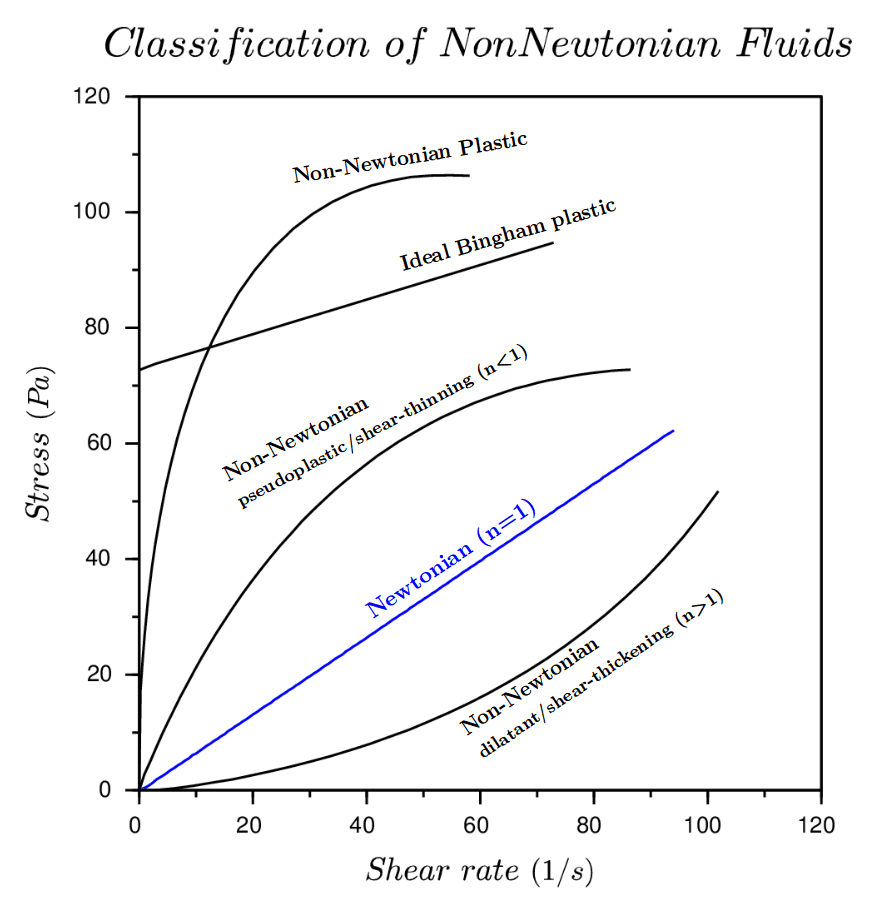
To understand why Non-Newtonian fluids are a “tech” trend, one must first understand the mechanics of their behavior. In a standard Newtonian fluid, viscosity—the measure of a fluid’s resistance to flow—is a constant at a given temperature. In Non-Newtonian fluids, viscosity is a variable.
Shear-Thickening vs. Shear-Thinning Tech
There are two primary behaviors that engineers exploit in technology: Dilatant (shear-thickening) and Pseudoplastic (shear-thinning).
Dilatant materials, such as cornstarch-and-water mixtures (Oobleck) or specialized silica-polyethylene glycol suspensions, increase in viscosity when stress is applied. Imagine a liquid that flows like honey but turns into an impenetrable shield the moment it is struck by a high-velocity impact. This “instant hardening” is a goldmine for hardware designers.
Conversely, Pseudoplastic materials become less viscous when stressed. This property is vital in the world of high-tech manufacturing, particularly in 3D printing and precision coating, where a material needs to flow easily through a nozzle but set instantly once the pressure is released.
The Role of Molecular Architecture
At a technological level, these behaviors are dictated by the molecular structure of the fluid. In shear-thickening fluids, particles are suspended in a liquid in a way that they stay separate under low force. However, when a sudden force is applied, the particles “clump” together, creating a temporary rigid structure. Understanding this molecular architecture allows tech companies to “program” fluids to react to specific levels of force, creating a new class of adaptive materials.
Smart Materials: How Non-Newtonian Properties Revolutionize Hardware Design
The consumer electronics and personal safety sectors are currently undergoing a quiet revolution fueled by Non-Newtonian materials. We are moving away from “hard” protection—bulky plastics and rigid metals—toward “soft” protection that adapts to the environment.
Impact Protection in Wearables and Gadgets
One of the most successful commercial applications of Non-Newtonian technology is found in the tech-wearable market. Companies like D3O have pioneered the use of Non-Newtonian polymers in smartphone cases and laptop sleeves. Under normal conditions, these cases are soft and flexible, making them comfortable to handle. However, upon impact—such as dropping a phone on concrete—the molecules within the material lock together instantly to absorb and dissipate the energy.
This leap in material science allows for slimmer, more ergonomic gadgets that do not sacrifice durability. Tech reviewers often highlight the “active” nature of these materials, noting that they provide better shock absorption than traditional foam or hard plastic by spreading the force of an impact over a larger surface area.
Liquid Armor and Defense Technology
In the defense tech sector, the concept of “Liquid Armor” is moving from science fiction to reality. Traditional ballistic vests are heavy and rigid, limiting the mobility of the wearer. By impregnating layers of Kevlar with shear-thickening fluids (STF), engineers have developed body armor that remains flexible during routine movement but hardens instantly when struck by a bullet or shrapnel.
This application of Non-Newtonian fluid dynamics represents a significant advancement in personal security technology. It reduces the weight of the gear while increasing the level of protection, a dual-goal that has plagued defense contractors for decades.
Soft Robotics and Bio-mimicry: The Fluid Future of Motion
As artificial intelligence and robotics move out of factories and into our homes and hospitals, the need for “soft robotics” has grown. Traditional robots made of steel and servos are often too dangerous or too clumsy to interact with humans. Non-Newtonian fluids are providing the solution for more lifelike, adaptive robotic systems.
Adaptive Grippers and Actuators
One of the most difficult challenges in robotics is the “grasping problem.” A robot designed to pick up a heavy metal bolt might crush a delicate grape or an egg. Tech startups are now using Non-Newtonian “granular jamming” grippers. These grippers consist of a flexible membrane filled with a Non-Newtonian substance. When the gripper touches an object, it behaves like a fluid, conforming to the object’s shape. Once in place, a vacuum is applied, causing the internal material to “jam” or harden, creating a perfect, firm grip on any geometry without the need for complex sensors or high-pressure motors.
Integrating Non-Newtonian Dynamics into AI-Driven Systems
The next frontier is the integration of these fluids into the “muscles” of robots. By using electro-rheological fluids—a type of Non-Newtonian fluid that changes viscosity in response to an electric field—engineers can create synthetic muscles. These actuators can change their stiffness in milliseconds based on commands from an AI. This allows for robots that can walk on uneven terrain with the grace of an animal, stiffening their “joints” when they need stability and loosening them when they need to absorb shock.
Industrial Innovation: Non-Newtonian Fluids in Manufacturing and Cooling
Beyond the flashy world of robotics and gadgets, Non-Newtonian fluids are solving some of the most persistent problems in heavy tech and industrial manufacturing.
High-Efficiency Thermal Management
As AI chips and data centers become more powerful, they generate massive amounts of heat. Traditional air cooling or water cooling is reaching its physical limits. Tech researchers are investigating the use of Non-Newtonian nanofluids as coolants. These fluids can be designed to become more or less viscous depending on the temperature or flow rate, optimizing the heat transfer process in real-time. By tailoring the fluid’s properties, data centers can significantly reduce energy consumption for cooling, which is currently one of the largest overhead costs in the digital economy.
3D Printing and Additive Manufacturing
The “ink” used in high-end 3D printers is often a Non-Newtonian fluid. In the field of bioprinting (printing living tissue) or high-performance carbon-fiber printing, the material must be thin enough to be extruded through a tiny nozzle but thick enough to maintain its shape the moment it is deposited. Mastering the “shear-thinning” profile of these materials is what allows for the high-resolution printing of complex components used in aerospace and medical technology.
The Digital Frontier: Simulating Fluid Dynamics in Modern Software
Finally, the study of Non-Newtonian fluids has forced a massive upgrade in the software tools used by engineers and digital artists.
Real-Time Physics Engines in Gaming and VR
In the world of gaming and Virtual Reality (VR), realism is king. Simulating water is difficult, but simulating Non-Newtonian fluids—like mud, lava, or alien slimes—requires incredible computational power. Modern physics engines, such as those integrated into Unreal Engine or NVIDIA’s PhysX, now include complex algorithms to handle Non-Newtonian behavior. This isn’t just for aesthetics; in VR medical simulators, surgeons practice on “digital tissues” that must react with the specific Non-Newtonian resistance of human flesh and blood.
Predictive Modeling for Engineering
In the enterprise sector, Computational Fluid Dynamics (CFD) software is used to predict how these complex materials will behave under stress. AI and machine learning are now being used to analyze the data from these simulations to discover new synthetic Non-Newtonian fluids. This “Materials Informatics” approach is accelerating the pace of tech innovation, allowing companies to design the perfect protective material or robotic actuator in a virtual environment before a single drop of fluid is mixed in a lab.
Through the lens of technology, the Non-Newtonian fluid is more than a science experiment—it is a programmable material that bridges the gap between the digital and physical worlds. As we continue to integrate these adaptive substances into our hardware, robotics, and software, we are moving toward a future where our technology is as flexible, resilient, and responsive as the fluids themselves.
aViewFromTheCave is a participant in the Amazon Services LLC Associates Program, an affiliate advertising program designed to provide a means for sites to earn advertising fees by advertising and linking to Amazon.com. Amazon, the Amazon logo, AmazonSupply, and the AmazonSupply logo are trademarks of Amazon.com, Inc. or its affiliates. As an Amazon Associate we earn affiliate commissions from qualifying purchases.