
The global energy landscape is currently undergoing a massive technological shift. As the world seeks to balance rising electricity demands with the urgent need for carbon-neutral baseload power, nuclear technology has returned to the forefront of the conversation. Among the various designs that define the nuclear sector, the Heavy Water Reactor (HWR) stands as a masterpiece of 20th-century engineering that continues to evolve through 21st-century digital integration and material science.
A Heavy Water Reactor is a type of nuclear reactor that uses heavy water (deuterium oxide, $D_2O$) as its primary coolant and neutron moderator. While the name might sound like something out of a science fiction novel, the technology is a proven, sophisticated branch of nuclear engineering that offers unique technical advantages over the more common Light Water Reactors (LWRs). To understand the “how” and “why” of this technology, one must look deep into the physics of neutron economy and the specialized hardware that makes these reactors possible.
The Technological Foundation: The Physics of Heavy Water
At the heart of the HWR’s technical superiority is the choice of the moderator. In a nuclear chain reaction, fission releases fast-moving neutrons. However, for these neutrons to effectively trigger further fission in Uranium-235 atoms, they must be slowed down, or “moderated.”
Defining Deuterium Oxide ($D_2O$)
Heavy water is chemically identical to regular water ($H_2O$) but incorporates a different isotope of hydrogen. In regular water, the hydrogen nucleus consists of a single proton. In heavy water, the hydrogen is replaced by deuterium, which contains one proton and one neutron. This extra neutron makes the molecule roughly 10% heavier than a standard water molecule. From a tech standpoint, this subtle change in subatomic structure completely alters the reactor’s efficiency.
Neutron Moderation and Absorption
The primary tech advantage of deuterium is its low neutron absorption cross-section. Regular water is a decent moderator but has a tendency to “eat” neutrons, removing them from the chain reaction. Because heavy water already has an extra neutron in its hydrogen atoms, it is much less likely to capture another one.
This leads to a superior “neutron economy.” Because fewer neutrons are lost to the coolant, the reactor can sustain a chain reaction using natural uranium (which contains only 0.7% U-235) rather than the enriched uranium required by Light Water Reactors. This bypasses the need for massive, energy-intensive isotope enrichment facilities, representing a significant technological shortcut in the nuclear fuel cycle.
Architecture and Design: The CANDU System and PHWRs
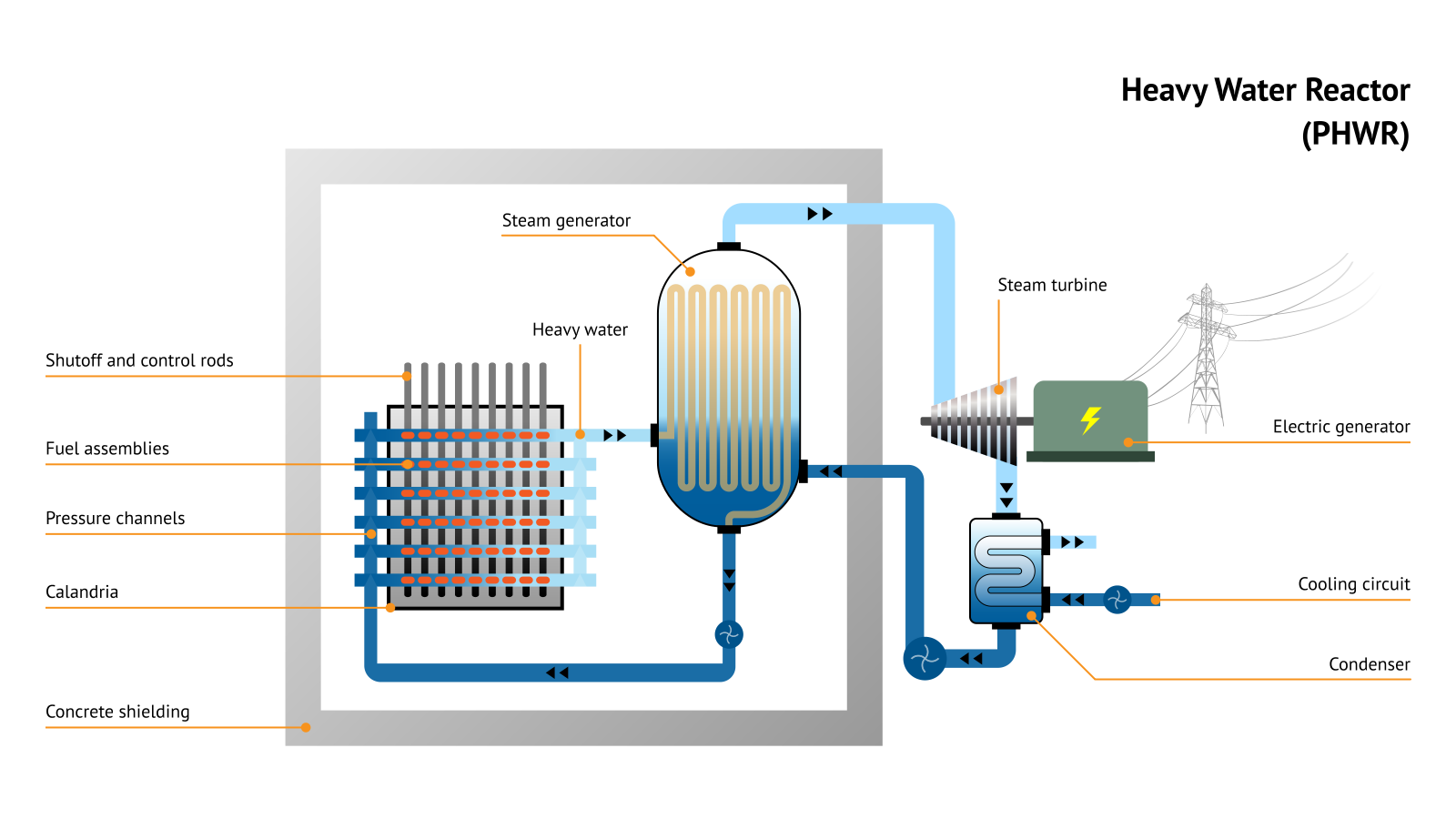
While there are several variations of HWRs, the most technologically significant and widely deployed design is the Pressurized Heavy Water Reactor (PHWR), pioneered by the Canadian Deuterium Uranium (CANDU) design. The engineering architecture of a CANDU reactor differs radically from the large pressure vessels used in conventional tech.
The Calandria and Pressure Tubes
Instead of one massive, thick-walled steel tank (a pressure vessel), an HWR typically utilizes a “Calandria.” The Calandria is a large, low-pressure tank containing the heavy water moderator. Penetrating this tank are hundreds of horizontal pressure tubes that hold the fuel bundles.
The coolant—also heavy water—circulates through these tubes at high pressure to carry heat away to the steam generators. This modular approach to the reactor core is an engineering marvel. It allows the reactor to be scaled more easily and simplifies the manufacturing of components, as smaller tubes are easier to fabricate than a single, multi-ton pressure vessel.
Online Refueling: A Continuous Tech Advantage
One of the most impressive technical features of the CANDU-style HWR is the ability to refuel while the reactor is running at full power. In a standard Light Water Reactor, the entire plant must be shut down for weeks every 18 to 24 months to replace fuel.
In an HWR, automated fueling machines can lock onto the ends of the pressure tubes, insert new fuel bundles, and remove spent ones without interrupting electricity production. This digital and mechanical synchronization ensures high “capacity factors,” meaning the technology can provide a constant, reliable flow of data-center-grade power to the grid without the downtime associated with other nuclear designs.
Safety Systems and Digital Control in Modern HWRs
As we transition into the era of Nuclear 4.0, the safety and monitoring systems of Heavy Water Reactors have seen a massive infusion of digital technology. Modern HWRs are no longer just mechanical systems; they are sophisticated, software-driven environments that prioritize “passive” safety and real-time data analysis.
Passive Safety Mechanisms
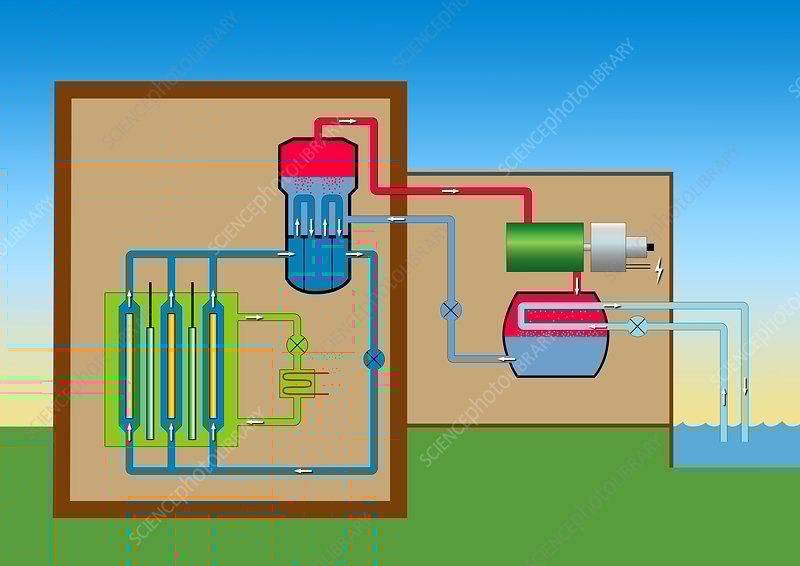
A core technical feature of the HWR design is its inherent safety. Because the moderator (the heavy water in the Calandria) is separate from the high-pressure coolant, it acts as a massive heat sink. In the event of a technical failure where the primary cooling system is lost, the large volume of relatively cool moderator water can absorb excess heat, preventing core damage.
Furthermore, modern designs incorporate “passive” shutdown systems. These systems do not require operator intervention or electrical power to activate. For instance, some HWRs use gravity-driven gadolinium nitrate injection systems that automatically “poison” the reaction if sensors detect a loss of pressure, quenching the nuclear chain reaction in seconds.
Real-Time Monitoring and Digital Twins
The latest generation of HWRs utilizes “Digital Twin” technology. Engineers create a 1:1 digital replica of the reactor’s physical components, fed by thousands of Internet of Things (IoT) sensors throughout the plant. These sensors monitor temperature, vibration, flow rates, and radiation levels.
By using machine learning algorithms, operators can predict when a pump or a valve might fail before it actually does—a concept known as predictive maintenance. This level of digital oversight ensures that the technological integrity of the reactor is maintained with surgical precision, reducing the risk of human error and optimizing the performance of the heavy water cycles.
The Role of HWRs in the Global Clean-Tech Landscape
The future of Heavy Water Reactors is inextricably linked to the broader evolution of “Clean-Tech.” As countries look for ways to integrate nuclear power with renewable grids, the HWR offers specific technical flexibilities that make it a cornerstone of modern energy strategy.
Synergy with Thorium and Fuel Flexibility
One of the most exciting technical frontiers for HWRs is their ability to burn “alternative” fuels. While most reactors are locked into a specific uranium cycle, the superior neutron economy of the HWR allows it to experiment with Thorium. Thorium is more abundant than uranium and produces significantly less long-lived radioactive waste.
Because HWRs can handle different fuel types without a complete core redesign, they serve as a technological bridge to the “Thorium Economy.” This flexibility is a major trend in nuclear research, positioning HWRs as a versatile tool for long-term sustainable energy.
Heavy Water Reactors in the Era of SMRs
The trend toward Small Modular Reactors (SMRs) has also influenced HWR development. Engineers are currently working on scaled-down versions of heavy water technology that can be factory-built and shipped to remote locations. These “Micro-HWRs” maintain the benefits of natural uranium usage and online refueling but in a package that fits the decentralized energy grids of the future.
Furthermore, the production of heavy water itself has become a specialized tech niche. The Girdler Sulfide process and newer, more efficient laser-based separation techniques are being refined to lower the cost of $D_2O$ production. This makes the entire HWR ecosystem more economically viable as part of a high-tech, low-carbon industrial strategy.

Conclusion: The Enduring Tech of the Heavy Water Reactor
The Heavy Water Reactor is far more than an alternative to conventional nuclear power; it is a high-performance technological platform characterized by its unique physics and sophisticated engineering. By leveraging the properties of deuterium, HWRs achieve a level of fuel efficiency and operational continuity that few other technologies can match.
From the modular architecture of the Calandria to the integration of AI-driven predictive maintenance and its potential for thorium utilization, the HWR remains at the cutting edge of energy technology. As the world demands smarter, safer, and more flexible ways to generate power, the Heavy Water Reactor stands as a testament to the power of specialized physics and advanced engineering in solving the global energy challenge. In the grand tapestry of tech trends, the evolution of the HWR is a clear signal that the future of electricity is not just about “more” power, but about the sophisticated, intelligent management of every single neutron.
aViewFromTheCave is a participant in the Amazon Services LLC Associates Program, an affiliate advertising program designed to provide a means for sites to earn advertising fees by advertising and linking to Amazon.com. Amazon, the Amazon logo, AmazonSupply, and the AmazonSupply logo are trademarks of Amazon.com, Inc. or its affiliates. As an Amazon Associate we earn affiliate commissions from qualifying purchases.