
In the landscape of modern digital security, few threats are as financially devastating or as deceptively simple as Business Email Compromise (BEC). As organizations move toward increasingly remote and digital-first operations, the reliance on email as the primary vehicle for corporate communication has created a massive attack surface. While “BEC” is the standard term used by law enforcement agencies like the FBI, this type of cybercrime is often referred to by several other names, depending on the specific tactics used or the historical context of the attack.
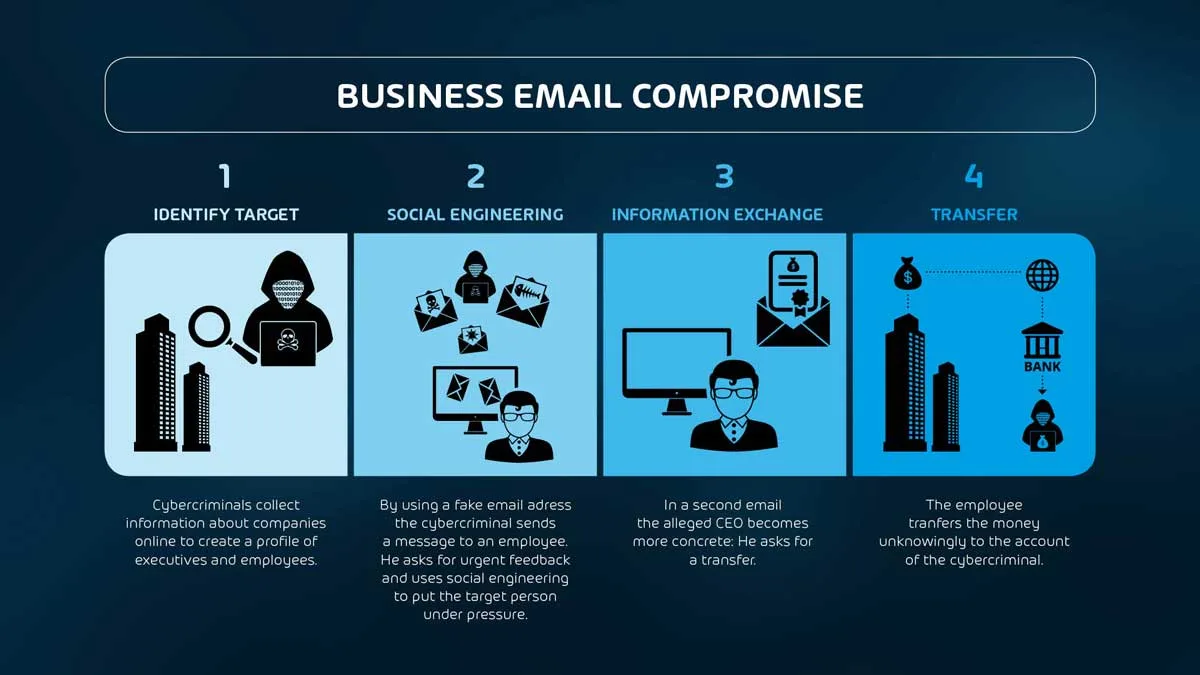
Understanding these different names is not merely an exercise in semantics; it is a critical step for IT professionals and security administrators to categorize threats, configure defensive software, and train employees effectively. By identifying the nuances between “CEO Fraud,” “Man-in-the-Email,” and “Wire Transfer Fraud,” organizations can better prepare for the diverse ways threat actors attempt to breach their digital perimeters.
The Evolution of Business Email Compromise: A Multitude of Monikers
Business Email Compromise is an umbrella term for a specific type of social engineering attack where a criminal uses email to trick a victim into sending money or divulging confidential company info. Because the methodology varies, several alternative names have gained traction in the cybersecurity community.
CEO Fraud: The Art of Impersonating Authority
Perhaps the most common alternative name for BEC is “CEO Fraud.” This name highlights the specific social engineering tactic used: the impersonation of a high-ranking executive. In these scenarios, an attacker sends an email to an employee in the finance or accounting department, appearing to come from the CEO, CFO, or another C-suite leader.
The “CEO Fraud” moniker is particularly descriptive of the psychological pressure involved. The emails often convey a sense of extreme urgency, requesting an immediate wire transfer for a “confidential acquisition” or an “overdue vendor payment.” By leveraging the authority of a top executive, attackers bypass standard verification protocols, as employees are often hesitant to question a direct order from their boss.
Man-in-the-Email: The Silent Intermediary
Before “BEC” became the industry standard, the cybersecurity world often used the term “Man-in-the-Email” (a play on the technical “Man-in-the-Middle” attack). This name accurately describes the mechanics of a compromise where an attacker gains access to a legitimate business email account and lurks silently.
Unlike a standard phishing attack that sends a malicious link, a Man-in-the-Email attack involves the criminal monitoring internal and external correspondence. They wait for the perfect moment—such as a pending invoice or a contract negotiation—to interject. They then send a message from the compromised account (or a pixel-perfect spoof) redirecting payment to a fraudulent bank account. The name emphasizes the “invisible” nature of the intruder within the communication stream.
Invoice Phishing and Billing Schemes
In the context of supply chain attacks, BEC is frequently referred to as “Invoice Phishing” or “Billing Schemes.” In these instances, the attacker does not necessarily impersonate an internal executive but instead poses as a trusted third-party vendor.
These schemes are highly effective because they target the routine nature of accounts payable. The attacker notifies the target company that the vendor’s banking information has changed and requests that all future payments be sent to a new account. Because the request often includes a legitimate-looking (though forged) invoice and comes at the expected time of the month, it frequently goes undetected until the actual vendor calls to inquire about a missing payment.
The Technical Mechanics of BEC Attacks
While the names change, the underlying technical strategies remain rooted in exploiting the inherent trust of the email protocol (SMTP). To understand BEC from a digital security perspective, one must look at how attackers manipulate identity and infrastructure.
Domain Spoofing and Look-Alike Domains
A core technical component of many BEC attacks is domain spoofing. In its simplest form, an attacker configures their email header so the “From” address appears exactly like a legitimate internal address (e.g., ceo@company.com). However, as more organizations implement security protocols like DMARC (Domain-based Message Authentication, Reporting, and Conformance), attackers have pivoted to “Look-Alike Domains” or “Cousin Domains.”
A cousin domain is a domain registered by the attacker that is visually similar to the target’s domain. For example, if the real domain is corporate-tech.com, the attacker might register corporate-ttech.com or corporate-tech.co. From a technical standpoint, these are legitimate, authenticated domains that bypass many basic spam filters because they have valid SPF and DKIM records. The vulnerability being exploited here isn’t the software, but the human eye’s tendency to skim over minor character variations.

Account Takeover (ATO) and Social Engineering
The most dangerous form of BEC occurs when an attacker moves beyond spoofing and achieves a full Account Takeover (ATO). In this scenario, the attacker uses stolen credentials—often harvested from previous phishing campaigns or credential stuffing attacks—to log directly into a legitimate employee’s account.
Once inside, the attacker often sets up “forwarding rules” in the email client (such as Outlook or Gmail). These rules automatically move incoming emails from the finance department to a hidden folder or forward them to an external address controlled by the attacker. This allows the criminal to conduct a “Man-in-the-Email” attack with total authenticity, as the emails are originating from the actual company server. From a digital security perspective, detecting ATO requires advanced behavioral analytics that can spot unusual login locations or suspicious mailbox rule creations.
Why BEC is a Growing Cybersecurity Priority
As malware and ransomware continue to dominate the headlines, BEC often flies under the radar. However, from a tech and security standpoint, it represents one of the most efficient “return on investment” paths for cybercriminals, necessitating a shift in how IT teams prioritize defense.
The Sophistication of Modern Social Engineering
BEC is the ultimate realization of social engineering. It bypasses traditional “hard” security measures like firewalls and antivirus software because it contains no malicious payload. There is no “virus” to detect. The “payload” is the text of the email itself, which uses psychological triggers—authority, urgency, and fear—to manipulate human behavior.
For security professionals, this means that traditional signature-based detection is insufficient. The tech industry is now turning toward Natural Language Processing (NLP) and Artificial Intelligence to analyze the intent and tone of emails. These AI-driven tools look for anomalies in how a specific executive usually writes versus the language used in a suspicious request, providing a layer of defense that manual filters cannot match.
The Shift from Malware to Identity-Based Attacks
The rise of BEC signifies a broader shift in the threat landscape from “system-based” attacks to “identity-based” attacks. Cybercriminals have realized that it is often easier to “log in” than to “break in.” By compromising a single identity, they gain the keys to the kingdom without ever having to write a line of malicious code.
This shift has forced the technology sector to rethink the “Zero Trust” model. In a Zero Trust environment, no email is inherently trusted simply because it comes from an internal domain. Every request for a financial transaction or sensitive data transfer must be verified through out-of-band communication (such as a phone call or a secondary messaging app) regardless of the sender’s perceived identity.
Implementing a Robust Defensive Strategy
Protecting an organization from the many forms of Business Email Compromise requires a multi-layered approach that combines technical configurations with human-centric security protocols.
Technical Controls: DMARC, SPF, and DKIM
The first line of defense is the implementation of the “Holy Trinity” of email authentication: SPF (Sender Policy Framework), DKIM (DomainKeys Identified Mail), and DMARC.
- SPF allows a domain owner to specify which mail servers are authorized to send email on their behalf.
- DKIM adds a digital signature to emails, ensuring the content hasn’t been tampered with in transit.
- DMARC ties these two together, giving the domain owner the power to tell receiving servers to “reject” or “quarantine” any email that fails authentication.
While these tools are highly effective against simple spoofing, they require precise configuration. A “p=reject” policy is the gold standard, ensuring that unauthorized emails never even reach the end-user’s inbox.
The Human Firewall: Security Awareness Training
Since BEC targets the human element, the “Human Firewall” is a critical component of any tech security stack. Security Awareness Training (SAT) must go beyond generic advice to “not click on links.” It must include simulated BEC attacks that mirror the “CEO Fraud” and “Invoice Phishing” tactics described earlier.
Employees should be trained to recognize the “red flags” of BEC: requests for secrecy, unusual changes in payment instructions, and a tone of voice that doesn’t match the purported sender. More importantly, the organization must establish a culture where it is acceptable—and encouraged—for a junior employee to double-check a request from an executive through a different communication channel.

Multi-Factor Authentication (MFA) as a Critical Barrier
To prevent the Account Takeover (ATO) variant of BEC, Multi-Factor Authentication (MFA) is non-negotiable. Even if an attacker successfully phishes an executive’s password, they cannot access the account without the second factor (such as a hardware key, a push notification, or a biometric scan).
In the context of digital security, moving toward phishing-resistant MFA, such as FIDO2 security keys, provides the highest level of protection against the sophisticated credential-harvesting techniques used in modern BEC campaigns. By securing the identity at the point of entry, organizations can effectively neutralize the threat of “Man-in-the-Email” attacks before they ever begin.
aViewFromTheCave is a participant in the Amazon Services LLC Associates Program, an affiliate advertising program designed to provide a means for sites to earn advertising fees by advertising and linking to Amazon.com. Amazon, the Amazon logo, AmazonSupply, and the AmazonSupply logo are trademarks of Amazon.com, Inc. or its affiliates. As an Amazon Associate we earn affiliate commissions from qualifying purchases.