
In the landscape of modern ballistics and small arms development, few designations carry as much weight—or have sparked as much technical debate—as the 5.56x45mm NATO. While often simplified as just “ammunition,” the 5.56 caliber represents a pivotal shift in military engineering, material science, and tactical philosophy. Understanding what 5.56 is requires looking beyond the brass casing and delving into the physics of high-velocity projectiles, the precision of chamber tolerances, and the technological evolution that transitioned the world’s militaries from heavy, long-range rifles to modular, high-efficiency carbines.
The Technical Specifications of the 5.56x45mm NATO
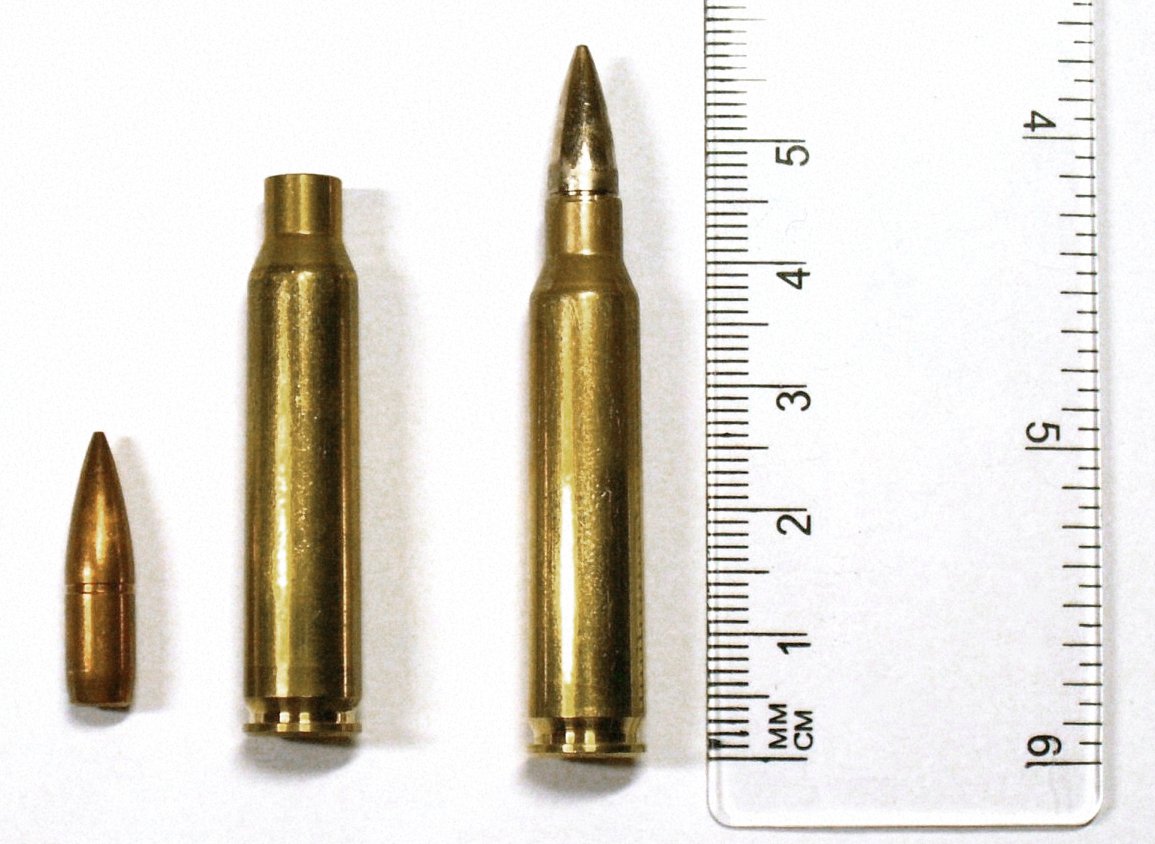
To define the 5.56 caliber, one must first understand its “blueprint.” The 5.56x45mm NATO is a rimless, bottlenecked intermediate cartridge. The numbers “5.56” and “45” refer to the internal diameter of the barrel (in millimeters) and the length of the cartridge case, respectively. However, the engineering behind these numbers is far more complex than simple measurements.
Dimensional Engineering and Tolerance
The 5.56 caliber is engineered for high-pressure performance within a very small footprint. The bullet itself typically measures 5.70 mm (0.224 inches) in diameter, while the “5.56” designation refers to the land-to-land diameter of the rifling inside the barrel. This precision is critical; the fit between the projectile and the barrel’s rifling determines the “seal” that allows expanding gases to propel the bullet.
The cartridge casing is made primarily of brass, an alloy chosen for its specific metallurgical properties: it is strong enough to contain tens of thousands of pounds of pressure, yet elastic enough to expand and seal the chamber during firing, then contract for easy extraction. The technical design of the “shoulder” of the casing is optimized for reliable feeding in semi-automatic and fully automatic platforms, ensuring that the technology functions even under the heat and stress of rapid fire.
Propellant Chemistry and Velocity
The true technological “magic” of the 5.56 caliber lies in its velocity. Unlike larger, older calibers that relied on mass (heavy bullets) to deliver energy, the 5.56 utilizes high-speed propellant technology. Modern 5.56 loads use smokeless powder with specific burn rates tailored to barrel length.
When ignited, these propellants generate internal pressures of approximately 62,366 psi (430 MPa). This pressure accelerates a relatively light projectile (usually 55 to 77 grains) to speeds exceeding 3,000 feet per second. From a physics perspective, the kinetic energy of a projectile is calculated as $KE = 1/2 mv^2$. By doubling the velocity ($v$), the energy increases fourfold. This emphasis on velocity over mass is the core technological philosophy of the 5.56 platform.
The Evolution of Small Arms Technology: From 7.62 to 5.56
The adoption of the 5.56 caliber was not a random choice but a response to technological limitations observed during mid-20th-century conflicts. Before the 5.56, the standard was the 7.62x51mm NATO, a powerful but heavy “full-power” battle rifle cartridge.
The Shift Toward Lightweight Intermediate Cartridges
During the 1950s, research by organizations like the Operations Research Office (ORO) began to change the technological requirements for infantry weapons. Data showed that most combat engagements occurred at ranges of less than 300 meters. The 7.62mm technology was “over-engineered” for these distances, resulting in excessive recoil and heavy ammunition loads that limited a soldier’s mobility.
The 5.56 caliber was developed to fill the need for an “intermediate” cartridge. The engineering goal was to create a round that had a flat trajectory (due to high velocity) but significantly lower recoil. This allowed for the development of lighter rifles and enabled the user to carry nearly twice as much ammunition for the same weight, a massive leap in logistical technology.
The Role of the AR-15 Platform in Technical Adoption
The 5.56 caliber is inextricably linked to the development of the AR-15/M16 rifle system designed by Eugene Stoner. This platform introduced several tech-forward concepts, such as “direct gas impingement” and the use of aircraft-grade aluminum and polymers instead of steel and wood.
The integration of the 5.56 caliber into this modular system allowed for a synergy between weapon and ammunition. The inline design of the stock—where the recoil path travels straight back into the shooter’s shoulder—minimized muzzle rise. This technical combination made the 5.56 extremely controllable during rapid fire, a feature that simply wasn’t possible with the high-recoil 7.62 platforms.
Terminal Ballistics: The Physics of Impact

The “tech” of 5.56 doesn’t end when the bullet leaves the barrel. In fact, some of its most sophisticated engineering is observed at the point of impact. This field is known as terminal ballistics.
Fragmentation and Hydrostatic Shock
Because the 5.56 projectile travels at such high speeds, it behaves uniquely when it hits a medium of different density. At velocities above 2,600 feet per second, many 5.56 projectiles are designed to “yaw” or turn sideways upon impact. Due to the high velocity and the stress placed on the thin copper jacket of the bullet, it often fragments into smaller pieces.
Technically, this creates a “permanent wound cavity” that is much larger than the diameter of the bullet itself. Additionally, the high-speed impact creates “hydrostatic shock,” a pressure wave that travels through liquid-filled tissues. This reliance on velocity-induced fragmentation is what allows such a small, light bullet to have a disproportionately large effect on its target.
Effective Range and Precision Metrics
From a technical standpoint, the 5.56 is a “flat-shooting” cartridge. Because it travels so fast, gravity has less time to pull the bullet down over a given distance compared to slower rounds. A standard 5.56 rifle zeroed at 200 yards will have a very predictable trajectory, making it an incredibly precise tool for mid-range applications.
However, the technology has its limits. As the bullet travels, air resistance (drag) slows it down. Once the velocity drops below a certain threshold (the fragmentation threshold), the caliber loses its primary mechanical advantage. Engineers have addressed this by developing “heavy” 77-grain Match Grade bullets, which use better aerodynamic shapes (high Ballistic Coefficient) to maintain velocity and stability at longer ranges, pushing the effective tech limit of the caliber out to 600 meters or more.
Manufacturing Standards and Global Compatibility
One of the most important aspects of the 5.56 caliber in the modern era is its standardization. In the world of tech, we talk about “interoperability,” and the 5.56 is the gold standard for ballistic interoperability.
NATO Standardization (STANAG)
The “NATO” in 5.56x45mm NATO refers to the Standardization Agreement (STANAG). This ensures that a 5.56 cartridge manufactured in the United States will function perfectly in a rifle manufactured in Germany, France, or Turkey. This requires incredibly tight manufacturing tolerances. Every aspect, from the hardness of the primer to the thickness of the case walls, is regulated to ensure 100% reliability across millions of different mechanical platforms.
5.56 NATO vs. .223 Remington: Engineering Differences
A common technical point of confusion is the difference between 5.56 NATO and .223 Remington. While they look nearly identical, they are not technologically interchangeable in all directions.
- Chamber Pressure: 5.56 NATO is loaded to higher pressures (approx. 62,000 psi) compared to the .223 Remington (approx. 55,000 psi).
- Leade/Throat Geometry: The “leade” is the distance between the mouth of the cartridge and the point where the rifling begins. 5.56 chambers have a longer leade to accommodate the higher pressures and potential debris of combat.
Firing a high-pressure 5.56 NATO round in a rifle with a precision-cut .223 Remington chamber can cause technical failures or dangerous over-pressure scenarios. This distinction is a prime example of why understanding the technical specs of ballistic “hardware” is vital.
The Future of Ballistic Tech: Beyond the 5.56
As technology marches forward, the limitations of the 5.56 caliber have become the catalyst for the next generation of ballistic engineering. While the 5.56 is efficient, the rise of modern body armor and the need for greater “stoppage” at extreme distances have pushed current tech to its ceiling.
Limitations of the Current Platform
The primary technical critique of the 5.56 is its reliance on velocity. In short-barreled carbines, the bullet often doesn’t reach the speeds necessary for fragmentation, significantly reducing its effectiveness. Furthermore, the small mass of the 5.56 makes it susceptible to deflection by barriers like glass, brush, or heavy clothing.

The Next Generation Squad Weapon (NGSW) Program
The technical successor to the 5.56’s dominance is already emerging. The U.S. military’s NGSW program has moved toward a 6.8mm projectile. This new tech aims to combine the high velocity of the 5.56 with the increased mass and “barrier-blind” performance of larger calibers.
Even as we move toward newer calibers, the 5.56 remains a masterpiece of 20th-century engineering. It redefined the logistics of warfare, the physics of terminal ballistics, and the manufacturing standards of the global defense industry. Whether utilized in a professional military capacity or in precision sporting applications, the 5.56 caliber stands as a testament to the power of high-velocity engineering and the relentless pursuit of ballistic efficiency.
aViewFromTheCave is a participant in the Amazon Services LLC Associates Program, an affiliate advertising program designed to provide a means for sites to earn advertising fees by advertising and linking to Amazon.com. Amazon, the Amazon logo, AmazonSupply, and the AmazonSupply logo are trademarks of Amazon.com, Inc. or its affiliates. As an Amazon Associate we earn affiliate commissions from qualifying purchases.