
When Richard Kelly’s Donnie Darko debuted in 2001, it was initially perceived as a cryptic coming-of-age story wrapped in a sci-fi enigma. However, through a modern technological lens, the film serves as a sophisticated metaphor for system architecture, simulation theory, and the mechanics of “debugging” a reality that has suffered a critical kernel panic. To understand what happens in Donnie Darko, one must look past the 1980s nostalgia and the haunting presence of Frank the Rabbit and instead view the narrative as a sequence of events triggered by a localized system failure in the fabric of spacetime.
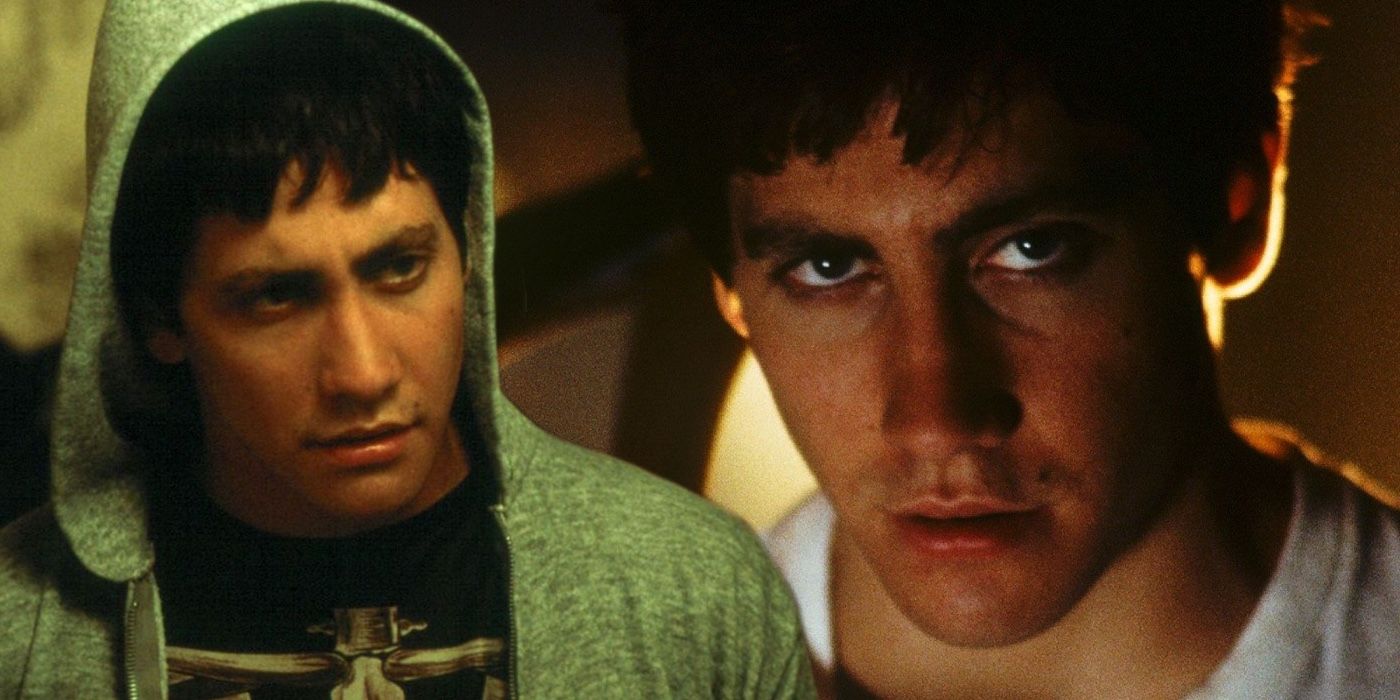
In the world of tech and physics-based software, we often discuss “sandbox” environments—isolated testing grounds where code can run without affecting the primary production environment. Donnie Darko is, in essence, the story of a sandbox environment (the Tangent Universe) that is spun up to resolve a logic error that threatens the integrity of the main server (the Primary Universe).
1. The Architecture of the Tangent Universe: A Sandbox Environment
The central conflict of the film begins when the “Primary Universe” experiences a localized glitch. In technical terms, this is a catastrophic data collision. A jet engine—the “Artifact”—appears out of nowhere, defying the laws of causality. To prevent the entire system from crashing, a “Tangent Universe” is automatically instantiated.
The Instantiation of the Tangent Loop
The Tangent Universe is an unstable copy of reality. In software engineering, when a system encounters an irreconcilable error, it may attempt to wall off the corruption to prevent a total system failure. The Tangent Universe is this “walled-off” instance. It is highly unstable and possesses a limited lifespan—exactly 28 days, 6 hours, 42 minutes, and 12 seconds. This countdown represents the time remaining before the Tangent Universe collapses under its own structural instability, potentially creating a gravitational singularity that would delete the Primary Universe along with it.
The Glitch in the Primary Engine
The “Artifact” (the jet engine) is the root cause of the error. In any database, you cannot have a record that lacks a clear origin or a primary key that points to nothing. The jet engine is a duplicate object that exists without a source. Until the system can find a way to re-integrate this object or delete it within the constraints of temporal logic, the “Production Environment” of reality is at risk. What happens in Donnie Darko is a recursive loop designed to solve this specific data integrity issue.
2. The Living Receiver as a System Administrator
In this simulated crisis, the universe “appoints” a Living Receiver. Donnie Darko is not merely a troubled teenager; he is the designated System Administrator for the Tangent Universe. He is granted “elevated privileges”—what the film refers to as “Fourth Dimensional Powers” like super-strength and telekinesis—to ensure the Artifact is returned to the Primary Universe.
Managing Elevated Privileges and System Permissions
Donnie’s journey involves navigating a series of prompts and triggers. Because the Tangent Universe is a fragile ecosystem, it “wants” to be fixed. However, as any developer knows, a system cannot fix itself without an agent. Donnie acts as this agent. His elevated permissions allow him to perceive the “liquid spears” or vectors that represent the pre-determined paths of people around him. In a technical sense, these are the visual representations of the underlying code—the “future paths” of data packets within the simulation.
The Role of the Manipulated Dead and Living
To guide the System Administrator (Donnie) toward the correct resolution, the environment utilizes “The Manipulated.” These are NPCs (Non-Player Characters) or sub-routines within the Tangent Universe whose sole purpose is to lead Donnie toward the “Master Exit” protocol. Frank the Rabbit, as a “Manipulated Dead,” serves as a high-level UI guide. He provides the countdown (the system status bar) and the necessary prompts to ensure Donnie completes the tasks required to “patch” the reality glitch.
3. Predictive Modeling and the Logic of Algorithmic Determinism

One of the most complex aspects of Donnie Darko is the “Spears of Destiny” or the paths that emerge from people’s chests. For a tech-focused mind, this is a clear illustration of predictive modeling. If you have enough data about a system’s current state and its governing laws, you can calculate the trajectory of every moving part with 100% accuracy.
Visualizing the Vector Path
The “liquid spears” Donnie sees are essentially the predictive UI of a hyper-advanced operating system. They show the latency-free movement of human “data” before the physical movement occurs. By following these vectors, Donnie is interacting with the “source code” of his reality. He isn’t just seeing the future; he is seeing the execution of a pre-written script. The film posits that within the Tangent Universe, free will is an illusion maintained to ensure the System Administrator reaches the desired conclusion.
Error Handling and the “Ensurance Trap”
The Manipulated Dead (Frank) sets up an “Ensurance Trap.” This is a series of events designed to leave the System Administrator with no choice but to execute the recovery protocol. In the film, this culminates in the death of Gretchen Ross. In technical terms, the system creates a “critical failure” in Donnie’s personal life to force him to use his powers to reset the timeline. It is a ruthless form of error handling where the cost of the “patch” is the emotional destruction of the admin.
4. The Resolution: System Rollback and Data Merging
The climax of Donnie Darko occurs when the 28-day countdown reaches zero. At this point, the Tangent Universe has reached its maximum entropy. Donnie, having been guided by the Manipulated and having accepted his role as the System Admin, uses his powers to rip the jet engine (the Artifact) from its current position and send it back through a wormhole into the Primary Universe.
Executing the System Rollback
What we see in the final moments is a “System Rollback.” The Tangent Universe is deleted. The data is wiped. The Primary Universe is restored to the moment the glitch first occurred—the night the engine fell. However, there is a key difference: the Artifact now has a “source” (Donnie’s actions in the Tangent Universe), resolving the logic error. Donnie, now back in the Primary Universe, chooses to stay in bed, laughing. He knows the “patch” has been successfully deployed.
Persistent Memory and Residual Data
A fascinating tech-adjacent theme in the film is the concept of residual data. After the rollback, several characters wake up with a sense of “deja vu” or lingering sadness. In a database migration or a system restore, sometimes “ghost files” or “cached data” remain. The characters in Donnie Darko are experiencing the “cache” of the Tangent Universe. They don’t remember the events, but the emotional “metadata” remains, influencing their behavior in the restored Primary Universe. This suggests that while a system can be reset, the experience of the simulation leaves a permanent mark on the underlying hardware of the soul.
5. Lessons for Modern Software Architecture and Systems Thinking
While Donnie Darko is a cinematic masterpiece, its internal logic offers profound insights into how we view complex systems and digital security today. It teaches us about the necessity of redundancy and the high cost of maintaining system integrity in the face of unpredictable “Artifacts.”
Redundancy and Self-Healing Systems
The “Philosophy of Time Travel” (the book within the movie) describes a universe that is fundamentally self-healing. When a breach occurs, the universe doesn’t just crash; it creates a temporary, redundant instance to solve the problem. In modern cloud computing, this is the equivalent of “Auto-scaling” or “Failover Clusters.” If one instance of an application fails, the load balancer shifts traffic to a new, identical instance. The Tangent Universe is the ultimate failover cluster.

The Human Element in the Machine
Ultimately, what happens in Donnie Darko is a reminder that even the most advanced systems require an observer or an operator to make the final, critical decision. Donnie is the “Human in the Loop.” Despite all the predictive modeling and the algorithmic guidance provided by Frank, it takes a sentient consciousness to execute the final command. In the world of AI and autonomous systems, this remains a cornerstone of safety and ethics: the need for an agent who can understand the “why” behind the “what,” even if it requires the ultimate sacrifice.
By viewing Donnie Darko through this technical framework, the film moves from a surrealist puzzle to a logical, albeit tragic, exploration of systemic maintenance. It is the story of a cosmic “hotfix” applied to a reality that momentarily lost its way, proving that in both cinema and technology, every glitch has a solution, provided there is someone willing to see the code through to the end.
aViewFromTheCave is a participant in the Amazon Services LLC Associates Program, an affiliate advertising program designed to provide a means for sites to earn advertising fees by advertising and linking to Amazon.com. Amazon, the Amazon logo, AmazonSupply, and the AmazonSupply logo are trademarks of Amazon.com, Inc. or its affiliates. As an Amazon Associate we earn affiliate commissions from qualifying purchases.