
For years, the digital landscape of unauthorized streaming was dominated by a few key players, but few commanded the brand recognition and user loyalty of Soap2day. In mid-2023, the platform abruptly shuttered its operations, leaving millions of users met with a cryptic farewell message. While the surface-level story is one of a website closing down, the technical underpinnings of its rise and fall offer a profound case study in digital infrastructure, cybersecurity, and the relentless “cat-and-mouse” game between global enforcement agencies and decentralized hosting networks.
To understand what happened to Soap2day, we must look beyond the domain name and analyze the technological ecosystem that allowed it to thrive and the sophisticated digital pressure that eventually led to its dismantling.

The Architecture of an Empire: How Soap2day Dominated the Gray Market
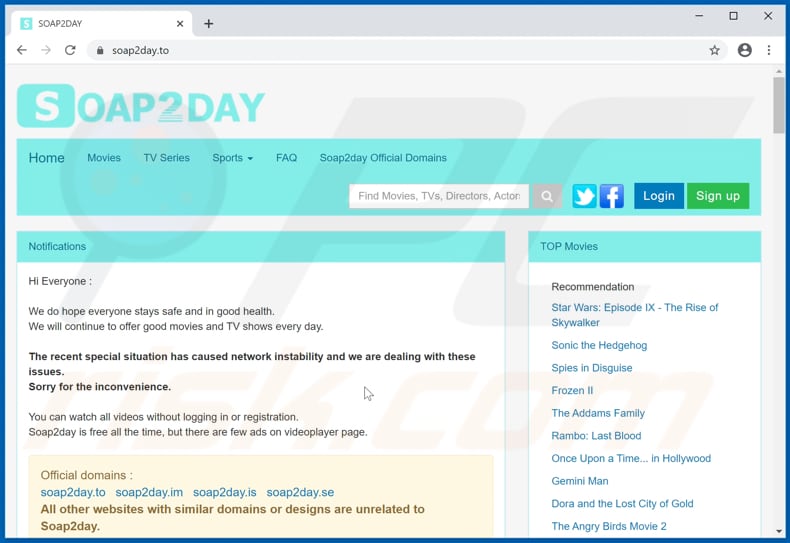
Soap2day was not merely a website; it was a masterclass in streamlined web delivery. Unlike its predecessors from the early 2010s, which were often bogged down by intrusive scripts and broken players, Soap2day leveraged modern web technologies to provide a user experience that rivaled multi-billion-dollar legal platforms.
Distributed Content Delivery and Domain Hopping
At its technical core, Soap2day utilized a complex network of mirrors and proxy servers. This is a strategy known as “domain hopping.” By spreading its traffic across multiple Top-Level Domains (TLDs) like .to, .ac, and .sh, the operators ensured that if one domain was seized or blacklisted by an Internet Service Provider (ISP), the traffic could be instantly rerouted to a live mirror.
Furthermore, the platform didn’t host the massive video files on its own primary servers. Instead, it functioned as a sophisticated indexing engine that used APIs to pull content from third-party video hosting “lockers.” These lockers are often located in jurisdictions with lax copyright enforcement, utilizing Content Delivery Networks (CDNs) to cache data closer to the user, thereby reducing latency and ensuring high-definition playback without the buffering issues common in older piracy tech.
The User Experience Factor: Simplicity as a Technical Advantage
One of the significant technological triumphs of Soap2day was its clean, minimalist front-end. Most “gray market” streaming sites are notorious for heavy JavaScript payloads that trigger malicious redirects and “malvertising.” Soap2day’s developers prioritized a lightweight UI.
From a software perspective, the site was optimized for mobile and desktop browsers alike, utilizing HTML5 video players that bypassed the need for outdated, security-vulnerable plugins like Flash. This technical reliability built a level of trust with users, making it the go-to platform for a generation of digital natives who prioritized speed and ease of access over the complexities of torrenting.
The Shutdown: Deconstructing the Technical and Legal Pressures
In June 2023, the Soap2day homepage was replaced by a brief statement: “We have decided to close soap2day forever. We are very sorry… Bye.” While the message seemed voluntary, the technical and legal context surrounding the disappearance suggests a coordinated effort by global anti-piracy coalitions.
The Role of ACE and Global Enforcement Agencies
The primary catalyst behind the collapse of major streaming hubs is the Alliance for Creativity and Entertainment (ACE). This is a technical and legal coalition that includes industry giants like Netflix, Disney, and Warner Bros. Discovery. ACE does not just file lawsuits; they employ sophisticated digital forensic teams to track the physical locations of servers and the identities of site operators.
Through the use of DMCA subpoenas served to domain registrars and CDN providers like Cloudflare, ACE is able to strip away the layers of anonymity that protect these sites. When Soap2day went dark, it followed a pattern seen with other giants like Fmovies and ZillaShare: the technical infrastructure was compromised to the point where “mirror hopping” was no longer viable. The operators likely faced a choice between a total technical seizure of their assets or a “voluntary” shutdown to mitigate legal damages.
Vulnerabilities in Decentralized Hosting
While Soap2day’s use of third-party lockers provided a layer of insulation, it also created a single point of failure. Modern anti-piracy tech now focuses on “site-blocking” at the ISP level and “de-indexing” at the search engine level.
Technically, even if the content exists on a server somewhere, if the DNS (Domain Name System) entries are revoked or blocked by major ISPs in the US, UK, and EU, the site effectively ceases to exist for 90% of its audience. The technical overhead required to constantly generate new SSL certificates and bypass updated ISP filters eventually creates a “resource exhaustion” scenario for the site’s developers.

Cybersecurity Implications for the Post-Soap2day Era
The vacuum left by Soap2day has created a significant cybersecurity risk for the average user. In the world of software and web security, nature abhors a vacuum, and malicious actors have been quick to fill the void.
The Rise of “Clone” Sites and Malicious Redirection
Immediately following the shutdown, dozens of “Soap2day.xxx” mirrors appeared. From a technical standpoint, these are rarely operated by the original team. Instead, they are “scrapper” sites that copy the CSS and HTML structure of the original site to trick users.
These clones are often laden with sophisticated malware. Many utilize “browser hijacking” scripts that can alter a user’s search settings or “cryptojacking” code that uses the visitor’s CPU power to mine cryptocurrency in the background. Without the (relatively) “clean” code of the original Soap2day, users are now interacting with far more dangerous digital environments where every “Play” button is a potential gateway for an XSS (Cross-Site Scripting) attack.
Protecting Digital Privacy in the Absence of Verified Platforms
The disappearance of Soap2day has highlighted the importance of technical literacy in digital privacy. Users who once relied on the site’s stability are now turning to Virtual Private Networks (VPNs) and ad-blocking extensions like uBlock Origin to navigate the riskier “clone” landscape.
From a tech perspective, the focus has shifted toward client-side security. Since the server-side “trust” has been broken, users are forced to employ more robust firewall configurations and DNS-over-HTTPS (DoH) protocols to mask their traffic and prevent their data from being harvested by the low-quality replacements that have surfaced in Soap2day’s wake.
The Evolution of Streaming Technology and Legal Alternatives
The story of Soap2day’s demise is also a story of how legal technology is evolving to reclaim the market. The technical “moat” that piracy sites once held—namely, a centralized library of content from multiple studios—is being challenged by new distribution models.
Closing the Gap: Why Legal Tech Still Struggles to Compete
One reason Soap2day was technically superior to legal options was its “all-in-one” interface. Legal streaming is currently fragmented across dozens of apps, each requiring its own login and subscription. This “platform fatigue” is a technical hurdle for users.
However, the tech industry is responding with “Aggregator Software.” We are seeing the rise of platforms that use unified search APIs to scan across Netflix, Hulu, and Amazon Prime, attempting to replicate the seamless search-and-play functionality that Soap2day mastered. The goal is to match the convenience of the gray market through superior metadata integration and cross-platform compatibility.
The Future of P2P and Decentralized Media Distribution
As centralized streaming sites like Soap2day become easier for authorities to shut down, the technology is shifting toward more resilient, decentralized models. We are seeing a resurgence in Interest in IPFS (InterPlanetary File System) and P2P (Peer-to-Peer) streaming protocols.
Unlike Soap2day, which relied on a central domain and web server, decentralized media distribution has no “off” switch. These technologies distribute fragments of a video file across thousands of user nodes, making it technically impossible to “shut down” a site because the site doesn’t exist in one place. While this tech is still in its infancy regarding mainstream streaming, it represents the next technical frontier in the ongoing battle over digital content.
Conclusion: The Legacy of a Digital Ghost
What happened to Soap2day was a calculated dismantling of a high-performing digital infrastructure. It was a victim of its own success; by becoming a household name, it became the primary target for the most advanced digital enforcement tools in existence.
For the tech-savvy observer, the fall of Soap2day marks the end of the “Golden Age” of centralized web-based piracy and the beginning of a more fragmented, dangerous, and technically complex era. As legal platforms work to close the convenience gap and pirate entities move toward decentralization, the technological landscape of how we consume media continues to undergo its most significant transformation since the advent of the internet itself. Soap2day may be gone, but the technical precedents it set—and the security lessons it left behind—will influence the web for years to come.
aViewFromTheCave is a participant in the Amazon Services LLC Associates Program, an affiliate advertising program designed to provide a means for sites to earn advertising fees by advertising and linking to Amazon.com. Amazon, the Amazon logo, AmazonSupply, and the AmazonSupply logo are trademarks of Amazon.com, Inc. or its affiliates. As an Amazon Associate we earn affiliate commissions from qualifying purchases.