
In the modern attention economy, a brand’s name is its most valuable equity. For over a decade, Marina Diamandis navigated the music industry under the stage name “Marina and the Diamonds.” To the casual observer, it was a whimsical moniker; to a brand strategist, it was a complex identity that balanced the individual with an imagined collective. However, in 2018, the artist underwent a radical rebranding, shedding “the Diamonds” to emerge simply as MARINA. This transition serves as a quintessential case study in personal brand evolution, demonstrating how an established entity can successfully pivot to reflect maturity, autonomy, and a streamlined market position.

The Anatomy of a Rebrand: From Plurality to Singularity
The decision to change a brand name is never trivial, especially when that name has already secured global recognition. For Marina Diamandis, the original brand “Marina and the Diamonds” was built on a clever play on words—the “Diamonds” were not a backing band, but rather her fans. While this created an immediate sense of community, it also created a layer of conceptual complexity that occasionally muddled the brand’s core message.
Shedding the “Diamonds” Archetype
The removal of “the Diamonds” was a strategic move toward professional maturity. In the early stages of a career, high-concept branding (like the pluralized name) helps in capturing a niche market. It creates a “world” for the consumer to inhabit. However, as a personal brand scales, these conceptual frameworks can become restrictive. By streamlining to MARINA, the artist signaled a shift from “indie-pop project” to “global solo powerhouse.” This move mirrors corporate trends where companies simplify their names (e.g., Starbucks Coffee becoming just Starbucks) to allow for greater flexibility and brand extension.
The Psychology of Name Simplification in Marketing
In digital marketing and SEO, simplicity is a competitive advantage. A mononym like MARINA is easier to search, easier to typeset on promotional collateral, and more impactful in a visual landscape dominated by mobile consumption. From a brand psychology perspective, a single name commands a different kind of authority; it positions the individual as a definitive entity rather than a collaborative effort. This “singularization” of the brand helped Diamandis transition away from the “alternative” pigeonhole and into a more sophisticated, high-art pop category.
Visual Identity and Aesthetic Eras as Brand Pillars
One of the most effective components of the Marina brand has been the use of “eras”—distinct periods defined by specific visual languages, color palettes, and thematic messaging. This approach is akin to a “seasonal refresh” in the fashion industry, keeping the audience engaged while reinforcing the brand’s versatility.
The “Electra Heart” Case Study: Character-Based Marketing
The most famous iteration of her brand was the Electra Heart era (2012). During this period, Diamandis didn’t just release music; she launched a comprehensive visual identity centered on an archetype. By utilizing a specific blonde wig, a heart-shaped cheek stamp, and a satirical take on American archetypes (the Housewife, the Beauty Queen, the Homewrecker, and the Idle Teen), she created a highly marketable “product.” This was a masterclass in character-based branding, allowing her to explore themes of identity and femininity while maintaining a clear, recognizable “uniform” that fans could—and did—replicate.

Transitioning to the Naturalist: The “Love + Fear” Aesthetic Shift
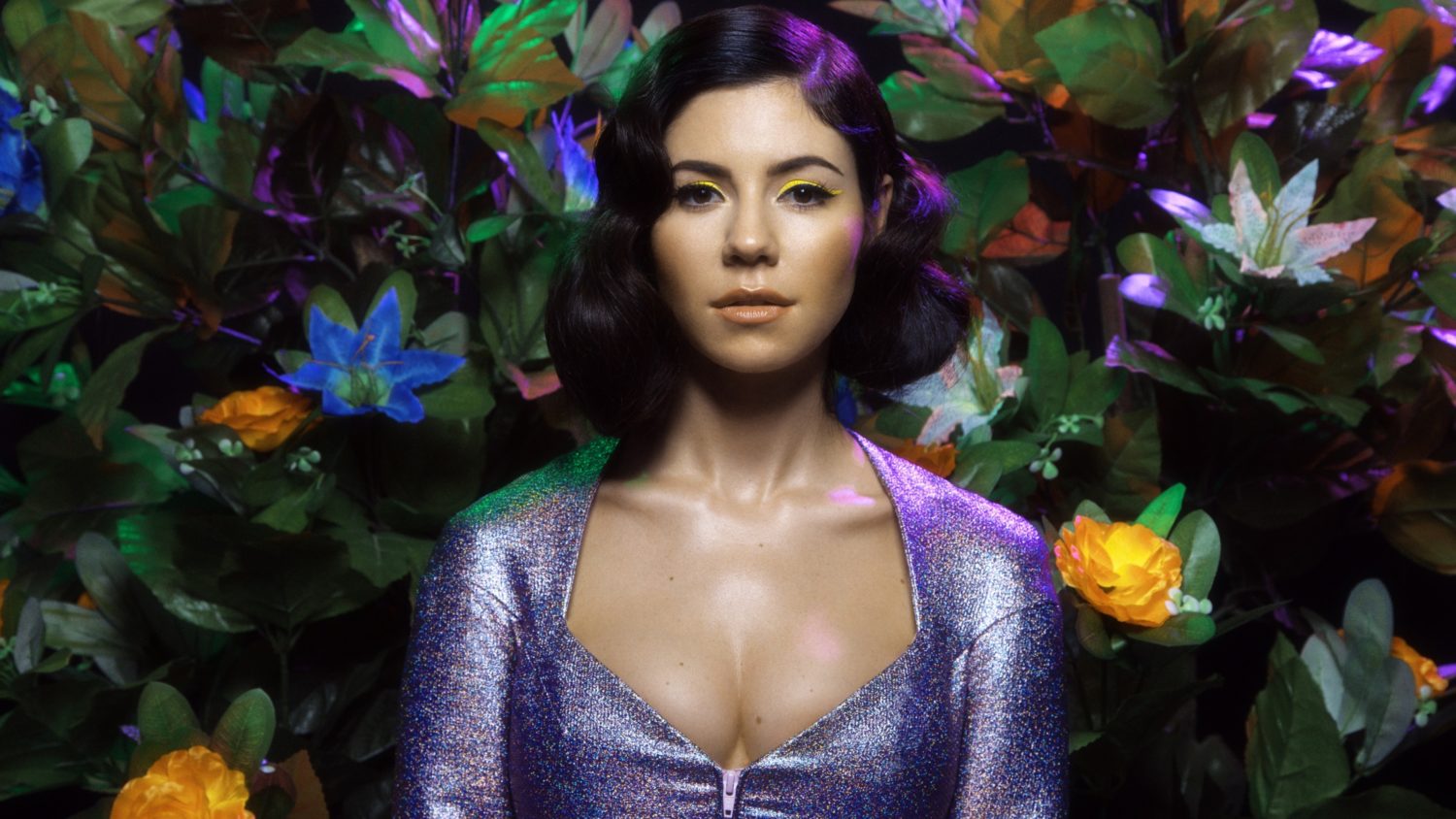
When the brand transitioned to Love + Fear and eventually Ancient Dreams in a Modern Land, the visual identity shifted from artifice to authenticity. The heavy makeup and wigs were replaced with natural lighting, organic textures, and a focus on human vulnerability. From a brand strategy standpoint, this shift was necessary to prevent the artist from becoming a caricature of herself. It allowed the brand to grow alongside its aging demographic, moving from the rebellious energy of youth to the more contemplative, socio-political focus of adulthood.
Direct-to-Consumer Engagement and Community Building
A brand is only as strong as its community. Long before the term “creator economy” became a buzzword, Marina was utilizing direct-to-consumer (DTC) engagement strategies that turned casual listeners into “The Diamonds”—a fiercely loyal advocate base.
Cultivating the “Diamond” Community
The original brand name served as a perpetual invitation to the audience. By defining the fans as “the Diamonds,” Diamandis practiced a form of inclusive branding. This created a high level of brand loyalty and “stickiness.” In marketing terms, this is the transition from a transaction-based relationship (buying a record) to an identity-based relationship (being a “Diamond”). Even after the official name change to MARINA, the community remained intact because the brand’s core values—individualism, intellectualism, and emotional transparency—remained the focus.
Maintaining Brand Authenticity in a Commercial Landscape
One of the greatest challenges for a personal brand is maintaining a sense of authenticity while operating within a multi-billion dollar industry. Marina navigated this by being transparent about her creative processes and her struggles with the industry itself. This “behind-the-scenes” access is a powerful branding tool; it builds trust. By speaking openly about her hiatus and her reasons for rebranding, she prevented the move from feeling like a corporate mandate. Instead, it was framed as an organic evolution, which is far more palatable to a modern consumer who is increasingly skeptical of traditional marketing tactics.
Strategic Longevity and the Independent Artist Pivot
The trajectory of the MARINA brand also highlights a broader trend in the creative industries: the pivot from major label dependence to creative autonomy. This move is essential for brand longevity, as it allows the creator to maintain control over their “IP” (intellectual property) and brand voice.
Leveraging Niche Markets vs. Mass Appeal
Throughout her career, the brand has successfully balanced “top 40” aspirations with “cult favorite” credibility. This is a difficult needle to thread. By refusing to conform to a singular genre, the MARINA brand has insulated itself against the volatility of pop trends. While her peers might chase the latest TikTok-friendly sound, the MARINA brand continues to invest in long-form storytelling and conceptual depth. This strategy prioritizes “Lifetime Value” (LTV) of the customer over short-term viral gains, ensuring a stable and sustainable business model.
The Future of the MARINA Brand: Sustainability and Autonomy
Looking forward, the brand has moved into a phase of complete ownership. With the release of Ancient Dreams in a Modern Land, Diamandis showcased the power of a brand that is fully aligned with its creator’s values. By taking more control over the production and distribution of her work, she has transitioned from a “product” of the music industry to a “founder” of her own creative ecosystem. This autonomy is the ultimate goal of any personal brand—to reach a point where the name alone (in this case, the mononym MARINA) is sufficient to drive engagement, regardless of the platform or the medium.
In conclusion, “what happened to Marina and the Diamonds” was not a disappearance, but a calculated and successful evolution. Through strategic name simplification, the use of visual archetypes, and a commitment to community building, Marina Diamandis transformed a quirky indie-pop project into a sophisticated, enduring personal brand. Her journey offers invaluable lessons for any brand looking to navigate the transition from a niche startup to a mature, autonomous entity in a crowded and ever-changing marketplace.
aViewFromTheCave is a participant in the Amazon Services LLC Associates Program, an affiliate advertising program designed to provide a means for sites to earn advertising fees by advertising and linking to Amazon.com. Amazon, the Amazon logo, AmazonSupply, and the AmazonSupply logo are trademarks of Amazon.com, Inc. or its affiliates. As an Amazon Associate we earn affiliate commissions from qualifying purchases.