
The 2001 cult classic Donnie Darko is often discussed in the realms of cinema and philosophy, but when viewed through the lens of modern technology and computational theory, the film reveals itself as a complex study of system architecture, data integrity, and simulation protocols. To understand “what happened” in the narrative is to understand the mechanics of a catastrophic system error and the subsequent “patch” required to prevent a total reality-wide crash.
In the world of software development and digital physics, the events surrounding Donnie Darko mirror the lifecycle of a corrupted instance within a multiversal framework. By applying concepts such as sandbox environments, recursive loops, and data redundancy, we can decode the technical layers of the film’s “Tangent Universe” and the methodology required to restore the “Primary Universe” to its stable state.
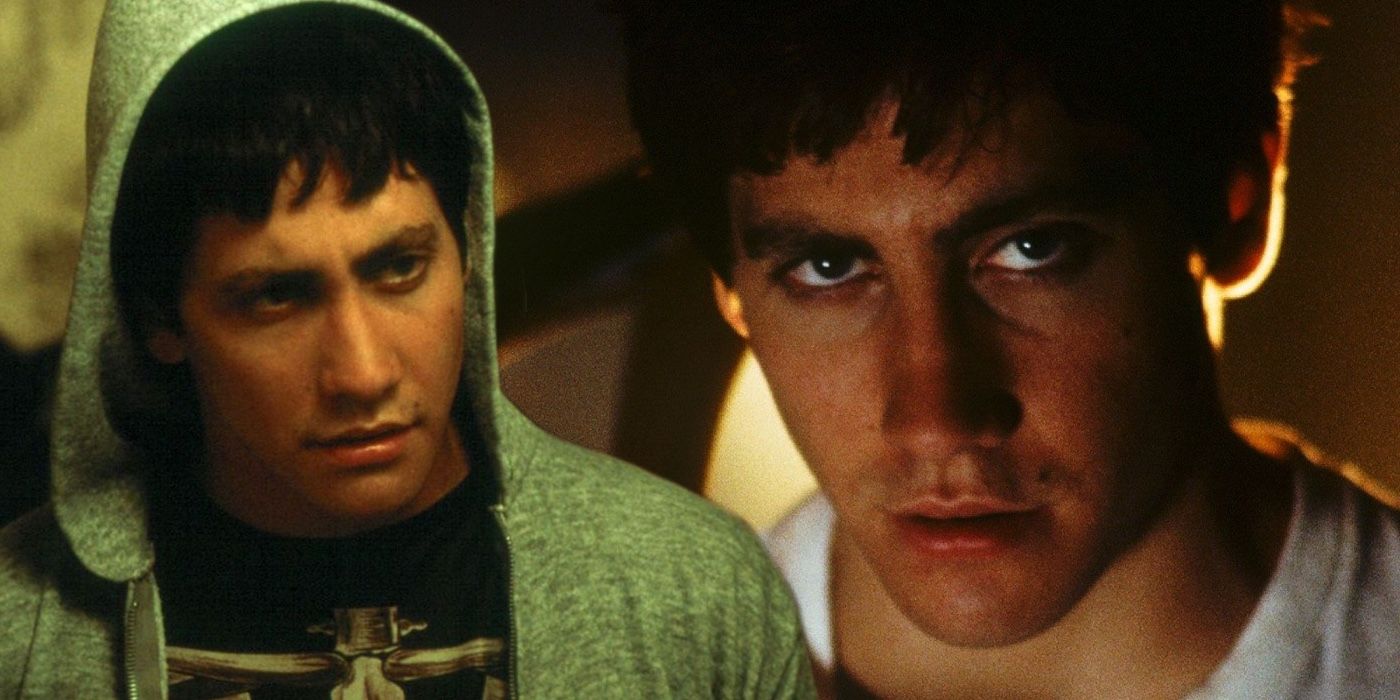
The Tangent Universe as a Corrupted Sandbox Instance
The central technical event in Donnie Darko is the sudden emergence of a Tangent Universe (TU). In computational terms, this can be identified as a “sandbox instance”—a replica of the Primary Universe (PU) that is instantiated for the purpose of resolving a temporal anomaly. However, unlike a controlled testing environment, the Tangent Universe is highly unstable and prone to terminal corruption.
The Physics of the System Crash
In the film, the Tangent Universe occurs when the fabric of the fourth dimension collapses, creating a duplicate reality that exists for approximately 28 days. From a tech perspective, this is a “fork” in the source code of reality. The system generates a secondary thread (the TU) that runs parallel to the main process. The problem is that this thread is not self-sustaining; it lacks the necessary “memory allocation” to exist indefinitely. If the Tangent Universe is not successfully collapsed and resolved, it creates a gravitational singularity that would ultimately delete the Primary Universe—essentially a total system wipe.
Instability and the Impending Shutdown
The countdown provided by the character Frank serves as the system’s “Time to Live” (TTL). Just as a process in a distributed system might have a timeout period, the Tangent Universe is programmed to terminate at a specific timestamp. The atmospheric disturbances and the surreal behavior of the inhabitants (the “Manipulated”) are symptoms of high latency and data packet loss within this unstable instance. The reality Donnie inhabits for most of the film is a simulated container designed to isolate a critical error before it spreads to the master server of the Primary Universe.
The Role of the Living Receiver as System Admin
Donnie Darko is designated by the system as the “Living Receiver.” In our technical framework, Donnie functions as a System Administrator with elevated permissions. He is granted “super-user” capabilities—telekinesis, fire-starting, and pre-cognition—not as magical gifts, but as administrative tools necessary to interact with the physical properties of the Tangent Universe. His “job” is to steer a specific “Artifact” (the jet engine) back into the Primary Universe to close the loop.
Artifacts, Data Integrity, and the Jet Engine Glitch
The catalyst for the entire narrative is the appearance of a jet engine that falls from the sky into Donnie’s bedroom. Within the logic of temporal technology, this engine is known as an “Artifact.” An Artifact is a piece of data that has been duplicated across two different instances (the PU and the TU) without a unique identifier, creating a “race condition” in the architecture of reality.

The Problem of Duplicate Objects
In any database, having two identical objects with the same primary key but different origins leads to data corruption. The jet engine belongs to the Primary Universe, yet it appears in the Tangent Universe without a clear source (the plane it fell from does not exist in the TU’s current timeline). This creates a “logic paradox.” To resolve this, the system must find a way to return the Artifact to its original stream. If the Artifact remains in the wrong instance when the TTL expires, the resulting “null pointer exception” is what causes the black hole that destroys everything.
The Manipulated Dead: User Interface Guides
Characters like Frank and Gretchen serve as the “Manipulated Dead.” In a tech-centric analysis, these entities act as a sophisticated User Interface (UI) or “guides” designed to shepherd the Living Receiver toward the desired outcome. Frank, specifically, functions as an “Event Trigger.” By appearing to Donnie and providing instructions, he ensures that the necessary variables are in place for the “Patch” to be deployed. These characters do not possess free will; they are programmed scripts designed to ensure that Donnie reaches the “Exit Node” of the Tangent Universe at the exact moment required to save the Primary Stream.
Ensuring Data Redundancy
The film emphasizes that the Manipulated will do anything to help the Living Receiver return the Artifact. This is a form of “error correction logic.” The system is aware of the impending crash and is aggressively trying to re-write the local data to favor a successful resolution. Every conversation and “coincidence” in the film is actually a data-driven push toward the final “Commit” of the temporal transaction.
Recursive Loops and the Philosophy of Time Travel
To understand the resolution of Donnie Darko, we must look at the “Philosophy of Time Travel”—the book within the film—as a technical manual or a “README” file for the universe’s error-handling protocols. It outlines the specific steps required to perform a successful “System Restore.”
The Recursive Nature of the Narrative
The events we witness suggest that the system may have attempted this resolution multiple times before achieving a “Success” state. In software development, we use recursive functions to solve problems by breaking them down into smaller, repeatable tasks. It is highly likely that Donnie has lived through variations of these 28 days in previous “builds” of the simulation, with Frank acting as the feedback loop that carries over minimal data from failed attempts to help Donnie succeed in the current iteration.
The Deployment of the “Resolution Patch”
At the end of the film, Donnie utilizes his administrative permissions (his “super-powers”) to create a wormhole. This is the technical equivalent of opening a secure tunnel for data transfer (SSH) between the Tangent Universe and the Primary Universe. He detaches the jet engine from the plane in the TU and sends it through the portal. By doing so, he satisfies the system’s requirement: the Artifact has been accounted for, and the duplicate data has been resolved.
The System Reboot and Cache Clearing
Once the Artifact is returned, the Tangent Universe is deleted. This is why we see the characters waking up in the Primary Universe with a sense of “deja vu.” In a technical sense, the PU has been rebooted from its last stable “save point.” While the volatile memory (the events of the 28 days) has been wiped, some “cached data” remains in the minds of the characters. They feel the emotional resonance of the deleted timeline because it was etched into the system’s “temp files” before the final reboot.
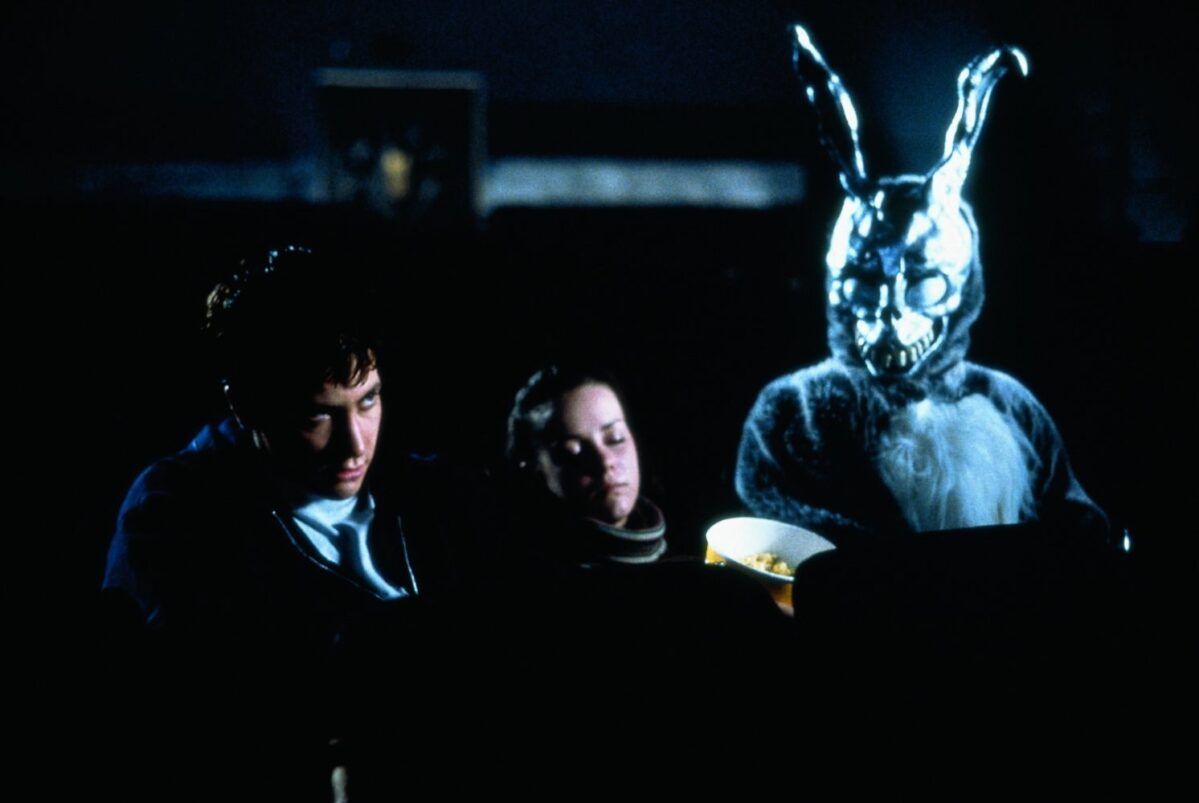
Conclusion: Donnie Darko as a Blueprint for Modern Virtual Realities
What happened in Donnie Darko was essentially a high-stakes “Hotfix” for a reality-breaking bug. The film illustrates the terrifying fragility of complex systems, where a single piece of misplaced data (the jet engine) can threaten the integrity of the entire environment. Donnie’s sacrifice was the ultimate administrative act—executing a command that deleted his own process in the Primary Universe to ensure the global system could continue running without a catastrophic overflow.
From the perspective of current technology, Donnie Darko serves as a visionary metaphor for simulation theory and the challenges of maintaining large-scale digital architectures. It reminds us that behind every stable interface, there is a complex set of protocols working tirelessly to prevent corruption, resolve paradoxes, and ensure that the “Primary Stream” remains online. In the end, Donnie didn’t just save his friends; he successfully debugged the universe.
aViewFromTheCave is a participant in the Amazon Services LLC Associates Program, an affiliate advertising program designed to provide a means for sites to earn advertising fees by advertising and linking to Amazon.com. Amazon, the Amazon logo, AmazonSupply, and the AmazonSupply logo are trademarks of Amazon.com, Inc. or its affiliates. As an Amazon Associate we earn affiliate commissions from qualifying purchases.