
On December 26, 2004, the world witnessed one of the most powerful natural phenomena in recorded history: the Sumatra-Andaman earthquake. While the human toll was devastating, the event served as a definitive turning point for the field of geosciences and disaster-mitigation technology. Understanding what caused the 2004 Indian Ocean earthquake requires more than a cursory glance at geography; it necessitates a deep dive into the mechanical tech of the Earth’s crust and the subsequent evolution of the monitoring systems designed to detect such massive energy releases.
The Tectonic Engine: Understanding the Subduction Zone Mechanics
The fundamental cause of the 2004 earthquake was a catastrophic failure along a subduction zone, a massive “machine” where one tectonic plate is forced beneath another. In this instance, the technological focus lies in the interaction between the Indo-Australian Plate and the Burma Microplate.
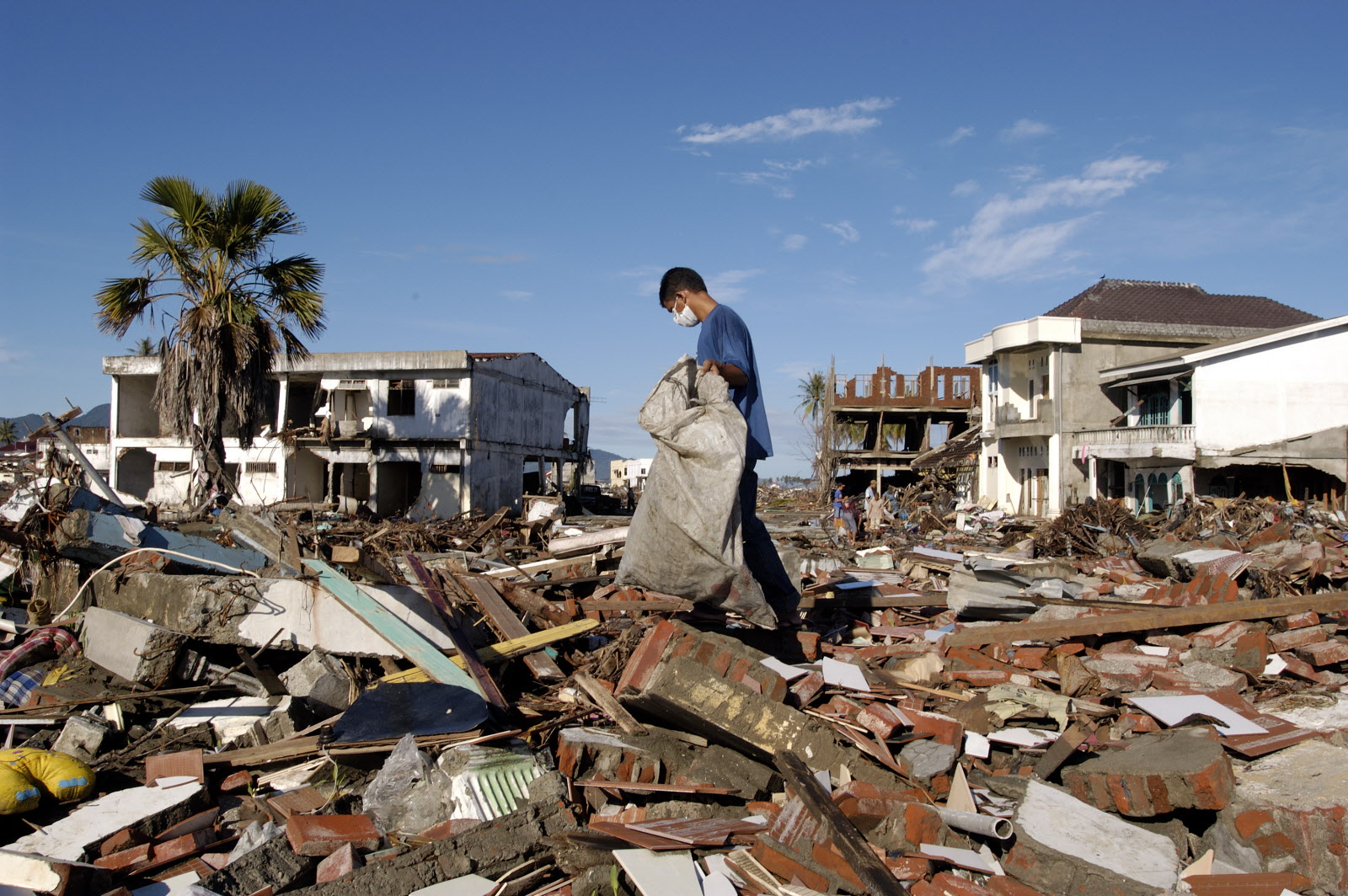
The Sunda Megathrust and Vertical Displacement
The specific geological interface responsible for the event is known as the Sunda Megathrust. For centuries, the Indo-Australian Plate had been moving northeast at a rate of approximately 6 centimeters per year, sliding under the Burma Plate. However, this motion was not fluid. Due to friction, the plates became “locked,” accumulating an immense amount of potential energy—much like a compressed spring in a mechanical system.
On the morning of December 26, the stress exceeded the frictional strength of the rock. The resulting rupture was staggering in scale: a 1,500-kilometer-long fault line unzipped at a speed of roughly 2.8 kilometers per second. From a mechanical perspective, the most critical factor was the vertical displacement. The seafloor was thrust upward by several meters, displacing an estimated 30 cubic kilometers of seawater. This “piston effect” provided the kinetic energy required to generate the subsequent tsunami.
Energy Release: The Physics of a 9.1 Magnitude Event
To quantify the cause, seismologists utilize the Moment Magnitude Scale (Mw), which measures the total energy released. The 2004 event registered between 9.1 and 9.3. To put this in perspective for tech-minded analysts, the energy release was equivalent to approximately 23,000 Hiroshima-type atomic bombs.
The vibration was so intense that it caused the entire planet to vibrate by as much as 10 millimeters and triggered secondary earthquakes as far away as Alaska. The rupture lasted for nearly 10 minutes—the longest duration of faulting ever observed—proving that the “cause” was not a single snap, but a sustained, cascading failure of the crustal architecture.
Early Detection Challenges: Why Technology Failed in 2004
In 2004, the primary cause of the high mortality rate was not just the earthquake itself, but a systemic failure in global detection and communication technology. At the time, the technological infrastructure for disaster management was heavily weighted toward the Pacific Ocean, leaving the Indian Ocean essentially “blind.”
The Absence of Deep-Ocean Assessment and Reporting (DART) Buoys
The most glaring technological deficit in 2004 was the lack of a sensor network in the Indian Ocean. While the Pacific Tsunami Warning Center (PTWC) existed, there were zero Deep-ocean Assessment and Reporting of Tsunamis (DART) buoys in the region. These buoys are sophisticated pieces of hardware consisting of a seafloor pressure sensor that communicates via acoustic telemetry to a surface buoy, which then relays data to satellites.
Without these sensors, scientists could confirm that a massive earthquake had occurred using seismographs, but they had no “eyes on the water” to confirm whether a tsunami had actually been generated. The lack of real-time hydrographic data meant that authorities were forced to rely on visual confirmation, which, in a disaster scenario, is a recipe for catastrophe.
Data Silos and the Communication Latency Gap
The second technological failure was one of connectivity and interoperability. In 2004, the internet was in its relative infancy regarding real-time emergency data distribution. Seismological data was often trapped in localized “data silos.” When the PTWC realized the magnitude of the event, they lacked a standardized, high-speed protocol to alert the governments of Indonesia, Thailand, Sri Lanka, and India.
The notification process relied on traditional phone calls and faxes—technologies that suffer from high latency and human-in-the-loop delays. By the time the information was disseminated, the physical waves had already outpaced the digital warnings in many coastal regions.
The Evolution of Seismological Monitoring and Real-Time Data Analysis

In the decades since the 2004 event, the “cause” of such disasters has been met with a massive influx of technological innovation. We have moved from reactive observation to proactive, high-fidelity modeling.
From Seismographs to GNSS: High-Precision Positioning
While traditional seismographs are excellent at measuring ground shaking, they can “saturate” during massive events, making it difficult to distinguish between an 8.5 and a 9.1 magnitude quake in the first few minutes. Today, tech stacks for disaster prevention include Global Navigation Satellite System (GNSS) stations.
These stations use high-precision GPS technology to measure the actual displacement of the Earth’s surface in real-time. By observing how far a coastal station moves horizontally and vertically during the first 60 seconds of an earthquake, algorithms can now calculate the magnitude of the rupture much faster than seismographs alone. This reduces the latency of the “Initial Warning” phase of the tech cycle.
AI and Machine Learning in Predictive Modeling
The modern approach to understanding earthquake causes involves “Digital Twins” of the ocean floor. When a rupture occurs, AI-driven software—such as the “EasyWave” or “ComMIT” modeling suites—simulates thousands of possible tsunami scenarios in seconds.
By feeding real-time seismic data into machine learning models trained on historical events (including 2004), these systems can predict the wave height, arrival time, and inundation depth for specific coastlines with remarkable accuracy. This transition from “observation” to “computational prediction” is perhaps the most significant technological leap of the 21st century in this field.
Modern Early Warning Systems (EWS): A Global Technological Shield
Today, the Indian Ocean is no longer a “blind spot.” The technological architecture has been rebuilt from the ground up to ensure that a 2004-level event never catches the world off-guard again.
The Indian Ocean Tsunami Warning and Mitigation System (IOTWMS)
Following the disaster, UNESCO’s Intergovernmental Oceanographic Commission spearheaded the IOTWMS. This is a “system of systems” that integrates hundreds of seismometers, over 50 tide gauges, and a sophisticated network of DART buoys.
The tech stack here is built on the principle of redundancy. Data is transmitted via multiple satellite constellations (such as Iridium) to regional watch centers in Australia, India, and Indonesia. These centers operate 24/7, using automated algorithms to filter noise from actual seismic signals, ensuring that the “Cause-to-Alert” window is minimized to under 10 minutes.
Edge Computing and IoT in Coastal Resilience
The “last mile” of the warning system has also seen a tech overhaul. In 2004, even if the data existed, there was no way to get it to the people on the beach. Today, we utilize the Internet of Things (IoT) and edge computing. Coastal sirens are now connected to cellular networks with battery backups and satellite overrides.
In many countries, Wireless Emergency Alerts (WEA) use cell-broadcast technology to push notifications directly to smartphones within a specific geographic radius. This technology bypasses network congestion, ensuring that even if the cellular voice lines are jammed, the data packet containing the evacuation order reaches every handset in the danger zone.
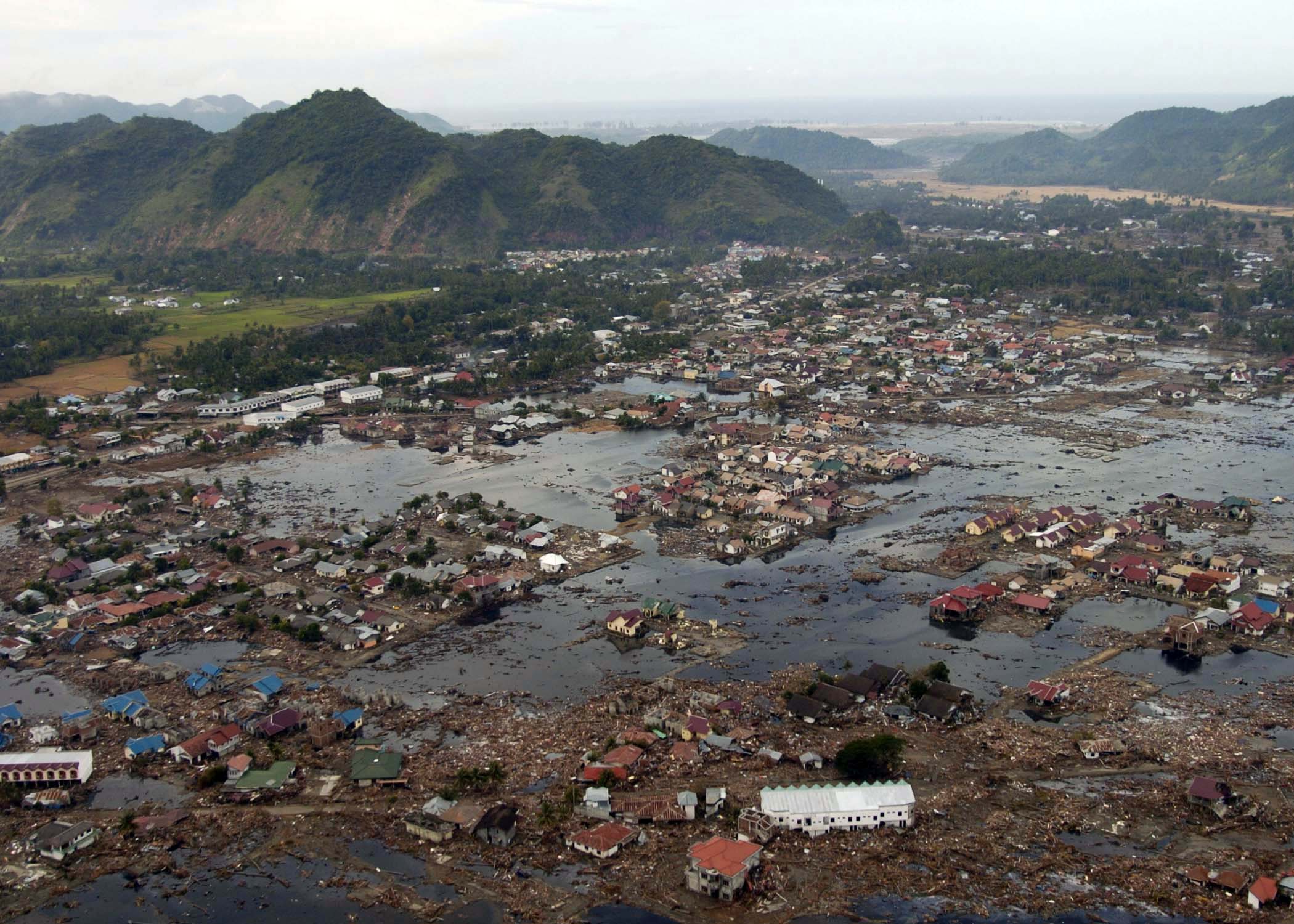
Future Frontiers: Satellite Altimetry and Quantum Seismology
As we look toward the future, the technology used to monitor the causes of subduction earthquakes is entering the realm of quantum and space-based observation.
Researchers are currently experimenting with using existing undersea fiber-optic telecommunications cables as massive seismic sensors. By using a technique called Distributed Acoustic Sensing (DAS), engineers can detect minute changes in the light pulses traveling through the cables caused by the stretching of the seafloor. This effectively turns thousands of miles of “dark fiber” into a giant, high-resolution seismometer.
Furthermore, satellite altimetry—traditionally used for mapping sea levels—is being refined to detect the “bulge” of a tsunami wave in the open ocean from space. While currently limited by orbital frequency, the next generation of satellite swarms promises 24/7 global coverage.
The 2004 Indian Ocean earthquake was caused by a violent shift in the Earth’s tectonic plates, but its legacy is one of rapid technological acceleration. By transforming the ocean from a silent, unmonitored void into a data-rich environment, we have utilized technology to turn a recurring geologic cause into a manageable, survivable event. The marriage of geophysics and high-end tech remains our best defense against the raw, unbridled power of the Sunda Megathrust.
aViewFromTheCave is a participant in the Amazon Services LLC Associates Program, an affiliate advertising program designed to provide a means for sites to earn advertising fees by advertising and linking to Amazon.com. Amazon, the Amazon logo, AmazonSupply, and the AmazonSupply logo are trademarks of Amazon.com, Inc. or its affiliates. As an Amazon Associate we earn affiliate commissions from qualifying purchases.