
When we hear the phrase “expressed powers of Congress,” our minds often drift toward high school civics classes or abstract legal debates. However, for the modern investor, entrepreneur, and financial strategist, these powers are far from abstract. They represent the “source code” of the American economy. Found primarily in Article I, Section 8 of the U.S. Constitution, the expressed powers—also known as enumerated powers—are the specific authorities granted to the federal legislature.
From a financial perspective, these powers dictate how money is created, how it is taxed, how it flows across borders, and how the stability of the markets is maintained. Understanding these powers is not just a lesson in history; it is a prerequisite for understanding the macro-economic forces that shape personal finance and business strategy today.
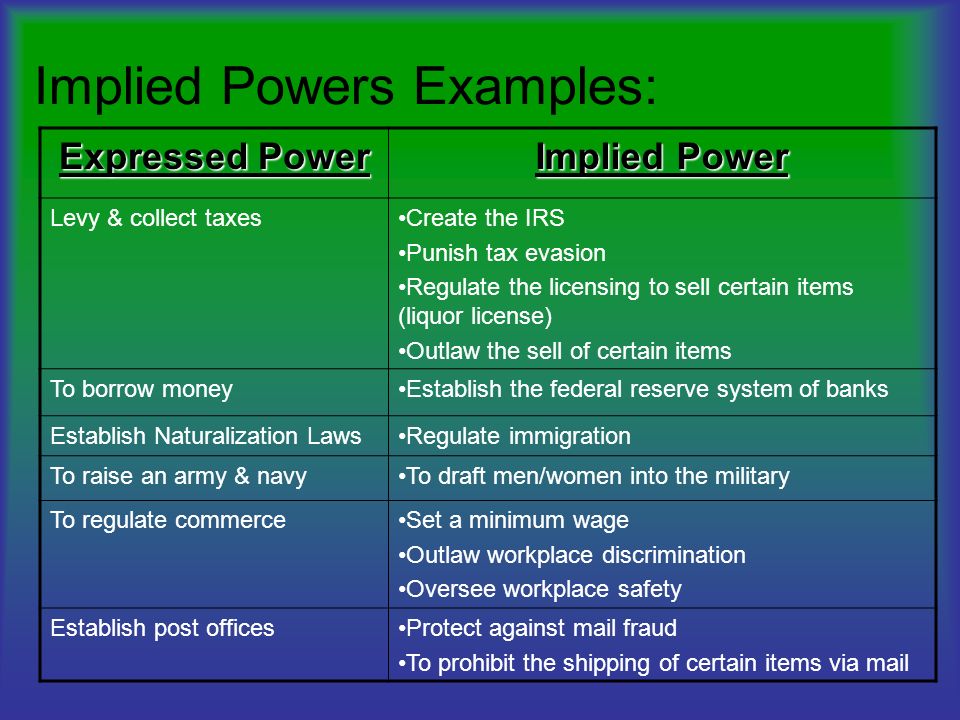
The Power to Tax and Spend: The Foundation of Fiscal Policy
The very first power granted to Congress in Article I, Section 8, is the “Power To lay and collect Taxes, Duties, Imposts and Excises.” This is the engine of the American financial system. Without the ability to generate revenue, the federal government could not function, and the infrastructure that supports private enterprise would crumble.
How Federal Taxation Impacts Personal Wealth
For anyone focused on wealth accumulation and personal finance, the expressed power of taxation is the most direct point of contact with the government. Congress uses this power not only to fund public services but also as a tool for economic engineering. By adjusting income tax brackets, capital gains rates, and corporate tax structures, Congress incentivizes or discourages specific financial behaviors.
For example, the creation of tax-advantaged accounts like the 401(k) or the IRA is an exercise of Congressional power intended to promote long-term personal saving. Similarly, the mortgage interest deduction was designed to stimulate the housing market. An insightful investor must look beyond the “bill” they pay every April and understand that tax policy is a shifting landscape. When Congress exercises its expressed power to change tax law, it can overnight alter the profitability of certain asset classes, such as real estate or dividend-paying stocks.
The Mechanics of Public Spending and Economic Stimulation
The second half of this power is the authority to “pay the Debts and provide for the common Defence and general Welfare.” In financial terms, this is the “Spend” side of fiscal policy. When Congress passes a budget or a stimulus package, it is injecting liquidity into the economy.
For business owners, understanding Congressional spending priorities is a form of market research. Whether it is an infrastructure bill, a defense contract, or a subsidy for renewable energy, Congressional spending creates “winners” in the private sector. By tracking where Congress directs its expressed power to spend, savvy investors can identify sectors poised for growth. This is the intersection of public policy and private profit.
The Commerce Clause: Regulating the National and Global Market
Perhaps the most influential expressed power regarding the modern business landscape is the power “To regulate Commerce with foreign Nations, and among the several States.” Known as the Commerce Clause, this short phrase provides the legal basis for nearly all federal business regulation.
Defining Interstate Commerce in the Digital Age
In the early days of the Republic, “interstate commerce” referred to the physical transport of goods across state lines via wagons or ships. Today, in our digital-first economy, the definition has expanded exponentially. Every time a digital product is sold online, or data is transferred across a server in a different state, it falls under the jurisdiction of Congressional regulation.
For entrepreneurs and tech-adjacent businesses, the Commerce Clause is the reason we have uniform rules for consumer protection, labor laws, and environmental standards. Without this expressed power, a business operating in all 50 states would face 50 different sets of conflicting regulations, creating a “friction” that would stifle economic growth. The Commerce Clause ensures a level playing field, allowing for the “internal free trade” that makes the American market so lucrative for investors.
The Impact of Business Regulations on Entrepreneurship

While the Commerce Clause provides a unified market, it also allows Congress to set the boundaries of corporate behavior. Antitrust laws, which prevent monopolies and promote competition, are derived from this power. For the financial community, the exercise of this power is a double-edged sword. On one hand, regulation can increase the cost of doing business (compliance costs). On the other hand, it protects the integrity of the market, ensuring that small startups have a fair chance to compete against entrenched giants. Understanding the current Congressional climate regarding trade and regulation is essential for anyone involved in corporate strategy or venture capital.
The Monetary Power: Coining Money and Regulating Value
Money is the lifeblood of the economy, and the Constitution gives Congress the exclusive expressed power “To coin Money, regulate the Value thereof, and of foreign Coin.” This power is the cornerstone of American monetary policy and the reason the U.S. Dollar remains the world’s primary reserve currency.
The Role of the Federal Reserve and Congressional Oversight
While Congress has the expressed power to regulate money, it has historically delegated the day-to-day management of the money supply to the Federal Reserve (the Fed). However, the Fed remains a creature of Congress, operating under a mandate set by legislators: to promote maximum employment and stable prices.
For the individual investor, this power manifests as inflation or deflation. When Congress or its delegates increase the money supply, the value of each dollar may decrease, impacting purchasing power. Conversely, when the money supply is tightened, borrowing costs (interest rates) rise. Because Congress holds the ultimate authority over “the value thereof,” their legislative actions regarding the Fed’s dual mandate are the most important signals for bond markets and mortgage rates.
Currency Stability and Its Influence on Long-Term Investing
The stability of the U.S. currency is a direct result of the disciplined (or sometimes undisciplined) exercise of this expressed power. Investors seek out the U.S. markets because they trust the legal framework that prevents arbitrary devaluation of the currency. In countries where the legislature lacks a clear, expressed power to maintain a stable currency, hyperinflation often destroys personal savings. In the U.S., the expressed power of Congress to regulate money provides the “safety net” that allows for long-term compound interest to work its magic.
Borrowing and National Debt: Implications for the Private Sector
Finally, Congress is granted the power “To borrow Money on the credit of the United States.” This expressed power allows the government to operate at a deficit, issuing Treasury bonds to fund operations that exceed current tax tax revenue.
How Government Debt Affects Interest Rates
The U.S. Treasury market is the largest and most liquid financial market in the world. When Congress exercises its power to borrow, it issues debt securities (bonds, notes, and bills). These are considered “risk-free” assets. Because they are the benchmark for safety, the interest rates on these government bonds set the floor for all other interest rates in the economy—including your mortgage, your car loan, and the expected returns on the stock market.
When the government borrows heavily, it can lead to “crowding out,” where the sheer volume of government debt absorbs available capital, potentially driving up interest rates for private borrowers. For business finance, this means that Congressional decisions on the national debt limit and the annual deficit have a direct correlation with the cost of capital for a small business or a Fortune 500 company.
Managing Personal Finances in a High-Debt Macro Environment
For the personal finance enthusiast, the expressed power to borrow is a reminder of the importance of diversification. If Congress borrows to the point that investors lose confidence in the “credit of the United States,” the value of the dollar and the stability of the bond market could be compromised. While this remains a theoretical risk for the U.S., it highlights why high-net-worth individuals often hold a mix of equities, real estate, and international assets. Understanding that the government’s ability to borrow is a finite (though large) resource helps individuals make better-informed decisions about their own debt-to-income ratios and investment horizons.

Conclusion: Why the Expressed Powers Matter to Your Bottom Line
The expressed powers of Congress are more than just a list of rules for politicians; they are the structural beams of the American financial house. The power to tax determines your take-home pay; the power to regulate commerce defines the competitive landscape for your business; the power to coin money affects the price of your groceries; and the power to borrow sets the interest rate on your home.
In the world of money and finance, ignorance of these powers is a liability. By understanding the constitutional “expressed powers,” you gain a deeper insight into the legislative shifts that precede economic cycles. Whether you are an investor looking for the next growth sector or an individual trying to optimize a retirement portfolio, keeping a close eye on how Congress exercises its expressed powers is the ultimate “insider’s edge” in the modern economy.
aViewFromTheCave is a participant in the Amazon Services LLC Associates Program, an affiliate advertising program designed to provide a means for sites to earn advertising fees by advertising and linking to Amazon.com. Amazon, the Amazon logo, AmazonSupply, and the AmazonSupply logo are trademarks of Amazon.com, Inc. or its affiliates. As an Amazon Associate we earn affiliate commissions from qualifying purchases.