
In the decade since its launch, Pokémon GO has evolved from a simple location-based novelty into a complex, data-driven ecosystem. For the casual player, the game is about exploration and collection. However, for the dedicated community, the experience is governed by a hidden layer of data known as Individual Values, or IVs. Understanding these metrics is essential for anyone looking to transition from a casual collector to a competitive player. This technical deep dive explores the architecture of IVs, their impact on gameplay performance, and the digital tools used to analyze them.
The Technical Architecture of Individual Values (IVs)
To understand IVs, one must first understand the distinction between a Pokémon’s species-base stats and its individual variation. In the software architecture of Pokémon GO, every Pokémon is defined by three primary attributes: Attack, Defense, and Stamina (HP). While every Pikachu shares the same “base stats,” no two Pikachu are necessarily identical in terms of performance. This variance is dictated by IVs.
Defining Attack, Defense, and HP within the App’s Code
Individual Values are hidden integers ranging from 0 to 15 that are added directly to the Pokémon’s base stats. Think of base stats as the “engine” of a car and IVs as the “fine-tuning” of that specific vehicle. Even if the base stats are high, a low IV spread can result in a Pokémon that underperforms relative to its potential.
The Attack IV influences how much damage a Pokémon deals per fast and charged move. The Defense IV determines how much damage it mitigates when struck by an opponent. The Stamina IV dictates the total Hit Points (HP) the Pokémon possesses. Because these values are added to the base stats before being multiplied by a “CP Multiplier” (determined by the Pokémon’s level), their impact is most significant on Pokémon with lower base stats, though they remain the gold standard for optimization across the board.
The 0-15 Scaling System and Random Number Generation (RNG)
The assignment of IVs is governed by a Random Number Generation (RNG) algorithm at the moment of an encounter. For a standard “wild” encounter, the IVs are completely randomized, meaning there are 4,096 possible combinations (16 x 16 x 16).
However, Niantic’s software includes “IV floors” for specific types of encounters to reward player engagement. For instance, Pokémon caught through Raids, Research Tasks, or Eggs have a minimum IV floor of 10/10/10. This significantly narrows the pool of outcomes, increasing the probability of obtaining a “high-percentile” specimen. From a technical standpoint, this manipulation of RNG is a core engagement mechanic, encouraging players to participate in specialized events rather than relying solely on wild spawns.
How the Pokémon GO Appraisal System Translates Raw Data
In the early years of Pokémon GO, IVs were entirely hidden from the user interface. Players had to rely on cryptic dialogue from team leaders or third-party “calculators” that scraped screen data to guess the values. In a major UI/UX overhaul, Niantic introduced the modern Appraisal System, which provides a transparent, visual representation of this underlying data.
From Binary to Visual: Understanding the Three-Bar Interface
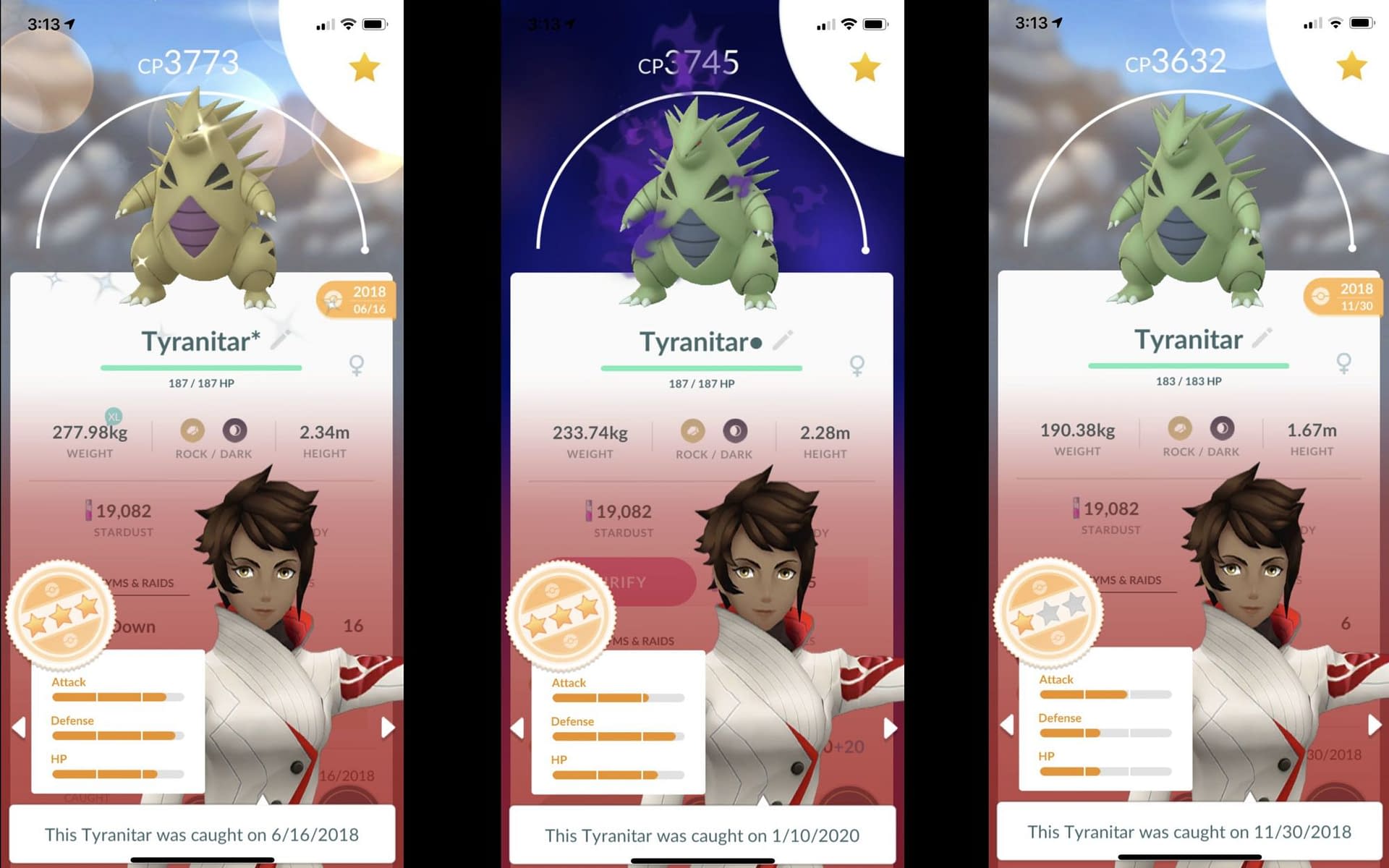
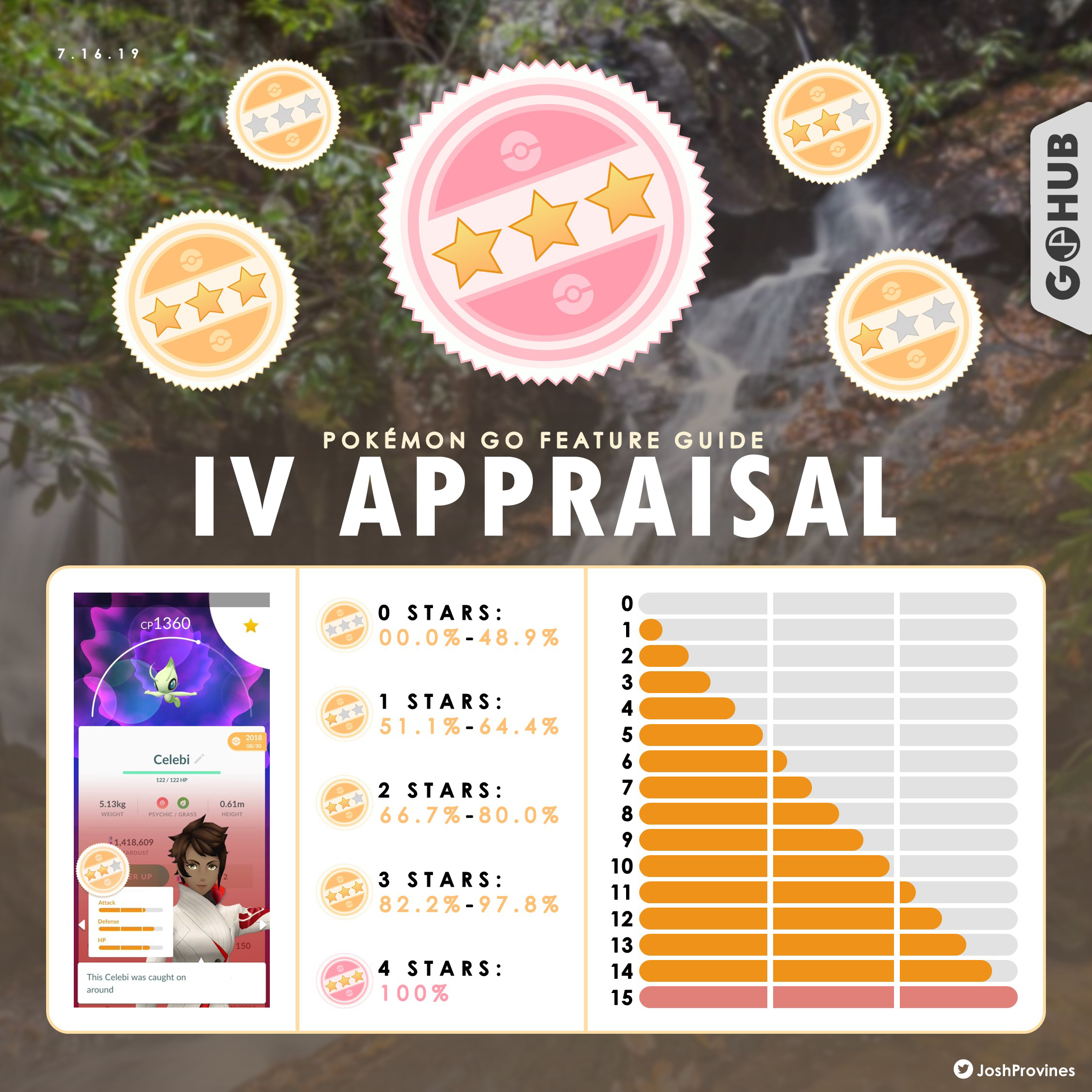
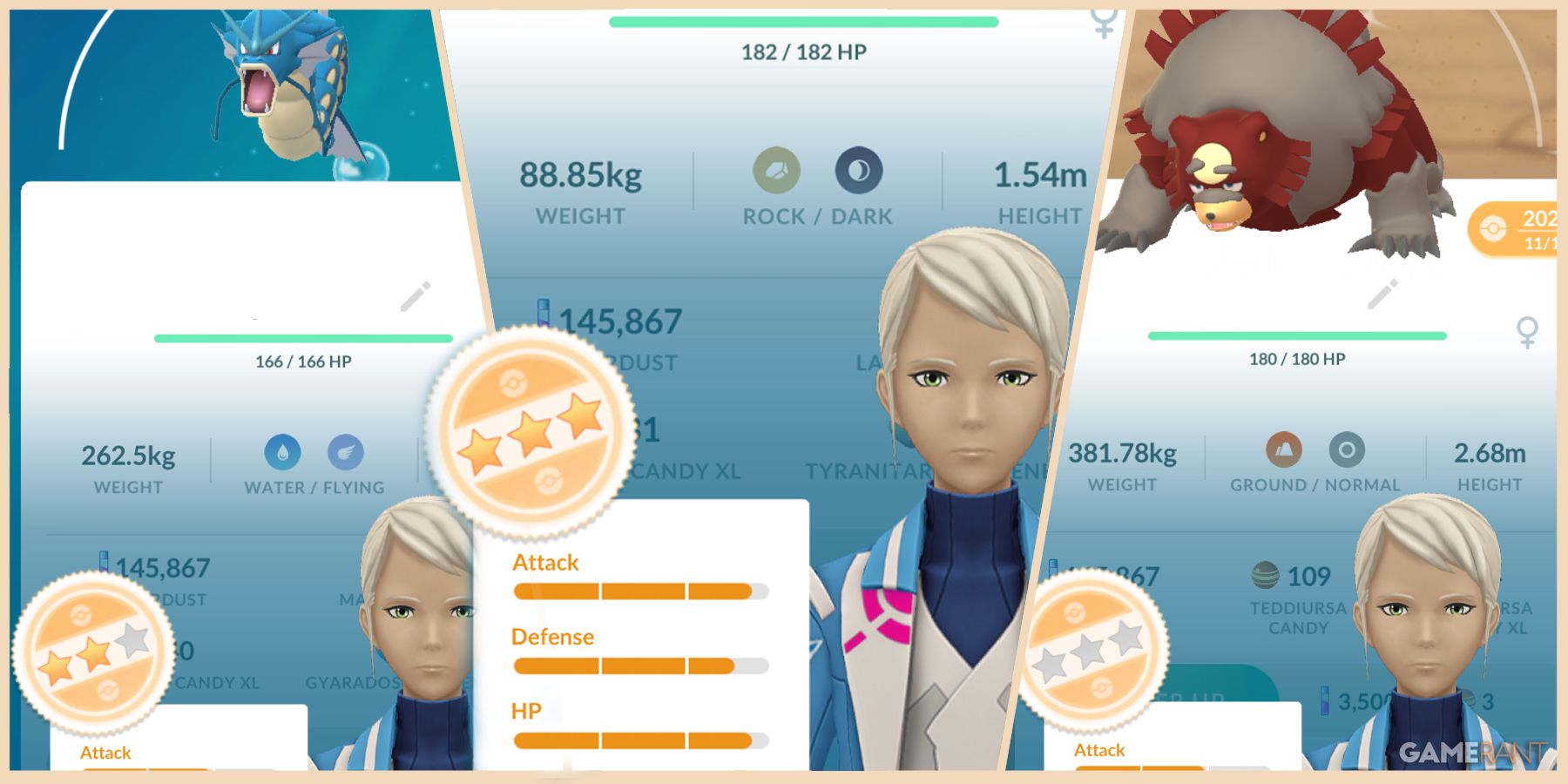
The appraisal system utilizes a three-bar horizontal graph to represent Attack, Defense, and HP. Each bar is divided into three segments. Each segment represents 5 points, totaling 15. When a player “Appraises” a Pokémon, the app pulls the specific integers from the server-side database and renders them as these colored bars.
This visual shorthand allows players to instantly identify the quality of their catch. A full bar (turning orange/red) signifies a value of 15, while an empty bar signifies 0. This interface design is a masterclass in translating complex back-end data into a user-friendly format that maintains the “game-like” feel without overwhelming the user with raw spreadsheets.
The “Hundo” and the “Nundo”: Extreme Ends of the Distribution Curve
In the community lexicon, a Pokémon with 15/15/15 IVs is referred to as a “Hundo” (100% IVs). This is the statistical peak of a Pokémon’s potential. Conversely, a 0/0/0 specimen is known as a “Nundo.”
Technically, a “Hundo” is the most desirable for Raid encounters and the Master League PvP, as it represents the maximum possible CP (Combat Power) for that species at any given level. The search for these rare data points (a 1 in 4,096 chance in the wild) drives much of the long-term retention in the game’s “end-game” phase.
Optimization Strategies: Why IVs Matter for High-Performance Play
While a 10% difference in stats might seem negligible for a casual player, it is the difference between victory and defeat in high-level competitive play. The technical application of IVs varies depending on the specific “mode” of gameplay.
Maximizing Damage Output in Tier 5 Raids
In PvE (Player vs. Environment) scenarios, such as high-level Raids, time is the primary enemy. Players must defeat a “Boss” Pokémon within a strict time limit. In this context, the Attack IV is paramount. A higher Attack IV allows a Pokémon to reach “breakpoints”—specific levels where a Fast Attack deals one additional point of damage per hit. In a battle where a player might tap the screen hundreds of times, that single extra point of damage per tap scales significantly, often being the deciding factor in whether a Raid Boss is defeated before the clock hits zero.
The PvP Paradox: Why Lower Attack Can Be Technically Superior
Perhaps the most counter-intuitive aspect of Pokémon GO’s technical mechanics is the “PvP IV” strategy used in the Great and Ultra Leagues. These leagues have CP caps (1500 and 2500, respectively).
The formula for CP weighs the Attack stat more heavily than Defense or Stamina. Therefore, a Pokémon with a high Attack IV will reach the 1500 CP limit at a lower level than a Pokémon with a low Attack IV. By prioritizing a low Attack IV (often 0 or 1) and high Defense/Stamina IVs, players can “squeeze” more levels into their Pokémon while staying under the CP cap. This results in a Pokémon with higher overall “Stat Product”—essentially making it bulkier and able to survive longer in battle, which is technically more efficient than having a slightly higher damage output.
Tools and Third-Party Integrations for Data Analysis
The complexity of IVs has birthed an entire sub-industry of software tools designed to help players analyze their data. These tools utilize sophisticated technology to bridge the gap between the game’s visual output and the mathematical reality.
Screen Overlay Apps and OCR Technology
Apps like PokeGenie and CalcyIV utilize Optical Character Recognition (OCR) to read the screen. When a player opens the appraisal screen, these third-party apps take a localized screenshot, analyze the position and length of the IV bars, and cross-reference them with the Pokémon’s current CP and HP.
Through this process, the software can provide an exact “Stat Product” percentage and predict what the Pokémon’s CP will be when evolved or powered up. This is a prime example of how the player community uses external tech to enhance the utility of a closed-loop app environment.
Security and API Terms of Service: Protecting Your Digital Account
It is vital to distinguish between “overlay” apps and “API-stripping” apps. Overlay apps are generally considered safe because they only “see” what is on the screen, much like a human eye. However, tools that require a player to log in with their Pokémon GO credentials to “scrape” the data directly from Niantic’s servers are a violation of the Terms of Service. These tools interact with the game’s private API, which can lead to account bans. Understanding this technical distinction is crucial for maintaining digital security and account longevity.
The Evolution of Pokémon GO’s Data Transparency
The journey of IVs from a hidden “easter egg” to a central gameplay pillar reflects a broader trend in the gaming industry: the move toward data transparency. Players today are more analytical, often treating their digital collections as assets to be optimized.
From Obscurity to Clarity: A History of UI Improvements
Initially, Niantic kept IVs hidden to maintain a sense of mystery and to prevent the game from feeling too much like a spreadsheet. However, the technical-minded community quickly reverse-engineered the formulas. Recognizing that players were going to seek this data regardless, Niantic chose to integrate it into the app.
This shift improved the “Quality of Life” for the user base and streamlined the gameplay loop. It allowed Niantic to maintain control over how the data was presented while satisfying the demand for technical depth. Today, the search for “three-star” and “perfect” Pokémon is a core component of the app’s marketing and event design.
The Future of Procedural Stats in AR
As Pokémon GO continues to integrate more advanced Augmented Reality (AR) features, the role of IVs may evolve. We are already seeing “Size” variants (XXS to XXL) being tracked as separate data points. The technical infrastructure of the game is moving toward a highly individualized model where every digital entity caught has a unique “DNA” composed of IVs, size, and move sets. For the tech-savvy trainer, mastering the language of IVs is not just about winning battles; it is about understanding the digital architecture of the world’s most successful AR experience.
aViewFromTheCave is a participant in the Amazon Services LLC Associates Program, an affiliate advertising program designed to provide a means for sites to earn advertising fees by advertising and linking to Amazon.com. Amazon, the Amazon logo, AmazonSupply, and the AmazonSupply logo are trademarks of Amazon.com, Inc. or its affiliates. As an Amazon Associate we earn affiliate commissions from qualifying purchases.