
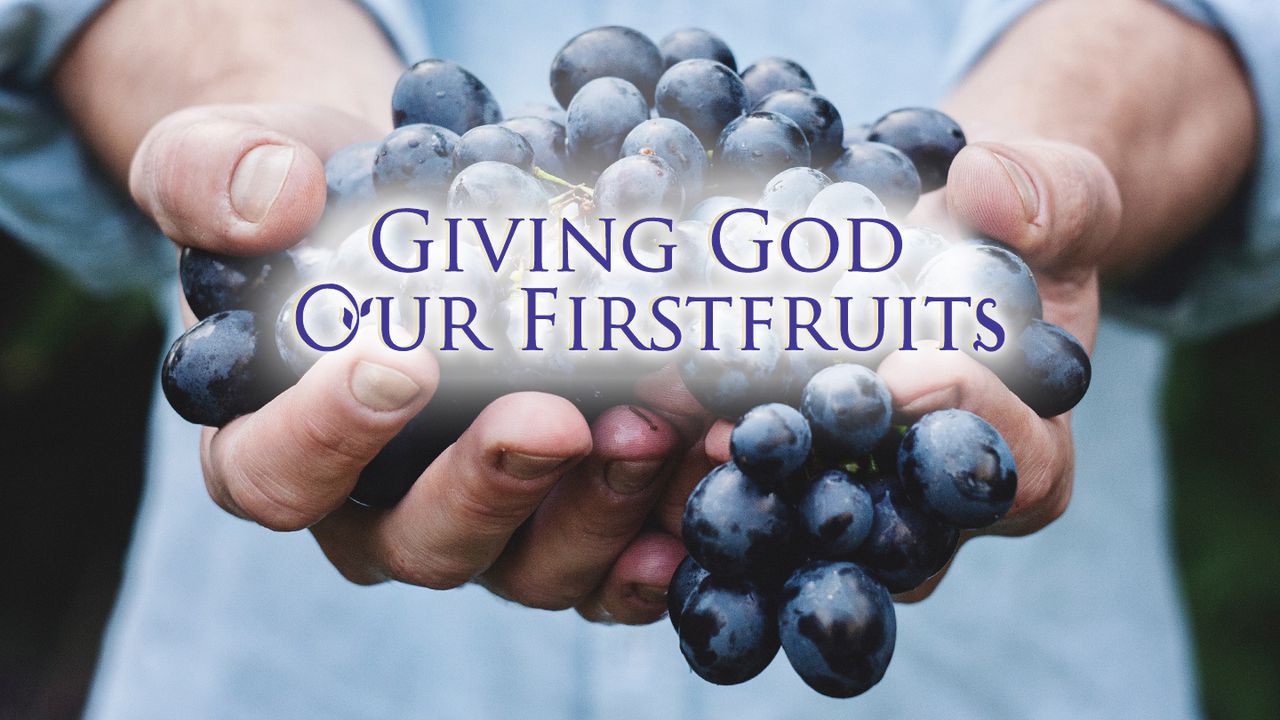
In the traditional sense, the term “first fruits” traces its origins back to ancient agricultural societies, where the first harvest of the season was set aside as an offering or a dedicated resource. It represented the best of the crop—the freshest, most vital portion—given away before the remainder was consumed. In the contemporary landscape of personal finance and wealth management, the concept of “first fruits” has evolved into a powerful metaphor for financial discipline, strategic allocation, and the “pay yourself first” mentality.
In this context, first fruits refer to the practice of prioritizing your most important financial goals—such as investing, debt reduction, and charitable giving—the moment your income arrives, rather than waiting to see what is left over at the end of the month. By treating your income with this level of intentionality, you shift your financial identity from a passive consumer to an active wealth builder.

The Philosophy of First Fruits in Personal Finance
To understand first fruits in a modern financial context, one must first understand the psychological shift required to build sustainable wealth. Most individuals follow a linear path of consumption: they receive a paycheck, pay their bills, spend on lifestyle choices, and then hope to save whatever remains. This is often referred to as “residual saving,” and it is the primary reason many high-earners still live paycheck to paycheck.
Moving from Scarcity to Abundance
The first-fruits approach flips this model on its head. It operates on the principle that if you wait until the end of the month to save, there will never be anything left. Parkinson’s Law suggests that expenses rise to meet income. By taking the “first fruits”—a predetermined percentage of your gross income—and moving it immediately into investment or savings vehicles, you force your lifestyle to adapt to the remaining balance. This creates a psychological sense of abundance because you are securing your future before the demands of the present can deplete your resources.
The Psychology of Paying Yourself First
“Paying yourself first” is the cornerstone of modern financial independence. When you treat your savings and investments as a non-negotiable “bill” that must be paid first, you are essentially investing in your future self. This habit builds a powerful feedback loop. As you see your investment accounts grow, your motivation increases, leading to more disciplined spending habits. It moves the focus away from deprivation and toward the excitement of asset accumulation.
Implementing the First Fruits Strategy: Practical Allocation
Transitioning to a first-fruits financial model requires more than just a change in mindset; it requires a structural overhaul of how you handle your cash flow. This is where the concept of “capital allocation” becomes essential for the individual investor.
Automating Your Savings and Investments
The greatest enemy of financial discipline is friction. If you have to manually transfer money to your brokerage account every month, you are susceptible to “decision fatigue” or the temptation to spend that money on an immediate want. The modern first-fruits strategy relies heavily on automation. By setting up automatic transfers that coincide with your payroll, you ensure that your “first fruits” are harvested and stored before you even have the chance to see them in your checking account. This includes contributions to 401(k) plans, IRAs, or automated brokerage deposits.
Strategic Debt Reduction as an Investment
For those carrying high-interest consumer debt, the “first fruits” of their labor should often be directed toward debt elimination. In a financial sense, paying down a credit card with an 18% APR is the equivalent of a guaranteed 18% return on investment. By allocating the first portion of your income toward principal reduction, you are effectively buying back your future cash flow. This creates a “snowball” or “avalanche” effect that clears the path for more aggressive wealth-building activities later on.
The Role of Philanthropy and Giving
In many interpretations of the first-fruits principle, charitable giving plays a central role. From a wealth-management perspective, intentional giving can serve as a “financial thermostat.” It prevents “lifestyle creep” by ensuring that as your income grows, your contribution to society grows proportionally. Furthermore, strategic giving can offer significant tax advantages, such as deductions for charitable contributions or the use of Donor-Advised Funds (DAFs), which allow your “first fruits” to grow tax-free before being distributed to causes you care about.
First Fruits and Investment Growth
The primary goal of capturing your first fruits is to convert active income (your labor) into passive income (your capital). This is how true wealth is generated. Once you have set aside your initial portion, the focus shifts to how that capital is deployed in the markets.
Capitalizing on Compound Interest
The most significant benefit of the first-fruits approach is the maximization of time. Because this strategy emphasizes consistency and early allocation, it allows the investor to harness the full power of compound interest. Albert Einstein famously called compound interest the “eighth wonder of the world.” By prioritizing your investments at the start of every month—and ideally, the start of your career—you give your “financial seeds” more time to grow. Even small amounts, when treated as first fruits, can grow into substantial portfolios over decades due to the exponential nature of market returns.
Diversification as a Harvest Strategy
Just as an ancient farmer would not rely on a single crop, a modern investor should not rely on a single asset class. Your first fruits should be distributed across a diversified portfolio to mitigate risk. This might include:
- Equities: For long-term growth and participation in global economic expansion.
- Fixed Income: For capital preservation and steady yield.
- Real Estate: For inflation protection and tangible asset growth.
- Alternative Investments: Such as private equity or venture capital for those with higher risk tolerances.
By systematically allocating your “first” dollars into these various buckets, you create a resilient financial ecosystem that can weather market volatility.
Building a Legacy: Long-term Wealth Management
The ultimate realization of the first-fruits philosophy is the creation of a legacy that extends beyond the individual. Wealth management is not merely about personal consumption; it is about the stewardship of resources for future generations and broader impacts.
Estate Planning and Generational Wealth
When you consistently practice the first-fruits method, you eventually reach a point where your assets generate more income than your lifestyle requires. At this stage, the focus shifts to estate planning. This involves structuring your assets to minimize the tax burden on your heirs and ensuring that the “harvest” you have spent a lifetime accumulating is passed down efficiently. Tools such as trusts, life insurance, and strategic gifting become the new mechanisms for managing your first fruits, ensuring that your financial values are preserved along with your capital.
Tax Efficiency in First-Fruits Investing
A critical component of modern money management is understanding that it’s not just about what you earn, but what you keep. Tax-efficient investing is a way to protect your first fruits from being eroded by the government. This includes:
- Utilizing Tax-Advantaged Accounts: Maximizing contributions to HSAs, Roth IRAs, and 529 plans.
- Tax-Loss Harvesting: Offsetting capital gains with losses to reduce your overall tax liability.
- Long-term Capital Gains Management: Holding assets for more than a year to benefit from lower tax rates.
By integrating tax strategy into your first-fruits allocation, you ensure that the maximum amount of your “harvest” remains working for you and your family.

Conclusion: The Discipline of the First Portion
The concept of “first fruits” is a timeless principle repackaged for the modern financial era. It is a rejection of the “leftovers” mentality that keeps so many people trapped in financial mediocrity. By choosing to prioritize your investments, your debt reduction, and your giving at the very moment you receive your income, you are taking a stand for your financial freedom.
True wealth is not a product of luck; it is a product of systems. The first-fruits system is perhaps the most effective tool available for building a secure and prosperous future. It requires the discipline to look past immediate gratification in favor of long-term stability. Whether you are just starting your career or are a seasoned investor, returning to the principle of the first fruits—the practice of honoring your future by prioritizing your present capital—will always be the surest path to financial success.
aViewFromTheCave is a participant in the Amazon Services LLC Associates Program, an affiliate advertising program designed to provide a means for sites to earn advertising fees by advertising and linking to Amazon.com. Amazon, the Amazon logo, AmazonSupply, and the AmazonSupply logo are trademarks of Amazon.com, Inc. or its affiliates. As an Amazon Associate we earn affiliate commissions from qualifying purchases.