
When an investor asks, “What are emeralds made of?” they are rarely seeking a simple lesson in geology. While the chemical composition of a gemstone provides the foundation for its existence, in the world of high-finance and alternative asset management, an emerald is “made of” rarity, market demand, historical provenance, and portable wealth.
Emeralds have long occupied a prestigious position in the “Big Three” of colored gemstones, alongside rubies and sapphires. As traditional equity markets experience volatility and fiat currencies face inflationary pressures, sophisticated investors are increasingly looking toward tangible assets. Understanding the physical and economic “makeup” of an emerald is the first step in determining its suitability for a diversified investment portfolio.
The Anatomy of Value: Physical Composition Meets Market Worth
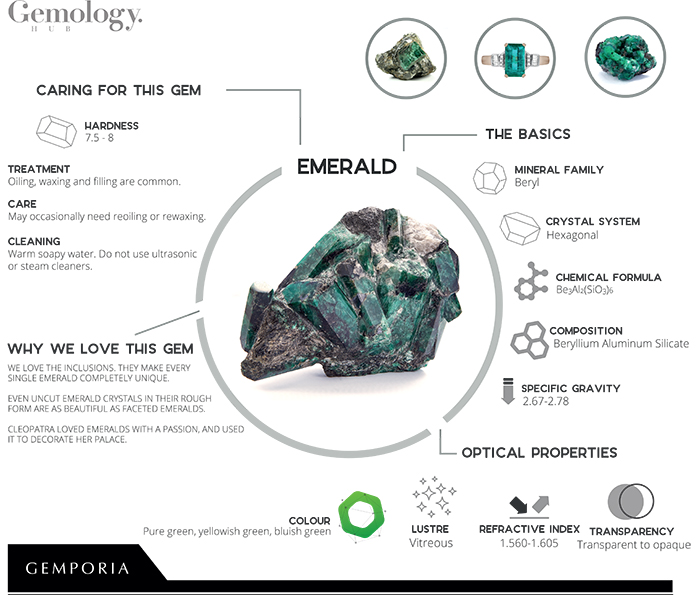
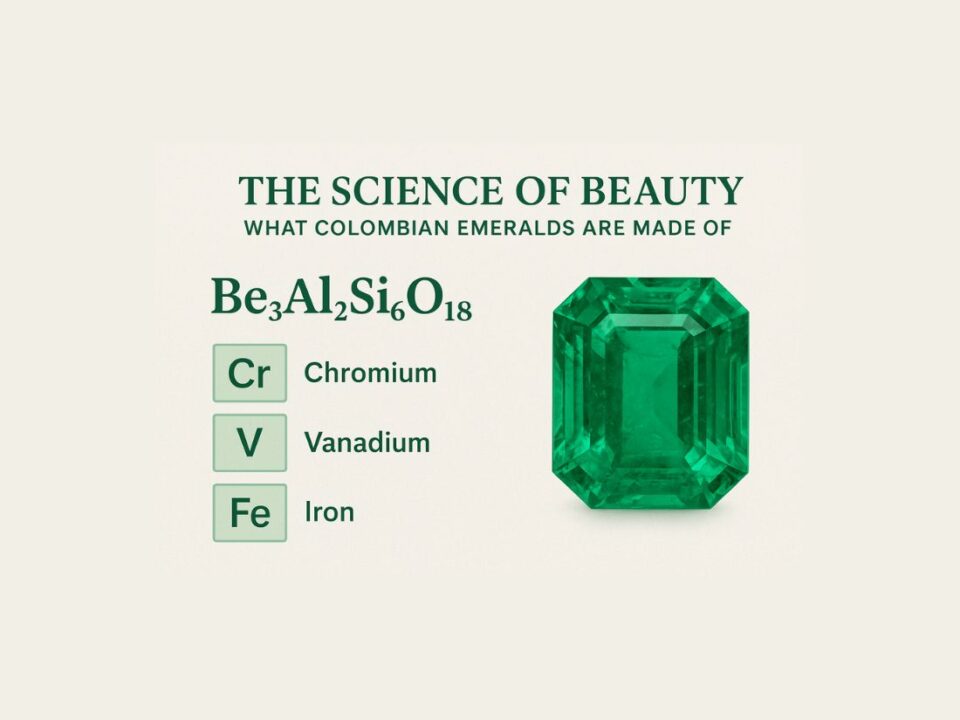
At their most basic level, emeralds are a variety of the mineral beryl. However, from a financial perspective, their value is derived from the specific impurities that give them their signature hue. While pure beryl is colorless, the presence of chromium, vanadium, and iron transforms the crystal into one of the most sought-after commodities on earth.
The Chemical Foundations of Rarity
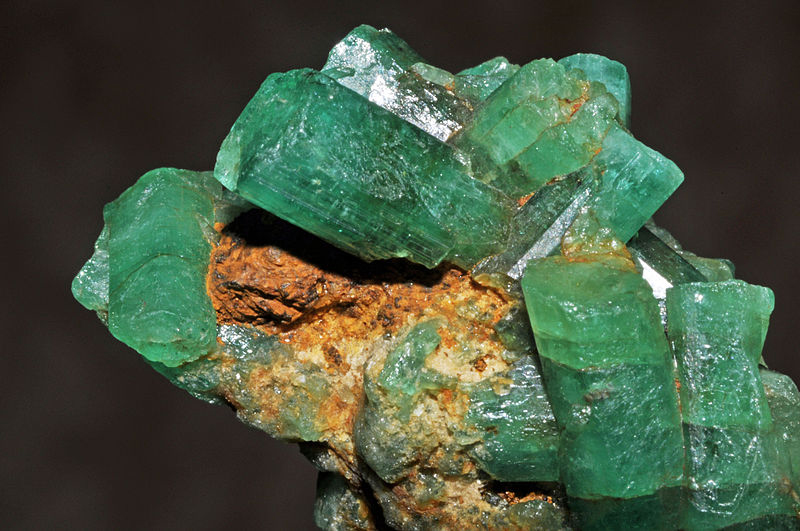
The geological conditions required to create an emerald are extraordinarily rare. They require the meeting of two different types of rock: beryllium (found in the Earth’s crust) and chromium (found in the Earth’s mantle). This tectonic “handshake” happens so infrequently that high-quality emeralds are significantly rarer than diamonds. For the investor, this scarcity creates a natural price floor. Unlike gold, which can be mined in predictable quantities, or synthetic assets that can be “printed,” the supply of investment-grade emeralds is finite and governed by the whims of planetary history.
Understanding the “Big Three” in Gemstone Portfolios
In the realm of alternative investments, emeralds serve as a cornerstone of the “Big Three.” While diamonds are often viewed as a “liquid” gemstone due to standardized pricing (the Rapaport Report), colored gemstones like emeralds offer higher potential for exponential appreciation. Because no two emeralds are chemically identical, a unique specimen can command a premium that far exceeds its weight in gold or its equivalent in stocks. This makes them an attractive option for “passion investing,” where the asset provides both aesthetic enjoyment and long-term capital gains.
Determining Quality: The Four Cs and Beyond
Just as a company’s stock price is determined by its earnings and debt-to-equity ratio, an emerald’s value is determined by its “Four Cs”: Color, Clarity, Cut, and Carat Weight. However, in the colored stone market, these metrics are weighted differently than they are for diamonds.
Color: The Primary Driver of ROI
In the gemstone market, color is the most significant factor in determining value. An emerald’s “makeup” is judged by three dimensions: hue, tone, and saturation. The most valuable emeralds possess a “vivid” saturation and a “medium-dark” tone. If a stone is too light, it is classified merely as “green beryl,” which carries a significantly lower price point. For an investor, focusing on “Muzo Green” (a term used for the finest Colombian specimens) can mean the difference between a 5% annual return and a 50% gain over a decade.
Clarity and the Role of Inclusions (The “Jardin”)
In the diamond world, an “inclusion” is a flaw. In the emerald world, inclusions are expected and often celebrated as the “Jardin” (French for garden). Because of the violent geological processes that create emeralds, almost all contain internal fractures or crystals. From a financial standpoint, these inclusions act as a “fingerprint,” proving the stone’s natural origin. However, the investor must be wary of “clarity enhancement.” Most emeralds are treated with cedar oil to fill surface-reaching fissures. While this is an industry-standard practice, the use of colored resins or polymers can drastically reduce the asset’s resale value.
Carat Weight and the Scarcity Premium
The price of an emerald does not rise linearly with its weight; it rises exponentially. A high-quality three-carat emerald is not three times more expensive than a one-carat stone; it may be ten times more expensive. This is because large, gem-quality emerald crystals are geological anomalies. For the private wealth manager, this means that “concentrating” capital into a single, high-carat stone often yields better long-term results than spreading that same capital across several smaller stones.
Strategic Sourcing: Origin as a Financial Multiplier
In the gemstone trade, “what an emerald is made of” is often inseparable from “where it was made.” The origin of a stone is a powerful brand that dictates market liquidity and premium pricing.
Colombian vs. Zambian: Why Geography Dictates Price
Historically, Colombia has been the gold standard for emeralds, producing stones with high transparency and a warm, glowing green. These stones typically command the highest premiums at auction houses like Christie’s and Sotheby’s. However, Zambia has emerged as a formidable market player, producing stones with a slightly bluish-green tint and fewer inclusions. For a value investor, Zambian emeralds often offer a better “entry price,” with the potential for higher percentage gains as the market increasingly accepts them as institutional-grade assets.
Ethically Sourced Assets and ESG Investing
Modern wealth management is increasingly focused on Environmental, Social, and Governance (ESG) criteria. The “makeup” of a modern investment emerald includes its ethical footprint. Stones that come with a “provenance report” or “blockchain-tracked” history are commanding higher prices. Investors are willing to pay a premium for “conflict-free” gems that support local mining communities. Ignoring the ethical component of gemstone sourcing can lead to “stranded assets” that are difficult to sell to the next generation of socially conscious buyers.
Market Dynamics and Risk Management
Investing in emeralds is not without its complexities. Unlike a savings account or a government bond, gemstones are “illiquid” assets that require a nuanced understanding of market timing and risk mitigation.
Liquidity Challenges in the Gemstone Market
One of the primary risks in gemstone investing is the “bid-ask spread.” Unlike a stock that can be sold instantly at a market price, an emerald requires a buyer who appreciates its specific characteristics. This means that emeralds should be viewed as long-term holds—typically 10 to 20 years. They are not “get-rich-quick” vehicles but rather “wealth preservation” tools designed to move capital across generations or across borders in a compact, physical form.
Certification: The Investor’s Insurance Policy
An emerald is only worth what its certification says it is. In the high-stakes world of gemstone finance, a report from a reputable lab like the GIA (Gemological Institute of America) or SSEF (Swiss Gemmological Institute) is non-negotiable. These documents verify the stone’s weight, dimensions, origin, and—most importantly—the level of treatment. An “un-oiled” emerald is the “holy grail” for investors; its natural perfection is so rare that it can command a 200% to 300% premium over a treated stone of the same appearance.
Diversifying Your Portfolio with Physical Assets
Why should an emerald have a place in a modern portfolio? The answer lies in its lack of correlation with traditional financial markets.
Hedge Against Inflation and Currency Volatility
Precious gemstones have historically maintained their purchasing power over centuries. When the value of a currency drops, the price of hard assets like emeralds tends to rise. Furthermore, they are “currency-neutral.” A high-quality emerald can be purchased in London, held in a vault in Singapore, and sold in New York, retaining its value regardless of the local economic climate. This “portability of wealth” is a unique feature that digital assets and real estate cannot replicate.
Long-term Hold Strategies for High-Net-Worth Individuals
For high-net-worth individuals (HNWIs), emeralds serve as a “private reserve.” They are an discreet way to store significant value without the public visibility of a real estate portfolio or the reporting requirements of certain financial instruments. By allocating 1% to 5% of a total portfolio to high-quality colored gemstones, an investor adds a layer of protection against systemic financial failure while participating in a market that has shown consistent upward momentum for decades.
In conclusion, what emeralds are “made of” is far more than mere chemistry. They are a complex blend of geological history, aesthetic beauty, and socioeconomic rarity. For the savvy investor, they represent a tangible link to the Earth’s most exclusive resources—a portable, beautiful, and enduring form of capital that transcends the digital ledgers of the modern banking system. By understanding the nuances of color, clarity, and origin, one can transform a “green rock” into a sophisticated financial instrument.
aViewFromTheCave is a participant in the Amazon Services LLC Associates Program, an affiliate advertising program designed to provide a means for sites to earn advertising fees by advertising and linking to Amazon.com. Amazon, the Amazon logo, AmazonSupply, and the AmazonSupply logo are trademarks of Amazon.com, Inc. or its affiliates. As an Amazon Associate we earn affiliate commissions from qualifying purchases.