
When we ask the question, “What was the tallest man in the world?” our curiosity is usually rooted in the spectacle of biology. We think of Robert Wadlow, the “Alton Giant,” who reached a staggering height of 8 feet 11.1 inches. However, beneath the surface of this historical record lies a fascinating study of economics, niche market monetization, and the staggering “cost of living” associated with extreme physical anomalies.
In the world of finance and business, “being the biggest” is often a goal for corporations seeking market dominance. But for the individuals who actually hold the title of the tallest in the world, their height served as both a unique financial asset and a significant liability. This article explores the economic reality of being a literal giant, examining how Robert Wadlow and his successors navigated the world of personal finance, brand partnerships, and the high overhead of a life built to an impossible scale.

The Monetization of Uniqueness: Turning a Record into a Revenue Stream
In the early 20th century, individuals with extreme physical traits often found themselves exploited by the “freak show” circuit. However, Robert Wadlow’s financial journey represents an early masterclass in personal branding and professional dignity. Rather than selling his dignity for a quick profit in a circus, Wadlow and his family treated his stature as a premium asset that required a strategic business model.
Historical Revenue Models: From Sideshows to Brand Ambassadorships
Robert Wadlow’s primary source of income was a sophisticated brand partnership that would look familiar to modern influencers. In 1938, he entered into a contract with the International Shoe Company. The deal was simple but effective: the company provided Wadlow with his custom-made shoes—which cost roughly $100 per pair at the time (equivalent to nearly $2,000 today)—free of charge. In return, Wadlow became a traveling representative for the brand.
This was more than just a sponsorship; it was a mobile marketing campaign. Wadlow visited over 800 towns and 41 states, traveling more than 300,000 miles. For the International Shoe Company, the ROI (Return on Investment) was astronomical. Wherever Wadlow went, crowds followed, providing the company with massive local exposure that traditional print advertising couldn’t replicate. This early example of “influence marketing” highlights how a unique physical trait can be leveraged to bypass traditional market barriers.
The Modern Economy of World Records and Social Media
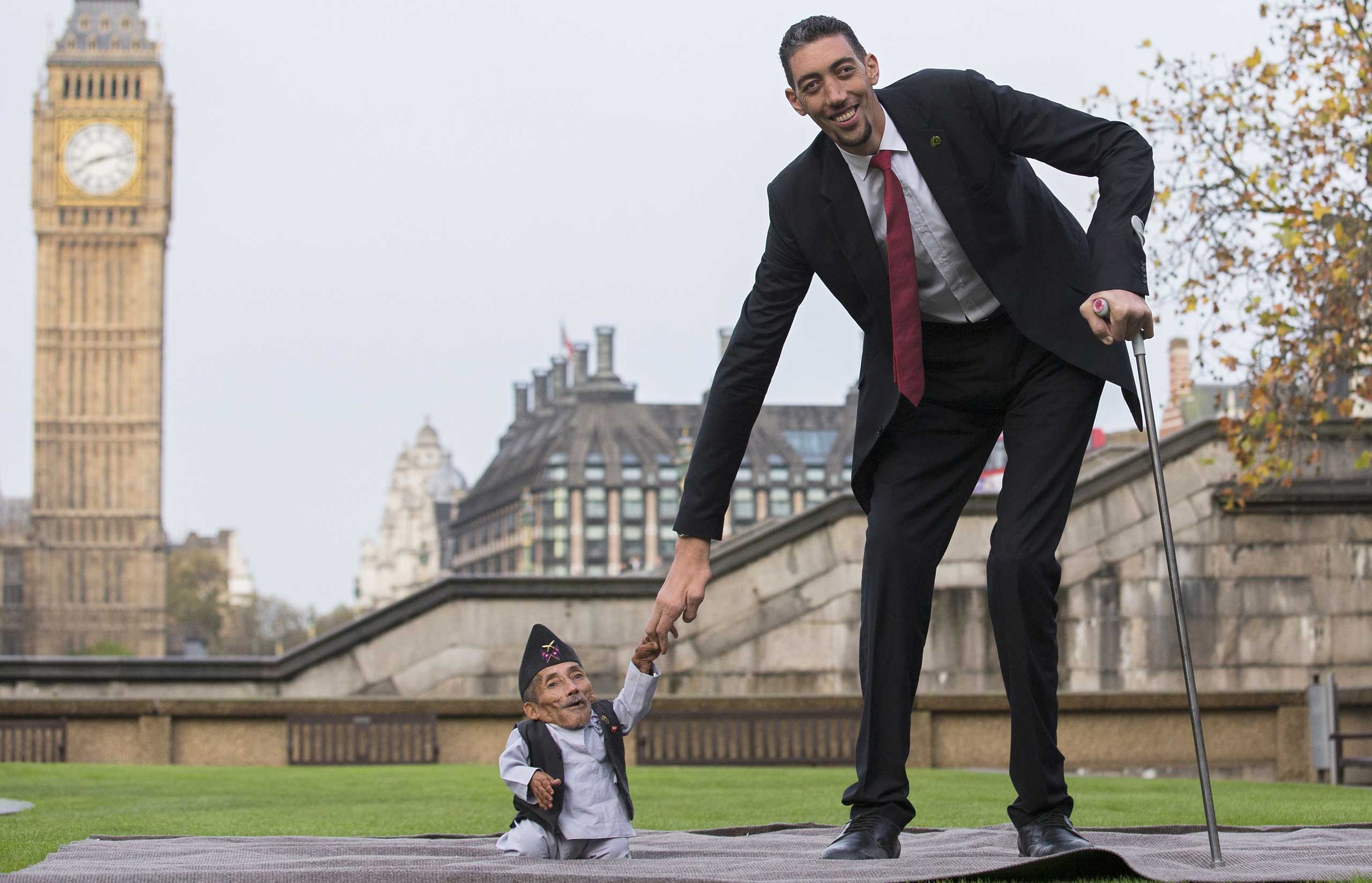
Today, the “tallest man” title—currently held by Sultan Kösen of Turkey—operates within a digital economy. The monetization of extreme height has shifted from physical tours to digital platforms. World record holders now utilize YouTube, Instagram, and TikTok to generate ad revenue and secure global sponsorship deals.
The Guinness World Records organization itself acts as a massive clearinghouse for these unique “assets.” While the organization does not pay individuals for holding a record, the title acts as a “Verified” badge of the highest order. This certification increases the individual’s market value for television appearances, documentaries, and keynote speaking engagements. In the modern money landscape, being the “tallest” is a top-of-funnel lead generation tool for a diversified portfolio of digital income.
The High Cost of Living Large: The Economics of Custom Infrastructure
While the revenue potential of being the world’s tallest man is significant, the “overhead” of maintaining such a life is proportionally massive. In business terms, Wadlow and others like him faced extreme “cost of goods sold” (COGS) for their basic existence. Most products are mass-produced for the average consumer to achieve economies of scale. When you are nearly nine feet tall, you exist entirely outside of the mass-market economy.
Logistics and Luxury: The Hidden Expenses of Extreme Physiology
For the tallest man in the world, nothing is “off the shelf.” Every basic necessity requires custom manufacturing, which carries a “bespoke premium.” Robert Wadlow required 37AA shoes. In the 1930s, the molds for these shoes had to be specially carved, and the leather requirements were triple that of a standard shoe.
Beyond clothing, the logistics of travel represent a significant financial drain. Wadlow had to have a custom-built car—a 1933 Ford 7-passenger sedan—modified by removing the front seat so he could sit in the back and still reach the pedals or simply have enough legroom. Modern giants face similar issues with aviation. To fly, they often must purchase two or three first-class seats or negotiate with airlines for exit-row modifications. From a financial planning perspective, the “burn rate” of a person with such extreme needs is significantly higher than that of a high-net-worth individual living a standard lifestyle.

Risk Management and Insurance for Anomalous Individuals
In the world of personal finance, insurance is a cornerstone of wealth protection. However, for the world’s tallest man, the actuarial tables are terrifying. Extreme height is almost always the result of a pituitary condition (hyperplasia), which brings a host of secondary health complications, including cardiovascular strain and bone fragility.
From a financial risk management standpoint, insuring a literal giant is a nightmare. Premiums for life and health insurance would be prohibitively expensive, if available at all. This necessitates a strategy of “self-insurance,” where the individual must maintain a much higher liquidity ratio than the average person to cover sudden medical expenses or the cost of mobility aids, such as the custom leg braces that eventually led to the infection that claimed Wadlow’s life at age 22.
Scalability and Market Position: Why “The Tallest” Always Wins
In business, there is a concept known as “The Winner-Take-All Market.” This occurs when the top performer in a category captures the vast majority of the rewards, leaving very little for those in second or third place. The title of “The Tallest Man in the World” is a perfect example of this financial phenomenon.
The Monopoly of the Extreme: Market Dominance in Niche Industries
There are many men who are seven feet tall; many of them play in the NBA and earn millions. However, the step from “very tall” to “the tallest” creates a unique monopoly. Robert Wadlow wasn’t just a tall man; he was an incomparable landmark. This allowed him to command appearance fees and contract terms that a man only six inches shorter could never negotiate.
In the niche market of “human curiosities,” the number one position is the only one with true scaling power. This teaches a valuable lesson in business strategy: it is often more profitable to be the undisputed leader of a narrow, extreme niche than to be a mid-tier player in a broad, competitive market. Wadlow’s “market cap” was high because his “competition” was non-existent.
Investing in Rare Talent: A Case Study in Human Capital
From an investment perspective, individuals like Wadlow represent “Black Swan” assets. They are unpredictable, rare, and high-impact. For the brands that worked with him, the investment was in “human capital” that could not be replicated.
If we look at the International Shoe Company’s decision to fund Wadlow’s lifestyle, we see a strategic allocation of marketing capital. They weren’t just paying for a spokesperson; they were investing in a unique distribution channel. Wadlow was a walking billboard that people would pay to see. This is the essence of high-value investing: finding an asset that has a low correlation with the rest of the market and high visibility.
Lessons for Modern Entrepreneurs: Managing the “Goliath” Asset
The story of the world’s tallest man is ultimately a story of managing a unique, yet fragile, business asset. Whether you are a personal brand or a corporate entity, the “Goliath” strategy carries both immense power and significant risk.
Sustainability and Legacy Planning in Short-Term Careers
The primary financial tragedy of Robert Wadlow’s life was its brevity. Because his “asset” (his height) was tied to a physical condition that limited his lifespan, his earning window was incredibly narrow. This is a common challenge for athletes, fashion models, and influencers whose income is tied to a physical state.
For anyone whose “Money” strategy is tied to a temporary physical advantage, legacy planning and wealth diversification are essential. Had Wadlow lived longer, his financial strategy would have needed to shift from “active appearance income” to “passive licensing income.” We see this today with the estates of deceased icons who continue to generate millions through brand licensing.
In conclusion, “What was the tallest man in the world?” is a question that invites us to look at the intersection of biology and business. Robert Wadlow was more than a record-holder; he was a pioneer in the economics of exceptionalism. He proved that even the most extreme physical challenges can be transformed into a professional brand, provided one understands the balance between high-overhead costs and the power of a unique market position. For the modern entrepreneur, the Alton Giant serves as a reminder that being “the biggest” requires a financial infrastructure just as large as the ambition itself.
aViewFromTheCave is a participant in the Amazon Services LLC Associates Program, an affiliate advertising program designed to provide a means for sites to earn advertising fees by advertising and linking to Amazon.com. Amazon, the Amazon logo, AmazonSupply, and the AmazonSupply logo are trademarks of Amazon.com, Inc. or its affiliates. As an Amazon Associate we earn affiliate commissions from qualifying purchases.