
When Disneyland opened its gates on July 17, 1955, the world witnessed more than the debut of an amusement park; it witnessed the birth of a revolutionary brand archetype. While historians often debate which specific attraction holds the title of the “first” ride—whether it was the King Arthur Carrousel (a refurbished 1875 masterpiece) or the first vehicle to depart on Peter Pan’s Flight—the significance lies not in the chronology, but in the corporate identity these attractions established.
For the modern brand strategist, Disneyland’s inaugural attractions serve as a masterclass in experiential marketing and narrative consistency. By examining the “firsts” of Disneyland through the lens of brand development, we can uncover how Walt Disney transformed a struggling film studio into a multi-generational lifestyle brand that commands unparalleled consumer loyalty.

The Foundation of Narrative Branding: From Screen to Street
Before 1955, the concept of a “theme park” did not exist. There were amusement parks—often dirty, chaotic environments focused on mechanical thrills. Walt Disney’s primary brand strategy was to pivot away from “rides” and toward “attractions.” This distinction is the cornerstone of the Disney brand identity: the hardware (the ride mechanism) must always be secondary to the software (the story).
Translating Cinema into Physical Space
The first rides at Disneyland, such as Snow White’s Adventures and Mr. Toad’s Wild Ride, were not merely kinetic experiences; they were three-dimensional extensions of established intellectual property (IP). This was a landmark move in brand scaling. By allowing consumers to “step into” the films they loved, Disney created a feedback loop of brand reinforcement. This strategy taught the corporate world that a brand is most powerful when it becomes an environment the customer can inhabit, rather than a product they simply observe.
The Role of the “Wienie” in Brand Navigation
Walt Disney famously used the term “wienie” to describe visual magnets that draw guests through a space. The first ride many guests saw upon entering Fantasyland was the King Arthur Carrousel, positioned strategically behind Sleeping Beauty Castle. In branding terms, this is “visual hierarchy.” By placing iconic, aesthetically pleasing attractions at key junctions, Disney established a brand language of discovery. Every “first” ride was positioned to guide the consumer’s journey, ensuring that the brand story unfolded in a logical, emotionally resonant sequence.
The King Arthur Carrousel: Heritage as a Brand Anchor
While many of the rides in 1955 were built from scratch, the King Arthur Carrousel was an antique, sourced from Sunnyside Beach Park in Toronto. The decision to make an 80-year-old carousel a centerpiece of a “forward-thinking” park was a deliberate brand choice regarding heritage and authenticity.
Preserving Tradition Amidst Innovation
In branding, “heritage” provides a sense of stability and trust. By refurbishing an authentic carousel rather than building a modern, plastic imitation, Disney signaled that his brand valued craftsmanship and history. Every horse on the carrousel was carved from wood, and Walt insisted that every guest should have a “jumping” horse. This attention to detail became a brand signature. It told the audience: “This brand does not cut corners.” For a modern corporate identity, this highlights the importance of “Brand Soul”—the intangible quality that makes a product feel human and curated rather than mass-produced.
Quality Control: The Meticulous Maintenance of Brand Standards
One of the most famous anecdotes in Disney’s brand history involves the maintenance of the first rides. Walt Disney noticed that at other parks, paint was chipped and staff were surly. He mandated that Disneyland be kept in a state of perpetual “Opening Day” freshness. The King Arthur Carrousel, for instance, is stripped and repainted annually. This commitment to “Show Quality” became a core pillar of the Disney brand. It established the expectation that the brand’s physical touchpoints would always exceed the industry standard, justifying a premium price point and fostering long-term brand equity.
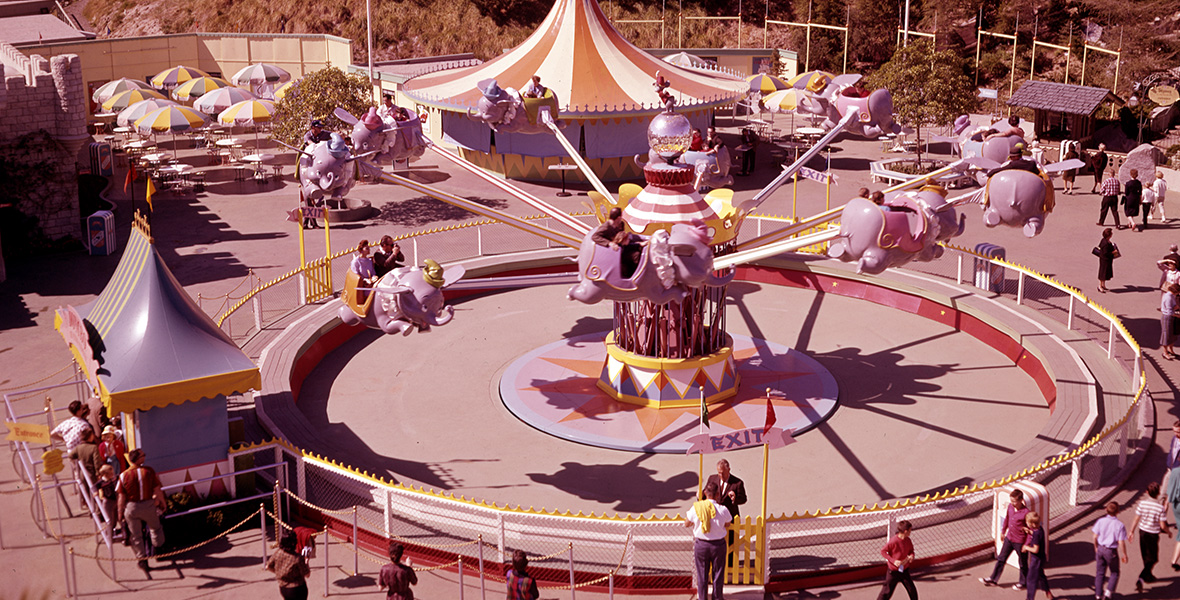
Pioneering Imagineering: The Technical Signature of the Disney Brand
The “first” rides at Disneyland necessitated the creation of a new corporate division: WED Enterprises, now known as Walt Disney Imagineering. This was the first time a brand had internalised the roles of structural engineering, storytelling, and theater arts under one roof.
Creating a Proprietary Methodology
The development of rides like the Jungle Cruise—another opening day “first”—showed how technical innovation could be leveraged to support a brand’s promise. The use of mechanical animals and controlled waterways allowed Disney to guarantee a “wildlife experience” that was consistent every single time. In brand strategy, consistency is the antidote to consumer anxiety. By “engineering” the experience, Disney ensured that the brand promise delivered in marketing materials was identical to the product delivered on the ground.
The Emotional ROI of Guest Experience
The first rides were designed with “the squeeze” in mind—the emotional peak of an experience. Whether it was the flight over London in Peter Pan’s Flight or the simulated train crash in Mr. Toad, these attractions focused on evoking a specific emotional response. This shifted the brand’s Value Proposition from “we provide rides” to “we provide memories.” Modern brands like Apple or Nike follow this same blueprint, focusing on how the product makes the user feel (empowered, creative, or nostalgic) rather than just what the product does.
Evolution and Consistency: Scaling the Disney Identity
A brand that stays static eventually becomes a relic. The genius of the Disneyland model is the concept of “plussing”—the constant improvement of even the most successful “first” rides to meet evolving consumer expectations without losing the core brand identity.
Modernizing Classics Without Diluting Brand Equity
Over the decades, the original 1955 rides have seen numerous technological upgrades. Alice in Wonderland (an early addition) and the Matterhorn Bobsleds (the first tubular steel roller coaster) have been refreshed with digital projections and smoother ride systems. However, the “brand DNA” of these attractions remains untouched. This teaches a vital lesson in brand management: you can change the delivery system (the technology), but you must never change the brand’s core narrative (the story). Successful brand scaling requires a delicate balance between innovation and nostalgia.
Lessons for Contemporary Brands
What can a modern startup or a legacy corporation learn from Disneyland’s first rides?
- Iterative Excellence: Disneyland was “finished” only in the sense that it opened; the brand itself is a living organism.
- Immersive Design: Every touchpoint—from the trash cans to the ride vehicles—must speak the same brand language.
- The Human Element: The “first” ride experience was nothing without the “Cast Members.” Disney rebranded employees as actors in a show, ensuring that the corporate culture was an extension of the brand’s theatrical promise.

Conclusion: The Legacy of the First Ride
What was the first ride at Disneyland? Technically, it depends on which gate you entered and which way you turned. But from a brand strategy perspective, the “first ride” was the transition from a passive consumer to an active participant in a corporate narrative.
The attractions of 1955 were the prototypes for what we now call “Integrated Marketing Communications.” They proved that a brand could be more than a logo on a screen; it could be a place, a smell, a sound, and a memory. By focusing on storytelling, meticulous quality, and emotional resonance, the first rides at Disneyland didn’t just entertain a mid-century audience—they built a foundational brand framework that continues to dominate the global marketplace nearly 70 years later. For any business looking to build a lasting legacy, the lesson is clear: start with the story, engineer the experience, and never stop “plussing” the brand.
aViewFromTheCave is a participant in the Amazon Services LLC Associates Program, an affiliate advertising program designed to provide a means for sites to earn advertising fees by advertising and linking to Amazon.com. Amazon, the Amazon logo, AmazonSupply, and the AmazonSupply logo are trademarks of Amazon.com, Inc. or its affiliates. As an Amazon Associate we earn affiliate commissions from qualifying purchases.