
The history of video games is not a straight line, but rather a complex web of technological breakthroughs, experimental physics, and computational milestones. When asking “what was the first game made,” the answer depends entirely on how one defines a “game” and the “technology” behind it. To understand the origin of this multi-billion-dollar industry, we must look past the flashy pixels of the modern era and delve into the world of vacuum tubes, cathode-ray tubes (CRTs), and room-sized mainframe computers.
The journey from academic curiosity to a global tech phenomenon is a testament to human ingenuity. By examining the earliest instances of interactive software and electronic play, we gain insight into how the foundational principles of computing—processing, input/output, and visual feedback—coalesced to create the very first video games.
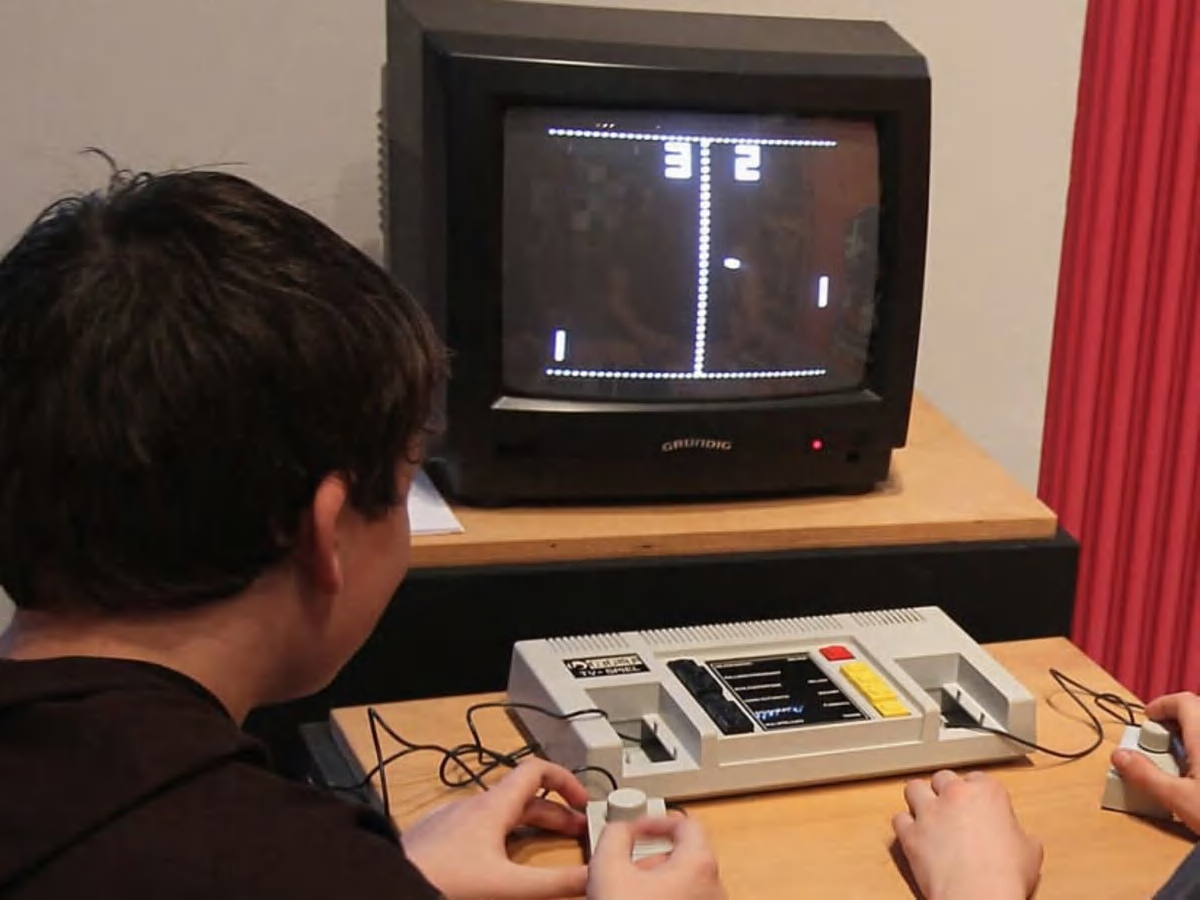
Defining the “First”: The Technical Evolution of Early Computing
To identify the first game, we must distinguish between electronic games, digital games, and games with a visual display. In the mid-20th century, computers were not the compact devices we carry today; they were massive calculators designed for ballistics research, weather forecasting, and atomic simulations. The idea of using these resources for “play” was often a secondary experiment to test the capabilities of new hardware.
The Cathode-Ray Tube Amusement Device (1947)
The earliest technical ancestor of the video game is the Cathode-Ray Tube Amusement Device, patented in 1947 by Thomas T. Goldsmith Jr. and Estle Ray Mann. This was not a computer game in the modern sense, as it did not run on a computer or use software. Instead, it used vacuum tube electronics and an oscilloscope display. Players used knobs to control a beam of light (simulating a missile) to hit targets placed on the screen via physical overlays. While primitive, it established the concept of electronic interactivity and visual feedback.
Bertie the Brain (1950)
A few years later, at the 1950 Canadian National Exhibition, “Bertie the Brain” was unveiled. Built by Josef Kates, this was a four-meter-tall monster of a machine that used vacuum tubes to play Tic-Tac-Toe. Bertie represented a leap forward in artificial intelligence (AI) in its simplest form, as the machine was programmed to respond to human moves. Though it was dismantled after the exhibition, it proved that specialized hardware could be engineered specifically for interactive entertainment.
The Mainframe Era: Logic, Mathematics, and Play
As the 1950s progressed, the focus shifted from specialized hardware to software running on general-purpose digital computers. This era was defined by the “stored-program” concept, where instructions were held in the computer’s memory, allowing for more complex logic and game states.
Nimrod and the Digital Logic of Play
In 1951, the Nimrod computer was built by Ferranti for the Festival of Britain. Unlike Bertie, Nimrod was designed specifically to showcase the power of digital logic by playing a game called “Nim.” The game involved players taking turns removing objects from heaps, with the goal of being the last to move. While Nimrod lacked a screen—using a panel of lights to represent the game state—it was a landmark in computing. It demonstrated that a digital machine could follow complex mathematical rules to compete against a human opponent, a precursor to modern algorithmic gaming.
OXO: The First Graphical Digital Game
The true “first” for many historians is OXO (also known as Noughts and Crosses), created in 1952 by Alexander S. Douglas at the University of Cambridge. Running on the EDSAC (Electronic Delay Storage Automatic Calculator), OXO was the first digital game to use a graphical display. The EDSAC used a 35×16 dot matrix on a CRT to display the game board. While the visuals were static compared to today’s standards, the underlying tech was revolutionary: it was a program stored in memory that manipulated a visual interface based on user input.
Tennis for Two: Moving Beyond Static Displays
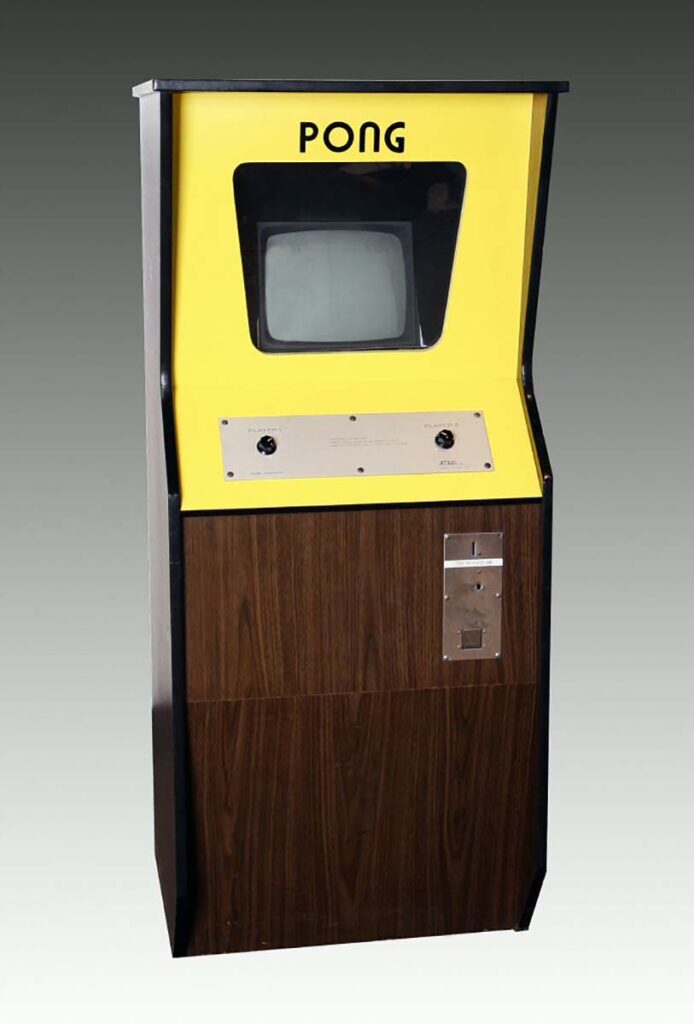
In 1958, the technical definition of a video game shifted again. Until this point, most games were turn-based and largely static. William Higinbotham, a physicist at the Brookhaven National Laboratory, wanted to liven up an annual public exhibition. He created Tennis for Two, which introduced the concept of real-time physics and motion to electronic play.
William Higinbotham’s Oscilloscope Innovation
Unlike its predecessors, Tennis for Two did not rely on a grid. Using an analog computer and an oscilloscope, Higinbotham programmed a side-view of a tennis court where a point of light represented the ball. The ball would bounce over a “net” and was affected by simulated gravity and wind resistance. Players used custom-built controllers with a knob and a button, making it one of the first games to feature a dedicated peripheral for interaction.
The Legacy of Analog Interaction
Tennis for Two was a masterclass in electrical engineering. It used operational amplifiers to calculate the trajectory of the ball in real-time. Although it was an analog system rather than a digital one, it was the first game created solely for entertainment rather than for academic research or hardware demonstration. It proved that technology could be used to simulate physical environments, a principle that remains the bedrock of modern game engines.
Spacewar! and the Birth of Modern Gaming Architecture
The early 1960s saw the arrival of the PDP-1 (Programmed Data Processor-1), a computer that was “small” enough to fit in a single room and featured a high-quality CRT display. At MIT, a group of students and researchers, led by Steve Russell, decided to push this hardware to its absolute limit. The result was Spacewar! (1962).
The PDP-1 and MIT’s Tech Model Railroad Club
Spacewar! featured two ships (the “Wedge” and the “Needle”) maneuvering in a starfield, firing torpedoes at each other while navigating the gravitational pull of a central star. Technically, it was light-years ahead of anything that had come before. It required thousands of lines of code and utilized a significant portion of the PDP-1’s processing power to calculate concurrent movements and physics. It was the first “shoot ’em up” and the first game that could be shared; because it was written for a standardized computer, it was ported to other PDP-1 installations across the country.
Influence on Future Software Engineering
The development of Spacewar! introduced several concepts that are now standard in software engineering. The creators wrote a “program” that was modular, allowing others to add features like a more realistic star map or “hyperspace” buttons. It also necessitated the creation of the first dedicated gaming controllers—external boxes with switches—because the computer’s toggle switches were too difficult to use during intense gameplay. This was the moment the “gamer” was born, as users began to value the technical responsiveness and framerate of the software.
From Lab Experiments to the Digital Frontier: The Tech Legacy
Tracing the “first game” reveals that the industry began not as a commercial endeavor, but as a byproduct of technical innovation. Each “first”—from the CRT Amusement Device to Spacewar!—marked a specific breakthrough in how humans interact with machines.
The Impact of Early Algorithms on Modern AI
The logic used in Bertie the Brain and OXO laid the groundwork for modern pathfinding and decision-making algorithms. Even the most advanced NPCs (non-player characters) in current AAA titles are descendants of those early vacuum-tube logic gates. The transition from hard-wired circuits to stored-program digital software allowed games to evolve from simple math puzzles into complex simulations.
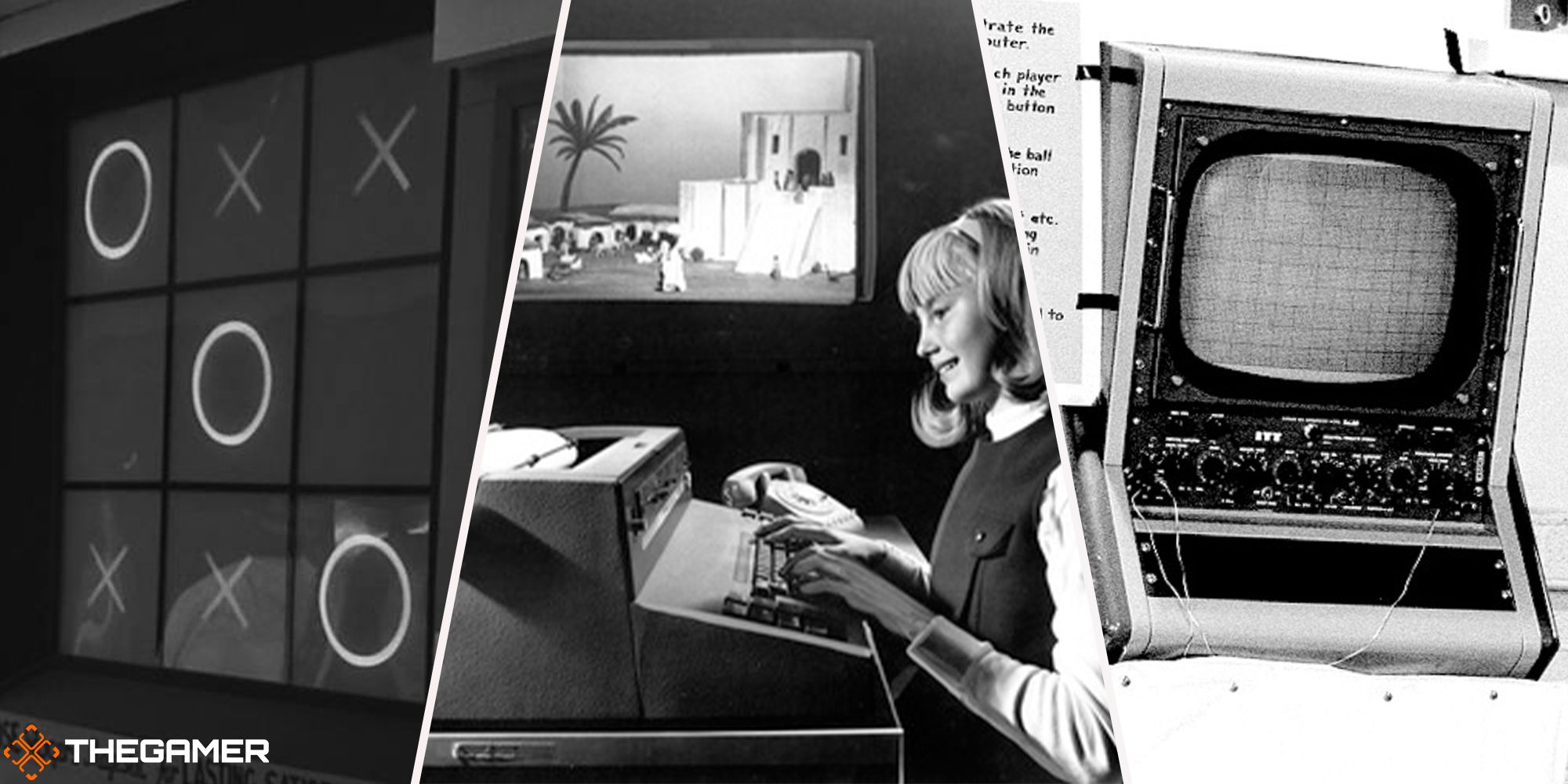
Why Hardware Limitations Defined Gameplay Mechanics
The history of early games is also a history of hardware limitations. The side-view perspective of Tennis for Two was a result of oscilloscope constraints. The black-and-white vector graphics of Spacewar! were necessary because raster-scan monitors were not yet viable for real-time graphics. Today’s ray-tracing and 4K resolutions are the continuation of this struggle between creative vision and hardware capability.
In conclusion, the title of “the first game” is shared among several pioneers. Whether it is the analog ingenuity of the Cathode-Ray Tube Amusement Device, the digital logic of OXO, the real-time physics of Tennis for Two, or the software complexity of Spacewar!, each one contributed a vital technical component to the digital world. These early experiments did more than provide entertainment; they demonstrated that computers could be interactive, visual, and—most importantly—engines for human imagination.
aViewFromTheCave is a participant in the Amazon Services LLC Associates Program, an affiliate advertising program designed to provide a means for sites to earn advertising fees by advertising and linking to Amazon.com. Amazon, the Amazon logo, AmazonSupply, and the AmazonSupply logo are trademarks of Amazon.com, Inc. or its affiliates. As an Amazon Associate we earn affiliate commissions from qualifying purchases.