
In 1924, a student walking into a classroom would find an environment that, while recognizable in its basic structure, operated on a completely different technological “operating system” than the one we use today. To understand what school was like 100 years ago is to witness the very beginning of the “EdTech” (Educational Technology) trajectory—a journey from physical, tactile tools to the ephemeral, data-driven ecosystems of the 21st century.
This evolution is not merely a story of better gadgets; it is a narrative of how technology has redefined the accessibility of information, the speed of communication, and the very nature of the pedagogical relationship between teacher and student.
The EdTech of 1924: Analog Innovation and the Physical Classroom
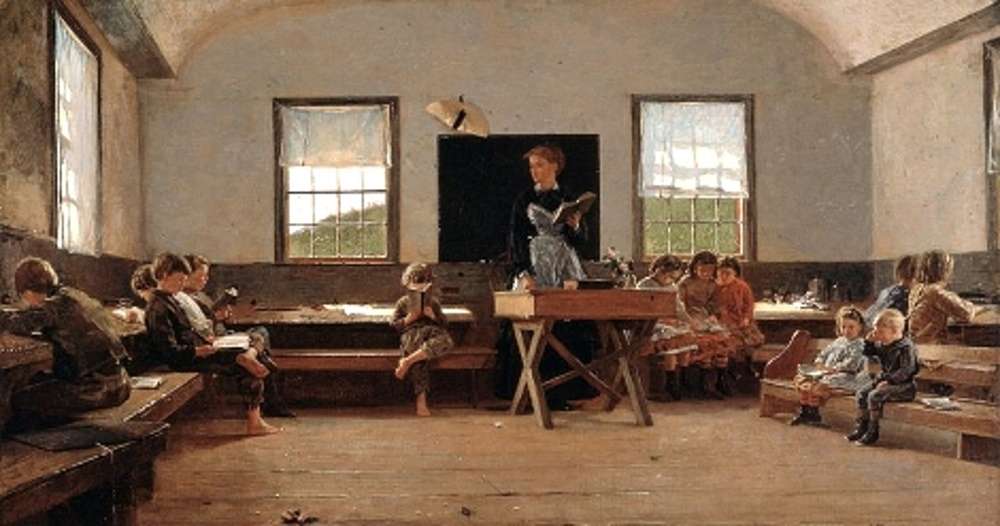
A century ago, the “technology” of the classroom was defined by its physical permanence. While we often think of the 1920s as primitive, it was actually an era of significant transition in educational tools. The transition from slates to paper was the “digital transformation” of its day.
The Primacy of the Pencil and the Inkwell
One hundred years ago, the widespread adoption of the mass-produced wood-cased pencil was a relatively recent standard. Before this, students often used individual slates and chalk, which offered no permanent record of their work. By 1924, the “tech stack” for a student included fountain pens, inkwells built directly into wooden desks, and standardized paper. This shift allowed for the archiving of knowledge and the ability for teachers to provide written feedback that students could keep—a fundamental shift in how data was stored and retrieved in an educational setting.
Visual Aids: From Magic Lanterns to Physical Maps
While today we have interactive 4K displays, the visual technology of 1924 relied on the “Magic Lantern” and the stereoscope. These were the ancestors of modern projectors, using glass slides to project images onto a wall. Though cumbersome, they represented the first time technology was used to bring the outside world—distant geography, microscopic biology, or historical artifacts—into the localized environment of a rural or urban classroom. Coupled with massive, pull-down linen maps, these tools were the high-bandwidth information delivery systems of their time.
The Mid-Century Shift: Broadcast and Audio-Visual Integration
As we moved toward the middle of the 20th century, the definition of classroom technology expanded from stationary tools to broadcast media. This era introduced the concept of “distance learning” long before the internet existed, leveraging the burgeoning fields of telecommunications.
Radio and Television: Bringing the World to the Classroom
In the 1930s and 40s, the “School of the Air” became a popular concept. Educators began using radio broadcasts to reach remote schools, providing high-quality lectures from experts that local teachers might not be able to replicate. By the 1950s and 60s, the television followed suit. The “AV Cart”—a heavy television and filmstrip projector on wheels—became a staple of school life. This was the first iteration of multimedia learning, where visual and auditory stimuli were combined to enhance rote memorization and conceptual understanding.
The Rise of Calculators and Early Computing
The 1970s marked a pivotal moment in the “Money” and “Tech” of education with the introduction of the handheld electronic calculator. Initially viewed with skepticism by educators who feared it would erode basic math skills—much like the current debate surrounding AI—the calculator forced a curriculum shift toward logic and problem-solving over manual computation. Simultaneously, the first mainframe computers began appearing in large universities, signaling the start of the transition from analog records to digital databases.
The Digital Revolution: Internet, Personal Computing, and the Cloud
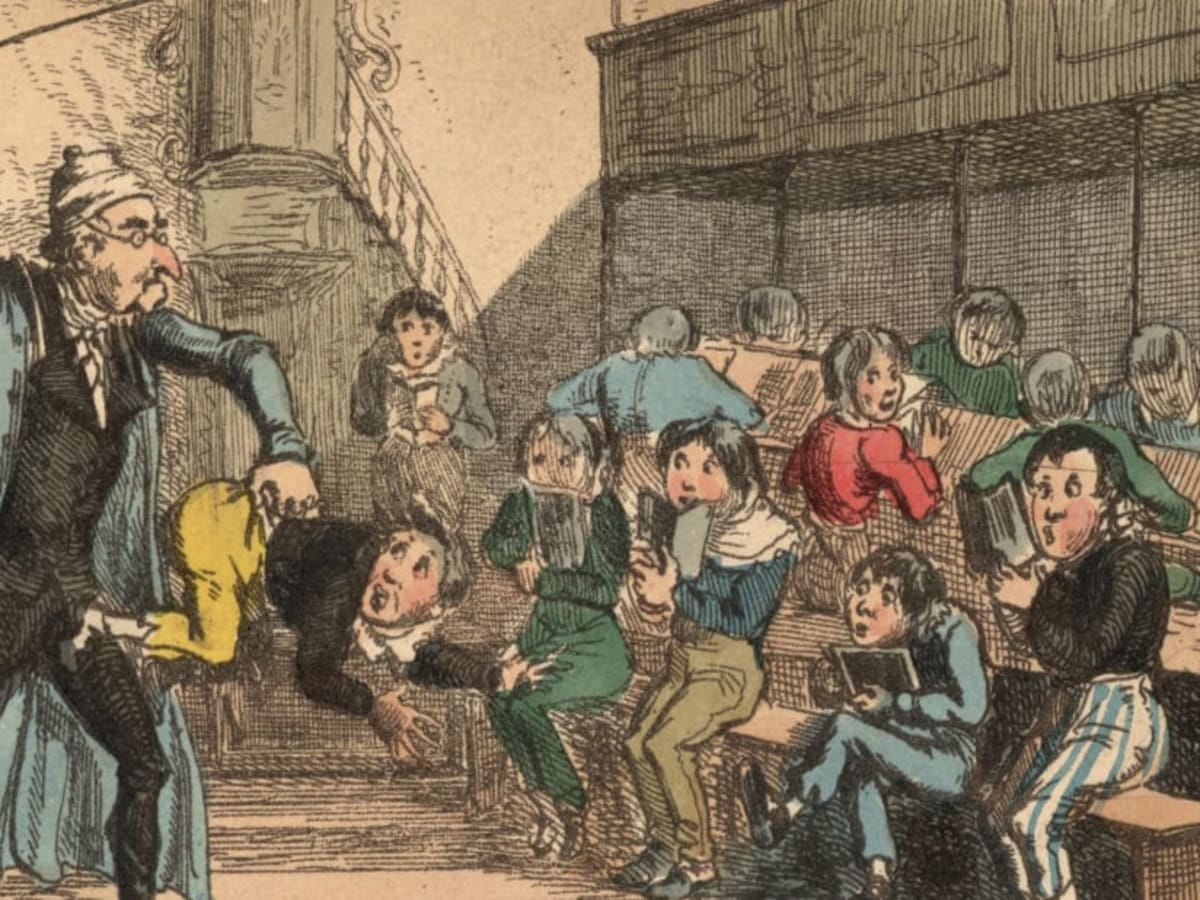
The most drastic change in the 130-year history of modern schooling occurred in the late 1990s and early 2000s. The shift from “computer labs” to “ubiquitous computing” changed the school from a place where you go to get information to a place where you process information that is available everywhere.
One-to-One Computing and the Death of the Textbook
In 1924, the textbook was the ultimate authority—a static, expensive repository of information. Today, through one-to-one (1:1) laptop or tablet initiatives, the “textbook” is a dynamic, cloud-based platform. Software-as-a-Service (SaaS) providers like Google Workspace for Education and Microsoft 365 have moved the classroom from a physical desk to a digital environment. Students no longer carry 20 pounds of paper; they carry a gateway to the entire sum of human knowledge, updated in real-time.
The Collaborative Power of the Cloud
A century ago, collaboration meant sitting next to someone and sharing a physical book. Modern tech has decoupled collaboration from physical proximity. Learning Management Systems (LMS) like Canvas or Blackboard allow for asynchronous learning. A student can submit a project at midnight, a teacher can provide video-based feedback at 6:00 AM, and classmates can peer-review the work via shared documents simultaneously. This infrastructure has created a 24/7 learning cycle that would have been unimaginable to the 1924 schoolboard.
The New Frontier: AI, VR, and Hyper-Personalized Learning
As we look at the contemporary classroom, we are entering the fourth industrial revolution of education. The technology of today is not just a tool for delivery; it is becoming an active participant in the learning process itself.
Artificial Intelligence as a Personalized Tutor
The most significant technological trend in modern education is the integration of Artificial Intelligence (AI). Unlike the standardized, one-size-fits-all approach of 100 years ago, AI allows for “Adaptive Learning.” Algorithms can now analyze a student’s performance in real-time, identifying specific gaps in their understanding and tailoring the curriculum to their individual pace. In 1924, a student who didn’t understand a concept was often left behind; in 2024, AI tools can provide instant remediation and personalized tutoring, effectively scaling the “Oxford Tutorial” model to millions of users.
Immersive Tech: VR and AR in the Modern Curriculum
Virtual Reality (VR) and Augmented Reality (AR) are the logical conclusions of the Magic Lanterns of 1924. Instead of looking at a flat image of the Roman Colosseum, students can now don a headset and walk through a digitally reconstructed version of it. This shift from “learning about” to “experiencing” is a fundamental change in pedagogical technology. It bridges the gap between theoretical knowledge and practical application, allowing students to perform “digital” chemistry experiments or practice surgery in risk-free, simulated environments.
Reflections on a Century of Progress: Does Better Tech Mean Better Learning?
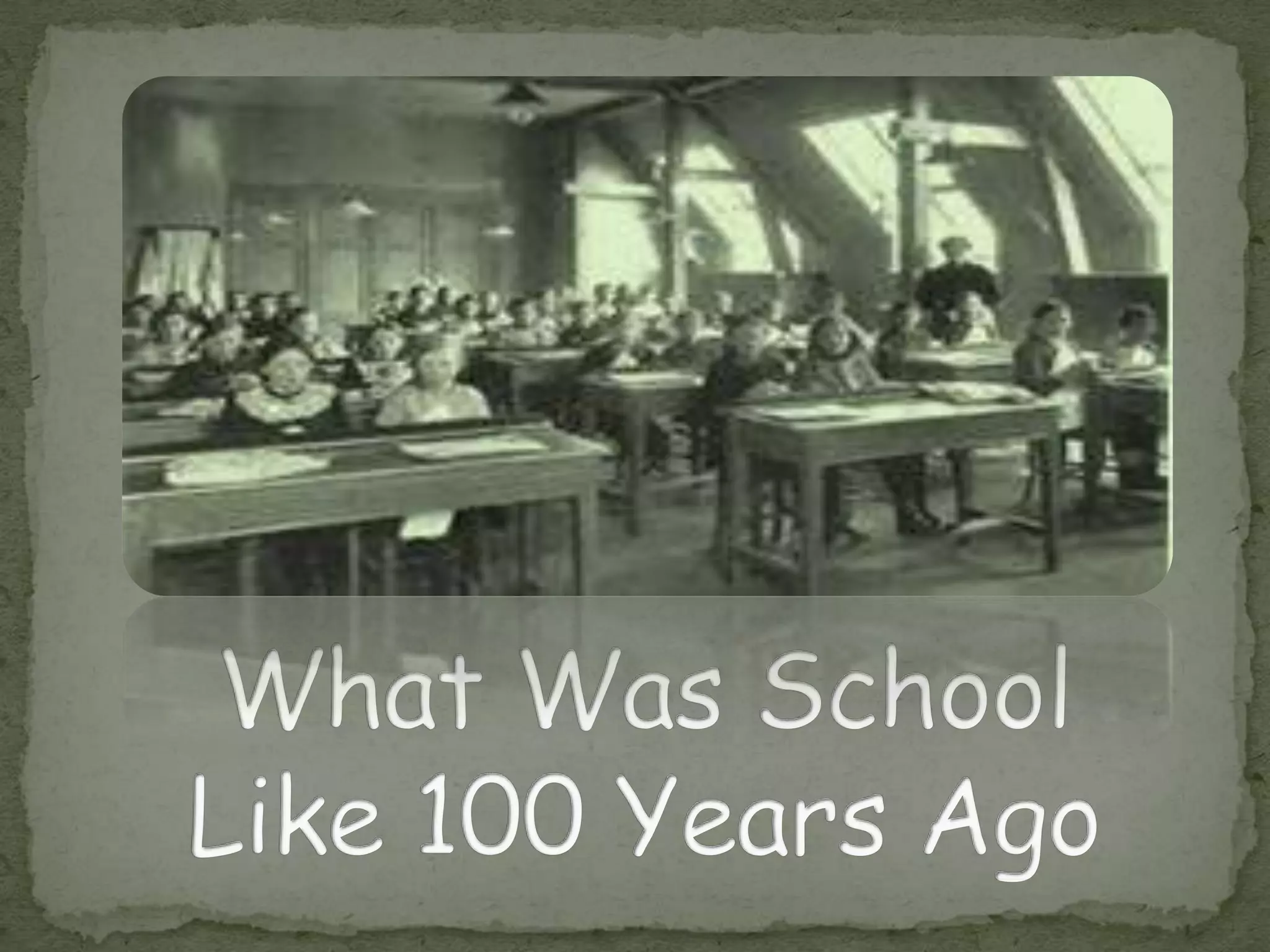
When we compare the school experience of 1924 to 2024, the technological disparity is staggering. We have moved from inkwells to gigabit fiber, from rote memorization of printed facts to the critical evaluation of AI-generated content. However, the core objective of technology in education has remained remarkably consistent: the reduction of friction.
One hundred years ago, the “friction” was the physical scarcity of information. Books were expensive, teachers were the sole source of knowledge, and geographic isolation was a major barrier. Today, the friction has shifted. Information is no longer scarce; it is overwhelming. The role of modern technology is no longer just to provide the data, but to help students filter, analyze, and apply it.
As we look toward the next 100 years, the trend lines suggest a move toward even greater decentralization. With the rise of Starlink and global satellite internet, the “classroom” is no longer a geographical requirement. The technological evolution that began with a wooden pencil has led us to a world where a child in a remote village can access the same MIT-level physics lectures as a student in Boston.
The lesson of the last century is that technology in school is most effective not when it replaces the human element, but when it removes the mechanical barriers to intellectual growth. Whether it is a fountain pen or a Large Language Model, the best educational tools have always been the ones that allow the mind to focus on the “why” rather than the “how.” As we reflect on what school was like 100 years ago, we see a path of incredible empowerment, proving that while the tools change, the human desire to learn, innovate, and connect remains the constant driving force behind every technological leap.
aViewFromTheCave is a participant in the Amazon Services LLC Associates Program, an affiliate advertising program designed to provide a means for sites to earn advertising fees by advertising and linking to Amazon.com. Amazon, the Amazon logo, AmazonSupply, and the AmazonSupply logo are trademarks of Amazon.com, Inc. or its affiliates. As an Amazon Associate we earn affiliate commissions from qualifying purchases.