
In the landscape of modern sports simulation, the release of a new NBA 2K title is more than just a roster update; it is a significant technological event that showcases the evolution of physics engines, animation blending, and user-input processing. With the arrival of 2K25, one specific technical term has moved to the forefront of the competitive community: Timing Stability.
While casual players may view shooting as a simple matter of pressing and releasing a button, the underlying software architecture treats every jumper as a complex calculation of hundreds of variables. Timing stability is the metric that governs the consistency of these variables. In this deep dive, we will explore the technical nuances of timing stability, the algorithmic shift in 2K25, and how this mechanic redefines the relationship between software logic and human dexterity.
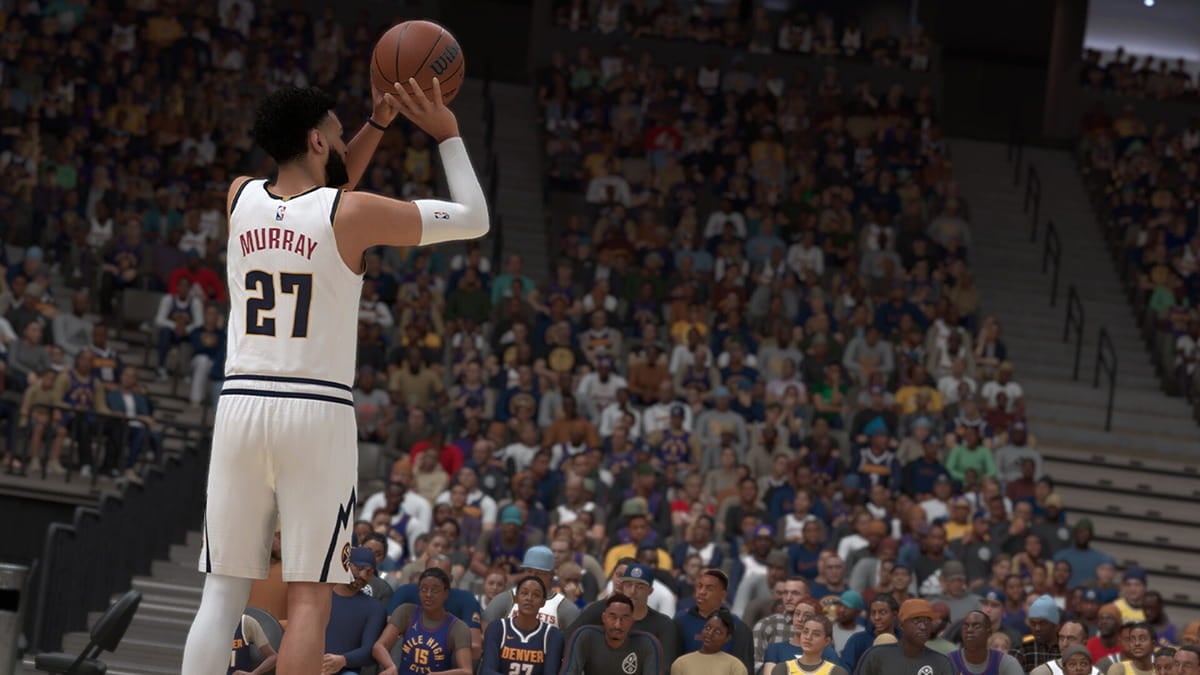
The Evolution of Shooting Mechanics in Modern Sports Simulation
To understand timing stability in 2K25, we must first look at the technological trajectory of the franchise. For years, sports games relied on static “green windows”—specific millisecond ranges where a shot was guaranteed to go in. However, as hardware capabilities increased with the current generation of consoles and PC architecture, developers sought to move away from static outcomes toward dynamic, “true-to-life” simulations.
From Static Gauges to Dynamic Windows
In earlier iterations, the “green window” was largely determined by a player’s attributes and the animation selected. In 2K25, the software utilizes a more fluid system where the window is not fixed. Instead, it is a shifting target influenced by environmental data. This transition from static to dynamic required a new logic pillar to prevent shooting from becoming entirely unpredictable. This is where timing stability enters the equation. It acts as the “anchor” for the shot’s release speed, ensuring that the software doesn’t fluctuate the release window so aggressively that it becomes unlearnable for the human brain.
The Role of Latency and Server Synchronization
From a technical standpoint, timing stability is also a response to the challenges of online play. In a multiplayer environment, input lag and packet loss can devastate a player’s ability to time a shot. 2K25 uses timing stability as a buffer to help mitigate the “jitter” caused by network fluctuations. By stabilizing the animation’s frame data, the game allows for a more forgiving interaction between the client-side input and the server-side verification, ensuring that a “Good” release on the user’s screen translates accurately within the game’s physics engine.
Understanding Timing Stability as a Core Gameplay Metric
Timing stability is fundamentally a software-driven modifier that dictates how much a player’s shot release speed changes based on external factors. In 2K25, the game’s engine calculates the “speed” of your jump shot animation every time you press the button. Without stability, every shot would feel different, leading to a frustrating user experience.
The Technical Definition of Stability in 2K25
At its core, timing stability determines the variability of the shot’s release point. If a player has “A+” Timing Stability, the window for an excellent release will remain relatively consistent regardless of whether they are wide open or contested. Conversely, a player with “D” Timing Stability will experience massive fluctuations in their shot speed. From a programming perspective, stability acts as a “variance dampener.” The higher the stability rating, the narrower the range of random millisecond offsets applied to the shot animation by the game’s RNG (Random Number Generator).
How Stamina and Fatigue Impact Shot Consistency
One of the most impressive technical feats in 2K25 is how the timing stability mechanic interacts with the stamina system. As a digital player’s energy bar depletes, the software triggers a “fatigue modifier.” For players with low timing stability, this modifier causes the shot animation to slow down significantly, often by several frames. High stability ratings effectively shield the player from these drastic changes, allowing the user to maintain the same muscular memory timing even when the digital avatar is exhausted. This represents a sophisticated layer of “biometric simulation” within the software, where physical state directly alters input-response windows.
The Technical Infrastructure Behind the Green Window

The “Green Window” is the holy grail of 2K players, but in 2K25, it is no longer a simple “on/off” switch. It is a product of high-level animation blending and frame-data analysis. Timing stability is the glue that holds these animations together.
Shot Profiles and Animation Logic
Every jump shot in 2K25 is composed of three distinct phases: the gather, the rise, and the release. The game’s engine must blend these phases seamlessly. Timing stability dictates how much “noise” is allowed during the transition between these phases. In technical terms, the software uses “linear interpolation” to smooth out the animation. When stability is high, the animation frames are delivered with high fidelity. When stability is low, the engine might skip or stretch frames to simulate a “struggled” shot, making it significantly harder for the user to visually identify the release point.
RNG vs. Skill-Based Input
A recurring debate in the tech side of gaming is the balance between RNG and pure skill. 2K25 leans heavily into skill-based shooting, but it uses timing stability to provide a safety net. The software calculates a “probability curve” for every shot. A perfectly timed release on a high-stability player results in a 100% success rate. However, if the stability is low, the software introduces a “timing impact” penalty, where even a seemingly perfect release might be moved outside the successful window by a few milliseconds of programmed variance. This balance ensures that the game remains a simulation of professional basketball rather than a simple rhythm game.
Optimizing Performance: Gear, Badges, and Attributes
In the ecosystem of 2K25, timing stability isn’t just a background stat; it is a modular component that players can optimize through specific software “loadouts” known as badges and attributes. This reflects a broader trend in gaming where players “tune” their digital performance much like an engineer tunes a machine.
The Synergy of Badges and Stability
Badges in 2K25 act as secondary scripts that override or enhance the base code of a player’s attributes. Certain badges are specifically designed to boost timing stability during high-pressure scenarios. For example, a “Deadeye” badge functions by telling the game engine to ignore a percentage of the “contest” modifier, which would normally decrease timing stability. From a technical standpoint, badges are “If/Then” statements: If a defender is within a certain radius, then apply a +10% stability buffer to the shot calculation.
Hardware Considerations for Competitive Edge
While timing stability is a software mechanic, its effectiveness is heavily influenced by the user’s hardware. High-refresh-rate monitors (120Hz and above) allow players to see the subtle frame changes that occur when timing stability is low. In a low-stability scenario where the window might only be open for 30 milliseconds, the difference between 60Hz and 120Hz becomes the difference between success and failure. Furthermore, controllers with low input polling rates (measured in Hz) are essential for navigating the tight windows that stability defines. This intersection of software logic and hardware performance is where the elite 2K community operates.
The Future of Realism in Digital Sports
The introduction of nuanced mechanics like timing stability in 2K25 points toward a future where sports games are indistinguishable from their real-life counterparts. The technological goal is to create a “transparent interface” where the user feels the weight and struggle of the athlete through the controller.
AI-Driven Animation Blending
Looking forward, we can expect timing stability to be managed not just by static attributes, but by real-time AI. Future versions of the game could use machine learning to analyze a player’s shooting habits and adjust the stability window dynamically to maintain a constant challenge level. This would move timing stability from a fixed stat to a “living” mechanic that evolves during the course of a single game or even a single possession.
Balancing the Skill Gap for Casual and Pro Players
The ultimate challenge for the developers of 2K25 is using tech like timing stability to satisfy two different audiences. For the “Pro” player, timing stability is a tool to be mastered and optimized for a 100% green-release rate. For the “Casual” player, it is a system that prevents the game from feeling “broken” or “unfair.” By compartmentalizing these logic systems, 2K25 manages to be both an accessible arcade experience and a high-level technical simulator.
In conclusion, timing stability in 2K25 is far more than a simple rating on a player card. It is a sophisticated piece of software engineering that balances animation fidelity, network latency, and user input. By understanding the mechanics of stability, players can better appreciate the complex digital ballet that occurs every time the ball leaves their fingertips in the virtual arena. As sports technology continues to advance, the “stability” of the experience will remain the benchmark for true immersion.
aViewFromTheCave is a participant in the Amazon Services LLC Associates Program, an affiliate advertising program designed to provide a means for sites to earn advertising fees by advertising and linking to Amazon.com. Amazon, the Amazon logo, AmazonSupply, and the AmazonSupply logo are trademarks of Amazon.com, Inc. or its affiliates. As an Amazon Associate we earn affiliate commissions from qualifying purchases.