
In the realm of physics, few constants carry as much weight—both literally and figuratively—as the speed of light. Often denoted by the symbol c, it is the ultimate speed limit of the universe. For technologists, engineers, and software developers, understanding the speed of light is not just a theoretical exercise in mathematics; it is the fundamental constraint that dictates the performance of our global digital infrastructure. Whether we are discussing the latency of a cross-continental fiber-optic link or the synchronization of satellites in low Earth orbit, every piece of modern technology is built around the reality of light’s velocity.

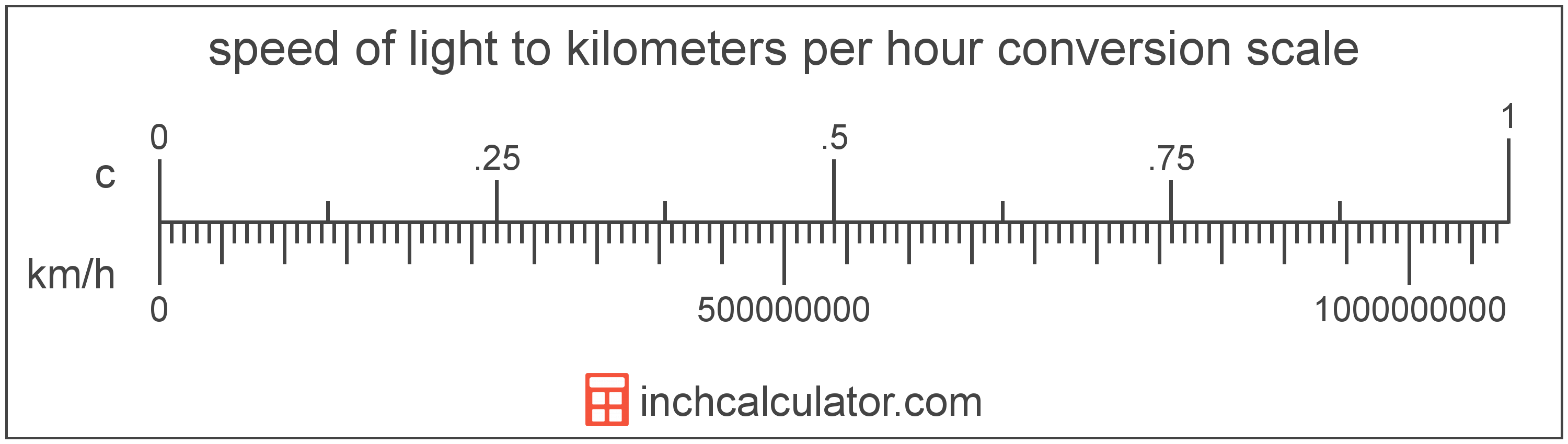
To answer the most direct question first: the speed of light in a vacuum is exactly 299,792,458 meters per second. When we translate this into a more familiar metric for terrestrial travel—kilometers per hour—the figure is staggering. Light travels at approximately 1,079,252,848.8 kilometers per hour.
Understanding this billion-kilometer-per-hour threshold is essential to grasping the future of tech. In this article, we will explore how this universal constant defines the boundaries of our digital world, from the physical hardware of the internet to the emerging frontiers of optical computing and space-based telecommunications.
The Physics of Data: Defining the Speed of Light for the Digital Age
Before diving into the technological implications, we must establish the baseline. In the world of “Tech,” speed is usually measured in megabits per second or processor clock cycles. However, the hardware that facilitates these measurements is governed by the physical properties of photons.
The Numerical Reality: Converting to km/h
While scientists prefer meters per second for precision, the tech industry often looks at global scale. To reach the figure of 1.079 billion km/h, we take the vacuum speed (299,792,458 m/s) and multiply it by 3,600 (the seconds in an hour), then divide by 1,000. This number represents the absolute ceiling. Nothing in the universe—no data packet, no electrical signal, no quantum state—can transmit information faster than this. In the context of technology, this means that even if we had “perfect” hardware with zero processing delay, we would still face a “propagation delay” dictated by the size of the Earth and the speed of light.
Why 1,079,252,848 km/h is the Universal Speed Limit
In 1905, Albert Einstein’s theory of special relativity established that as an object with mass approaches the speed of light, its mass becomes infinite, requiring infinite energy to move it faster. For technology, this is why we use photons (massless particles of light) or electrons (nearly massless) to carry data. However, even these particles are bound by c. In the tech sector, this creates a “latency floor.” For example, a signal traveling from New York to London and back (roughly 11,000 km) cannot physically complete the trip in less than about 37 milliseconds, even in a straight line through a vacuum.
Fiber Optics and the Backbone of Global Connectivity
The most direct application of light speed in technology is found in fiber-optic cables. These thin strands of glass or plastic carry the vast majority of the world’s internet traffic. However, there is a catch that every network engineer must account for: light travels slower in glass than it does in a vacuum.
Photon Propagation in Glass Fibers
When light travels through the silica glass of a fiber-optic cable, it interacts with the atoms of the medium. This slows the light down to about two-thirds of its vacuum speed—approximately 200,000 kilometers per second, or roughly 720 million kilometers per hour. This “Refractive Index” is a critical variable in software architecture and digital security. For high-frequency trading platforms or real-time remote surgery applications, the difference between 1.079 billion km/h (vacuum) and 720 million km/h (fiber) is the difference between success and failure.
Minimizing Latency for Real-Time Applications
As we move toward an era of 5G, 6G, and the Internet of Things (IoT), tech companies are obsessed with “ultra-low latency.” To combat the speed limitations of glass, researchers are developing “hollow-core fibers.” These cables allow light to travel through air or a vacuum-like center instead of solid glass, pushing the data transmission speed back toward that 1.079 billion km/h limit. This technology is currently being trialed in data centers where micro-seconds of delay can impact the training of large language models (LLMs) and AI neural networks.
Satellite Communication and Space-Based Tech Frontiers
While terrestrial fiber is the backbone of the internet, the new frontier of tech is happening above us. Companies like SpaceX (Starlink), Amazon (Project Kuiper), and various defense contractors are leveraging the speed of light in the vacuum of space to revolutionize global connectivity.
The Delay Factor in LEO vs. GEO Satellites
In the past, satellite internet was notoriously slow due to latency. This was because traditional satellites resided in Geostationary Orbit (GEO), about 35,786 kilometers above Earth. Even at 1.079 billion km/h, the round-trip for a signal took over half a second. Modern tech has shifted toward Low Earth Orbit (LEO) satellites, positioned only 550 kilometers up. At this distance, the light-speed delay is negligible, allowing for gaming and video calls that were previously impossible via satellite.
Starlink and the Vacuum Advantage
One of the most significant tech developments in recent years is the use of “laser inter-satellite links” (ISLs). By using lasers to transmit data between satellites in the vacuum of space, information can travel at the full 1.079 billion km/h without the slowdown caused by glass fiber. This actually makes space-based data transmission potentially faster for long distances (like London to Singapore) than terrestrial fiber-optic cables, which must navigate the “slow” medium of glass and the zig-zagging paths of underground trenches.
The Role of Light Speed in High-Performance Computing and AI
As we shrink transistors down to the 3-nanometer and 2-nanometer scale, the speed of light begins to affect the internal architecture of the computers themselves. In high-performance computing (HPC) and AI clusters, the distance between the processor (CPU/GPU) and the memory (RAM) is a major bottleneck.
Interconnects and the Bottleneck of Distance
In a modern AI supercomputer, thousands of GPUs must work in parallel. If the signals traveling between these chips take too long, the processors sit idle, wasting energy and time. At 1.079 billion km/h, light travels about 30 centimeters in one nanosecond. This might seem fast, but in a machine performing billions of calculations per second, 30 centimeters is a vast distance. This “interconnect bottleneck” is driving the tech industry toward “Silicon Photonics,” where light is used instead of electricity to move data between chips on a motherboard.
Quantum Networking: Moving Beyond Classical Constraints
While quantum entanglement suggests a form of “instantaneous” connection, the “No-Communication Theorem” in physics dictates that usable information still cannot exceed the speed of light. Tech firms specializing in quantum security are building quantum key distribution (QKD) networks that rely on the precise timing of single photons. These systems are so sensitive that any attempt to intercept the data alters the state of the light, providing a level of digital security that is physically impossible to breach without detection.
Future Frontiers: Photonics and Optical Computing
The ultimate goal for the next generation of tech is to move away from electrons entirely and embrace a truly light-based computing paradigm. This field, known as photonics, aims to create processors that use light to perform logic operations.
Replacing Electrons with Photons
Electrons moving through copper wires generate heat due to resistance. Photons moving through optical circuits do not. By harnessing the 1.079 billion km/h speed of light within the chip itself, we could theoretically build computers that are thousands of times faster and significantly more energy-efficient than current silicon-based technology. This would be a monumental shift in the “Green Tech” space, as data centers currently consume a massive portion of the world’s electricity.
The Search for Near-Instantaneous Global Connectivity
The pursuit of light-speed efficiency is driving the development of the “Quantum Internet.” By combining hollow-core fibers, LEO satellite laser links, and photonic processors, the tech industry is working toward a future where the physical distance between two points on Earth—or even between Earth and Mars—is the only remaining barrier. We are moving toward a world where the 1,079,252,848 km/h limit is not just a figure in a textbook, but the standardized operating speed of our entire civilization.
In conclusion, the speed of light in kilometers per hour provides a profound perspective on the limitations and possibilities of technology. As we continue to push the boundaries of AI, global networking, and space exploration, our success will be measured by how closely we can approach this ultimate universal constant. We are no longer just building tools; we are building a digital nervous system for the planet, and its pulses are governed by the fastest speed the universe allows.
aViewFromTheCave is a participant in the Amazon Services LLC Associates Program, an affiliate advertising program designed to provide a means for sites to earn advertising fees by advertising and linking to Amazon.com. Amazon, the Amazon logo, AmazonSupply, and the AmazonSupply logo are trademarks of Amazon.com, Inc. or its affiliates. As an Amazon Associate we earn affiliate commissions from qualifying purchases.