
In the landscape of modern technology, we are conditioned to think in terms of “exponential growth.” From Moore’s Law describing the doubling of transistors on a microchip to the viral spread of social media content, the exponent is the symbol of the digital age. However, for every action in computational logic, there is a necessary reaction. To build functional software, secure encryption, and efficient algorithms, engineers must master the “opposite” of exponents.
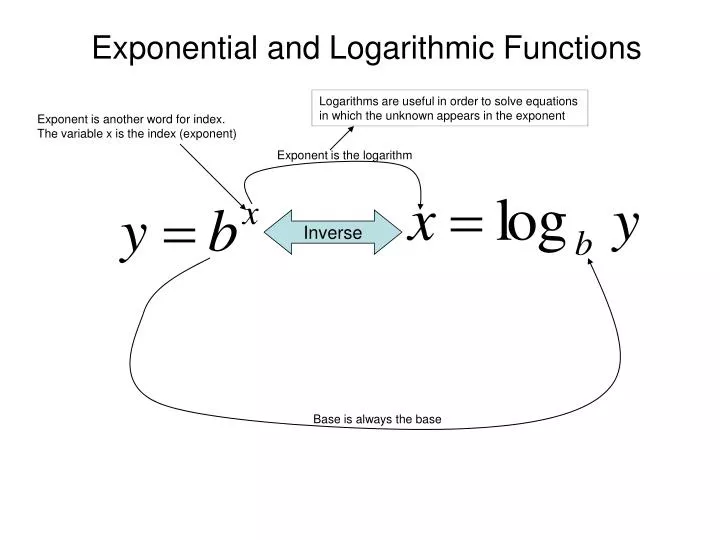
Mathematically, the inverse of exponentiation can be viewed in two ways: roots and logarithms. While roots (such as the square root) determine the base of a power, logarithms determine the exponent itself. In the tech sector, logarithms are the true “opposite” that drives everything from the way we search through databases to how we protect our private data. Understanding these inverse relationships is not just an exercise in high school algebra; it is the foundation of high-level system architecture and digital security.
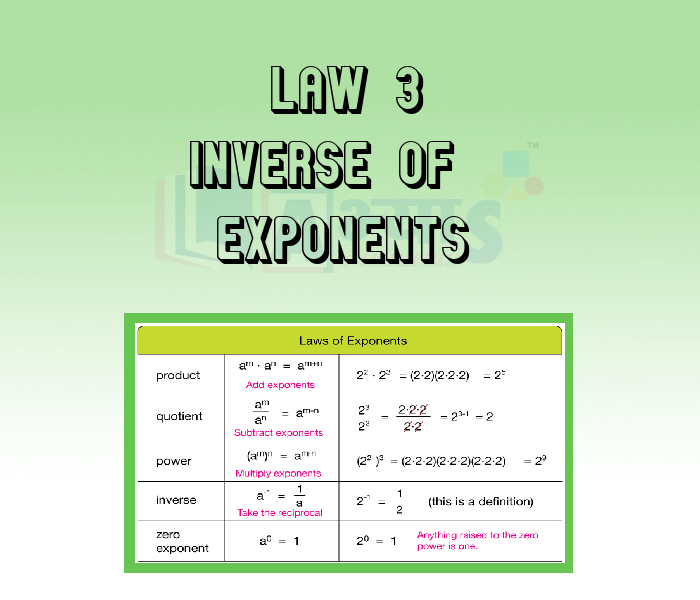
The Mathematical Foundation: Roots and Logarithms in Computing
To understand how technology utilizes the inverse of exponents, we must first distinguish between the two primary mathematical operations that undo exponentiation. In a digital context, these operations serve different purposes in hardware and software design.
Roots: Scaling Down Geometric Growth
A “root” asks the question: “What number, when multiplied by itself $n$ times, gives us this result?” In tech, nth-root calculations are frequently seen in graphics processing and signal manipulation. For instance, in digital imaging, gamma correction uses power-law expressions (roots) to adjust the brightness and contrast of pixels to match the human eye’s non-linear perception of light. Without the ability to calculate the inverse of exponents quickly, our displays would produce images that look washed out or unnaturally dark.
Logarithms: The True Digital Inverse
While roots are useful, logarithms are the superstars of the tech world. A logarithm asks: “To what power must we raise a base to get this number?” If exponentiation represents an explosion of growth, logarithms represent the “taming” of that growth. In a world of Big Data, where we deal with billions of data points, we cannot operate on an exponential scale. We use logarithms to map massive datasets into manageable, linear ranges. This is the core logic behind data compression and hierarchical data structures.
Algorithmic Efficiency and Big O Notation
For software engineers, the opposite of an exponent is the key to performance. When we write code, we measure its efficiency using Big O notation, which describes how the execution time of an algorithm grows relative to the input size.
The Power of Logarithmic Time Complexity
In the realm of Big O, exponential time complexity—denoted as $O(2^n)$—is the ultimate failure. An exponential algorithm becomes unusable as soon as the input size grows even slightly. The “opposite” or the “holy grail” of efficiency is Logarithmic Time Complexity, or $O(log n)$.
Consider the difference between a simple linear search and a binary search. In a linear search, if you have a billion items, you might have to look at a billion items. But a binary search uses logarithmic logic—the inverse of exponential doubling—to cut the search space in half with every step. For a billion items, a logarithmic approach requires only about 30 steps. This dramatic reduction in workload is what allows search engines like Google to return results in milliseconds.
Why Exponential Growth is the Developer’s Enemy
In tech development, “exponential” often refers to a problem that has spiraled out of control. For example, in recursive functions without proper memoization, the number of function calls can grow exponentially. Understanding the inverse—how to apply logarithmic constraints—allows developers to optimize these processes. By applying “divide and conquer” strategies, developers effectively use the inverse of exponents to break down unsolvable, massive problems into tiny, executable tasks.
Cryptography and the Discrete Logarithm Problem
Perhaps the most critical application of the “opposite of exponents” is in the field of digital security and cybersecurity. Modern encryption relies on a concept known as “trapdoor functions.” These are mathematical operations that are easy to perform in one direction but extremely difficult to reverse.
Public Key Infrastructure (PKI)
The backbone of secure internet communication (HTTPS, SSL/TLS) often relies on the relationship between exponentiation and logarithms. In algorithms like Diffie-Hellman or RSA, two parties can create a shared secret key by raising numbers to high powers within a modular field. For a computer, performing this exponentiation is nearly instantaneous.
The Difficulty of “Un-calculating” Exponents
The security of your bank account and private messages depends on the fact that finding the “opposite” of that exponentiation—specifically the “Discrete Logarithm”—is computationally nearly impossible for traditional computers when the numbers involved are sufficiently large. While we know the operation (the logarithm), the sheer amount of processing power required to “undo” the exponentiation would take millions of years. This asymmetry is the “trapdoor” that keeps the digital world secure. If someone were to find a way to calculate the discrete logarithm easily, modern encryption would collapse instantly.
Data Science and Signal Processing: Normalizing the Exponential
Data science and Artificial Intelligence (AI) deal with varying scales of information. Often, data arrives in an exponential distribution, where a few values are massive and most are tiny. To make this data useful for machine learning models, tech professionals must use the inverse of exponents to “normalize” the information.
Logarithmic Scaling in Data Visualization
When tech companies track user growth or system logs, an exponential spike can make a graph unreadable. By using a logarithmic scale—the inverse of the exponent—data scientists can visualize the rate of change rather than just the raw volume. This allows for a more nuanced understanding of tech trends, such as the adoption rate of a new app or the spread of a system vulnerability across a network.
Neural Networks and Activation Functions
In the architecture of a Neural Network, we often use functions that handle “squashing” values. While not always a direct logarithm, functions like the Sigmoid or Softmax are designed to take values that could grow exponentially and pull them back into a controlled range (usually between 0 and 1). This “inverse-like” behavior prevents “exploding gradients,” a common problem in AI where values become too large for the hardware to process accurately. By keeping growth in check, these mathematical inverses allow AI to learn and adapt.
Future Trends: Quantum Computing and the End of Conventional Inverses
As we look toward the future of technology, the relationship between exponents and their inverses is facing a paradigm shift. The most significant threat and opportunity lies in Quantum Computing.
Shor’s Algorithm and the Threat to Security
Quantum computers use “qubits” to perform calculations in ways that classical transistors cannot. One of the most famous quantum algorithms, Shor’s Algorithm, is specifically designed to solve the prime factorization and discrete logarithm problems exponentially faster than any classical computer. In essence, a quantum computer is exceptionally good at finding the “opposite” of the exponents used in our current encryption.
The Move to Post-Quantum Cryptography
Because the “opposite” of exponents might soon become easy to calculate for quantum machines, the tech industry is currently racing to develop “Post-Quantum Cryptography.” These are new encryption methods that do not rely on the difficulty of reversing exponentiation. Instead, they use lattice-based mathematics or other complex structures where even a quantum computer cannot easily find the inverse.
Conclusion: The Symmetry of Digital Innovation
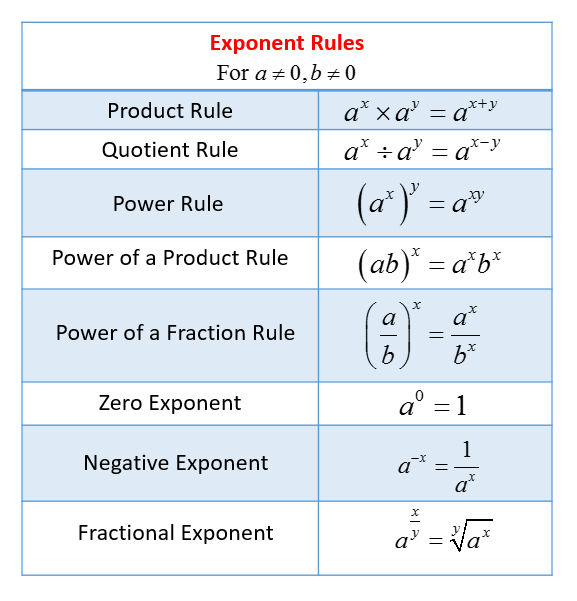
In technology, “what is the opposite of exponents” is not a simple trivia question; it is a fundamental architectural principle. If exponentiation represents the raw power and growth potential of technology, then its inverses—roots and logarithms—represent the control, efficiency, and security necessary to harness that power.
From the $O(log n)$ efficiency of our databases to the discrete logarithms that guard our digital identities, the inverse of the exponent is the silent workhorse of the digital age. As we move into an era of AI-driven data and quantum threats, the ability to balance exponential growth with its mathematical opposites will remain the defining challenge for the next generation of tech innovators. Understanding this symmetry is essential for anyone looking to build, secure, or scale the technologies of tomorrow.
aViewFromTheCave is a participant in the Amazon Services LLC Associates Program, an affiliate advertising program designed to provide a means for sites to earn advertising fees by advertising and linking to Amazon.com. Amazon, the Amazon logo, AmazonSupply, and the AmazonSupply logo are trademarks of Amazon.com, Inc. or its affiliates. As an Amazon Associate we earn affiliate commissions from qualifying purchases.