
For decades, the mystery of the Earth’s interior remained the exclusive domain of geologists and theoretical physicists. However, as we stand on the precipice of a global energy transition and a revolution in material science, the question “what is the hottest layer of Earth?” has shifted from a classroom trivia point to a multi-billion-dollar technological challenge. The answer is the Inner Core—a solid sphere of iron and nickel fueled by radioactive decay and residual heat from the planet’s formation, reaching temperatures of up to 5,200° Celsius (9,392° Fahrenheit).
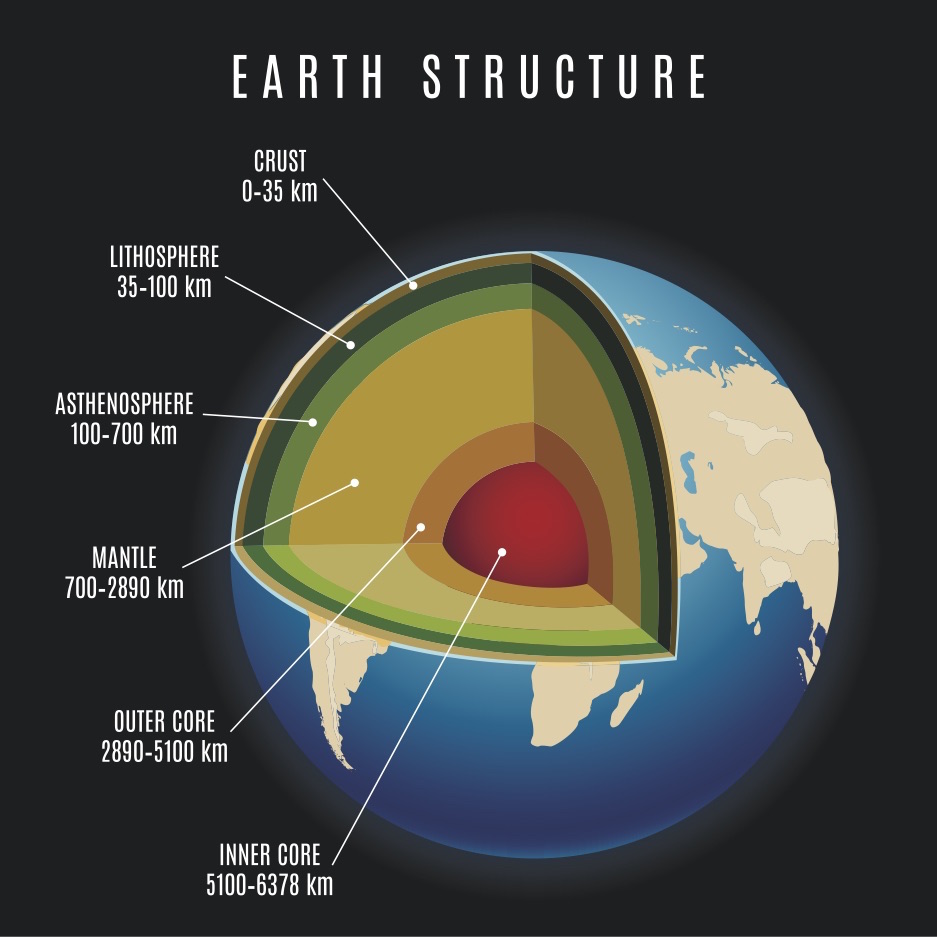
But for the modern tech industry, the interest lies not just in the temperature itself, but in the technological “stack” required to understand, reach, and harness this immense thermal reservoir. From high-frequency seismic modeling to millimeter-wave drilling, the race is on to bridge the gap between our cool surface and the inferno beneath our feet.
Exploring the Inner Core: The Ultimate Frontier for High-Heat Robotics
While we know the Inner Core is the hottest layer, reaching it—or even the layers significantly above it—presents a hardware challenge that dwarfs the rigors of space exploration. While the vacuum of space is cold and empty, the journey toward the Earth’s core involves crushing pressures and corrosive environments that melt standard circuitry.
Material Science: Building Sensors for Extreme Environments
To study the heat of the Earth, we need “hardened” technology. Current silicon-based chips fail at temperatures above 200°C, a mere fraction of the heat found in the deep crust, let alone the mantle or core. Tech innovators are currently pivoting toward Wide Bandgap (WBG) semiconductors, such as Silicon Carbide (SiC) and Gallium Nitride (GaN). These materials allow sensors to operate in the high-heat zones of the Earth’s upper layers without the need for bulky cooling systems. This is the same technology being utilized in high-performance electric vehicle (EV) inverters, showing a cross-pollination between green tech and deep-earth exploration.
AI-Driven Seismic Modeling: Seeing Through the Crust
Since we cannot physically send a camera to the hottest layer of the Earth, we use data. The tech sector has stepped in with AI-driven seismic tomography. By deploying massive arrays of IoT-enabled sensors across the globe, researchers capture seismic waves generated by earthquakes. Machine learning algorithms then process these trillions of data points to create a “Digital Twin” of the Earth’s interior. This software-defined visualization allows us to see “thermochemical piles” and the shifting heat of the core with a resolution that was impossible five years ago.
Geothermal Energy: Harnessing the Planet’s Internal Battery
The Inner Core acts as the “heat engine” for the entire planet. For the technology sector, the goal is to tap into the secondary heat found in the lithosphere and mantle to create a 24/7 source of clean energy. Traditional geothermal tech was limited to volcanic regions, but a new wave of “Deep Geothermal” startups is changing the narrative.
Enhanced Geothermal Systems (EGS) and Deep Drilling Tech
Enhanced Geothermal Systems (EGS) represent the software-and-hardware synthesis of the energy world. By using techniques adapted from the oil and gas industry—such as precision directional drilling and hydraulic fracturing—tech firms are creating artificial reservoirs in hot, dry rock. The “tech” here involves sophisticated feedback loops where fiber-optic cables are lowered into boreholes to provide real-time data on temperature, pressure, and flow rates. This “intelligent” drilling ensures that we can extract the maximum thermal energy from the Earth’s heat gradients.
The Rise of Millimeter-Wave Drilling
One of the most exciting tech trends in this niche is the move away from mechanical drill bits. Companies like Quaise Energy are working on “vacuum tube” technology, specifically gyrotrons, to blast rock with high-power millimeter waves. This technology, originally developed for nuclear fusion research, literally vaporizes hard rock. This could allow us to drill holes up to 12 miles deep—far deeper than any mechanical bit has ever gone—reaching temperatures that could turn any power plant into a “supercritical” geothermal hub. This represents a fundamental shift from mechanical engineering to high-energy physics in the quest for the Earth’s hottest layers.
Data Centers and the Subterranean Cooling Revolution
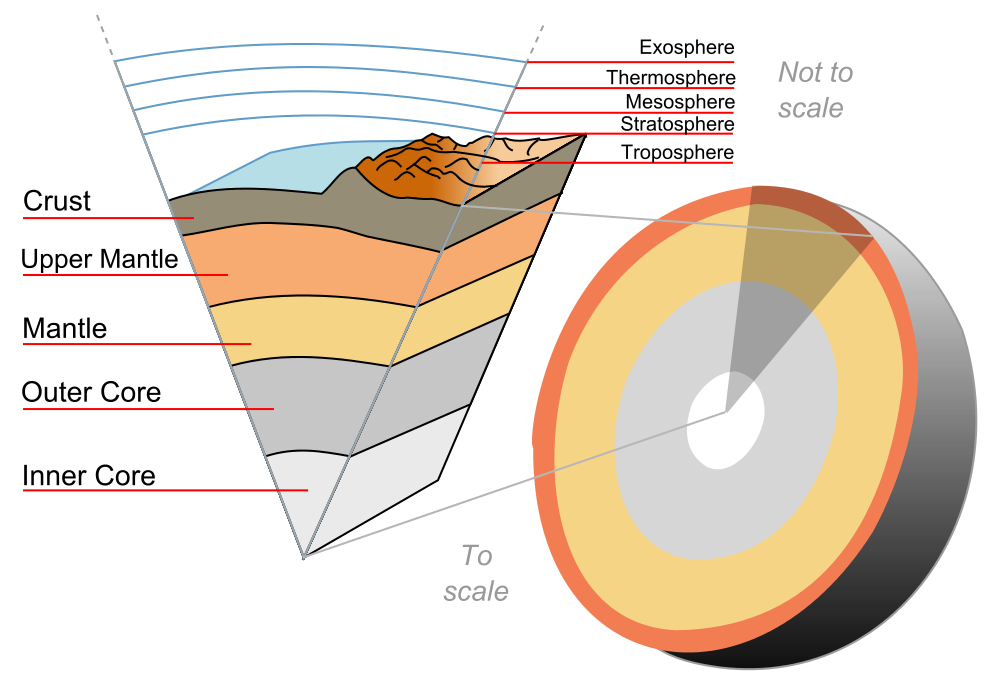
As we discuss the hottest layers of the Earth, we must also address the “heat problem” in the tech industry itself. Data centers, the backbone of AI and the modern web, generate immense amounts of heat. Paradoxically, the solution to managing this heat often lies in the Earth’s own geological layers.
Strategic Siting: Using Geology for Passive Heat Management
Hyperscale providers like Google and Microsoft are increasingly looking at “geothermal cooling.” Instead of using energy-intensive air conditioning, these tech giants are using the Earth’s crust as a massive heat sink. By circulating water through the cooler upper layers of the Earth (the lithosphere), data centers can dump their waste heat into the ground. This creates a circular tech ecosystem: the data center stays cool, and the “waste” heat can potentially be recycled for local heating or even converted back into low-grade electricity.
The Convergence of Clean Tech and Big Data
The intersection of “Deep Tech” and “Green Tech” is best seen in how we manage the heat of our own making. Using the Earth’s thermal properties requires massive computational power to map underground aquifers and rock formations. We are seeing a rise in “Geospatial AI” platforms that help tech companies decide where to build infrastructure based on the thermal conductivity of the soil and the depth of the nearest high-heat layer.
The Future of Deep-Earth Exploration Technology
The quest to understand the hottest layer of Earth is driving a new era of “Planetary Tech.” We are no longer content with just staying on the surface; we are looking to integrate our technological infrastructure with the planet’s internal mechanics.
Beyond the Moho: The Next Decade of Planetary Tech
The “Moho” (Mohorovičić discontinuity) is the boundary between the crust and the mantle. Crossing this boundary is the “Moonshot” for the next decade of geological technology. To do so, we will need autonomous “subterrenes”—robotic probes capable of melting through rock rather than grinding it. These devices will require decentralized AI, as radio signals cannot penetrate deep into the Earth’s metallic layers. The development of autonomous navigation in high-density, high-heat environments will likely have applications in mining, tunneling for hyperloops, and even exploring the molten cores of other planets.
The Role of Quantum Sensors in Thermal Mapping
Looking forward, quantum technology may provide the ultimate tool for measuring the Earth’s heat. Quantum gravimeters and magnetometers are sensitive enough to detect minute changes in the Earth’s density caused by the movement of molten material in the mantle and core. By integrating these quantum sensors into our global tech grid, we can predict volcanic activity and seismic events with unprecedented accuracy. This is the ultimate goal of “Earth Tech”: turning the entire planet into a sentient, monitored system that protects its inhabitants while providing for their energy needs.
Conclusion
What is the hottest layer of Earth? It is the Inner Core, a 5,200°C engine of iron and nickel. But for those of us in the technology sector, it represents something more: the ultimate challenge for material science, the ultimate source for clean energy, and the ultimate data set for our AI models.
As we continue to develop the tools to probe deeper into our planet, we find that the boundaries between geology and technology are blurring. The innovations required to survive the heat of the Earth’s core—from Silicon Carbide chips to gyrotron drilling—are the same innovations that will power our future on the surface. We are finally moving from a civilization that lives on the Earth to one that technologically integrates with the Earth, harnessing the ancient heat of the core to fuel the digital age.
aViewFromTheCave is a participant in the Amazon Services LLC Associates Program, an affiliate advertising program designed to provide a means for sites to earn advertising fees by advertising and linking to Amazon.com. Amazon, the Amazon logo, AmazonSupply, and the AmazonSupply logo are trademarks of Amazon.com, Inc. or its affiliates. As an Amazon Associate we earn affiliate commissions from qualifying purchases.