
In the rapidly evolving landscape of educational technology (EdTech) and software development, the way we process and categorize information has become a critical pillar of productivity. As we move away from rote memorization and toward deep conceptual understanding, frameworks that facilitate mental clarity are more valuable than ever. One such framework is the Frayer Model.
Originally developed as a graphic organizer for vocabulary building, the Frayer Model has found a new home in the tech sector. From UX design and software architecture to artificial intelligence training and digital pedagogy, this model serves as a robust tool for clarifying complex technical concepts. This article explores the Frayer Model through the lens of technology, examining how it functions, why it is essential for modern digital workflows, and how it can be implemented through cutting-edge software tools.
The Evolution of the Frayer Model: From Paper to Digital Intelligence
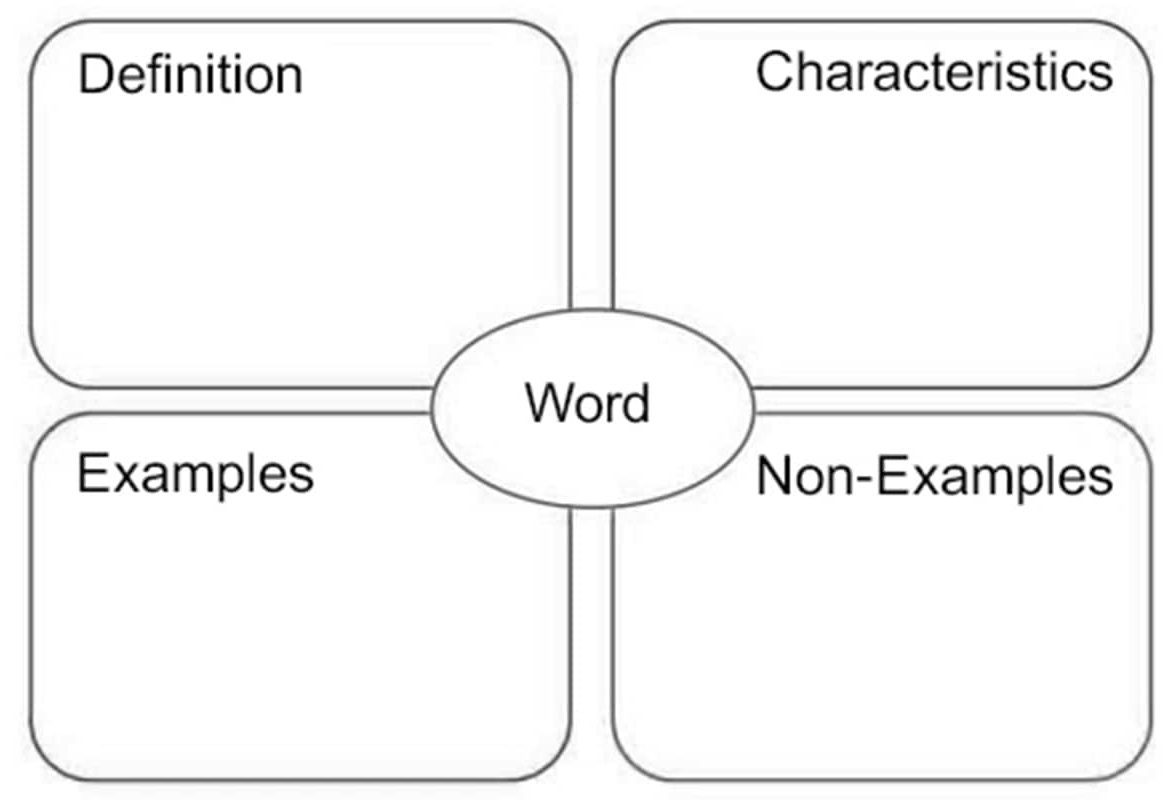
The Frayer Model was first introduced by Dorothy Frayer and her colleagues at the University of Wisconsin in 1969. At its core, it is a four-square graphic organizer designed to help learners understand a specific concept by examining its definition, characteristics, examples, and non-examples. In the analog era, this was a classroom staple for literacy. However, in the tech era, the Frayer Model has evolved into a strategic framework for conceptual mapping in complex systems.
EdTech Integration and Digital Interactivity
In the realm of EdTech, the Frayer Model is no longer a static worksheet. Interactive whiteboards, collaborative platforms like Miro and Mural, and Learning Management Systems (LMS) have transformed the model into a dynamic experience. Digital Frayer Models allow for the embedding of multimedia, such as video clips for “examples” or interactive code snippets for “characteristics.”
This transition to digital has significant implications for cognitive load theory. By using tech-enabled Frayer organizers, users can offload the structural organization of information to the software, allowing their brains to focus entirely on the relational links between concepts. This is particularly useful in “flipped classroom” models and remote tech training, where asynchronous learning requires clear, structured guidance.
Scaling Conceptual Clarity in Software Documentation
For technical writers and software engineers, the Frayer Model offers a solution to the “curse of knowledge.” When documenting a new API or a complex software feature, the Frayer structure ensures that the documentation covers not just what the feature is, but also what it is not. In a digital environment, these models act as “living documents” that can be updated as the software evolves, providing a centralized source of truth for development teams.
Applying the Frayer Model to UX/UI Design and Product Development
The tech industry thrives on clarity, yet many digital products fail because of conceptual ambiguity. The Frayer Model provides a rigorous methodology for User Experience (UX) designers and Product Managers to define features and user personas with surgical precision.
Defining Features and Functionality
When a new feature is proposed in a sprint, the Frayer Model can be used to prevent “scope creep.”
- Definition: What is the primary function of this feature in the software?
- Characteristics: What are the technical requirements and UI constraints?
- Examples: What are the specific use cases where this feature will solve a user problem?
- Non-examples: What functionality is explicitly out of scope for this release?
By using the “Non-examples” quadrant, product teams can avoid building unnecessary bloatware. It forces designers to identify the boundaries of a concept, ensuring that the user interface remains intuitive and focused.
User Persona Mapping and Edge Cases
In UX research, understanding the “target user” is a conceptual challenge. Applying the Frayer Model to persona development allows designers to go beyond demographics. They can define the “Characteristic Behaviors” of a user and, crucially, the “Non-examples”—the types of users or behaviors the product is specifically not designed for. This prevents the “designing for everyone and no one” trap. Furthermore, the “Non-examples” quadrant is an excellent place to document “edge cases”—scenarios where the software might fail or behave unexpectedly, allowing developers to build more resilient code.
The Frayer Model in AI Training and Prompt Engineering
As we enter the age of Large Language Models (LLMs) and Generative AI, the Frayer Model has found a surprising application in how we interact with and train machines. AI, much like a human learner, requires a clear definition of boundaries to operate effectively.
Structured Data and Contextual Accuracy
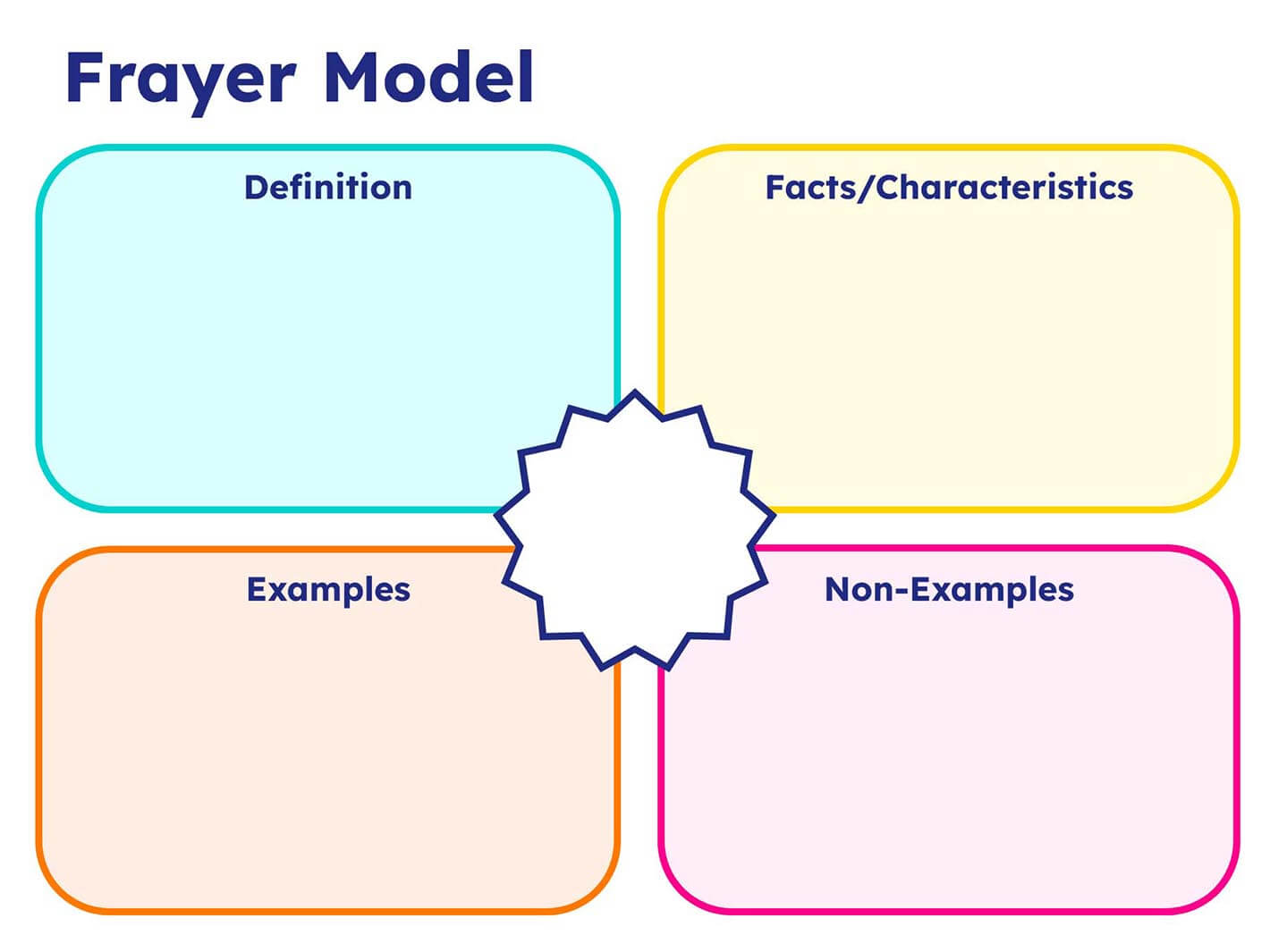
When developers fine-tune AI models, they are essentially teaching the machine the “Frayer Model” of a concept. To minimize hallucinations (where the AI generates false information), the training data must include robust “Non-examples.” For instance, if training a medical AI to recognize “malignant tumors,” the model must be fed clear examples of “benign cysts” as non-examples.
The Frayer Model provides a blueprint for structuring this training data. By organizing datasets into these four quadrants, data scientists can ensure that the model understands the nuances and distinguishing features of a concept, leading to higher accuracy and more reliable outputs.
Enhancing Prompt Engineering
For users of AI tools like ChatGPT or Claude, the Frayer Model serves as a master template for prompt engineering. A common mistake in prompting is providing only a definition (“Write a Python script for X”). A “Frayer-style” prompt is significantly more effective:
- Concept: Python script for data scraping.
- Definition/Goal: Create a script that extracts pricing from e-commerce sites.
- Characteristics/Constraints: Use BeautifulSoup, output to CSV, and include error handling.
- Example Output: Show a snippet of the desired format.
- Non-examples/Constraints: Do not use Selenium; do not scrape images.
By utilizing this cognitive framework, tech professionals can elicit much more precise and usable responses from AI, saving hours of iterative refining.
Knowledge Management: Digital Tools for Implementation
Implementing the Frayer Model at scale requires more than just a conceptual understanding; it requires the right tech stack. Fortunately, several categories of software are perfectly suited for this framework.
Collaborative Visual Workspaces
Tools like Lucidchart, Miro, and FigJam have revolutionized conceptual mapping. These platforms allow distributed tech teams to collaborate on a Frayer Model in real-time. In a “Digital Brainstorming” session, team members can drop “Post-it notes” into the four quadrants. This visual hierarchy is essential for systems thinking, allowing developers to see the “big picture” of a software architecture while still attending to the granular details of the “characteristics” quadrant.
Advanced Note-Taking and Personal Knowledge Management (PKM)
For individual developers and tech enthusiasts, apps like Obsidian, Notion, and Roam Research allow for the creation of “Linked Frayer Models.” Using bidirectional linking, a user can define a concept in one note and link it to “Examples” or “Non-examples” housed in other parts of their digital library.
In Notion, for example, a database can be structured to follow the Frayer Model. A “Tech Glossary” database might have properties for Definition, Characteristics, Examples (linked to project pages), and Non-examples. This creates a powerful, searchable knowledge base that grows in value as the user’s career progresses.
AI-Powered Diagramming Tools
Newer tools like Whimsical AI or ChatMind can now generate a Frayer Model layout based on a single keyword. By leveraging AI to populate the initial quadrants, tech professionals can move quickly from a blank canvas to a refined conceptual map. While the human must still verify the “Non-examples” for accuracy, the speed at which technology can now facilitate this cognitive process is a game-changer for rapid learning in the tech industry.

Conclusion: The Strategic Value of Conceptual Clarity
In a world saturated with information, the ability to synthesize, categorize, and define concepts is the ultimate competitive advantage. The Frayer Model, though born in the classroom, has proven to be a versatile and powerful framework for the modern tech professional.
By applying this model to software development, UX design, and AI training, we can reduce ambiguity, minimize errors, and foster deeper collaboration. Whether you are a developer trying to grasp a new programming paradigm or a product manager defining a vision, the four quadrants of the Frayer Model provide the structure needed to navigate the complexities of the digital age. As our tools become more sophisticated, the frameworks we use to direct them must be equally robust. The Frayer Model is not just a vocabulary tool; it is a logic system for the future of technology.
aViewFromTheCave is a participant in the Amazon Services LLC Associates Program, an affiliate advertising program designed to provide a means for sites to earn advertising fees by advertising and linking to Amazon.com. Amazon, the Amazon logo, AmazonSupply, and the AmazonSupply logo are trademarks of Amazon.com, Inc. or its affiliates. As an Amazon Associate we earn affiliate commissions from qualifying purchases.