
In our hyper-connected modern era, the terms “Internet” and “World Wide Web” are frequently used as synonyms. For the average user, the distinction may seem pedantic—after all, when you open a laptop or pick up a smartphone, the experience feels like a singular, seamless transition into a digital world. However, from a technical perspective, these two entities are vastly different. One is a massive physical infrastructure, while the other is a specialized service that runs on top of that infrastructure.
Understanding the difference is not just an academic exercise; it is fundamental to understanding how digital security works, how software is developed, and how the future of decentralized technology will evolve. To grasp the nuances of the digital age, we must look beneath the surface of our screens and distinguish the “pipes” from the “water” that flows through them.
The Internet: The Global Network of Networks
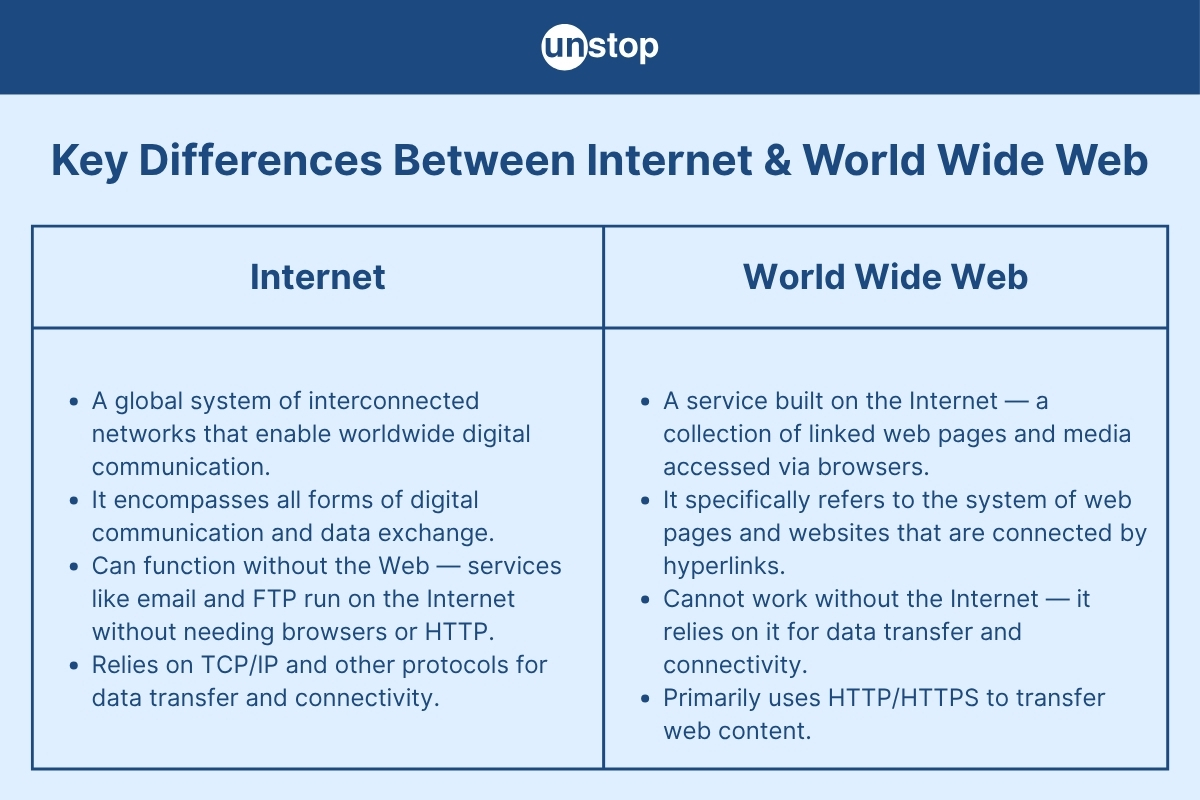
At its most basic level, the Internet is a hardware-based infrastructure. It is a sprawling, global network of networks that connects millions of private, public, academic, business, and government circuits. If we use a transportation analogy, the Internet is the system of roads, highways, bridges, and tunnels that span the globe. It provides the physical and logical pathways for data to travel from point A to point B.
Hardware and Physical Interconnectivity
The Internet consists of a staggering amount of physical hardware. This includes the fiber-optic cables buried under our streets and laid across the ocean floors, the massive data centers housing thousands of servers, and the local routers and switches in our homes and offices. When you send a piece of data, it is broken down into small units called “packets.” These packets travel across this physical hardware, jumping from one router to another until they reach their destination.
This infrastructure is decentralized by design. There is no “off” switch for the Internet because it is not owned by any single entity. Instead, it is a collaborative effort between Internet Service Providers (ISPs), backbone providers, and international regulatory bodies that ensure different pieces of hardware can talk to each other.
Protocols and Data Transmission (TCP/IP)
For hardware to communicate effectively, it needs a shared language. This is where the Internet Protocol Suite comes in, commonly known as TCP/IP (Transmission Control Protocol/Internet Protocol). These protocols act as the “rules of the road” for the Internet.
The IP portion is responsible for addressing—ensuring that data knows which device it is supposed to go to (using IP addresses). The TCP portion ensures that the data is delivered reliably, checking that all packets arrived in the correct order and requesting a re-send if any were lost in transit. This protocol layer is what allows a computer in Tokyo to communicate with a server in London in a matter of milliseconds. Without these protocols, the Internet would simply be a collection of disconnected wires.
The World Wide Web: A Service Built Atop the Internet
If the Internet is the highway system, the World Wide Web (or simply “the Web”) is the traffic—or more specifically, a specific type of delivery service—that uses those highways. The Web is an information-sharing model that is built on top of the Internet. It is a collection of interconnected documents and other resources, linked by hyperlinks and URLs.
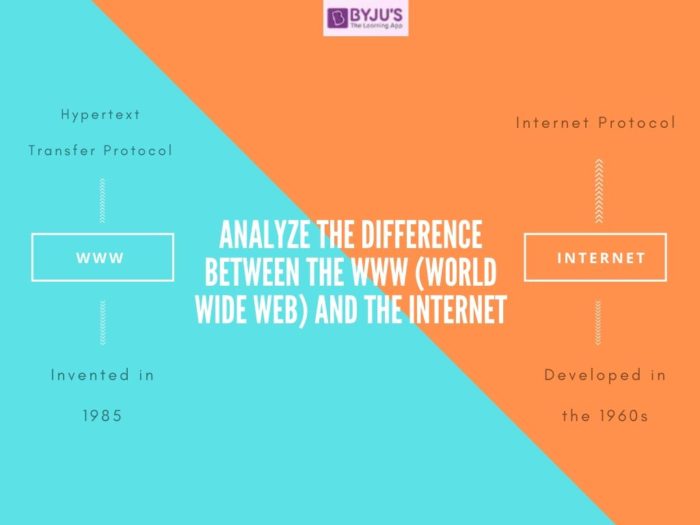
It is important to remember that the Internet existed for decades before the Web was even conceived. While the Internet began to take shape in the late 1960s (via ARPANET), the World Wide Web wasn’t proposed until 1989.
The Birth of HTTP and HTML
The Web was created by Sir Tim Berners-Lee while he was working at CERN. He sought a way for scientists to easily share research and data across different computer systems. To achieve this, he developed three fundamental technologies that still define the Web today:
- HTML (HyperText Markup Language): The formatting language used to create web pages.
- HTTP (HyperText Transfer Protocol): The specific “language” used to request and transmit web pages over the Internet.
- URL (Uniform Resource Locator): The unique address used to identify a specific resource on the Web.
When you type a website address into your browser, you are using the Web. Your browser uses the Internet’s infrastructure to send an HTTP request to a server, which then sends back HTML code that your browser “renders” into the visual page you see.
Browsers: Your Window into the Web
A common point of confusion is the role of the web browser. Applications like Google Chrome, Mozilla Firefox, Safari, and Microsoft Edge are software tools designed specifically to access the World Wide Web. They are not the Internet itself; they are the vehicles we use to navigate the specific “Web” layer of the Internet.
The browser’s job is to interpret the code (HTML, CSS, JavaScript) provided by web servers and display it in a user-friendly format. Because the Web is so dominant in our daily lives, many people mistakenly believe that the browser is their gateway to the entire Internet, but as we will see, there is much more to the Internet than just web pages.
Key Differences: A Comparative Analysis
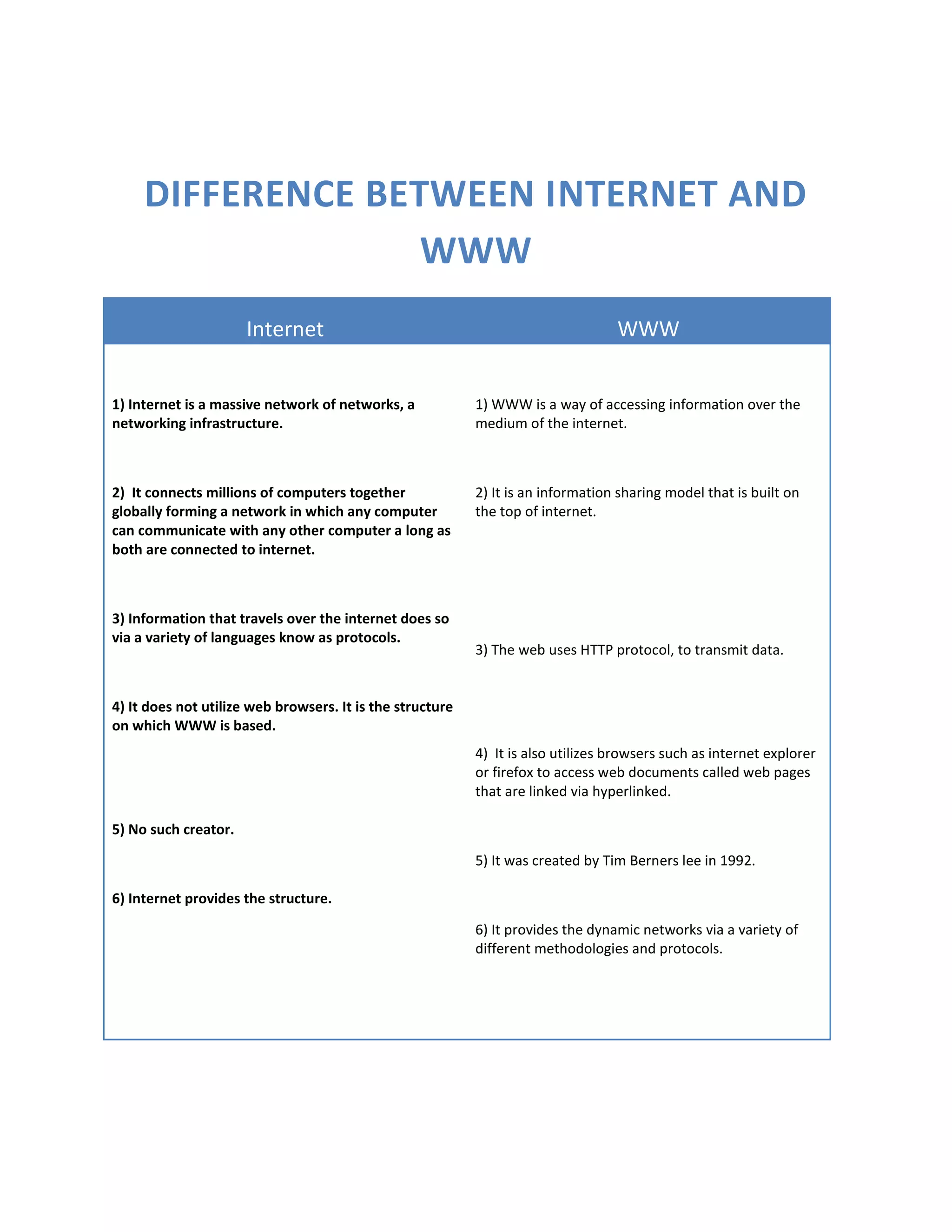
To truly distinguish the two, we must look at how they function in relation to one another. The relationship is one of dependency: the Web cannot exist without the Internet, but the Internet can—and does—exist without the Web.
Physicality vs. Virtual Services
The Internet is tangible. You can point to a router, a satellite, or an undersea cable and say, “That is part of the Internet.” It is the physical medium of connection. The Web, conversely, is an abstract collection of data and software. It is a virtual library of information that exists as bits and bytes stored on the Internet’s hardware. You cannot “touch” the Web; you can only access the documents and media it contains.
Communication Protocols: IP vs. HTTP
Another major distinction lies in the protocols used. The Internet functions on the network layer (IP) and the transport layer (TCP/UDP). It is concerned with moving data packets regardless of what they contain. The Web functions at the application layer (HTTP/HTTPS). It is specifically concerned with how information is structured and retrieved.
When you use an “HTTPS” connection, you are using a secure version of the Web’s primary protocol. While this security relies on the Internet’s ability to move the data, the encryption and the “handshake” that makes the connection secure happen at the Web level.
Beyond the Web: Other Services That Use the Internet
One of the most effective ways to understand the difference between the two is to look at all the things you do online that don’t involve the World Wide Web. While the Web is the most visible part of the Internet, it is only one of many services.
Email, VoIP, and File Transfers
Before the Web became popular, the Internet was primarily used for email and file transfers.
- Email: When you use a dedicated app like Outlook or Apple Mail, you are often using protocols like SMTP (Simple Mail Transfer Protocol) or IMAP. This data travels over the Internet, but it does not necessarily use the World Wide Web (unless you are accessing your email through a web browser like Gmail.com).
- VoIP (Voice over IP): Services like Skype, Zoom, or WhatsApp calls use the Internet to transmit voice and video data. These services use specialized protocols designed for real-time communication rather than the HTML/HTTP structure of the Web.
- FTP (File Transfer Protocol): This is a method for moving files between computers on the Internet. While you can sometimes use a browser to access FTP sites, it is a distinct service from the Web.
The Internet of Things (IoT) and Online Gaming
The modern digital landscape has expanded far beyond the desktop computer. The Internet of Things (IoT)—which includes smart thermostats, security cameras, and connected refrigerators—relies heavily on the Internet to send data to the cloud. However, these devices rarely use the World Wide Web to communicate; they use lightweight protocols like MQTT to send small bursts of data across the Internet’s infrastructure.
Similarly, online gaming is a massive industry that relies on the Internet. When you play a multiplayer game, your console or PC is communicating directly with a game server. This communication happens over the Internet using low-latency protocols, bypassing the World Wide Web entirely.
Why the Distinction Matters in Modern Digital Security and Literacy
In an era of increasing cyber threats and rapidly evolving technology, being able to distinguish between the network and the application is crucial for digital security and literacy.
Understanding Privacy Across Layers
Security vulnerabilities can exist at different levels. A vulnerability in the “Internet” might involve a flaw in a routing protocol that allows hackers to redirect traffic. A vulnerability in the “Web” might involve a flaw in a website’s code (like a Cross-Site Scripting or SQL injection) that allows someone to steal your password.
By understanding that the Web is just one layer, users can better protect themselves. For example, using a VPN (Virtual Private Network) secures your connection at the Internet level, encrypting all data leaving your device regardless of whether it’s a web page, an email, or a video call. Conversely, an SSL certificate (the padlock icon in a browser) only secures the specific communication between your browser and a web server.
Future Trends: Web 3.0 and the Decentralized Internet
As we look toward the future, the terminology is shifting again. We are currently hearing a lot about “Web3,” which aims to create a decentralized World Wide Web built on blockchain technology. The goal of Web3 is to shift power away from centralized tech giants and back to individual users.
However, even as the “Web” evolves into its third iteration, it will still require the “Internet” to function. Even the most advanced decentralized applications (dApps) still need the physical cables, routers, and IP addresses of the Internet to move data. As we move into an era of AI-driven tools and decentralized networks, the distinction remains: the Internet provides the connectivity, while the Web provides the interface and the information architecture.
In conclusion, while the terms are used interchangeably in casual conversation, the Internet and the World Wide Web are distinct components of our digital lives. The Internet is the vast, physical foundation—the hardware and the protocols that connect the world. The Web is the brilliant, complex service that allows us to navigate that connection through browsers and hyperlinks. Understanding this difference is the first step in moving from a passive consumer of technology to an informed participant in the digital age.
aViewFromTheCave is a participant in the Amazon Services LLC Associates Program, an affiliate advertising program designed to provide a means for sites to earn advertising fees by advertising and linking to Amazon.com. Amazon, the Amazon logo, AmazonSupply, and the AmazonSupply logo are trademarks of Amazon.com, Inc. or its affiliates. As an Amazon Associate we earn affiliate commissions from qualifying purchases.