
In the realm of optical technology and visual media, few concepts are as aesthetically impactful or technically significant as shallow depth of field (DOF). Often recognized by the “blurred background” effect it produces, shallow depth of field is more than just a creative choice; it is a complex interaction of physics, hardware engineering, and increasingly, sophisticated computational algorithms. As we move further into the era of high-definition digital imaging and AI-driven photography, understanding the mechanics behind this phenomenon is essential for tech enthusiasts, software developers, and hardware engineers alike.
The Physics of Optics: How Hardware Shapes Perspective
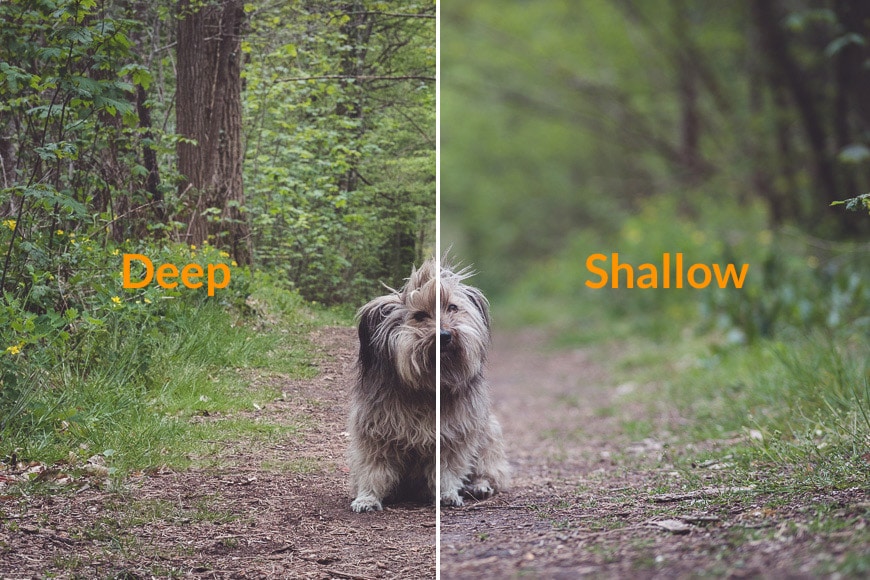
At its core, shallow depth of field is a physical property of light as it passes through a lens and converges onto a sensor. Depth of field refers to the distance between the nearest and farthest objects in a scene that appear acceptably sharp in an image. When that distance is very small—focusing on a single plane while blurring everything else—we refer to it as “shallow.”
The Role of Aperture and the F-Stop Scale
The primary mechanical driver of shallow depth of field is the aperture. The aperture is a calibrated opening within the lens, controlled by a series of overlapping blades. In technical terms, the size of this opening is expressed as an f-number (e.g., f/1.4, f/2.8, f/16).
The f-number is a ratio of the lens’s focal length to the diameter of the entrance pupil. A lower f-number indicates a wider opening. From a physics standpoint, a wider aperture allows light rays to enter the lens from more extreme angles. These rays converge at a sharper angle toward the sensor, creating a narrower “plane of focus.” Consequently, objects even slightly in front of or behind this plane do not converge to a single point on the sensor, resulting in the “circle of confusion”—the technical term for the blur we see in out-of-focus areas.
Focal Length and Magnification Optics
Focal length plays a critical role in the compression of an image and the perceived depth of field. Telephoto lenses (long focal lengths like 85mm or 200mm) naturally produce a shallower depth of field than wide-angle lenses (like 16mm or 24mm) at the same aperture settings. This occurs because long focal lengths magnify the background, which in turn magnifies the “circle of confusion.” In tech-heavy industries like cinematography, engineers prioritize lens elements that can maintain sharpness at the focal point while providing a smooth, non-distracting fall-off in the background.
Sensor Size and the Physics of the Focal Plane
The physical dimensions of a digital sensor significantly influence depth of field. Larger sensors, such as Full Frame or Medium Format, require longer focal lengths to achieve the same field of view as smaller sensors (like APS-C or Micro Four Thirds). Because longer focal lengths are used, the depth of field is inherently shallower. This is a key reason why high-end professional cameras are preferred for high-stakes tech and media production; the physical surface area of the sensor allows for greater control over optical isolation that smaller mobile sensors cannot replicate through hardware alone.
The Engineering of “Bokeh”: Glass Quality and Mechanical Design
While “shallow depth of field” describes the technical state of the focal plane, “bokeh” describes the subjective quality of the out-of-focus blur. In the tech world, the engineering of bokeh is a multi-million dollar pursuit involving advanced materials science and precision manufacturing.
Aspherical Elements and Chromatic Aberration
To achieve a clean, shallow depth of field, lens manufacturers must combat optical flaws known as aberrations. High-end lenses utilize aspherical elements—glass shaped with non-spherical surfaces—to correct spherical aberration. Without this, the blurred highlights in a shallow DOF image would appear distorted or “onion-skinned.” Furthermore, the use of Extra-low Dispersion (ED) glass ensures that light of different wavelengths hits the sensor at the same point, preventing the “color fringing” that often plagues lower-quality optics when shooting at wide apertures.
Aperture Blade Configuration and Geometry
The mechanical design of the aperture diaphragm determines the shape of the bokeh. Modern professional lenses often feature 9 or 11 rounded blades. Tech reviews of lenses often focus on this “blade count” because more blades create a more circular opening. When the aperture is wide open for a shallow DOF effect, the highlights in the background take on the shape of the aperture. Rounder blades lead to a more “creamy” and natural-looking blur, which is a hallmark of premium optical engineering.

Lens Coatings and Light Transmission (T-Stops)
In the world of professional cinema tech, engineers look at T-stops (Transmission stops) rather than F-stops. While F-stops are a mathematical calculation of the aperture size, T-stops measure the actual amount of light that reaches the sensor after passing through various glass elements. High-tech nano-coatings are applied to lens surfaces to maximize light transmission and minimize internal reflections (ghosting). This allows for a shallower depth of field even in low-light environments without sacrificing the contrast or clarity of the focused subject.
Computational Photography: Simulating Depth with AI and Software
Perhaps the most significant advancement in the niche of depth of field over the last decade is the rise of computational photography. As smartphone sensors are physically too small to produce a truly shallow depth of field through optics alone, software engineers have stepped in to bridge the gap using AI and machine learning.
Neural Engines and Semantic Segmentation
Modern smartphones utilize “Portrait Mode,” which is a software-driven simulation of shallow depth of field. This process begins with semantic segmentation—the ability of an AI model to identify and categorize every pixel in an image (e.g., “this is a person,” “this is a strand of hair,” “this is a tree”). By using neural engines, the software creates a “mask” around the subject. The challenge for software developers lies in the “edge cases”—literally. Accurately masking fine details like individual hairs or transparent glasses is a benchmark for the power of modern mobile processors.
Depth Mapping via Dual-Lens and LiDAR Technology
To create a realistic blur, the device needs to know how far objects are from the camera. Tech companies employ several methods for this:
- Stereoscopic Vision: Using two lenses to calculate depth based on the offset between the two images (parallax).
- Dual-Pixel Autofocus: Using the sensor itself to measure the phase difference of light hitting different parts of a single pixel.
- LiDAR (Light Detection and Ranging): Sending out infrared pulses to build a precise 3D map of the environment.
This depth data allows the software to apply a “gradient blur,” where objects further from the subject are blurred more intensely than objects closer to it, mimicking the behavior of a physical lens.
Post-Processing Workflows and Synthetic Aperture
The tech industry has also introduced “synthetic aperture” tools in post-production software like Adobe Premiere Pro and DaVinci Resolve. Using AI-based plugins, editors can now add a shallow depth of field to footage that was originally shot with everything in focus. These tools use depth-estimation algorithms to map the 2D video into a 3D space, allowing the user to digitally select a focal point and adjust the “f-stop” after the fact. This represents a massive shift in how visual media is produced, moving from “captured” optics to “calculated” optics.
Industrial and Future Applications of Depth-Sensing Tech
The technical utility of shallow depth of field extends far beyond the world of photography and social media. It is becoming a vital component in several emerging tech sectors.
Medical Imaging and Microscopy
In the field of digital microscopy and medical tech, shallow depth of field is both a challenge and a tool. High-magnification lenses used in pathology have an extremely thin depth of field—sometimes measured in micrometers. Engineers have developed “Focus Stacking” software, which takes dozens of images at different focal planes and merges them into a single sharp image. This fusion of hardware precision and software processing allows for 3D reconstructions of cellular structures that were previously impossible to visualize.
Autonomous Vehicles and Computer Vision
For autonomous drones and self-driving cars, understanding depth is a matter of safety. Computer vision systems utilize the principles of shallow depth of field to isolate obstacles. By analyzing which objects are “in focus” or “sharp” relative to the sensor’s calibration, the onboard AI can make millisecond decisions about distance and velocity. The intersection of optical physics and real-time data processing is what enables these machines to navigate complex 3D environments.

The Future: Light Field Photography
The next frontier in this niche is Light Field (Plenoptic) technology. Unlike traditional sensors that record light intensity and color, light field sensors record the direction of every ray of light entering the lens. This creates a “4D” image file. In a light field image, the depth of field is entirely malleable; the user can change the focus point and the depth of field infinitely after the image is taken, without any loss of quality. While still in its infancy for consumer tech, this represents the ultimate evolution of depth-of-field control—moving from a physical constraint to a digital variable.
By mastering the interplay between glass, sensors, and silicon, the technology industry continues to redefine how we perceive depth. Whether through the precision of a $50,000 cinema lens or the neural processing of a smartphone, shallow depth of field remains one of the most powerful tools in the modern digital arsenal.
aViewFromTheCave is a participant in the Amazon Services LLC Associates Program, an affiliate advertising program designed to provide a means for sites to earn advertising fees by advertising and linking to Amazon.com. Amazon, the Amazon logo, AmazonSupply, and the AmazonSupply logo are trademarks of Amazon.com, Inc. or its affiliates. As an Amazon Associate we earn affiliate commissions from qualifying purchases.