
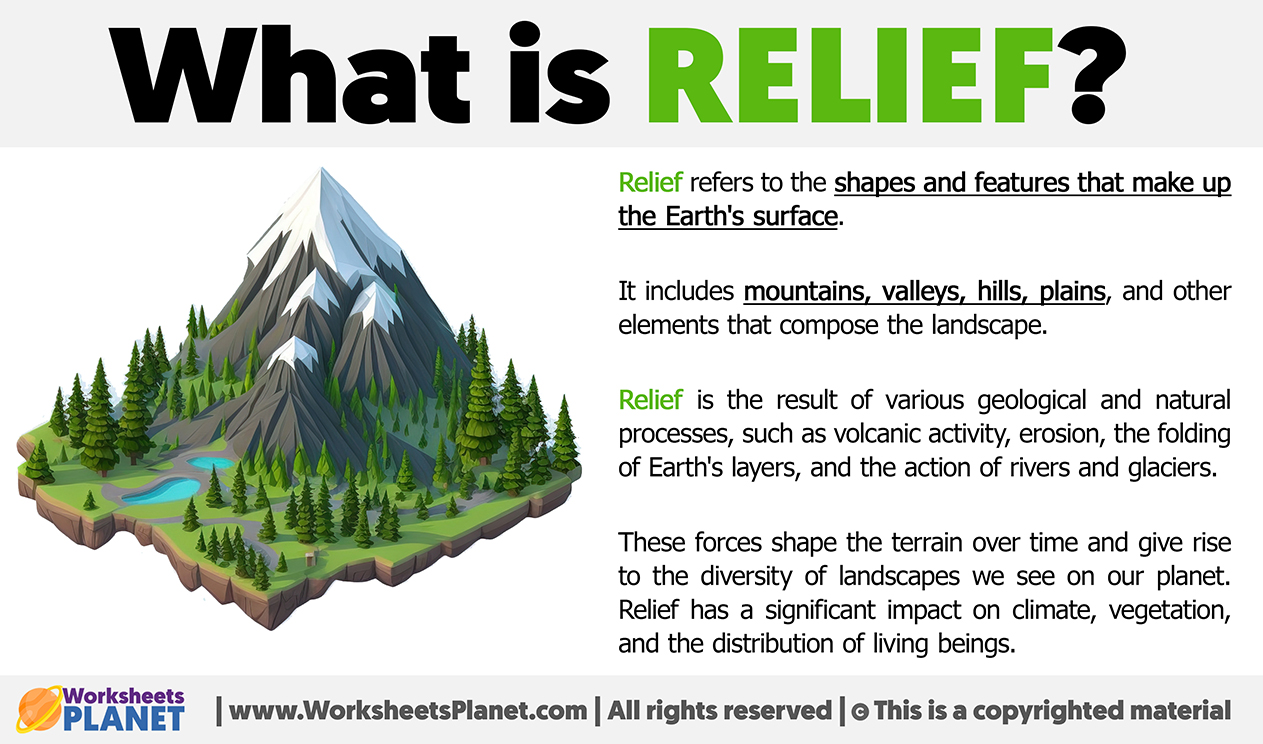
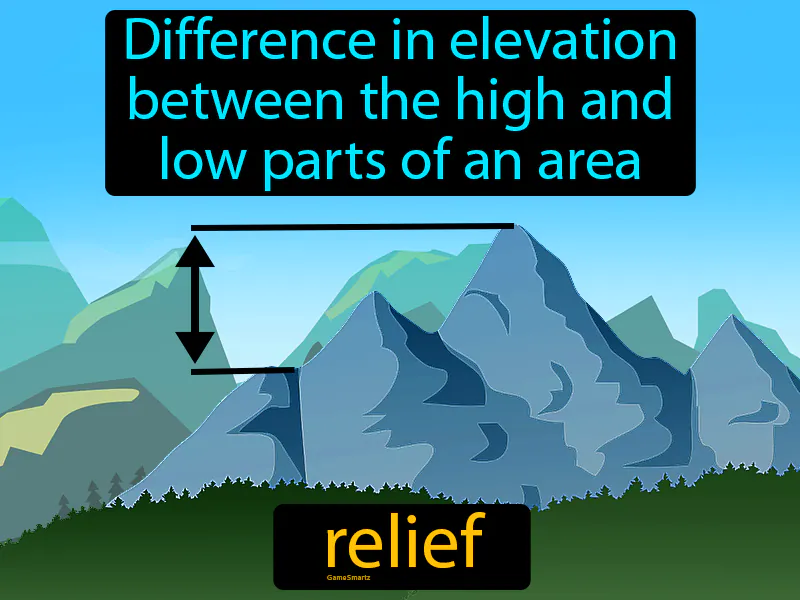
In the traditional sense, relief geography is the study of the vertical and horizontal dimensions of land surface—the mountains, valleys, plains, and ridges that define our physical world. However, in the modern era, this field has been completely subsumed and redefined by technology. Today, “Relief Geography” is a sophisticated data science discipline powered by Geographic Information Systems (GIS), high-resolution sensors, and artificial intelligence.
Understanding relief geography in the 21st century requires looking beyond physical maps. It involves exploring the digital architectures that allow us to visualize, simulate, and manipulate topographic data with millimeter precision. This technological shift has transformed how we approach urban planning, environmental conservation, and infrastructure development, turning static terrain into dynamic, actionable intelligence.
The Evolution from Physical Maps to Digital Elevation Models (DEMs)
The transition from hand-drawn contour lines to digital frameworks represents one of the most significant leaps in geographic science. Historically, relief was represented through hachures or shading on paper, which offered a qualitative “feel” for the land but lacked the quantitative data necessary for modern engineering.
Understanding the Shift to Digital Cartography
Digital cartography replaced manual surveying with computerized data points. The fundamental building block of modern relief geography is the Digital Elevation Model (DEM). A DEM is a 3D representation of a terrain’s surface, created from terrain elevation data. Unlike a flat map, a DEM assigns a Z-value (elevation) to every X and Y coordinate in a grid. This allows software to calculate slope, aspect, and volume, turning a simple image into a powerful analytical tool.
Key Components of Modern Topographic Software
To process relief data, professionals rely on specialized software suites like ArcGIS, QGIS, and Global Mapper. These tools are designed to handle “raster” data—grids of cells where each cell contains a value representing elevation. Within these platforms, users can perform complex hydrological modeling, such as predicting where water will flow during a flood, or viewshed analysis, which determines what areas are visible from a specific geographic point. The tech stack for relief geography has become so advanced that it can now simulate environmental changes over decades in a matter of seconds.
Essential Technologies Powering Modern Relief Geography
The “how” of relief geography is defined by the hardware used to capture data. We no longer rely solely on ground-based surveyors with theodolites; instead, we look to the sky and beyond.
LiDAR: The Laser-Powered Eye in the Sky
Light Detection and Ranging (LiDAR) is perhaps the most transformative technology in relief geography. By firing thousands of laser pulses per second from an aircraft or drone and measuring how long they take to bounce back, LiDAR creates a “point cloud.” These millions of points result in a highly accurate 3D model of the earth’s surface.
What makes LiDAR revolutionary for relief geography is its ability to “see” through vegetation. By filtering out the “first returns” (the tops of trees), software can generate a “Bare Earth” model, revealing hidden ruins, fault lines, or drainage patterns that are invisible to the naked eye or standard photography.
Photogrammetry and Drone-Based Relief Mapping
While LiDAR is high-end, photogrammetry has democratized terrain analysis. This tech uses overlapping high-resolution photographs taken from different angles to triangulate the 3D coordinates of a surface. With the rise of commercial drones (UAVs) and software like Pix4D or Agisoft Metashape, even small-scale developers can create precise relief maps of construction sites or agricultural fields at a fraction of the cost of traditional aerial surveys.
Satellite Remote Sensing and Global Terrain Data
On a global scale, satellites like those in the Copernicus or Landsat programs provide the macro-view of relief geography. Technologies like InSAR (Interferometric Synthetic Aperture Radar) allow scientists to monitor the “relief” of the earth as it changes in real-time. This tech is so sensitive it can detect land subsidence (sinking) or tectonic shifts measured in centimeters from hundreds of miles above the planet.
The Role of AI and Machine Learning in Interpreting Relief Data
The sheer volume of data generated by LiDAR and satellites is overwhelming for human analysts. This is where Artificial Intelligence (AI) and Machine Learning (ML) have become indispensable components of the relief geography tech ecosystem.
Automated Feature Recognition in Geographic Software
One of the most tedious tasks in geography was manually identifying landforms or man-made structures within a map. Modern GIS software now utilizes Convolutional Neural Networks (CNNs) to automatically classify features. For instance, an AI can be trained to distinguish between a natural ridge and a man-made levee across thousands of square miles of data, identifying potential points of failure in flood defenses with speed and accuracy that humans cannot match.
Predictive Analytics for Geological and Environmental Shifts
Machine learning algorithms are now used to predict how relief will change over time. By feeding historical terrain data into a model, tech platforms can simulate erosion patterns, landslide risks, and the impact of rising sea levels on coastal topography. These “predictive relief models” are essential for climate adaptation tech, allowing governments to visualize the “relief geography” of 2050 and build infrastructure accordingly.
Real-World Tech Applications: From Urban Planning to Digital Twins
Relief geography isn’t just an academic exercise; it is the backbone of the “Digital Twin” movement and smart city initiatives.
Designing Smarter Cities through Topographic Precision
When engineers plan a new subway system or a sewage network, the relief of the land dictates every decision. GIS tech allows planners to overlay relief data with utility maps and population density. By analyzing the verticality of a city, architects can optimize the placement of 5G towers (which require clear lines of sight) or design “sponge cities” that use the natural slopes of the land to manage stormwater runoff, reducing the tech-load on traditional drainage systems.
The Rise of Digital Twins and Virtual Relief Simulations
A “Digital Twin” is a virtual replica of a physical asset or environment. In relief geography, this means creating a 1:1 digital version of a landscape. These models are used in immersive technologies like VR (Virtual Reality) and AR (Augmented Reality). For example, emergency responders use digital twins of mountainous regions to simulate rescue missions in a virtual environment before ever stepping foot on the actual terrain. This integration of relief data into the “Metaverse” or industrial simulation tools represents the cutting edge of geographic tech.
Selecting the Right Tools for Geospatial Analysis
For those looking to enter the field or integrate terrain analysis into their workflow, the software landscape is diverse. Choosing the right tool depends on the complexity of the “relief” you are analyzing and the budget of your project.
Professional Software Suites: ArcGIS vs. QGIS
The industry standard is Esri’s ArcGIS, a powerhouse of proprietary software that offers deep integration with cloud computing and AI. It is the “Adobe Photoshop” of the geography world—expensive but incredibly capable. On the other hand, QGIS is the leading open-source alternative. It offers a massive library of community-driven plugins that allow users to perform high-level relief analysis, such as terrain ruggedness indexing and slope calculations, without the high licensing fees.
Emerging Trends in Mobile Mapping Apps
The future of relief geography is increasingly mobile. Apps like ArcGIS Field Maps or specialized topographic tools like Gaia GPS allow users to interact with high-resolution relief data on-site. Using the GPS and sensors built into modern smartphones, field workers can verify digital elevation models against real-world conditions, “ground-truthing” the data and uploading corrections to the cloud in real-time.
As we look forward, the line between “geography” and “information technology” will continue to blur. Relief geography is no longer about static shapes; it is about the flow of data, the precision of sensors, and the intelligence of algorithms. Whether we are mapping the surface of Mars or planning the foundation of a new skyscraper, the tech of relief geography provides the essential framework for understanding the 3D world we inhabit.
aViewFromTheCave is a participant in the Amazon Services LLC Associates Program, an affiliate advertising program designed to provide a means for sites to earn advertising fees by advertising and linking to Amazon.com. Amazon, the Amazon logo, AmazonSupply, and the AmazonSupply logo are trademarks of Amazon.com, Inc. or its affiliates. As an Amazon Associate we earn affiliate commissions from qualifying purchases.