
In the intricate world of business finance, every transaction has a ripple effect on a company’s bottom line. While much attention is paid to sales revenue and capital investment, the management of outflows is equally critical for maintaining fiscal health. One of the most common yet often misunderstood components of the procurement cycle is the “purchase return.”
A purchase return occurs when a buyer returns goods or services to a seller after the initial purchase has been recorded. Whether the cause is a defect, an oversupply, or a discrepancy in specifications, the financial handling of these returns dictates the accuracy of a company’s financial statements. For business owners, accountants, and financial analysts, mastering the mechanics of purchase returns is essential for optimizing cash flow and ensuring high-integrity financial reporting.

The Fundamentals of Purchase Returns in Accounting
In accounting terminology, a purchase return—often referred to as “returns outwards”—represents the reversal of a previous procurement transaction. To understand its role, one must first understand its placement within the general ledger and the specific documentation required to validate the reversal.
Defining Purchase Returns (Returns Outwards)
A purchase return is recognized when a business sends back merchandise to the supplier. This is distinct from a “purchase allowance,” where the buyer keeps the damaged goods but receives a price reduction. In a purchase return, the physical inventory leaves the premises, and the financial liability to the supplier must be adjusted accordingly. From a niche perspective in business finance, this is categorized as a “contra-revenue” or “contra-expense” activity, depending on how the initial purchase was categorized, though it primarily functions to reduce the total cost of purchases.
The Journal Entry Process: Debit and Credit Mechanics
The accounting for purchase returns follows a standardized double-entry system. When a company purchases goods on credit, it debits its “Inventory” or “Purchases” account and credits “Accounts Payable.” When those goods are returned, the process must be reversed to reflect that the debt to the supplier is no longer owed.
To document this, the business issues a Debit Note to the supplier. The journal entry involves:
- Debiting Accounts Payable: This decreases the amount of money the company owes to its vendors.
- Crediting Purchase Returns and Allowances: This account acts as a contra-account to the main Purchases account, effectively reducing the net purchase figure on the financial statements.
By maintaining a separate account for returns rather than simply erasing the original purchase entry, businesses can track the frequency and volume of returns, which serves as a vital KPI for supply chain efficiency.
The Impact of Purchase Returns on Financial Statements
The significance of purchase returns extends far beyond simple bookkeeping. They have a direct impact on the three primary financial statements: the Income Statement, the Balance Sheet, and the Cash Flow Statement.
Effect on the Income Statement (Cost of Goods Sold)
On the Income Statement, purchase returns are subtracted from “Gross Purchases” to arrive at “Net Purchases.” This figure is a primary component in calculating the Cost of Goods Sold (COGS).
If a business fails to record purchase returns accurately, its COGS will be artificially inflated. This results in an understated Gross Profit and Net Income. Conversely, a high volume of purchase returns might indicate that the business is struggling with unreliable suppliers, leading to indirect costs such as production delays and increased labor for processing returns, which eventually erode the operating margin.
Impact on the Balance Sheet and Accounts Payable
On the Balance Sheet, purchase returns directly influence the “Current Liabilities” section. By reducing Accounts Payable, the company improves its Current Ratio (current assets divided by current liabilities). A healthy Current Ratio is a key indicator of a business’s short-term solvency.
Furthermore, if the inventory is managed under a perpetual system, the return must also be reflected in the “Inventory” asset account. Failure to synchronize the physical return of goods with the digital ledger leads to “ghost inventory,” where the books show assets that are no longer physically present in the warehouse.
Cash Flow Implications: Managing Liquidity
From a liquidity standpoint, purchase returns are a double-edged sword. While they reduce the total cash outflow required to settle payables, they can also signal disruptions in the cash-to-cash cycle.

If a business has already paid for the goods in cash, a purchase return should result in a cash refund or a credit toward future purchases. In finance, managing these credits is essential for Working Capital Management. If credits sit unused on a supplier’s books, that capital is effectively “trapped,” earning zero interest and providing no utility to the business. Professional financial management requires a proactive approach to either reclaiming those funds or deploying the credit quickly to maintain momentum.
Strategies for Optimizing the Purchase Return Process
In the “Money” niche, efficiency is synonymous with profitability. A disorganized return process leads to “leakage”—money lost due to administrative errors, missed deadlines for returns, or uncollected refunds.
Implementing Efficient Vendor Management Systems
To minimize the negative impact of returns, businesses must integrate purchase return protocols into their broader Vendor Management Strategy. This involves negotiating clear “Return Merchandise Authorization” (RMA) terms during the initial contract phase.
Financial leaders should analyze return data to perform Vendor Performance Reviews. If a specific supplier has a return rate significantly higher than the industry average, the “landed cost” of their products—which includes the cost of processing returns—may actually be higher than a more expensive, higher-quality competitor. Switching to a more reliable vendor can improve the bottom line even if the unit price is higher.
Leveraging Financial Tools for Real-Time Tracking
In the modern era, manual spreadsheets are insufficient for managing complex return cycles. Modern Enterprise Resource Planning (ERP) tools and dedicated financial software allow for real-time tracking of purchase returns.
Automated systems can:
- Flag discrepancies between the Purchase Order (PO) and the receiving report.
- Automatically generate Debit Notes.
- Link return shipments to specific invoices to ensure that credits are applied correctly.
- Provide “aging reports” for outstanding return credits, ensuring that the finance team follows up on refunds that haven’t been processed by the vendor.
Tax Implications and Audit Compliance
For any business, the intersection of accounting and taxation is a high-stakes area. Purchase returns have specific implications for tax filings and the integrity of the audit trail.
Sales Tax (GST/VAT) Reversals
In many jurisdictions, purchases are subject to Value Added Tax (VAT) or Goods and Services Tax (GST). When a business returns goods, it is essentially reversing a transaction for which it may have already claimed an “Input Tax Credit.”
If the tax has already been recorded, the business must ensure that the purchase return documentation includes a tax adjustment. Failure to properly account for the tax component of a return can lead to overstating tax credits, which may trigger penalties during a government audit. A “Credit Note” from the supplier is the standard legal document required to substantiate these tax adjustments.
Maintaining the Audit Trail for Fiscal Responsibility
Auditors look closely at contra-accounts like purchase returns because they can be used to manipulate earnings or hide inventory shrinkage. A robust audit trail for purchase returns includes:
- The original Purchase Order.
- The Receiving Report (noting the defect or reason for return).
- The Debit Note issued to the supplier.
- The Credit Note received from the supplier.
- Shipping documentation proving the goods left the facility.
Ensuring these documents are linked and archived is a hallmark of professional financial governance and protects the business from accusations of financial mismanagement.
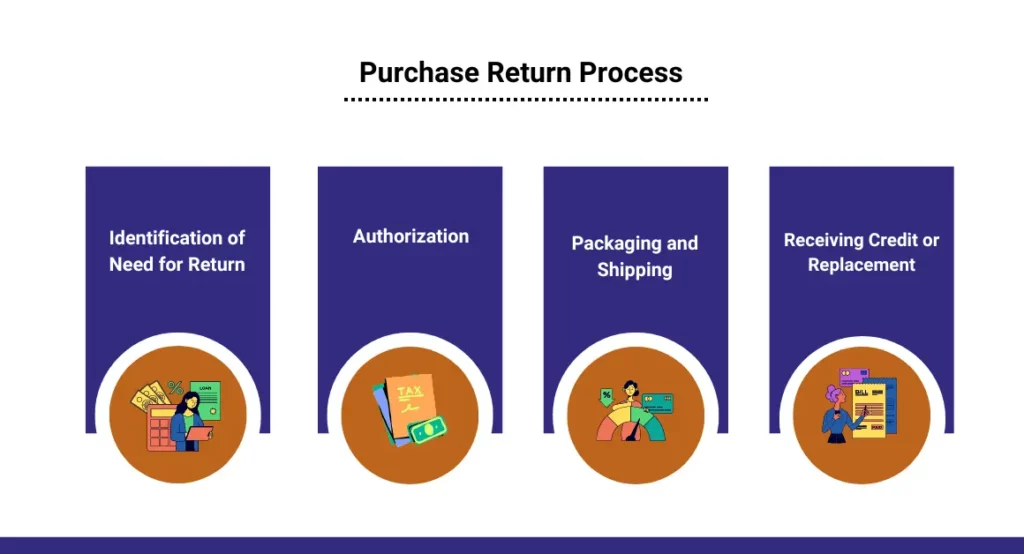
Conclusion: Purchase Returns as a Metric for Operational Excellence
While often viewed as a mere administrative nuisance, the purchase return is a critical financial lever. In the context of business finance, it is a tool for correcting errors, recovering capital, and refining the supply chain.
By accurately recording these transactions, businesses ensure the integrity of their financial statements, optimize their working capital, and maintain a transparent relationship with tax authorities. Ultimately, a low and well-managed purchase return rate is a testament to a company’s operational excellence and its ability to maintain high standards of procurement and financial oversight. In the world of money management, it is not just about how much you spend, but how effectively you manage the reversal of that spending when the value delivered does not meet the standard required.
aViewFromTheCave is a participant in the Amazon Services LLC Associates Program, an affiliate advertising program designed to provide a means for sites to earn advertising fees by advertising and linking to Amazon.com. Amazon, the Amazon logo, AmazonSupply, and the AmazonSupply logo are trademarks of Amazon.com, Inc. or its affiliates. As an Amazon Associate we earn affiliate commissions from qualifying purchases.