
In the landscape of global technology, few companies exert as much influence over the physical world while remaining largely invisible to the average consumer as Fanuc. If you have ever driven a car, used a smartphone, or opened a packaged food item, there is a high probability that a Fanuc machine played a role in its creation. Headquartered at the foot of Mount Fuji in Japan, Fanuc (an acronym for Factory Automation Numerical Control) is the world’s leading manufacturer of industrial robots and Computer Numerical Control (CNC) systems.

This article dives deep into the technological ecosystem of Fanuc, exploring how its hardware, software, and AI-driven innovations are defining the future of the “smart factory” and modern manufacturing.
The Evolution of Fanuc: From Numerical Control to Robotics Leadership
To understand what Fanuc is today, one must look at its origins in the early days of computing and mechanical engineering. The company began as part of Fujitsu in the 1950s, tasked with developing the first numerical control (NC) systems. Under the leadership of Dr. Seiuemon Inaba, Fanuc pioneered the transition from manual machine operation to automated precision.
The Origins of Numerical Control (NC)
Numerical control was the precursor to modern computing in manufacturing. By using punched tape and eventually digital processors to dictate the movements of machine tools, Fanuc allowed for a level of repeatability and precision that was previously impossible. This technology revolutionized the aerospace and automotive industries, moving production away from artisanal craftsmanship toward scalable, high-tech industrialization.
Transitioning to Independent Robotics
In 1972, Fanuc spun off from Fujitsu to become an independent entity. This era marked the birth of the iconic “Fanuc Yellow”—the bright color used for their robots and factory buildings. During the 1980s, Fanuc realized that the controllers they built for machine tools could also be used to power articulated arms. This led to the development of their first industrial robots, which quickly became the gold standard for welding, painting, and assembly lines globally. Today, Fanuc has installed over 750,000 robots and millions of CNC systems worldwide, cementing its status as a pillar of the global tech infrastructure.
Core Technologies: Understanding CNC Systems and Industrial Software
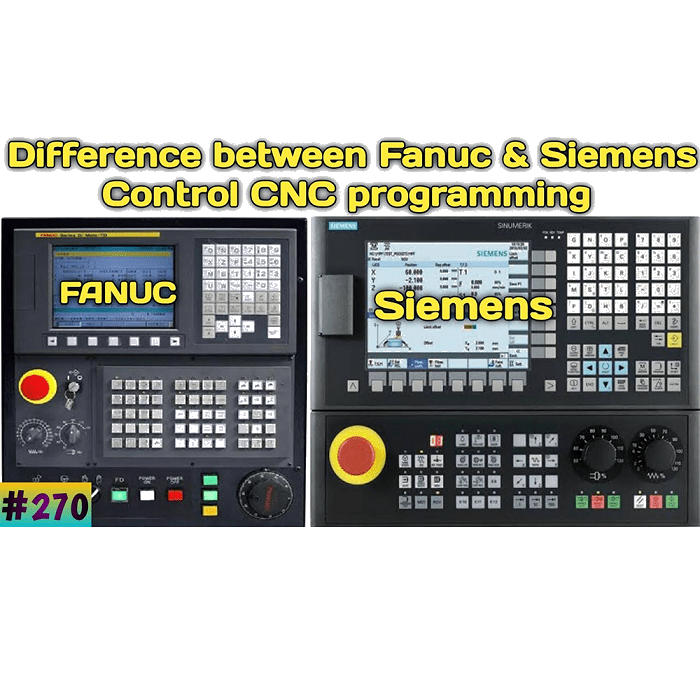
While their yellow robots are the most visible aspect of the company, Fanuc’s real technological dominance lies in its “brain”—the CNC system. CNC is the software and hardware interface that tells a machine how to move, cut, and shape material with sub-micron precision.
The “Brain” of the Machine: Fanuc CNC Controls
Fanuc’s CNC systems are renowned for their “ultra-reliability.” In the tech world, where software updates often lead to glitches, Fanuc prioritizes stability. Their control systems use a proprietary operating system designed to run for decades without a crash. This level of reliability is critical because even a single minute of downtime in a high-volume automotive plant can cost tens of thousands of dollars. The hardware includes high-speed processors and fiber-optic communications that allow for real-time synchronization between the software commands and the physical motor movements.
Proprietary Programming and Simulation Software
Fanuc doesn’t just provide the hardware; they provide an extensive suite of software tools like ROBOGUIDE and CNC Guide. These are sophisticated digital twin environments where engineers can model a factory floor in 3D, program the robots, and run simulations to detect potential collisions or inefficiencies before a single piece of equipment is ever turned on. This “virtual commissioning” saves companies months of setup time and reduces the risk of expensive hardware damage.
The Hardware Ecosystem: A Deep Dive into Fanuc Industrial Robots
Fanuc’s hardware portfolio is vast, ranging from tiny robots that can pick up electronic components to massive arms capable of lifting entire car chassis. Each category represents a specific technological solution to a manufacturing challenge.
Articulated Robots for Heavy Lifting
The R-2000 and M-900 series are the workhorses of the heavy industry. These multi-axis articulated robots mimic the human arm but with vastly superior strength and endurance. They utilize advanced servo motors and gearboxes that allow them to move payloads of up to 2,300 kg with millimeter precision. The tech behind these machines involves complex kinematics and motion-control algorithms that ensure smooth movement even at high speeds.
Collaborative Robots (Cobots) and Human-Machine Interaction
One of the most significant shifts in robotics technology is the move toward “Cobots.” Traditionally, industrial robots had to be kept behind safety cages because their speed and power were lethal to humans. Fanuc’s CR and CRX series utilize advanced force-torque sensors and “skin” sensors. If a human touches the robot, it stops instantly. This allows for a hybrid workspace where humans and machines work side-by-side, combining human intuition with robotic consistency.
SCARA and Delta Robots for High-Speed Precision
For the electronics and food industries, Fanuc produces SCARA (Selective Compliance Assembly Robot Arm) and Delta robots. Delta robots, often seen in “pick and place” applications, use a parallel kinematic structure that allows them to move at incredible speeds—sometimes over 200 picks per minute. These machines are integrated with high-speed vision systems (iRVision) that allow the robot to “see” items on a moving conveyor belt, identify their orientation, and sort them in real-time.
Integration of AI and IoT: Driving the Smart Factory Revolution
We are currently in the era of Industry 4.0, where the physical factory is integrated with the “Internet of Things” (IoT) and Artificial Intelligence. Fanuc is at the forefront of this digital transformation, moving beyond simple automation toward “intelligent” machines.
FIELD System (Fanuc Intelligent Edge Link & Drive)
The FIELD system is Fanuc’s open platform for the industrial IoT. Unlike cloud-based systems that might suffer from latency, the FIELD system operates on the “edge”—meaning the data processing happens locally on the factory floor. This allows for real-time data collection from various machines, regardless of the manufacturer. By analyzing this data, the system can optimize production flows and energy consumption across the entire facility.
Predictive Maintenance and AI-Enhanced Precision
One of the most powerful applications of AI in the Fanuc ecosystem is Zero Down Time (ZDT). Using machine learning algorithms, ZDT monitors the health of robots and CNC machines. It tracks thermal expansion, vibration patterns, and motor torque to predict when a component is likely to fail. Instead of a machine breaking down unexpectedly, the AI alerts the maintenance team weeks in advance, allowing them to replace a part during scheduled downtime. Additionally, AI is used to enhance “path learning,” where a robot learns to compensate for its own vibrations to achieve even higher levels of accuracy.
Security and Connectivity in Modern Industrial Environments
As factories become more connected, they also become more vulnerable to cyber threats. Fanuc has pivoted its tech strategy to include robust digital security measures, ensuring that the backbone of global manufacturing remains secure.
Protecting the Digital Factory Floor
In the realm of Operational Technology (OT), security is handled differently than in standard IT. Fanuc employs multi-layered defense mechanisms, including encrypted communication protocols and secure boot processes for their controllers. This ensures that unauthorized software cannot be loaded onto the machines and that the data being sent to the FIELD system is protected from interception.
The Future of Interconnected Manufacturing
Looking ahead, Fanuc is exploring the integration of 5G technology into its robots. The high bandwidth and low latency of 5G would allow for “untethered” robots that can communicate wirelessly with central controllers and each other without the need for miles of cabling. This would create a truly flexible factory where robots can be moved and reconfigured in hours rather than weeks.
Furthermore, the development of “Deep Learning” vision systems is allowing Fanuc robots to handle “random bin picking”—one of the hardest tasks in robotics. By using neural networks, the robot can recognize an object it has never seen before, determine how to grip it, and navigate it out of a cluttered bin without a human ever having to write a specific line of code for that object.

Conclusion
Fanuc is far more than a manufacturer of yellow machines; it is a foundational technology company that provides the hardware and software “operating system” for the physical world. Through its dominance in CNC systems, its pioneering work in articulated robotics, and its current leadership in industrial AI and IoT, Fanuc continues to push the boundaries of what is possible in automation. As we move deeper into the 21st century, the technologies developed by Fanuc will remain the silent, precise, and tireless drivers of global progress.
aViewFromTheCave is a participant in the Amazon Services LLC Associates Program, an affiliate advertising program designed to provide a means for sites to earn advertising fees by advertising and linking to Amazon.com. Amazon, the Amazon logo, AmazonSupply, and the AmazonSupply logo are trademarks of Amazon.com, Inc. or its affiliates. As an Amazon Associate we earn affiliate commissions from qualifying purchases.