
In the landscape of environmental science and public health, the term ETS stands for Environmental Tobacco Smoke. Commonly referred to as secondhand smoke, ETS is a complex mixture of thousands of chemicals, including gases and particulate matter, released into the air from burning tobacco products. While the health implications of ETS have been documented for decades, the 21st century has introduced a sophisticated technological layer to how we identify, quantify, and mitigate this airborne challenge.
Today, the conversation surrounding ETS has shifted from simple “no smoking” signs to integrated technological ecosystems. We are no longer reliant on human senses to detect the presence of tobacco smoke; instead, we utilize high-precision sensors, Internet of Things (IoT) connectivity, and advanced filtration algorithms to maintain clean environments. This article explores the technological frontier of ETS detection and the digital tools reshaping our relationship with indoor air quality.

Defining ETS in the Digital Age: From Secondhand Smoke to Data Points
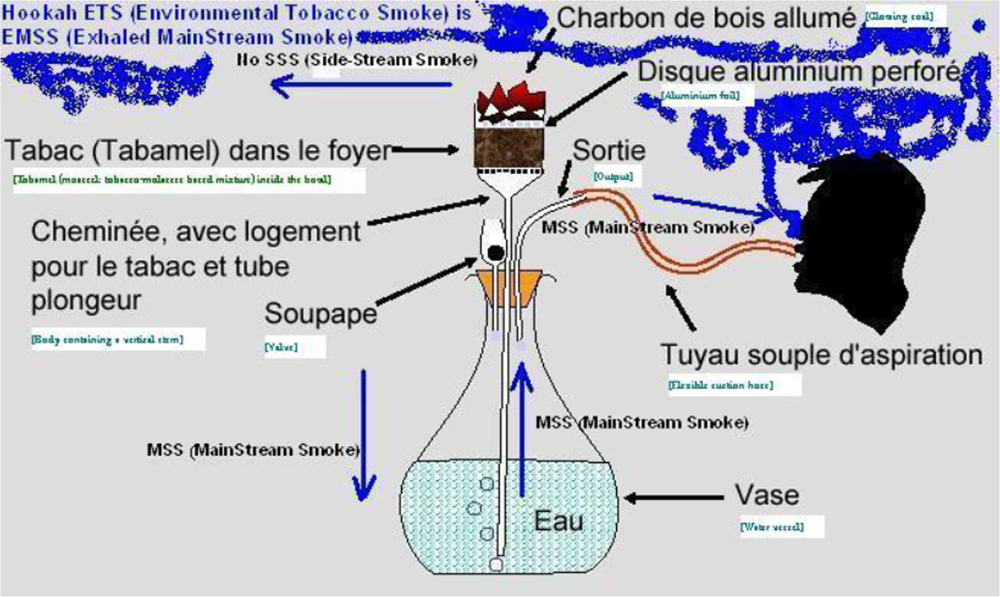
To address ETS through a technological lens, we must first understand what it is as a physical and chemical data set. ETS is composed of two components: sidestream smoke (smoke from the burning end of a cigarette) and mainstream smoke (smoke exhaled by the smoker). For a sensor, this isn’t just “smoke”—it is a specific signature of Volatile Organic Compounds (VOCs) and Particulate Matter (PM).
The Chemical Complexity of Environmental Tobacco Smoke
From a technical standpoint, ETS is one of the most difficult aerosols to monitor because of its diversity. It contains over 7,000 chemicals, many of which are in a gaseous state, while others are microscopic solids. Engineers designing air quality monitors must program their devices to distinguish between ETS and other household aerosols, such as steam from cooking or dust. The “tech stack” for identifying ETS usually involves targeting markers like nicotine, 3-ethenylpyridine (3-EP), and fine particulate matter (PM2.5).
Digitizing Air Quality: Why Sensors Matter
In the past, the only “technology” used to combat ETS was ventilation—simply opening a window. In the modern smart home or office, we use digitized air quality monitoring. By converting chemical concentrations into digital signals, we can track exposure levels over time. This data-driven approach allows for the creation of “heat maps” within buildings, identifying where ETS accumulates and how long it persists, providing actionable insights that a simple smoke alarm never could.
IoT and Sensor Tech: Detecting the Invisible
The hardware used to detect ETS has seen a radical transformation. We have moved away from bulky laboratory equipment toward miniaturized, low-power sensors that can be integrated into smartphones, wearable devices, and smart home hubs. These devices leverage the Internet of Things (IoT) to provide real-time alerts and automated responses.
Photoionization Detectors (PIDs) vs. Laser Scattering
Two primary technologies dominate the detection of ETS in the consumer and industrial tech sectors.
- Laser Scattering (PM2.5 Sensors): These sensors use a laser beam to illuminate particles passing through a chamber. By measuring the light scattered by these particles, the device calculates the concentration of PM2.5—the size of particles most prevalent in tobacco smoke.
- Photoionization Detectors (PIDs): For a more specific chemical analysis, PIDs use high-energy ultraviolet (UV) light to ionize gas molecules. This tech is highly effective at detecting VOCs that are specific to tobacco combustion, offering a higher degree of accuracy in distinguishing ETS from general pollution.
Real-time Data Analytics and Smartphone Integration
The true power of modern ETS tech lies in the software layer. Modern air quality monitors, such as those developed by companies like Awair or PurpleAir, sync with mobile applications via the cloud. These apps use sophisticated algorithms to process raw sensor data and present it as an Air Quality Index (AQI) score. For facility managers or homeowners, this means receiving a push notification the moment ETS is detected, allowing for immediate intervention. Furthermore, the integration of AI allows these systems to “learn” the environment, eventually predicting peak times of smoke exposure based on historical data patterns.

Smart Air Purification: Tech-Driven Solutions for ETS Mitigation
Once ETS is detected, the technological ecosystem shifts from monitoring to mitigation. The latest generation of air purifiers is not just a fan with a filter; they are intelligent machines capable of targeted chemical filtration.
HEPA and Activated Carbon: The Hardware Layer
To effectively remove ETS, a dual-stage filtration system is required.
- HEPA (High-Efficiency Particulate Air) Filters: Specifically, HEPA H13 or H14 grade filters are the gold standard for trapping the particulate side of ETS, capturing 99.97% of particles as small as 0.3 microns.
- Activated Carbon Layers: Because ETS contains gases and odors that pass right through a HEPA filter, high-tech purifiers utilize deep-bed activated carbon. This material undergoes a process of “adsorption,” where gas molecules are chemically trapped in a porous carbon lattice.
AI-Enhanced Filtration Systems
The most recent trend in “CleanTech” is the development of automated filtration. Using “Auto Mode” logic, an air purifier stays in a low-power, silent state until its onboard sensors detect a spike in VOCs or PM2.5 (indicating the presence of smoke). The onboard microchip then ramps up the motor speed instantly. This responsive technology ensures that energy is conserved while maintaining a “zero-tolerance” environment for ETS. Some advanced systems even utilize “Molecular Disocciation” technology, using cold plasma or UV-C light to break the molecular bonds of tobacco-specific toxins, rendering them harmless at a molecular level.
The Future of Environmental Tobacco Smoke Prevention: Wearables and Smart Cities
As we look toward the future, the technology used to manage ETS is becoming increasingly personal and increasingly urban. We are moving toward a world where the “quantified self” includes an awareness of the air we breathe in every environment, from the office to the subway.
Wearable Exposure Trackers
We are seeing the emergence of wearable air quality trackers—devices no larger than a smartwatch that clip onto clothing. These gadgets utilize micro-electromechanical systems (MEMS) to monitor the wearer’s immediate “breathing zone.” For individuals with respiratory sensitivities, this technology is life-changing. It provides a personal digital shield, logging every instance of ETS exposure and syncing that data with health apps to correlate air quality with lung function or heart rate.
Urban Tech and Public Health Databases
On a macro level, smart city initiatives are beginning to incorporate ETS detection into urban infrastructure. Sensors mounted on smart streetlights can monitor outdoor smoking areas to ensure smoke isn’t drifting into hospital air intakes or school playgrounds. This “Big Data” approach allows city planners to design better-ventilated public spaces. By aggregating data from thousands of IoT sensors, public health officials can gain a real-time understanding of how ETS travels through urban canyons, leading to smarter, tech-enabled policy decisions.
Conclusion: The Digital Shield Against ETS
The definition of ETS may be rooted in biology and chemistry, but our modern response to it is defined by technology. Through the marriage of high-precision sensors, IoT connectivity, and AI-driven filtration, we have developed a digital shield that protects indoor and outdoor environments.
As software continues to evolve and sensors become even more sensitive, our ability to eliminate the risks associated with Environmental Tobacco Smoke will only increase. We are moving away from a reactive stance toward a proactive, automated future where clean air is managed by a “tech stack” dedicated to health and safety. In this new era, technology isn’t just a convenience; it is the primary tool for reclaiming our environments from the invisible threats of tobacco smoke.
aViewFromTheCave is a participant in the Amazon Services LLC Associates Program, an affiliate advertising program designed to provide a means for sites to earn advertising fees by advertising and linking to Amazon.com. Amazon, the Amazon logo, AmazonSupply, and the AmazonSupply logo are trademarks of Amazon.com, Inc. or its affiliates. As an Amazon Associate we earn affiliate commissions from qualifying purchases.