
In the landscape of international finance, professional development, and global business operations, the DS-2019 form stands as a critical document. Formally known as the “Certificate of Eligibility for Exchange Visitor (J-1) Status,” the DS-2019 is the foundational pillar for any individual seeking to enter the United States under the J-1 Exchange Visitor Program. While it is often viewed through the lens of immigration, its implications for personal finance, corporate budgeting, and international tax compliance are profound. Understanding the DS-2019 is essential for scholars, interns, and business professionals who view international mobility as a strategic financial and career investment.
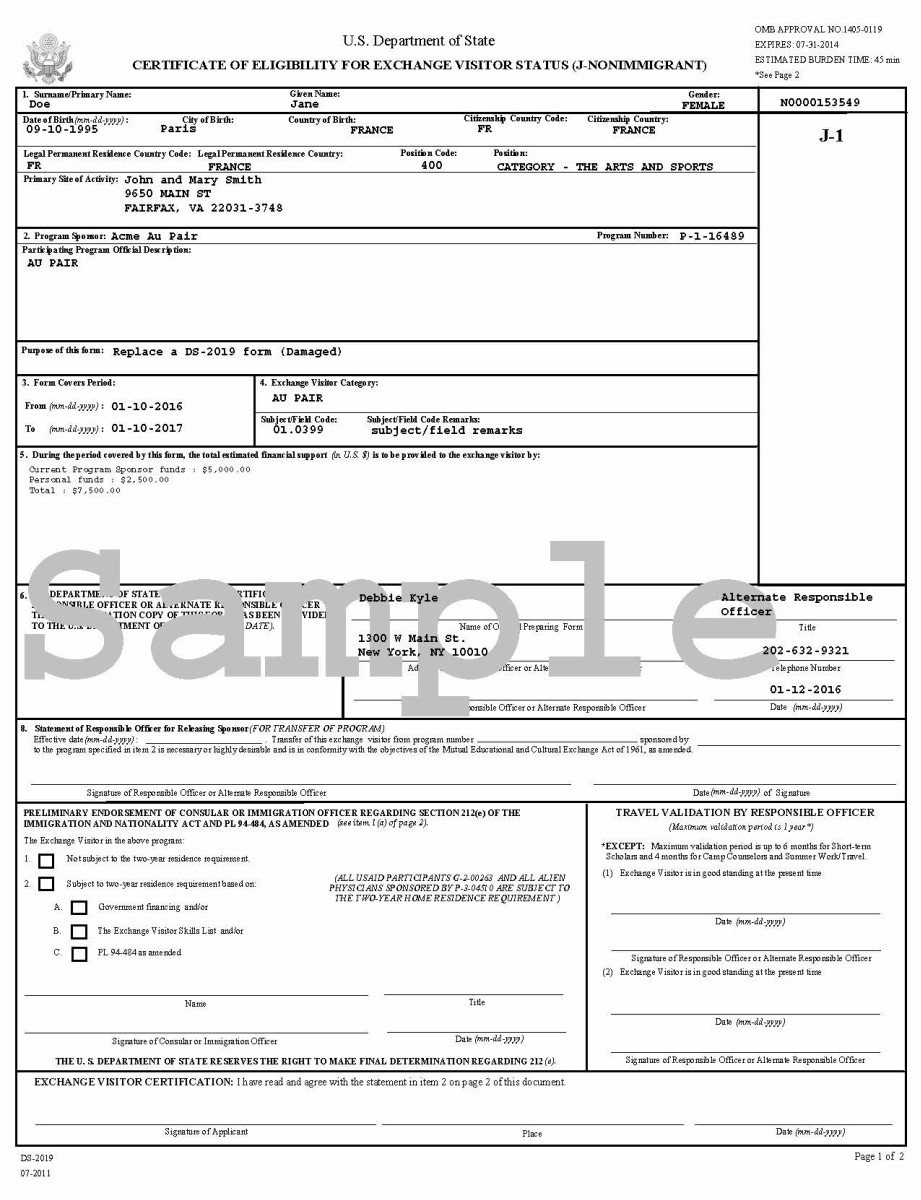
1. The Financial Anatomy of the DS-2019 Form
The DS-2019 is more than just a permit; it is a legal statement of financial solvency and institutional backing. Issued by a U.S. Department of State-designated sponsor, the document outlines the parameters of an individual’s stay, including their program’s duration, the nature of their activities, and, most importantly, the source of their funding.
The Role of Section 5: Financial Support
One of the most vital components of the DS-2019 is Section 5, which details the financial breakdown of the participant’s program. To be issued this form, an applicant must demonstrate that they have sufficient funds to cover all expenses, including housing, insurance, and living costs, without becoming a “public charge.” This section categorizes funding into several streams:
- Sponsor Support: Funding provided directly by the host organization or university.
- Personal Funds: Liquid assets provided by the individual to bridge the gap between stipends and cost of living.
- Government Grants: Financial backing from either the U.S. government or the visitor’s home government.
- Other Organizations: Support from international agencies or private foundations.
SEVIS and the Financial Cost of Entry
The issuance of the DS-2019 triggers the requirement for the SEVIS I-901 fee. This is a mandatory financial obligation paid to the Department of Homeland Security. From a personal finance perspective, this represents the first of many “entry costs” for international exchange. Managing these upfront costs—which also include visa interview fees and mandatory health insurance premiums—requires careful budgetary planning months before departure.
2. Navigating the Costs: Fees, Proof of Funds, and Budgetary Planning
Securing a DS-2019 is a process governed by strict financial scrutiny. Sponsors are legally obligated to ensure that participants will not face financial hardship during their tenure in the U.S. This necessitates a rigorous “Proof of Funds” phase that serves as a reality check for the participant’s financial strategy.
Calculating the Minimum Cost of Living
Sponsors typically set a “minimum monthly requirement” based on the cost of living in the specific region where the program is located. For instance, a J-1 intern in New York City will face significantly higher financial thresholds for their DS-2019 than one located in a mid-sized Midwestern city. This calculation includes:
- Housing and Utilities: Often the largest expenditure, requiring a significant portion of the stipend or personal savings.
- Mandatory Health Insurance: Unlike standard travel insurance, J-1 visitors must meet specific Department of State requirements (e.g., $100,000 per accident/illness minimum).
- Repatriation and Medical Evacuation: Financial provisions for emergency transport back to the home country.
Strategic Financial Documentation
To satisfy the requirements for the DS-2019, individuals must provide bank statements, scholarship letters, or employment contracts. In the realm of personal finance, this often involves “laddering” funds—ensuring that liquid cash is available for the initial months of the program while other assets remain invested. For those relying on personal savings, exchange rate volatility is a major factor; a sudden dip in the value of one’s home currency can jeopardize the financial validity of the DS-2019 before the visa is even issued.
3. Tax Implications and Financial Benefits for DS-2019 Holders
One of the most overlooked aspects of the DS-2019 is the unique tax status it confers upon the holder. For international professionals and students, understanding the intersection of the J-1 status and U.S. tax law can lead to significant financial savings and better long-term wealth management.
FICA Tax Exemptions
Most J-1 visitors who are considered “non-resident aliens” for tax purposes are exempt from Social Security and Medicare taxes (FICA). This is a substantial financial benefit, effectively increasing the visitor’s take-home pay by approximately 7.65%. For a business professional or a researcher on a paid internship, this exemption represents a direct boost to their net income, allowing for higher savings or more aggressive debt repayment in their home country.

Utilizing Tax Treaties
Many countries have bilateral tax treaties with the United States. Depending on the visitor’s home country and the nature of their work (as specified on the DS-2019), they may be eligible to exempt a portion of their U.S.-sourced income from federal income tax. These treaties are complex and vary by country, but for the savvy financial planner, they provide a mechanism to minimize global tax liability.
The Resident vs. Non-Resident Alien Distinction
The DS-2019 determines the start date of the “Substantial Presence Test” window. For the first two years (for researchers/trainees) or five years (for students), holders are generally treated as non-resident aliens. This classification impacts which tax forms are filed (Form 1040-NR) and which deductions can be claimed. Navigating this correctly is essential to avoid costly IRS audits or penalties that could derail future financial opportunities in the U.S.
4. Business Finance: The ROI of Hosting International Talent
From the perspective of a U.S. business or research institution, the DS-2019 is a tool for global talent acquisition. While there are costs associated with sponsoring an exchange visitor, the return on investment (ROI) can be substantial for the corporate bottom line.
Cost-Effective Training and Innovation
Hosting a J-1 visitor via a DS-2019 allows companies to bring in specialized international talent for short-to-medium-term projects without the long-term overhead of an H-1B visa. For startups and tech firms, this provides access to global perspectives and specific technical skills at a predictable cost. The program is designed for “training” and “exchange,” meaning the financial investment is often categorized under Research and Development (R&D) or Professional Development budgets.
Managing Corporate Compliance Risk
The DS-2019 places significant reporting burdens on the host organization. Failure to monitor the participant’s activities or financial status can lead to the loss of sponsorship designation, which is a major reputational and financial risk. Businesses must invest in robust HR and compliance systems to manage their J-1 programs, ensuring that the “Money” spent on administration yields the “Value” of international collaboration.
Global Market Expansion
Companies often use the DS-2019 to bring employees from foreign branches to the U.S. headquarters. This cross-pollination of corporate culture and technical expertise is a strategic move that facilitates smoother international operations and can lead to increased profitability in overseas markets.
5. Wealth Management and Financial Transitions for J-1 Visitors
The lifecycle of a DS-2019 begins with an application and ends with either a departure or a transition to another status. Each stage requires specific financial maneuvers to ensure that the individual’s wealth is protected and grown during their time in the United States.
Banking and Credit Building
One of the first financial hurdles for a DS-2019 holder is opening a U.S. bank account. While many banks require a Social Security Number (SSN), some will accept the DS-2019 and a passport. Establishing a U.S. banking relationship is crucial for receiving stipends and managing domestic expenses. Furthermore, for those who intend to return to the U.S. on different visas (like the H-1B or L-1) later in their careers, starting the process of building a U.S. credit score—even while on a J-1—can be a massive financial advantage for future loans or mortgages.
The Two-Year Home-Country Physical Presence Requirement (212(e))
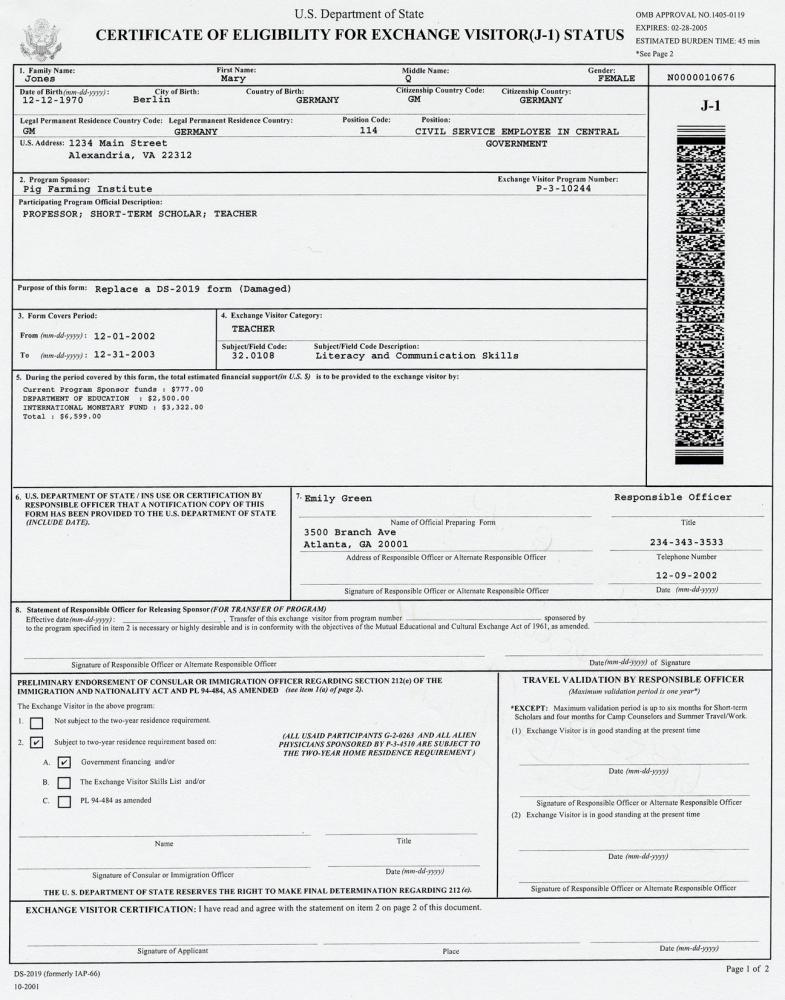
Some DS-2019 forms come with a “Section 212(e)” notation, which requires the visitor to return to their home country for two years after the program ends before they can apply for certain other U.S. visas. This has significant financial implications. If a visitor is subject to this rule, they must plan their career trajectory and financial commitments (such as car leases or long-term rentals) with this “forced” departure in mind. Conversely, obtaining a “Waiver” for this requirement involves legal fees and administrative costs that must be factored into one’s long-term financial plan.
Currency Management and Remittance
For many exchange visitors, the goal is to save a portion of their U.S. earnings to send back home. Efficiently managing remittances requires an understanding of exchange rates, wire transfer fees, and the tax implications of moving large sums of money across borders. A DS-2019 holder who manages their stipend effectively can return home with significant capital to invest in property, business ventures, or further education.
In conclusion, the DS-2019 form is far more than a bureaucratic necessity for entry into the United States. It is a roadmap for financial eligibility, a catalyst for tax-advantaged income, and a strategic tool for both personal and corporate financial growth. By understanding the fiscal intricacies of this document, international visitors and their hosts can maximize the economic benefits of global exchange while maintaining rigorous compliance with U.S. financial and immigration standards.
aViewFromTheCave is a participant in the Amazon Services LLC Associates Program, an affiliate advertising program designed to provide a means for sites to earn advertising fees by advertising and linking to Amazon.com. Amazon, the Amazon logo, AmazonSupply, and the AmazonSupply logo are trademarks of Amazon.com, Inc. or its affiliates. As an Amazon Associate we earn affiliate commissions from qualifying purchases.