
In the vast landscape of mathematical concepts, some tools stand out for their intuitive power and wide-ranging applicability. The “area model for multiplication” is precisely one such tool. Far more than a mere arithmetic trick, it represents a foundational approach to understanding multiplication, transforming abstract numbers into concrete, visual representations. At its core, the area model leverages the simple geometric principle that the area of a rectangle is found by multiplying its length by its width. By applying this visual framework, complex multiplication problems – from basic single-digit products to multi-digit operations and even algebraic expressions – become accessible, understandable, and strategically manageable.
In an era increasingly defined by technology, financial literacy, and the strategic communication of ideas, understanding fundamental concepts like the area model becomes surprisingly pertinent. Whether you’re a tech enthusiast grappling with algorithms, an aspiring investor planning financial growth, or a brand strategist aiming for clarity in complex messaging, the ability to visualize and break down multi-factor problems is invaluable. This article will delve into the mechanics of the area model, explore its pedagogical benefits, and most importantly, demonstrate its profound relevance across the domains of technology, personal finance, and strategic brand management.
Unpacking the Fundamentals: The Geometry of Multiplication
At its heart, the area model for multiplication is an elegant bridge between arithmetic and geometry. It takes the abstract operation of multiplication and grounds it in a tangible, spatial representation, making the concept of “groups of” or “scaling” visibly clear.
The Basic Concept: Length x Width = Area
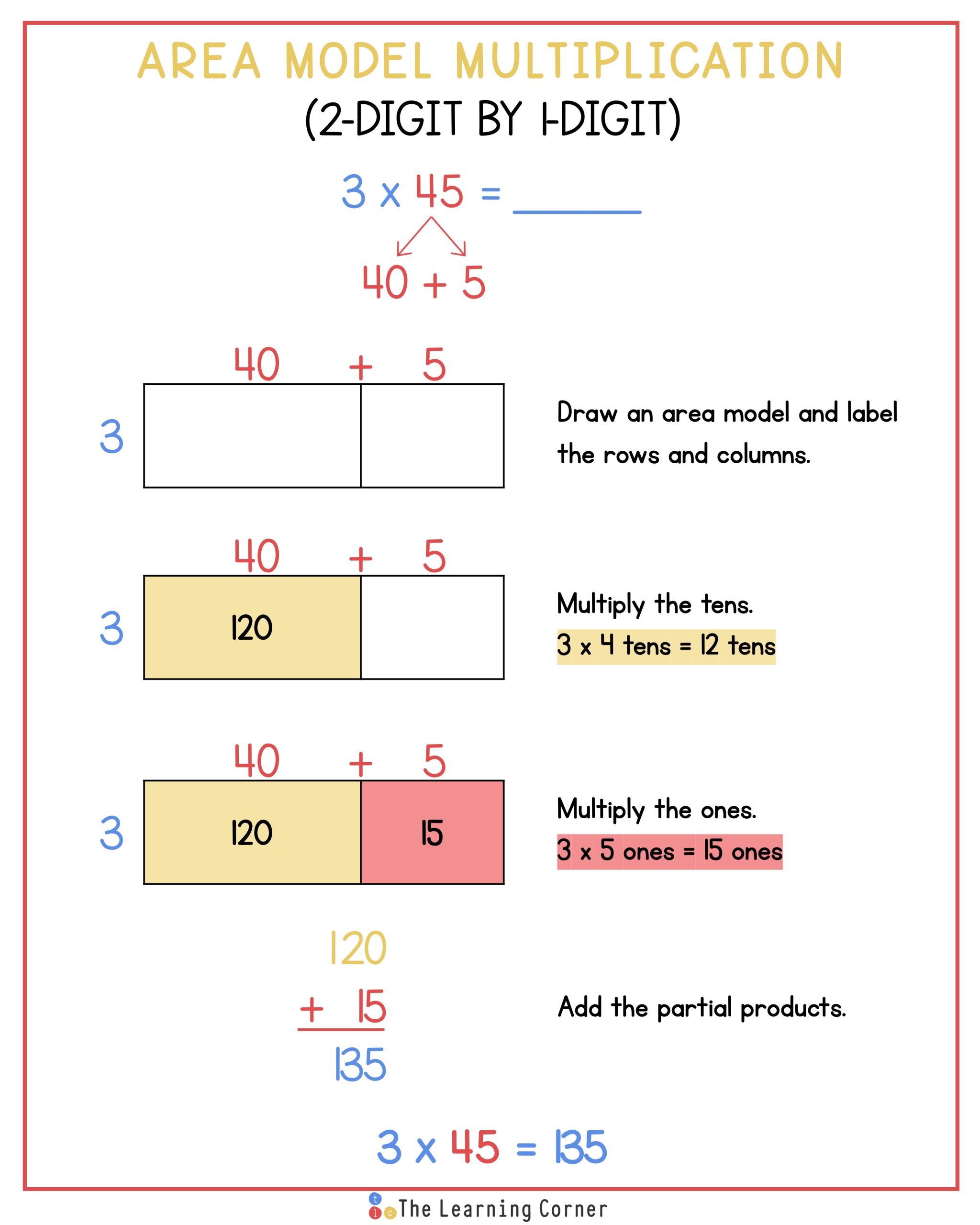
Imagine you want to calculate 3 x 4. Traditionally, one might think of this as “three groups of four” or simply recall it from memory. The area model, however, invites you to visualize this product as a rectangle with a length of 4 units and a width of 3 units. When you draw this rectangle and divide it into unit squares, you will count 12 individual squares. Each square represents one unit of area, and the total number of squares directly corresponds to the product of 3 and 4. Thus, 3 x 4 = 12.
This simple visualization, though seemingly basic, carries immense power. It demystifies multiplication, showing why a certain product results from two factors. It also naturally connects to the concept of arrays, where items are arranged in rows and columns, further solidifying the visual understanding of multiplication as repeated addition or the combination of dimensions. For younger learners, this concrete representation builds a robust conceptual foundation that prevents rote memorization from becoming a barrier to deeper understanding. For adults, it offers a refreshed perspective, reminding us of the underlying logic behind operations we often take for granted.
Visualizing Larger Numbers: Breaking Down Complexity
The true brilliance of the area model shines when tackling larger, multi-digit multiplication problems. Here, it beautifully demonstrates the distributive property of multiplication, which states that multiplying a sum by a number gives the same result as multiplying each addend by the number and then adding the products. The area model provides a visual map for this property, making it far more intuitive than an abstract algebraic formula.
Consider multiplying 12 x 13.
Without the area model, one might perform a standard algorithm, often without fully grasping why each step works. With the area model, we can decompose each number into its place value components:
- 12 becomes (10 + 2)
- 13 becomes (10 + 3)
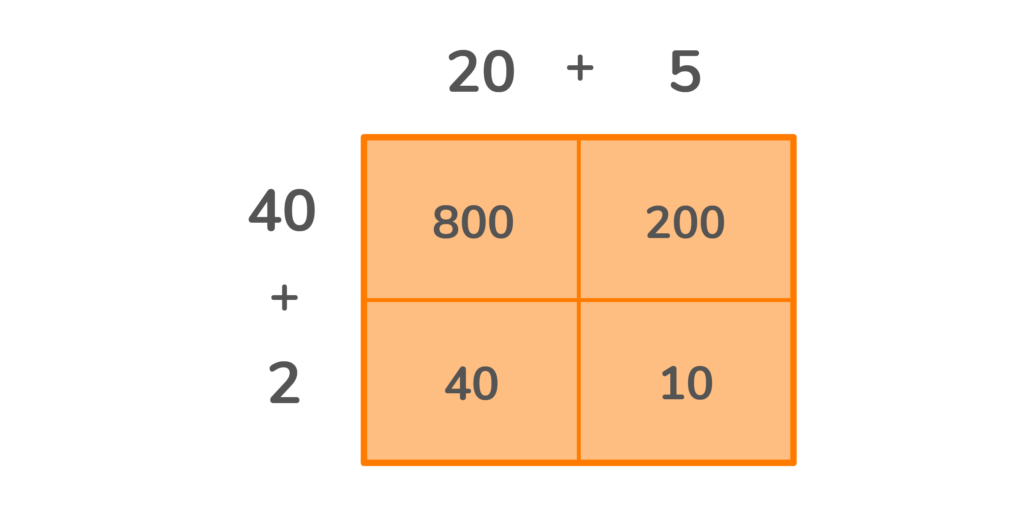
Now, we draw a larger rectangle and divide its length and width according to these components. We create a grid:
- One section with dimensions 10 x 10 = 100
- One section with dimensions 10 x 3 = 30
- One section with dimensions 2 x 10 = 20
- One section with dimensions 2 x 3 = 6
The total area of the large rectangle is the sum of the areas of these four smaller rectangles: 100 + 30 + 20 + 6 = 156.
This method visually breaks down a seemingly complex problem into four simpler multiplication problems, which are then summed. It makes the “why” of carrying over numbers in the traditional algorithm much clearer and provides a powerful strategy for mental math or estimation. This ability to partition and conquer complexity is not just a mathematical skill; it’s a fundamental approach applicable across a multitude of disciplines, including those relevant to technology, finance, and branding.
Beyond Basic Arithmetic: The Area Model as a Strategic Tool
While rooted in elementary mathematics, the principles embodied by the area model extend far beyond the classroom. Its inherent ability to visualize and decompose complex interactions makes it a powerful strategic tool, particularly when viewed through the lenses of technology, personal finance, and brand strategy.
Enhancing Financial Acumen with Visual Multiplication (Money Topic)
The world of finance is inherently multiplicative. From calculating interest to projecting profits, understanding the cumulative effect of various factors is paramount. The area model provides an intuitive framework for visualizing these financial calculations, making abstract numbers tangible and aiding in more informed decision-making.
- Budgeting and Expense Management: Imagine planning your expenses for a year. If your monthly rent is $1,500 and utilities average $200, an area model can quickly visualize your annual housing costs. One dimension would be 12 months, the other would be (1500 + 200). You’d see 12 x 1500 and 12 x 200, summing up to your total. This makes tracking and understanding large sums less daunting.
- Investing and Compound Interest: While compound interest involves exponential growth, the area model can help visualize the initial layers of multiplication. If you invest $1,000 at a 5% annual return, you can visualize the initial growth. Over multiple years, while more complex, the concept of your principal multiplying by a growth factor (1 + interest rate) annually is a sequence of multiplications that can be conceptually mapped to an expanding area. Visualizing a portfolio where different assets (stocks, bonds, real estate) contribute to overall wealth, each with its own “multiplication factor” (return), can also be approached with an area-like partitioning.
- Business Planning and Revenue Projections: For entrepreneurs and business owners, the area model is an implicit tool for projecting revenue or understanding cost structures. If a side hustle involves selling a product, revenue is (units sold) x (price per unit). If you expand your product line or target market, you’re essentially adding new “areas” to your revenue model. For service-based businesses, it’s (hours worked) x (hourly rate). Breaking down business scenarios into these multiplicative components helps in strategic planning, identifying bottlenecks, and forecasting potential income or expenditure. This clarity is crucial for securing funding or scaling operations.
- Financial Literacy and Risk Assessment: Understanding the “multiplicative effect” of debt (e.g., high-interest credit card debt compounding) or the benefit of early savings (small, consistent contributions multiplying over time) becomes clearer. The area model, by making these processes visual, fosters a deeper financial literacy that transcends mere number crunching, empowering individuals to make smarter money choices.
Leveraging Technology for Deeper Understanding and Productivity (Tech Topic)
In the digital age, technology is not just about automation; it’s about enhancing understanding and boosting productivity. The area model, far from being an outdated concept, finds surprising resonance and powerful applications within technological contexts.
- Educational Software and Interactive Tools: The area model is a prime candidate for interactive learning platforms. Software applications can allow users to dynamically adjust lengths and widths of rectangles, seeing the area calculation update in real-time. This hands-on, visual experimentation deepens understanding much more effectively than static examples. Virtual manipulatives and educational apps are already using these principles to teach multiplication, making learning engaging and effective.
- Digital Whiteboards and Collaborative Learning: In remote work or hybrid learning environments, digital whiteboards provide an excellent canvas for constructing and manipulating area models collaboratively. Teams can sketch out complex calculations, break them down visually, and collectively solve problems, fostering a shared understanding that is crucial for technical collaboration. This is particularly useful in brainstorming sessions where different factors need to be multiplied to achieve a desired outcome or where resource allocation (e.g., people x hours x tasks) needs to be visualized.
- Spreadsheets and Algorithmic Thinking: While not a direct visual area, a spreadsheet fundamentally operates on a similar grid-based, multiplicative logic. Rows and columns represent dimensions, and formulas perform calculations (multiplications, sums) across these dimensions. Understanding the area model helps in grasping how complex financial models or data analyses are built in spreadsheets, where values in one cell (dimension) are multiplied by others to produce an outcome. Furthermore, the partitioning strategy of the area model mirrors the “divide and conquer” approach often found in algorithms – breaking down a large problem into smaller, manageable sub-problems, solving them, and combining the results. This conceptual link is invaluable for anyone delving into programming or data science.
- AI and Optimization: While AI doesn’t “draw” area models, the principles of optimal resource allocation, efficiency calculations, and even neural network architectures (layers of weighted inputs being multiplied) subtly reflect a multiplicative breakdown of problems. Understanding the foundational visualization of multiplication can provide an intuitive basis for grasping how complex systems combine multiple factors to produce results or predictions.
Crafting Clarity: The Area Model in Branding and Strategic Communication (Brand Topic)
At first glance, connecting a mathematical model to brand strategy might seem like a stretch. However, branding is fundamentally about communication, perception, and strategic decomposition of value. The area model’s core principles – visualization, decomposition, and clarity – are highly analogous to effective brand building and communication.
- Visual Simplicity in Design: Good brand design often takes complex ideas and distills them into simple, recognizable visuals. Just as the area model simplifies multiplication into a clear rectangle, effective logos and brand aesthetics make a brand’s essence instantly comprehensible. The model reinforces the power of visual aids to convey information accurately and appealingly, a cornerstone of successful branding.
- Strategic Thinking and Value Proposition: A brand’s value proposition is rarely a single factor; it’s a multiplication of benefits, features, and emotional connections. An area model approach can help strategists break down how different aspects of a product or service multiply to create overall value. For instance, “brand value” might be a combination of (quality x reputation x customer experience). By visualizing these interacting factors, strategists can identify which “areas” need more development or emphasis to maximize the overall brand “area.”
- Reputation Building and Trust: Clarity and transparency build trust. When a brand can clearly articulate its offerings, its pricing structure, or the impact of its services, it enhances its reputation. The area model’s ability to make complex calculations transparent translates into a metaphor for clear communication in branding. A brand that can “show its math” – explain its processes, value, or impact in an understandable, almost visual way – is likely to be perceived as more trustworthy and authoritative.
- Communicating Complex Multi-Factor Propositions: Imagine a company selling a SaaS product with tiered pricing, multiple features, and various support packages. Explaining the total “value” or “cost” to a client can be overwhelming. Using an area model conceptually, where different tiers, features, and support levels are ‘dimensions’ that multiply into a total proposition, helps both the brand and the client grasp the complete offering more effectively. It’s about making the multiplicative nature of value explicit and easy to digest, much like how a well-designed infographic or a clear pricing table operates.
Advantages and Applications: Why Master the Area Model?
The enduring relevance of the area model for multiplication stems from a suite of distinct advantages that extend its utility far beyond the classroom.
- Conceptual Understanding Over Rote Memorization: Its primary benefit is fostering a deep, conceptual understanding of multiplication. Instead of merely memorizing facts or algorithms, learners grasp why multiplication works, what it represents, and how numbers interact. This foundational insight is crucial for higher-level mathematics.
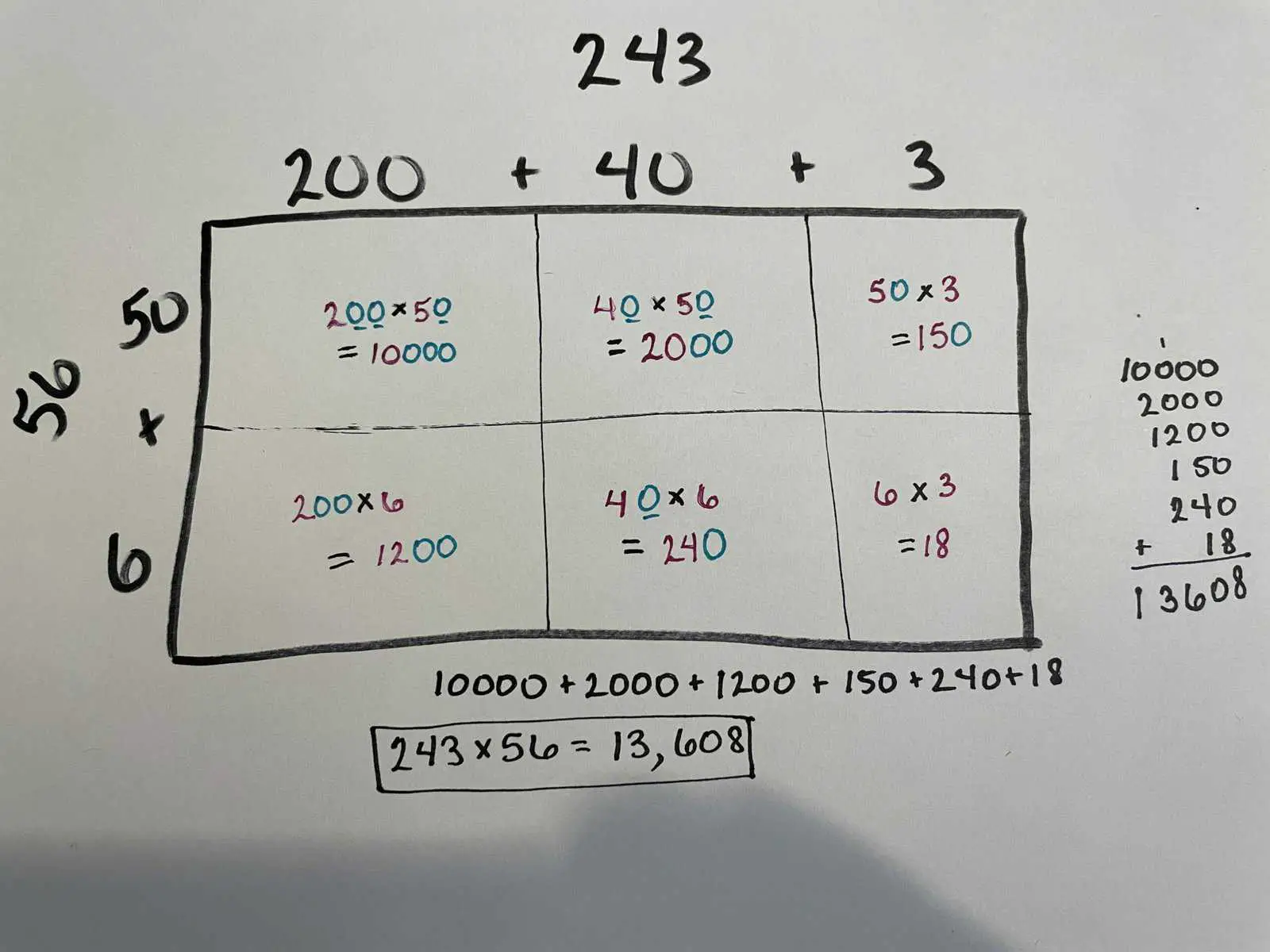
- Powerful Problem-Solving Strategy: The ability to decompose complex problems into smaller, manageable parts is a universal problem-solving skill. The area model explicitly teaches this “divide and conquer” strategy, making it invaluable for tackling multi-digit arithmetic, algebraic expressions (multiplying polynomials, which is a direct extension of the area model), and even real-world challenges in business or science.
- Bridge to Algebra and Beyond: The area model provides a seamless bridge to algebraic concepts. Multiplying binomials, such as (x + 2)(x + 3), uses the exact same visual partitioning and distribution principles as multiplying 12 x 13. This visual continuity makes algebra less intimidating and more intuitive for students. Its logical framework also extends to more advanced areas like probability (visualizing event spaces) and statistics (understanding interaction effects).
- Real-World Relevance and Practicality: From calculating the square footage of a room for renovation to estimating material costs in construction, from understanding financial projections to optimizing resource allocation in project management, the principles of area and multiplication are ubiquitous. Mastering the area model provides a concrete framework for approaching these everyday and professional challenges with confidence and clarity.
In conclusion, the area model for multiplication is more than just a geometric representation; it’s a powerful cognitive tool. It empowers individuals to visualize, deconstruct, and comprehend complex multiplicative relationships, transforming abstract numbers into concrete insights. In a world driven by technological innovation, financial complexity, and the constant need for clear communication, the ability to apply the principles of the area model translates directly into enhanced problem-solving skills, sharper financial acumen, and more effective strategic thinking. It’s a testament to the enduring power of foundational concepts to illuminate and simplify the intricate workings of our modern world.
aViewFromTheCave is a participant in the Amazon Services LLC Associates Program, an affiliate advertising program designed to provide a means for sites to earn advertising fees by advertising and linking to Amazon.com. Amazon, the Amazon logo, AmazonSupply, and the AmazonSupply logo are trademarks of Amazon.com, Inc. or its affiliates. As an Amazon Associate we earn affiliate commissions from qualifying purchases.