
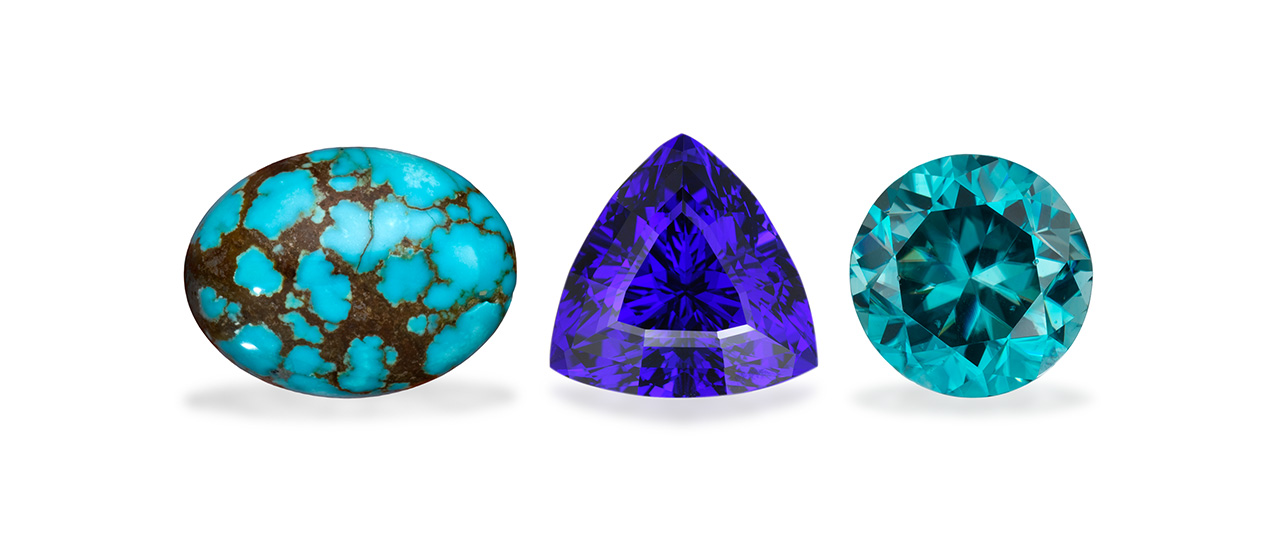
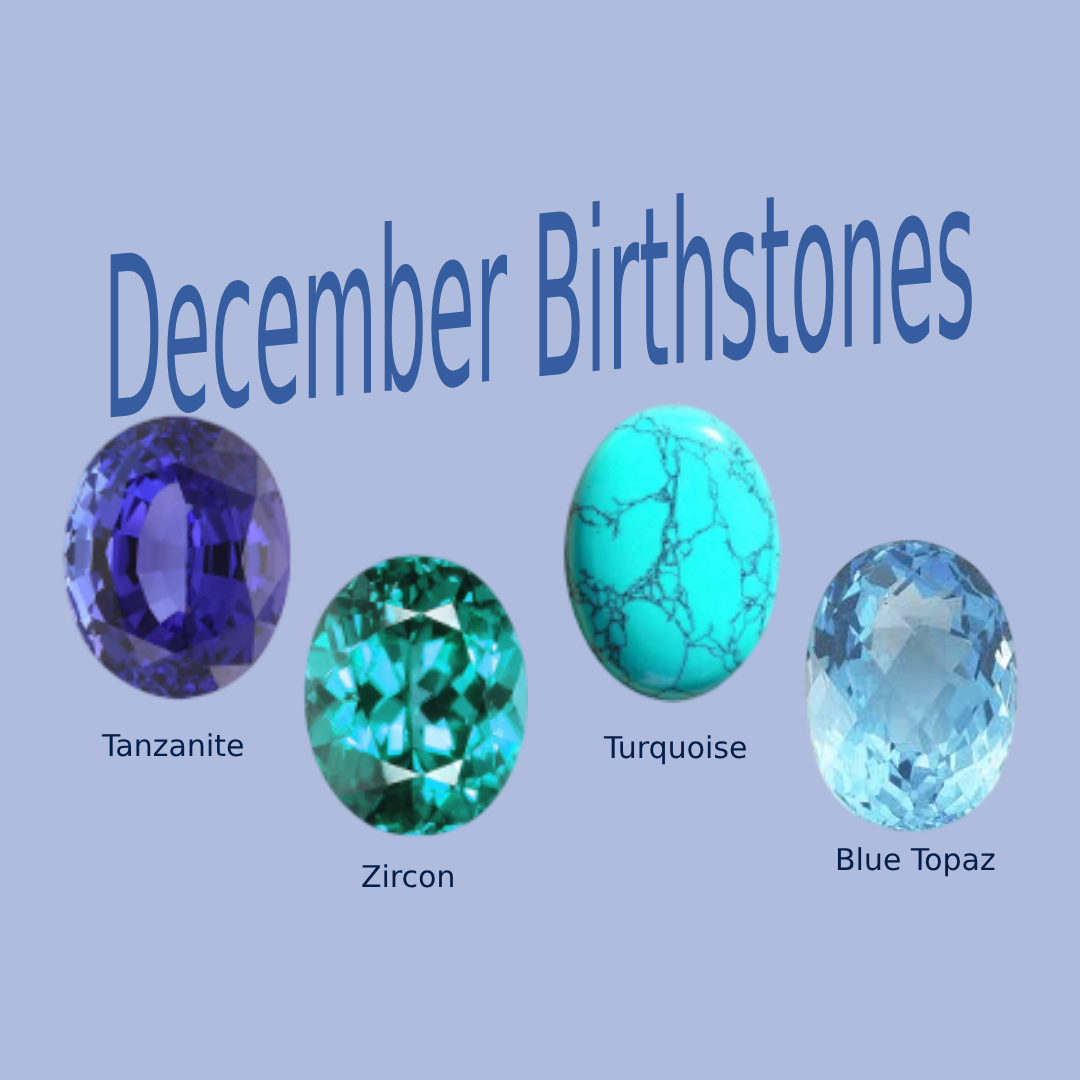
In the landscape of modern finance, the traditional portfolio—once dominated by equities and bonds—is undergoing a significant transformation. High-net-worth individuals and institutional investors are increasingly looking toward tangible assets to hedge against inflation and market volatility. Among the most intriguing of these assets are colored gemstones. Specifically, when we ask “what is December’s gemstone,” we are not merely discussing a piece of jewelry; we are identifying a unique class of financial assets: Tanzanite, Zircon, and Turquoise.
While Turquoise has a historical legacy and Zircon offers a brilliance that rivals diamonds, Tanzanite stands as the “blue chip” investment of the December trio. Discovered only in the late 1960s, it has rapidly ascended the ranks of the gemstone market to become one of the most coveted and strategically significant stones in the world. This article explores the economic viability, market trends, and investment potential of December’s gemstones, focusing on how these rare earth treasures function as instruments of wealth preservation.

The Blue Chip of the Jewelry World: Tanzanite’s Unique Market Position
From a financial perspective, Tanzanite is a statistical anomaly. Most gemstones, such as rubies or emeralds, are found in multiple locations across the globe. Tanzanite, however, is found in only one place on Earth: a small four-kilometer strip of land near Mount Kilimanjaro in Tanzania. This extreme geographical limitation creates a supply-side narrative that is highly attractive to commodity investors.
Geological Scarcity and the Supply Chain Constraint
The primary driver of value in any asset class is scarcity. Tanzanite is often cited as being “a thousand times rarer than diamonds.” Geologists estimate that the current mines will be depleted within the next 20 to 30 years. This “one-generation” supply window creates a sense of urgency in the market. As an investor, purchasing Tanzanite today is akin to buying shares in a company that has a finite amount of inventory and no ability to manufacture more. Once the Merelani Hills are exhausted, the only way to acquire high-grade Tanzanite will be through the secondary market, which historically leads to significant price appreciation.
The Tanzanian Monopoly: Geopolitical Risks and Rewards
Because the entire global supply of Tanzanite is controlled by a single nation, the market is subject to geopolitical shifts. In recent years, the Tanzanian government has implemented stricter regulations on the export of raw gemstones, aiming to keep the “value-added” processes—such as cutting and polishing—within its borders. While this can lead to short-term supply shocks, it also professionalizes the industry. For the investor, these regulations act as a double-edged sword: they may increase the acquisition cost, but they also ensure a more transparent and regulated supply chain, which is essential for the long-term valuation of the asset.
Evaluating December’s Gemstones as Financial Instruments
When diversifying into gemstones, one must distinguish between “commercial grade” and “investment grade” stones. The distinction is critical for anyone looking to realize a return on their capital. While Turquoise and Zircon are beautiful, their market dynamics differ significantly from Tanzanite.
Tanzanite vs. Blue Zircon: Assessing Relative Value
Zircon, another December gemstone, is often undervalued by the general public. However, from a money perspective, “Blue Zircon” (the most popular December variant) offers a lower entry point for investors. It possesses high “fire” and refractive indices, making it a viable alternative for those looking to enter the gemstone market with less capital. However, Zircon does not share the same “supply cliff” that Tanzanite does. Therefore, while Zircon may offer steady growth, Tanzanite is the asset positioned for potential exponential gains as the mines approach depletion.
The Secondary Market: Liquidity and Resale Potential
One of the common critiques of gemstone investing is liquidity. Unlike a stock that can be sold at the click of a button, a gemstone requires a buyer who recognizes its specific value. To mitigate this risk, investors focus on the “top 1%.” In the world of Tanzanite, this means stones that exhibit a deep “trichroic” nature—showing flashes of blue, violet, and red. High-carat, vivid stones have a robust secondary market through auction houses like Christie’s and Sotheby’s. Investing in December’s gemstones requires a long-term horizon (5–10 years) to allow for the natural appreciation of the stone and to find the right exit point in the high-end collector market.
Portfolio Diversification through Tangible Wealth
The primary reason to hold December gemstones in a financial portfolio is for diversification. In an era of digital currencies and over-leveraged markets, physical assets provide a “hard” floor for wealth.
Hedging Against Inflation with High-Grade Gemstones
Gemstones are a classic “store of value.” When the purchasing power of fiat currency declines, the nominal price of rare commodities tends to rise. Tanzanite, priced in USD globally, acts as a hedge for international investors. Because it is a compact form of wealth—a single stone worth $50,000 can fit in the palm of your hand—it offers a level of portability and privacy that real estate or heavy bullion cannot match. For the savvy investor, December’s gemstones represent a “moveable feast” of capital that can be transported across borders if necessary.
The Role of Certification in Wealth Preservation
In the money niche, “trust but verify” is the golden rule. The value of a gemstone is intrinsically tied to its certification. For an investment to be valid, it must be accompanied by a report from a reputable laboratory, such as the Gemological Institute of America (GIA) or the American Gemological Laboratories (AGL). These reports provide a standardized “identity” for the stone, detailing its weight, dimensions, and whether it has undergone heat treatment. Without a high-tier laboratory report, a gemstone is merely a decorative object; with it, it becomes a tradable financial instrument.
Strategic Acquisition: How to Buy Gemstones for Profit
Entering the gemstone market requires a different mindset than buying jewelry for aesthetic pleasure. The focus must be on the “4Cs”—Color, Clarity, Cut, and Carat—but through the lens of capital gains.
Navigating the 4Cs from a Capital Gains Perspective
To maximize ROI on December’s gemstones, investors should focus on the following metrics:
- Color: For Tanzanite, the “D-Block” vivid blue-violet is the gold standard. Anything less than “vivid” saturation will struggle to appreciate at the same rate.
- Carat Weight: There is a price “jump” at certain milestones. A 10-carat Tanzanite is not just twice as valuable as a 5-carat stone; it is exponentially more valuable due to its rarity.
- Clarity: Investment-grade stones must be “eye-clean.” Any visible inclusions significantly hamper the resale price.
- Cut: A precision cut that maximizes light return is essential. A poorly cut stone, even if it is large and rare, will be discounted by professional buyers.
Insurance and Storage: Protecting Your Physical Capital
The final pillar of gemstone investing is asset protection. Unlike digital assets protected by encryption, gemstones require physical security. Professional investors often utilize “allocated storage” in high-security vaults or include the stones in specialized “Jewelry and Fine Arts” insurance floaters. These costs—storage and insurance—must be factored into the overall “carry cost” of the investment. However, considering that Tanzanite has historically outperformed many traditional indices in terms of price-per-carat growth, these costs are often viewed as a necessary premium for securing a high-performing asset.
Conclusion: The Future Value of December’s Gemstones
When we analyze “what is December’s gemstone” through a financial lens, we see a compelling story of rarity, market demand, and wealth preservation. Tanzanite, in particular, represents a unique “sunset” investment—an asset whose primary supply is fixed and nearing its end.
For the modern investor, December’s gemstones offer more than just seasonal beauty. They represent a strategic opportunity to move capital away from the volatility of paper markets and into the enduring stability of the earth’s rarest treasures. As the mines in Tanzania eventually close, those who held these stones as part of a diversified portfolio will likely find themselves holding one of the most sought-after commodities of the 21st century. Whether you are looking for a hedge against inflation or a legacy asset for the next generation, December’s gemstones provide a brilliant intersection of aesthetic luxury and hard-nosed financial strategy.
aViewFromTheCave is a participant in the Amazon Services LLC Associates Program, an affiliate advertising program designed to provide a means for sites to earn advertising fees by advertising and linking to Amazon.com. Amazon, the Amazon logo, AmazonSupply, and the AmazonSupply logo are trademarks of Amazon.com, Inc. or its affiliates. As an Amazon Associate we earn affiliate commissions from qualifying purchases.