
In the modern landscape of high-stakes B2B sales and complex SaaS (Software as a Service) models, the journey from a prospect’s initial interest to a signed contract is rarely a straight line. As companies scale, the complexity of pricing, contract terms, and revenue recognition grows exponentially. This is where the “Deal Desk” becomes an indispensable asset.
While often misunderstood as a bureaucratic hurdle, a Deal Desk is actually a strategic financial function designed to accelerate deal velocity while protecting a company’s bottom line. It serves as the central nervous system for complex transactions, ensuring that every contract signed contributes positively to the organization’s financial health. For any business leader or financial professional, understanding the mechanics of a Deal Desk is essential for maintaining fiscal discipline in a competitive market.
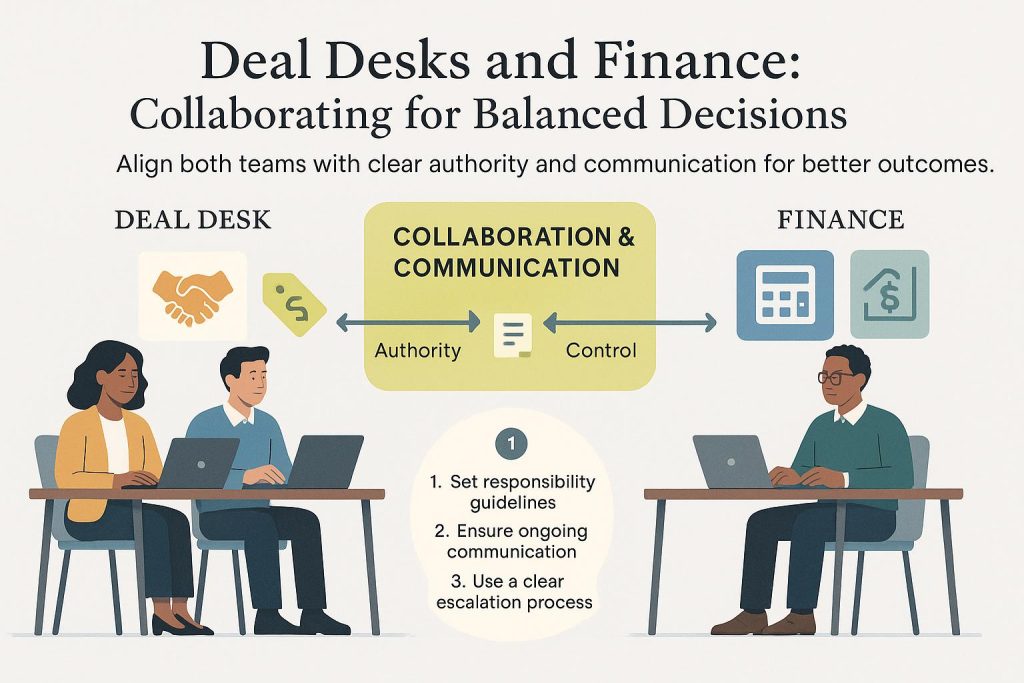
Defining the Deal Desk: Where Sales Strategy Meets Financial Rigor
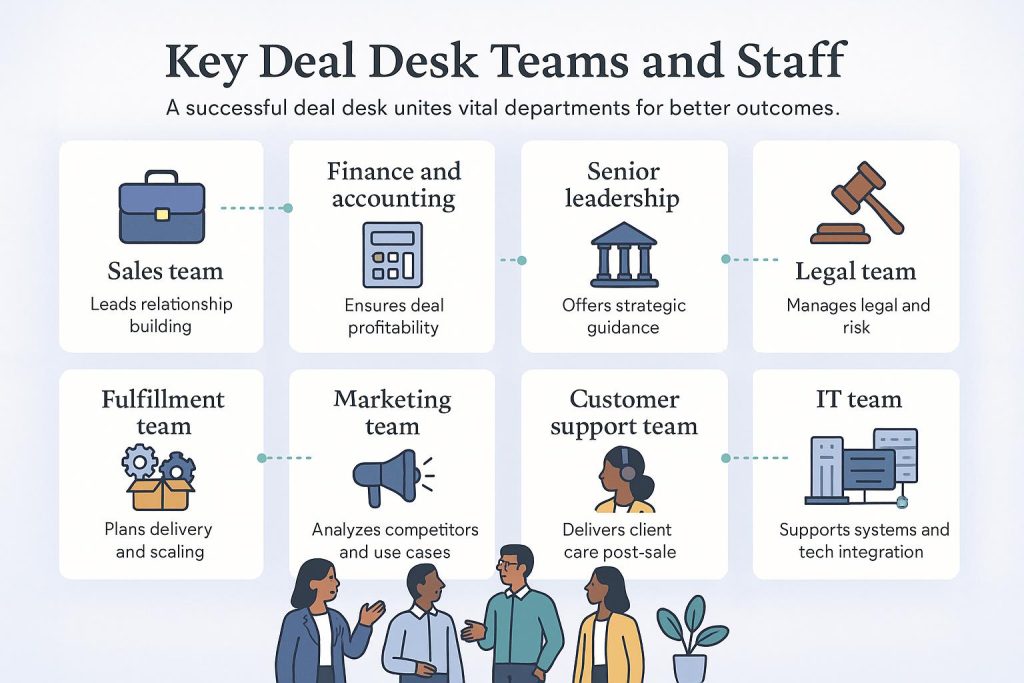
At its core, a Deal Desk is a cross-functional unit—typically sitting at the intersection of Finance, Sales, and Legal—that manages the structuring and approval of non-standard deals. In a simple business model, pricing is fixed; however, in enterprise sales, every deal may involve different service levels, multi-year discounts, and customized payment terms.
The Core Function of a Deal Desk
The primary objective of a Deal Desk is to provide a centralized location for sales representatives to get support on complex quotes. Instead of a salesperson chasing down a CFO for a discount approval or a lawyer for a contract tweak, the Deal Desk streamlines these interactions. It acts as a “clearinghouse” where all the variables of a deal are analyzed to ensure they align with the company’s broader financial goals and operational capabilities.
Bridging the Gap Between Sales and Finance
Sales teams are naturally incentivized to close deals quickly to meet quotas. Finance teams, conversely, are incentivized to protect margins, ensure cash flow, and maintain compliance. Without a Deal Desk, these two departments often find themselves at odds. The Deal Desk acts as a mediator, speaking both “languages.” It helps sales teams structure deals that are attractive to the client but remain financially viable and legally sound for the company. By doing so, it removes the friction that typically slows down the end-of-quarter push.
The Financial Impact of a Deal Desk on Corporate Revenue
The implementation of a Deal Desk is not just an administrative move; it is a direct investment in a company’s financial performance. When properly executed, a Deal Desk has a measurable impact on revenue quality and the overall valuation of a business.
Protecting Gross Margins and Profitability
One of the most immediate benefits of a Deal Desk is “margin protection.” In the heat of a negotiation, sales reps may feel pressured to offer deep discounts to win a logo. A Deal Desk establishes clear “guardrails” for discounting. By analyzing historical deal data and current market trends, the Deal Desk ensures that discounts do not erode the company’s profitability. It empowers the organization to walk away from “bad revenue”—deals that might look good on paper but actually cost the company money in the long run due to high support costs or unsustainable pricing.
Optimizing Revenue Recognition and Compliance
For CFOs and finance leaders, how revenue is recognized is just as important as the total contract value. Complex deals often involve “contingent milestones” or specific payment schedules that can complicate accounting under standards like ASC 606. A Deal Desk ensures that every contract is structured in a way that allows for clean, predictable revenue recognition. This financial transparency is critical for companies preparing for an IPO, seeking venture capital, or undergoing an audit. By catching non-standard terms before the contract is signed, the Deal Desk prevents future financial restatements and legal disputes.
Key Components of an Effective Deal Desk Infrastructure
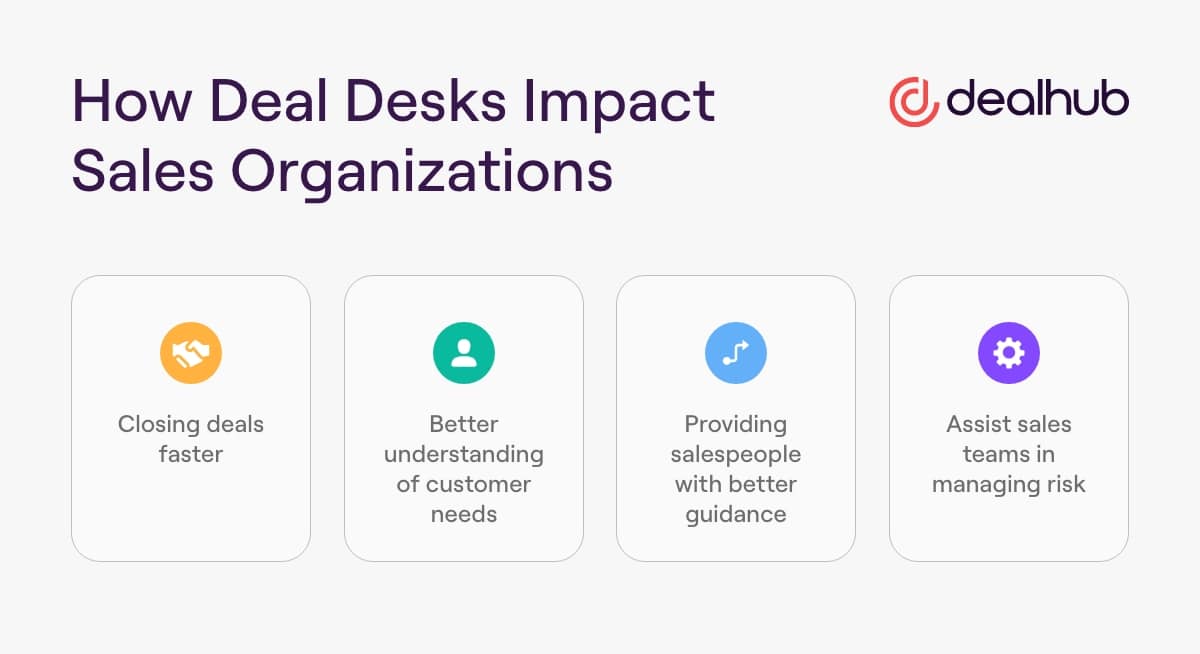
Building a Deal Desk requires more than just hiring a coordinator; it requires a robust framework that combines policy, process, and tools. To function as a true financial hub, the desk must have authority over several key areas.
Pricing Governance and Discounting Frameworks
The Deal Desk is the custodian of the company’s “Price Book.” This involves more than just setting a list price; it involves creating sophisticated pricing tiers, bundling strategies, and volume-based incentives. An effective Deal Desk develops a “Delegation of Authority” (DoA) matrix. This matrix defines who has the power to approve certain levels of discounts—for example, a Sales Manager might approve up to 10%, a VP of Sales up to 20%, but anything higher requires Deal Desk or CFO intervention. This systemic approach to pricing prevents “rogue discounting” and ensures consistency across the customer base.
Contract Lifecycle Management (CLM) and Legal Guardrails
Financial risk is often buried in the “fine print” of a contract. Indemnification clauses, termination for convenience, and service level agreements (SLAs) all carry potential financial liabilities. The Deal Desk works closely with the legal team to standardize contract templates. By creating a library of pre-approved “fallback clauses,” the Deal Desk allows sales teams to negotiate terms within a safe zone without needing a lawyer to review every single draft. This drastically reduces the legal spend and minimizes the financial risk associated with non-standard commitments.
Building a High-Performance Deal Desk: Strategic Implementation
For many growing businesses, the question isn’t whether they need a Deal Desk, but when and how to build one. Transitioning from an ad-hoc approval process to a formalized desk is a significant milestone in a company’s financial maturity.
Identifying the Right Time to Formalize
A company typically needs a Deal Desk when it reaches a certain level of “deal friction.” Symptoms include:
- Sales cycles are lengthening due to internal approval bottlenecks.
- Gross margins are inconsistent across similar customer segments.
- The Finance team is discovering “surprises” in signed contracts that make revenue recognition difficult.
- The Sales team complains that they don’t know what the current pricing policy is.
Once a company moves beyond “cookie-cutter” transactions into enterprise-grade agreements, the ROI of a Deal Desk becomes undeniable.
Measuring Success Through Financial KPIs
A Deal Desk should be measured like any other financial function. Key Performance Indicators (KPIs) often include:
- Average Deal Cycle Time: How long does it take from quote generation to signature?
- Quote-to-Cash Velocity: How efficiently is the deal moving through the financial pipeline?
- Discount Variance: Are discounts staying within the approved ranges?
- Contract Throughput: How many deals can the organization process per month?
By tracking these metrics, the Deal Desk can prove its value by showing how it has shortened the time to revenue while maintaining or increasing average deal size.
The Future of Deal Desks in a Data-Driven Financial Landscape
As we move deeper into an era of big data and artificial intelligence, the Deal Desk is evolving from a reactive approval body into a proactive strategic advisor. The “Money” side of the business is becoming increasingly predictive.
Leveraging Predictive Analytics for Better Deal Outcomes
Modern Deal Desks are beginning to use “Deal Scoring” models. By feeding historical data into analytical tools, the Deal Desk can predict the likelihood of a deal closing based on its structure, price point, and the specific terms requested. This allows Finance and Sales leaders to prioritize their efforts on the most lucrative and high-probability opportunities.
Furthermore, the Deal Desk is becoming the primary source of truth for “Win/Loss” financial analysis. By studying why certain price points failed and others succeeded, the Deal Desk provides the executive team with the financial intelligence needed to adjust the overall corporate strategy. In this way, the Deal Desk is no longer just about managing individual transactions; it is about steering the financial future of the entire enterprise.
Conclusion: The Deal Desk as a Profit Center
While it is categorized as an operational function, the Deal Desk is, in reality, a profit protector and a revenue accelerator. In a business world where margins are under constant pressure and financial regulations are becoming more stringent, the Deal Desk provides the discipline necessary to thrive. By bridging the gap between the ambition of Sales and the caution of Finance, the Deal Desk ensures that every dollar of revenue is earned efficiently, recognized correctly, and optimized for maximum growth. For any organization serious about its financial health, the question isn’t just “What is a Deal Desk?” but rather, “How quickly can we build a world-class one?”
aViewFromTheCave is a participant in the Amazon Services LLC Associates Program, an affiliate advertising program designed to provide a means for sites to earn advertising fees by advertising and linking to Amazon.com. Amazon, the Amazon logo, AmazonSupply, and the AmazonSupply logo are trademarks of Amazon.com, Inc. or its affiliates. As an Amazon Associate we earn affiliate commissions from qualifying purchases.