
In the landscape of modern brand strategy, few case studies offer as much raw insight into the power of “disruptive positioning” as the phenomenon of Avenue Q. While many recognize it as a Tony Award-winning musical, from a professional branding and marketing perspective, Avenue Q represents a masterclass in how to take an established visual language, subvert its core expectations, and capture a niche market that didn’t even know it was underserved.
When we ask “What is Avenue Q about?” through the lens of brand identity, the answer isn’t just about puppets or catchy songs. It is about the strategic intersection of nostalgia and cynicism, the calculated use of “counter-intuitive aesthetics,” and the successful execution of a “Blue Ocean” strategy in the highly competitive entertainment sector.

The Anatomy of a Disruptive Brand: Subverting Visual Language
Every successful brand relies on a recognizable visual identity. However, Avenue Q achieved market dominance by “borrowing” the visual equity of a global educational giant—Sesame Street—and repurposing it for an entirely different demographic. This is a high-risk, high-reward branding tactic known as “Visual Subversion.”
The “Sesame Street for Adults” Framework
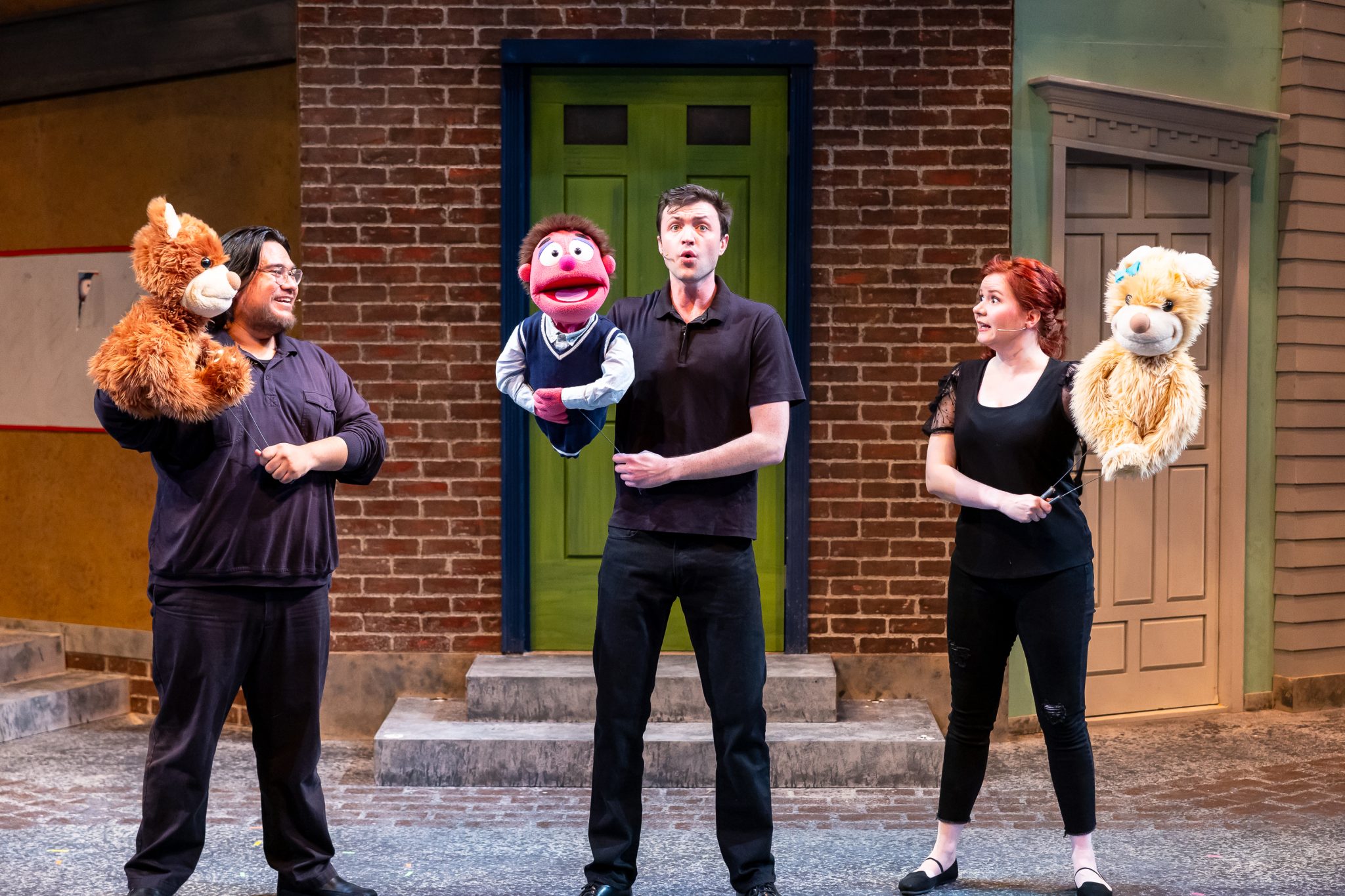
In brand strategy, leveraging existing mental schemas is a powerful shortcut to consumer understanding. By using puppets that mimic the style of Jim Henson’s creations, the brand immediately evokes feelings of safety, childhood innocence, and educational authority. However, the Avenue Q brand identity is built on the friction between that innocent form and its “R-rated” substance.
This contrast creates an immediate “stop-and-stare” effect. In marketing, this is the “Pattern Interrupt.” When a consumer sees a puppet—an icon of childhood—discussing the complexities of unemployment, racism, or existential dread, the cognitive dissonance ensures the brand is memorable. It isn’t just another show; it is a “rebellious” take on a childhood staple.
Defining the Target Audience: The Quarter-Life Crisis Demographic
One of the most impressive aspects of the Avenue Q brand strategy was its laser-accurate identification of its target persona. In the early 2000s, there was a significant gap in the market for content that spoke directly to older Millennials and younger Gen Xers who were graduating into a world that felt significantly more hostile than they were promised as children.
The brand identified a specific psychological state: the “Quarter-Life Crisis.” By positioning itself as the “uncomfortable truth” about adulthood, the brand moved from being mere entertainment to becoming a cultural touchstone for a generation navigating entry-level jobs and social isolation.
Strategic Differentiation in a Crowded Marketplace
To understand what Avenue Q is about from a corporate identity perspective, one must look at how it differentiated itself from the “Disney-fied” Broadway landscape. At a time when the market was saturated with high-budget, safe, family-friendly spectacles, Avenue Q chose the path of the “authentic underdog.”
Narrative Branding: Honesty as a Competitive Advantage
In modern marketing, “authenticity” is often a buzzword, but for Avenue Q, it was a core brand pillar. The brand’s messaging was centered on the “Anti-Hero’s Journey.” Unlike traditional brands that promise transformation and perfection, Avenue Q promised a celebration of imperfection.
Songs like “It Sucks to Be Me” and “Purpose” served as the brand’s mission statement. From a marketing standpoint, this created a high level of “Brand Relatability.” By admitting that life is often disappointing, the brand built a deep, emotional trust with its audience—a level of loyalty that “aspirational” brands often struggle to achieve.
The Power of Niche Positioning
Large-scale brands often make the mistake of trying to appeal to everyone, resulting in a diluted identity. Avenue Q leaned into its “Niche” status. It didn’t try to compete with the spectacle of Wicked or The Lion King. Instead, it marketed itself as the “scrappy, smart alternative.” This “Us vs. Them” positioning is a classic brand strategy that fosters a strong sense of community among the brand’s advocates.
The Marketing Lessons from the Avenue Q Playbook
The success of the brand was not an accident of art; it was supported by a series of aggressive and innovative marketing campaigns that are still studied by brand managers today.
The “Vote Your Heart” Campaign
One of the most famous examples of the brand’s marketing genius was its campaign for the 2004 Tony Awards. Facing off against the juggernaut that was Wicked, the Avenue Q team launched a grassroots-style campaign titled “Vote Your Heart.”
This wasn’t just a request for votes; it was a repositioning of the two contenders. It framed Wicked as the “Corporate/Industry Choice” and Avenue Q as the “Artistic/Human Choice.” In brand strategy, this is known as “David vs. Goliath” positioning. It turned the act of supporting the brand into a political and emotional statement, leading to an upset victory that cemented the brand’s status in history.
Viral Marketing Before the Social Media Era
Long before TikTok and Instagram became the primary tools for brand awareness, Avenue Q utilized “Experiential Marketing.” They took the puppets out of the theater and into the “real world,” staging mock protests, appearing in late-night talk shows in character, and creating a sense that these characters were real entities living in New York City. This blurred the lines between the product and the consumer’s reality, a technique now widely used in “Transmedia Branding.”
Applying the Avenue Q Strategy to Modern Business
What can modern brand managers, marketers, and entrepreneurs learn from what Avenue Q is about? The principles that fueled its success are remarkably applicable to today’s digital and corporate landscape.
Leveraging Contrast to Command Attention
In a digital world where consumers are bombarded with thousands of brand messages daily, “harmony” is ignored. “Contrast” is what gets clicked. Whether it is a luxury brand using “grunge” aesthetics or a tech company using “analog” messaging, the Avenue Q strategy teaches us that the most effective way to be seen is to look like one thing and act like another.
The Resilience of “Honest” Branding
We are currently seeing a shift toward “Lo-Fi” branding and raw, unedited content (as seen in the rise of platforms like BeReal). Avenue Q predicted this shift decades ago. Consumers are increasingly skeptical of “over-polished” brand identities. A brand that is willing to show its “seams”—quite literally, in the case of puppets—is perceived as more trustworthy than one that presents a facade of perfection.
Scaling Through Community, Not Just Reach
Avenue Q thrived because it didn’t just have “customers”; it had “fans.” From a brand strategy perspective, the goal should always be to move consumers from the awareness stage to the advocacy stage. By speaking to a specific set of shared grievances and universal truths, Avenue Q created a “Brand Tribe.” This tribe did the marketing for them, through word-of-mouth and cultural memes, ensuring the brand’s longevity for nearly two decades on and off Broadway.

Conclusion: The Legacy of a Subversive Icon
Ultimately, when we analyze what Avenue Q is about, we find a blueprint for successful brand disruption. It is a testament to the idea that you do not need the largest budget or the most mainstream appeal to dominate a market. Instead, you need a clear understanding of your audience’s psyche, a willingness to subvert existing categories, and the courage to be “authentically unpolished.”
In the world of Brand Strategy, Avenue Q remains the ultimate example of how to turn a niche concept into a global powerhouse by leaning into what makes you different, rather than what makes you the same. It teaches us that “Purpose” isn’t just a song—it’s the cornerstone of a brand that people will fight for.
aViewFromTheCave is a participant in the Amazon Services LLC Associates Program, an affiliate advertising program designed to provide a means for sites to earn advertising fees by advertising and linking to Amazon.com. Amazon, the Amazon logo, AmazonSupply, and the AmazonSupply logo are trademarks of Amazon.com, Inc. or its affiliates. As an Amazon Associate we earn affiliate commissions from qualifying purchases.