
In the realm of modern technology, geometry is far more than a classroom abstraction. From the architecture of the microchips powering our smartphones to the complex algorithms governing spatial data in artificial intelligence, geometric principles provide the foundational blueprint. Among these shapes, the hexagon—a six-sided polygon—holds a place of particular prestige. Understanding the “angle of a hexagon” is not merely an exercise in mathematics; it is a prerequisite for engineers, game developers, and network architects who seek to optimize efficiency in the digital world.

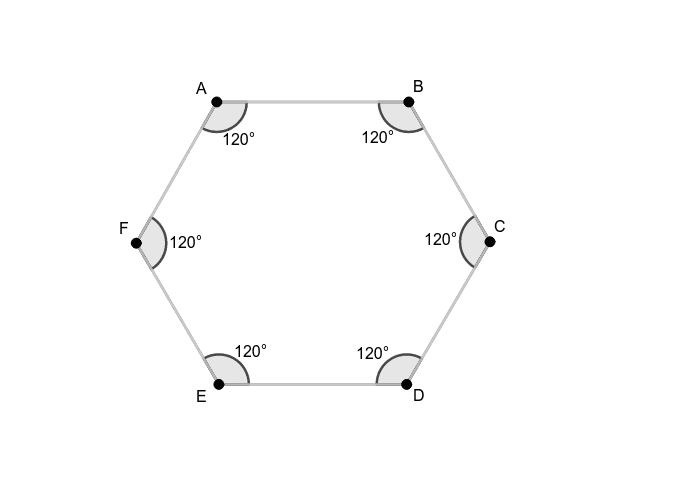
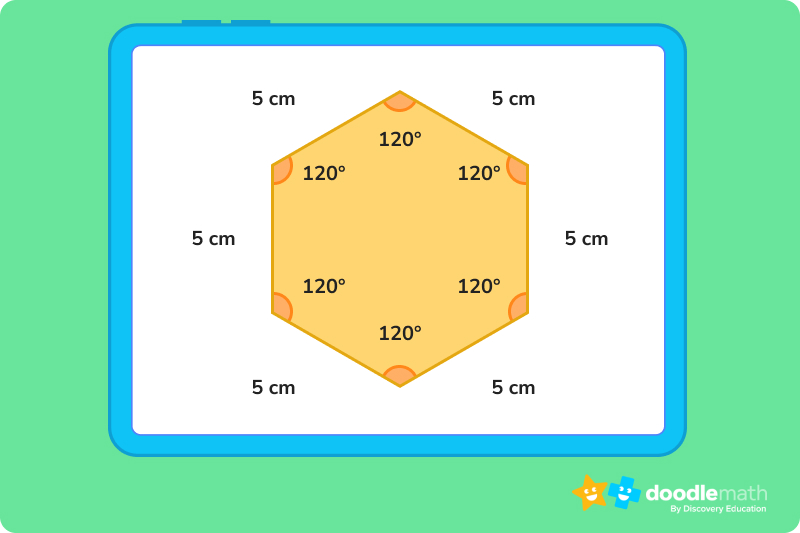
A regular hexagon features interior angles of 120 degrees and a total sum of internal angles equaling 720 degrees. While these figures are constant, their applications in technology are incredibly varied. This article explores how the precise 120-degree angle of a hexagon serves as a cornerstone for network topology, software development, UI/UX design, and advanced hardware manufacturing.
The Mathematics of Connectivity: Why the 120-Degree Angle Dominates Network Topology
In the telecommunications industry, the hexagon is the “gold standard” for spatial division. When we refer to “cellular” networks, the term itself is a nod to the hexagonal grid system used to map out signal coverage.
Cellular Architecture and the Hexagonal Grid
When engineers design a mobile network, they face the challenge of covering a geographic area without leaving “dead zones” or creating excessive signal interference. If circular coverage areas are used, they either overlap inefficiently or leave gaps between the circles. Squares and triangles can tile a plane without gaps, but they do not approximate a circle as effectively as a hexagon. The 120-degree interior angle of a hexagon allows these shapes to fit together perfectly (tessellate) while maintaining a more uniform distance from the center to the edges. This ensures that as a user moves from one “cell” to another, the handoff between base stations is seamless.
Optimizing Signal Overlap through Geometric Precision
The specific 120-degree angle allows for a three-sector antenna configuration. By placing directional antennas at the intersection of three hexagonal cells, engineers can cover a 360-degree area using three 120-degree beamwidths. This mathematical alignment reduces “co-channel interference,” a common tech hurdle where signals from different towers disrupt each other. By leveraging the hexagonal angle, network providers maximize frequency reuse, allowing more users to access high-speed data within the same spectrum.
Hexagonal Logic in Game Development and Procedural Generation
For software engineers and game designers, the move from square-based grids to hexagonal grids represents a significant leap in computational logic. The angle of the hexagon dictates how characters move, how maps are generated, and how artificial intelligence calculates “pathfinding.”
The Advantage of 120 Degrees over 90 Degrees in Movement Algorithms
In a standard square grid (like a chessboard), movement is inconsistent. Moving orthogonally (up, down, left, right) covers a distance of 1 unit, but moving diagonally covers approximately 1.41 units. This creates a “Euclidean distortion” that complicates game balance. In a hexagonal grid, every adjacent cell is equidistant from the center. Because each 120-degree interior angle contributes to a perfectly symmetrical layout, the distance between the centers of any two adjacent hexes is always the same. This makes the hexagon the superior choice for strategy games and simulations where precise movement and range calculations are critical.
Implementing Hexagonal Coordinate Systems in C++ and Python
Coding a hexagonal grid requires a deeper understanding of trigonometry than a simple Cartesian (X, Y) plane. Developers often use “Cube Coordinates” or “Axial Coordinates” to handle the 120-degree offsets. In these systems, the software must account for the fact that every “step” in a hex grid involves a change in at least two axes. Modern game engines like Unity or Unreal Engine have built-in support for hexagonal tiles, but the underlying math still relies on the 720-degree sum of the hexagon’s angles to ensure that textures don’t warp and that spatial hashes remain accurate during high-speed rendering.
UI/UX Design: The Psychology and Engineering of the Hexagonal Interface
In the world of User Interface (UI) and User Experience (UX), the hexagon is often used to convey a sense of “tech-forward” innovation. It breaks the monotony of the “boxy” web while offering unique structural benefits for data visualization.
CSS and SVG: Coding the Perfect 120-Degree Internal Angle
Creating a hexagon in web design is more complex than a simple div with a border-radius. Front-end developers use Scalable Vector Graphics (SVG) or complex CSS clip-path properties to define the six vertices. Each vertex must be placed at a precise coordinate to maintain the 120-degree angle. If the angle is off even by a fraction of a degree, the “honeycomb” effect is ruined, leading to visual artifacts and misaligned elements on high-density (Retina) displays. Developers prioritize these angles because hexagons are perceived by users as being “organic” yet “engineered,” striking a balance between the natural world and digital precision.
Beyond the Grid: Why Modern Dashboards are Turning to Hexagonal Tiling
Data visualization tools, especially those dealing with “Big Data” or “Internet of Things” (IoT) clusters, frequently use hexagonal binning. When displaying thousands of data points on a screen, a square grid can lead to “aliasing” or visual clutter. Hexagonal binning uses the 120-degree intersections to smooth out the distribution of data points. This creates a “heat map” that is easier for the human eye to process, allowing tech analysts to identify trends and anomalies faster than they could on a traditional scatter plot.
Hardware and Advanced Manufacturing: The Structural Integrity of 120 Degrees
The angle of a hexagon is not just a digital construct; it is a physical necessity in the manufacturing of high-tech hardware, from aerospace components to 3D-printed gadgets.
3D Printing Infills and the Honeycomb Effect
In additive manufacturing (3D printing), the “infill” is the structure inside a solid-looking object. One of the most popular infill patterns is the honeycomb. By utilizing the 120-degree angles of a hexagon, 3D printers can create parts that are incredibly lightweight yet exceptionally strong. The 120-degree angle is the most efficient at distributing stress and tension across a surface. In the tech industry, this is crucial for creating lightweight drone frames, heat sinks for servers, and protective casings for sensitive electronics.
Nanotechnology and Carbon Nanotubes: Nature’s Perfect Tech Angle
At the cutting edge of hardware technology lies graphene and carbon nanotubes. On a molecular level, graphene is a sheet of carbon atoms arranged in a hexagonal lattice. The stability of these materials—which are among the strongest and most conductive in existence—comes directly from the 120-degree bond angles between the carbon atoms. Tech researchers are currently using this “hexagonal logic” to develop the next generation of semiconductors and supercapacitors, which could eventually replace silicon and lead to a revolution in computing speed and battery life.
The Future of Hexagonal Computation and AI Mapping
As we look toward the future of technology, the hexagon continues to move into the forefront of Artificial Intelligence and spatial computing.
Spatial Data Analysis in AI
AI models used in autonomous vehicles and drones rely on “Occupancy Grids” to understand the world around them. Many of these models are shifting from square voxels to hexagonal prisms. The 120-degree angle allows the AI to calculate the probability of obstacles with more nuance. Because a hexagon has six neighbors (as opposed to a square’s four), the AI has a “higher resolution” of movement options at every decision point, leading to smoother navigation and safer autonomous systems.
Conclusion: The Evergreen Importance of Geometric Fundamentals
The question “what is the angle of a hexagon” may seem simple at first glance, but for the technology sector, the answer—120 degrees—is a vital piece of the puzzle. It is the angle that allows our phones to stay connected, our video games to feel realistic, our web interfaces to look modern, and our hardware to remain durable.
As we push deeper into the frontiers of AI, nanotechnology, and 6G networking, the hexagon will remain a fundamental tool in the technologist’s kit. By mastering these geometric principles, software and hardware developers can continue to build systems that are not only more efficient but also more in harmony with the natural laws of structural logic. In the digital age, the most “advanced” solutions are often those that best utilize the timeless perfection of shapes like the hexagon.
aViewFromTheCave is a participant in the Amazon Services LLC Associates Program, an affiliate advertising program designed to provide a means for sites to earn advertising fees by advertising and linking to Amazon.com. Amazon, the Amazon logo, AmazonSupply, and the AmazonSupply logo are trademarks of Amazon.com, Inc. or its affiliates. As an Amazon Associate we earn affiliate commissions from qualifying purchases.