
In the landscape of modern hardware and environmental engineering, few innovations have had as profound an impact on human productivity and technological sustainability as the split system. While many recognize the term in the context of residential comfort, the “split system” represents a sophisticated architectural approach to thermal management. It is a technological solution designed to decouple the heat-exchange process, allowing for more efficient, quieter, and scalable climate control.
As we move toward an era of smart homes and high-density data processing, the split system has evolved from a simple mechanical appliance into a complex, software-driven ecosystem. Understanding the technology behind these systems is essential for grasping how we manage energy, integrate IoT (Internet of Things) devices, and maintain the delicate thermal balance required for both human life and high-performance computing.

1. The Architecture of Modular Thermal Engineering
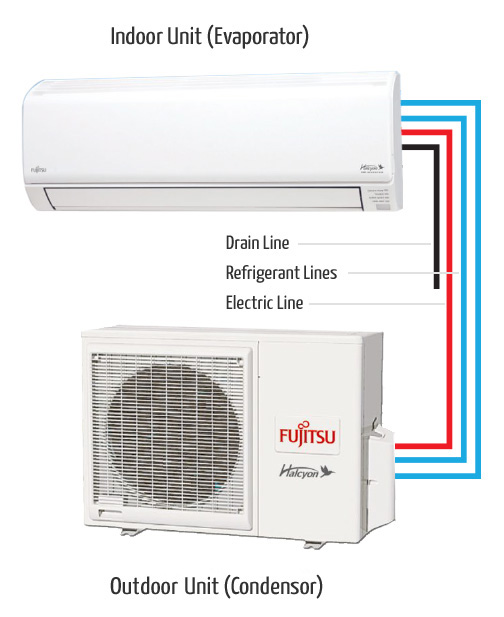
At its core, a split system is defined by its bifurcated design. Unlike “packaged” units where all components are housed in a single chassis, a split system separates the components into two primary modules: the indoor unit (evaporator) and the outdoor unit (condenser). This physical separation is not merely for convenience; it is a strategic engineering choice that optimizes noise reduction and thermal efficiency.
The Mechanics of Synchronization
The synchronization between the indoor and outdoor units is managed by a series of copper refrigerant lines and communication cables. The indoor unit’s primary role is to act as a heat exchanger, pulling warm air from the environment and passing it over cold evaporator coils. The “split” occurs when the absorbed heat is transported via refrigerant to the outdoor unit, where a compressor and a condenser coil release that heat into the atmosphere. This modularity allows for the “noisy” and “hot” parts of the technology to be isolated from the controlled environment, a fundamental principle in modern hardware design.
Inverter Technology: The Digital Brain of the Compressor
Perhaps the most significant technological advancement in split systems is the transition from fixed-speed motors to Inverter Technology. In traditional systems, compressors were either “on” or “off,” leading to significant energy spikes and mechanical wear. Modern split systems utilize variable-frequency drives (VFDs) to control the speed of the motor. This is effectively the “CPU” of the HVAC world—using sensors to calculate the precise amount of cooling required and adjusting the power output in real-time. This digital precision reduces energy consumption by up to 30-50% and represents a major leap in power management technology.
Advanced Filtration and Atmospheric Sensing
Modern split systems do more than change temperature; they process the environment. High-tech indoor units are now equipped with HEPA (High-Efficiency Particulate Air) filters and ionizers that use electrostatic charges to trap microscopic pollutants. Furthermore, integrated atmospheric sensors monitor humidity levels and CO2 concentrations, adjusting the system’s operation to maintain optimal air quality. This level of environmental sensing is a cornerstone of the burgeoning “Health-Tech” sector.
2. The Smart Evolution: IoT and AI Integration
As the world becomes increasingly connected, the split system has transitioned into a node within the broader IoT ecosystem. No longer a “set it and forget it” analog device, the modern split system is a data-generating asset that interacts with cloud-based platforms and mobile applications.
Predictive Maintenance and Machine Learning
One of the most exciting tech trends in split system management is the implementation of predictive maintenance. By utilizing embedded sensors that monitor vibration, pressure, and electrical draw, manufacturers can apply machine learning algorithms to predict a component failure before it occurs. Instead of waiting for a system crash, the hardware sends a diagnostic report to the user’s smartphone or a central monitoring station. This shift from reactive to proactive maintenance is a hallmark of Industry 4.0.
Smart Home Ecosystem Integration
Integration with platforms like Amazon Alexa, Google Home, and Apple HomeKit has transformed the split system into a responsive component of the smart home. Through API integrations, these systems can now react to “if-this-then-that” (IFTTT) protocols. For example, if a smartphone’s GPS detects that the user is five miles from home, the split system can automatically exit “Eco-mode” to begin cooling. Similarly, light sensors can detect when the sun is hitting a specific room, signaling the split system to increase output in that localized zone—a process known as smart zoning.
The Role of Edge Computing in Climate Control
To reduce latency and improve reliability, many high-end split systems are now employing “edge computing.” Rather than sending every sensor reading to a distant cloud server, the unit’s internal logic board processes data locally to make split-second adjustments. This ensures that the system remains operational and efficient even if the local Wi-Fi network experiences an outage, highlighting the importance of decentralized processing in modern gadgetry.
3. Thermal Management in High-Performance Computing
While residential use is common, the “split system” philosophy is critical in the tech industry’s infrastructure, specifically regarding data centers and server rooms. As AI models and crypto-mining operations demand higher computational power, the heat generated by GPUs and CPUs has reached unprecedented levels, necessitating precision cooling technology.
Precision Environmental Control Units (PECU)
In data centers, split systems are evolved into Precision Environmental Control Units. These systems must maintain a strict temperature range (often within 1 degree Celsius) and specific humidity levels to prevent static electricity or condensation. Because server racks are densely packed, traditional cooling is insufficient. The split system architecture allows for “In-Row” cooling, where the indoor units are placed directly between server racks, while the heat-rejection units are located on the building’s exterior, preventing the “hot aisle” from compromising the hardware.
Scalability and Redundancy
A major advantage of split systems in a tech environment is scalability. In a growing data center, IT managers can add additional indoor units to a multi-split configuration without overhauling the entire building’s infrastructure. Furthermore, the modular nature of split systems provides built-in redundancy. If one outdoor condenser fails, only a specific portion of the cooling capacity is lost, rather than the entire facility going offline—a critical fail-safe for maintaining 99.99% uptime in digital services.
Liquid-to-Air Split Configurations
The frontier of this technology involves hybrid liquid-cooling split systems. In these setups, a liquid coolant is circulated directly over high-heat components (like AI processing chips) and then pumped to an outdoor split-system heat exchanger. This marriage of liquid cooling and traditional refrigerant split technology represents the cutting edge of thermal management, allowing for higher clock speeds and more powerful hardware configurations.
4. The Digital Future: Sustainability and Next-Gen Refrigerants
The future of split system technology is being written in the code of energy efficiency and environmental sustainability. As global tech standards move toward “Green Tech,” the software and hardware within split systems are undergoing a radical transformation.
Heat Pump Innovation and Decarbonization
The most modern split systems are actually “Reverse Cycle” heat pumps. Through a sophisticated reversing valve and software logic, the system can flip the refrigeration cycle to provide heat instead of cooling. This technology is being hailed as a key driver in the decarbonization of the grid. By moving heat rather than generating it through combustion, these tech-driven systems offer a 300-400% efficiency rate, which is being optimized further through AI-driven power-grid management.
The Shift to Low-GWP Refrigerants
On the hardware side, the tech industry is racing to implement refrigerants with a Low Global Warming Potential (GWP), such as R-32 or R-454B. This transition requires a redesign of the hardware’s internal architecture, including more robust compressors and more sensitive leak-detection sensors. The digital monitoring of refrigerant flow is becoming more precise, with electronic expansion valves (EEVs) replacing old mechanical valves to ensure the highest possible thermodynamic efficiency.
Automation and the Autonomous Climate
We are approaching an era where the split system will be fully autonomous. By leveraging occupancy sensors, thermal imaging, and historical usage patterns, the system will create a “thermal profile” for its environment. It will learn when rooms are occupied, understand the thermal properties of the building materials, and even monitor weather forecasts to pre-cool a space before a heatwave arrives. This level of automation turns a piece of hardware into a living part of the digital infrastructure.

Conclusion: The Split System as a Pillar of Modern Tech
The question “what is a split system?” is no longer answered by looking at a simple box on the wall. In the modern context, it is a high-tech solution to one of humanity’s oldest problems: environmental control. From the implementation of variable-speed inverter logic to the integration of AI and the cooling of massive server farms, the split system is a masterpiece of modular engineering.
As we continue to push the boundaries of what software and hardware can achieve, the role of thermal management will only grow in importance. The split system remains at the forefront of this journey, bridging the gap between mechanical power and digital intelligence, and ensuring that our technological future remains both cool and sustainable.
aViewFromTheCave is a participant in the Amazon Services LLC Associates Program, an affiliate advertising program designed to provide a means for sites to earn advertising fees by advertising and linking to Amazon.com. Amazon, the Amazon logo, AmazonSupply, and the AmazonSupply logo are trademarks of Amazon.com, Inc. or its affiliates. As an Amazon Associate we earn affiliate commissions from qualifying purchases.