
Navigating the landscape of personal finance requires a keen understanding of one’s largest expenditures, and for most individuals and families, health insurance sits near the top of that list. Whether you are an entrepreneur, a corporate employee, or a retiree, the cost of health insurance is a pivotal factor in your overall financial health. However, determining a single “price tag” for coverage is complex. The cost is not merely the monthly premium you pay to keep the policy active; it is a multifaceted equation involving deductibles, out-of-pocket maximums, and tax implications.

In this comprehensive guide, we will break down the financial components of health insurance, the variables that influence pricing, and strategic ways to integrate these costs into a robust financial plan.
Decoding the Components of Health Insurance Pricing
When most people ask, “How much does health insurance cost?” they are usually referring to the monthly premium. In the realm of personal finance, however, looking only at the premium is a strategic error. To understand the true cost, one must evaluate the “total cost of care.”
Premiums vs. Out-of-Pocket Costs
The premium is the fixed amount you pay every month to your insurance provider. As of 2024, the average monthly premium for an individual on a benchmark Silver plan in the United States hovers around $450 to $600, while family plans can easily exceed $1,500 per month.
However, a low premium often signals higher out-of-pocket costs. These are the expenses you incur when you actually use medical services. If you are healthy and rarely visit the doctor, a low-premium, high-deductible plan might save you money. Conversely, if you have a chronic condition, paying a higher monthly premium for a plan with lower service fees could be the more cost-effective financial move.
Deductibles and Their Impact on Monthly Rates
The deductible is the amount you must pay out of your own pocket for covered health care services before your insurance plan begins to pay. There is an inverse relationship between deductibles and premiums. From a financial planning perspective, choosing a high deductible ($6,000+) can significantly lower your fixed monthly expenses, but it requires you to have an emergency fund capable of covering that full amount should a medical crisis occur.
The Role of Copayments and Coinsurance
Even after you meet your deductible, you are rarely finished paying. Copayments are fixed fees (e.g., $30 for a primary care visit), while coinsurance is a percentage of the total cost (e.g., you pay 20%, the insurer pays 80%). These “hidden” costs can add up quickly, especially for specialist visits or advanced imaging like MRIs. When calculating the annual cost of health insurance, you must estimate your utilization of these services to get an accurate financial picture.
Factors That Dictate Your Specific Premium
Health insurance pricing is not arbitrary; it is governed by specific actuarial data and federal regulations. Understanding these factors can help you predict how your costs might change as your life circumstances evolve.
Age and Geography: The Non-Negotiables
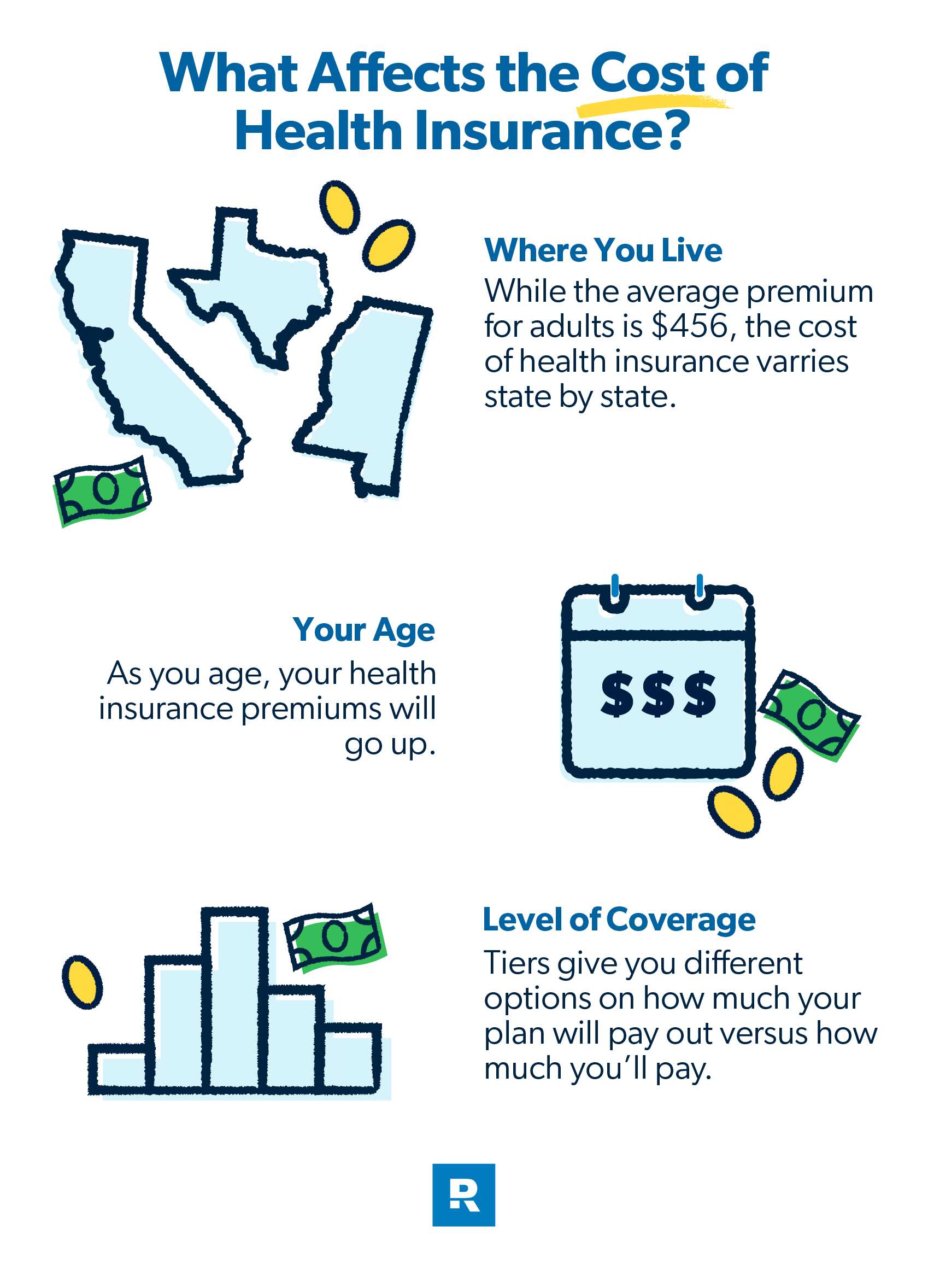
Under the current regulatory framework, age is one of the primary drivers of cost. Generally, older individuals pay more for insurance because their statistical likelihood of requiring medical care is higher. In many regions, a 60-year-old might pay three times as much as a 21-year-old for the exact same coverage.
Geography also plays a massive role. Costs vary by state and even by county based on the cost of living, the number of competing insurers in the area, and local healthcare provider rates. For instance, a plan in a rural area with only one hospital system might be significantly more expensive than a plan in a major metropolitan area with high competition.
Plan Metal Tiers: Bronze, Silver, Gold, and Platinum
The Affordable Care Act (ACA) categorized plans into “Metal Tiers” to help consumers compare costs. These tiers do not reflect the quality of medical care, but rather the split of costs between the insurer and the policyholder:
- Bronze: The insurer pays 60%, you pay 40%. Lowest premiums, highest deductibles.
- Silver: The insurer pays 70%, you pay 30%. This is the “benchmark” for subsidies.
- Gold: The insurer pays 80%, you pay 20%. Higher premiums, lower costs at the point of care.
- Platinum: The insurer pays 90%, you pay 10%. Highest premiums, lowest out-of-pocket costs.
Tobacco Use and Family Coverage
In most states, insurers are permitted to charge tobacco users up to 50% more in premiums. From a wealth-building perspective, this “tobacco surcharge” is a significant drain on capital that could otherwise be invested. Additionally, adding dependents—spouses or children—multiples the premium, though many family plans offer a “per child” cap that can provide some financial relief for larger households.
Employer-Sponsored vs. Individual Marketplace Plans
Where you get your insurance is perhaps the biggest determinant of what you will actually pay. The “sticker price” of health insurance is rarely what the consumer pays out of pocket due to various subsidies and employer contributions.
The Benefit of Group Rates and Subsidies
Most Americans receive health insurance through an employer. In these “Group Plans,” the employer typically covers 70% to 85% of the premium cost. For an employee, this means a plan that actually costs $18,000 a year might only result in a $4,000 annual payroll deduction. This is a massive “hidden” part of a compensation package that should be factored into any career-related financial decision.
Navigating the ACA Marketplace
For the self-employed, freelancers, or those whose employers do not offer benefits, the Health Insurance Marketplace is the primary source of coverage. Here, the “cost” is highly dependent on your Modified Adjusted Gross Income (MAGI). If your income falls between 100% and 400% of the federal poverty level, you likely qualify for Advanced Premium Tax Credits (APTC), which can lower your monthly premium to nearly zero in some cases.
Understanding Tax Credits and Cost-Sharing Reductions
For those on the lower end of the income spectrum, “Cost-Sharing Reductions” (CSRs) are available on Silver-tier plans. These don’t just lower the premium; they lower the deductible and the out-of-pocket maximum. From a money management standpoint, if you qualify for CSRs, a Silver plan is almost always the most financially efficient choice, often providing Gold-level benefits at a Bronze-level price.
Budgeting for Health Insurance: A Strategic Approach
Integrating health insurance into a financial plan requires more than just making a monthly payment. It requires proactive management of tax-advantaged accounts and risk assessment.
Assessing Your Healthcare Utilization Needs
To budget effectively, review your medical spending from the previous two years. Are you a “low utilizer” who only goes for annual physicals? Or a “high utilizer” with monthly prescriptions and regular therapy?
- Low Utilizers: Should lean toward High Deductible Health Plans (HDHPs) to save on premiums and invest the difference.
- High Utilizers: Should lean toward Gold or Platinum plans where the higher premium acts as a “cap” on unpredictable medical bills.
Leveraging HSAs and FSAs for Tax Efficiency
One of the most powerful tools in personal finance is the Health Savings Account (HSA), available only to those with a qualifying HDHP. Contributions to an HSA are 100% tax-deductible, the money grows tax-free, and withdrawals for medical expenses are tax-free. This “triple tax advantage” makes the HSA a secondary retirement account for many savvy investors. By opting for a higher-deductible plan, you lower your premium and gain the ability to shield thousands of dollars from the IRS annually.
Flexible Spending Accounts (FSAs) are a similar employer-based tool, though they usually operate on a “use it or lose it” basis. Utilizing these accounts effectively can reduce the “real cost” of your healthcare by 20% to 30%, depending on your tax bracket.

The Financial Risk of Being Underinsured
While the goal is to minimize costs, being “underinsured” is a significant financial risk. Medical debt is the leading cause of bankruptcy in the United States. Choosing a plan solely based on the lowest premium without considering the Out-of-Pocket Maximum (the absolute most you would have to pay in a year) is a gamble. A sound financial strategy ensures that your emergency fund always covers your plan’s maximum out-of-pocket limit, protecting your long-term investments from being liquidated to pay for an unexpected surgery or accident.
In conclusion, the cost of health insurance is a variable that requires constant monitoring. By understanding the interplay between premiums, deductibles, and tax-advantaged accounts, you can transform health insurance from a burdensome expense into a calculated component of your broader financial success. Whether you are optimizing for monthly cash flow or long-term wealth preservation, the right health insurance strategy is one that balances immediate affordability with comprehensive protection against life’s uncertainties.
aViewFromTheCave is a participant in the Amazon Services LLC Associates Program, an affiliate advertising program designed to provide a means for sites to earn advertising fees by advertising and linking to Amazon.com. Amazon, the Amazon logo, AmazonSupply, and the AmazonSupply logo are trademarks of Amazon.com, Inc. or its affiliates. As an Amazon Associate we earn affiliate commissions from qualifying purchases.