
In the world of specialty coffee and high-end culinary hardware, the “Lungo” is often misunderstood as merely a “large espresso.” However, from a technical and engineering perspective, a Lungo represents a specific calibration of fluid dynamics, extraction variables, and hardware synchronization. In the niche of coffee technology and precision brewing, understanding the Lungo is essential for anyone looking to master the intersection of software-driven extraction and mechanical engineering.
This article explores the technical identity of the Lungo espresso, the gadgetry required to produce it, and the software innovations currently transforming how we perceive “long” extractions.

The Technical Framework of the Lungo Shot
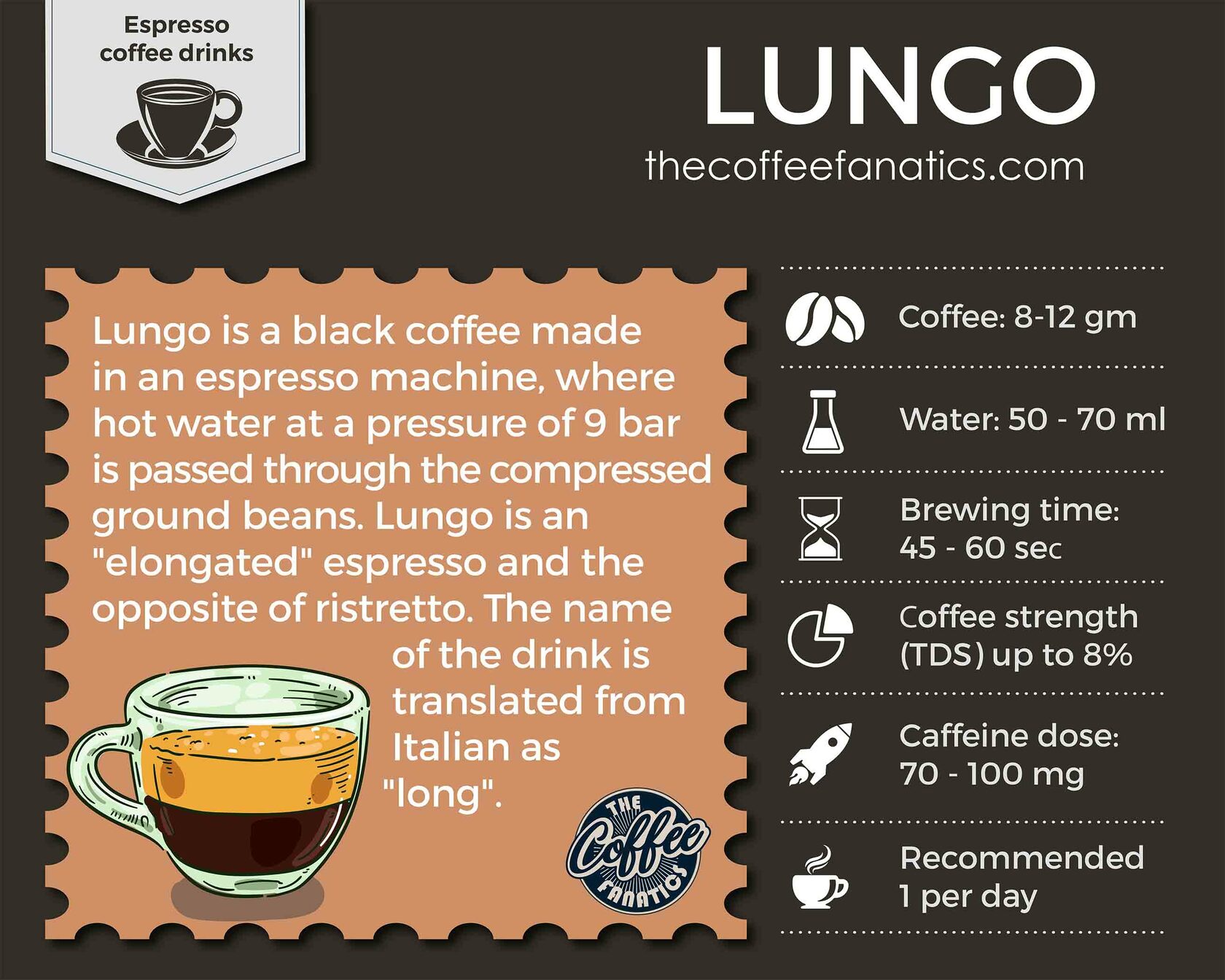
To understand what a Lungo is, one must first look at the espresso extraction process through the lens of physics. While a standard espresso typically follows a 1:2 brewing ratio (e.g., 18 grams of ground coffee yielding 36 grams of liquid), a Lungo pushes the boundaries of this ratio, typically landing between 1:3 and 1:4. This is not achieved by simply adding hot water after the fact—as one would with an Americano—but by passing more water through the coffee puck under high pressure.
The Physics of Hydraulic Resistance
The production of a Lungo is a study in hydraulic resistance. When a high-pressure pump (usually set at 9 bars) forces water through a compressed bed of coffee, the “puck” acts as a flow restrictor. In a Lungo, the technologist must manage the degradation of this resistance over a longer duration.
As the water continues to flow beyond the 30-second mark typical of an espresso, the structural integrity of the coffee puck begins to break down. If the grind size is too fine, the increased water volume leads to “channeling”—the digital-age term for high-velocity streams of water carving paths through the puck, leading to uneven extraction. Technical mastery of the Lungo requires a recalibration of grind distribution to ensure that even at a 1:3 ratio, the resistance remains constant enough to prevent over-extraction of bitter compounds.
Extraction Yield (EY) and Total Dissolved Solids (TDS)
In the tech-driven coffee lab, the quality of a Lungo is measured using a refractometer. This device measures the Total Dissolved Solids (TDS) in the liquid. A standard espresso might have a TDS of 8% to 12%, whereas a Lungo usually sits between 3% and 7%.
The “Extraction Yield” (EY) tells us how much of the original dry coffee mass has been dissolved into the water. The engineering challenge of the Lungo is to achieve an EY of 20% to 22% without the liquid becoming astringent. This requires precise thermal stability. If the machine’s PID (Proportional-Integral-Derivative) controller fluctuates even by a single degree during the extended 40- to 60-second brew time, the chemical profile of the Lungo shifts, rendering the “long shot” technically flawed.
Hardware and Gadgetry: Tools for the Perfect Lungo
The evolution of the Lungo has been driven by advancements in espresso machine hardware. Without precision gadgets, the Lungo is often just a bitter, over-extracted mess. Modern enthusiasts and professionals use specific hardware modules to control the variables inherent in long extractions.
Pressure Profiling in Modern Espresso Machines
Traditional espresso machines operate at a static pressure. However, the “Tech” approach to a Lungo involves dynamic pressure profiling. Because the coffee puck erodes as more water passes through it, maintaining a constant 9 bars of pressure can be counterproductive.
High-end machines like the Decent Espresso DE1 or the La Marzocco Strada allow users to program “pressure curves.” For a Lungo, a technician might program a “ramp down” profile. This starts the extraction at 9 bars but gradually reduces the pressure to 4 or 5 bars as the volume increases. This mechanical adjustment compensates for the thinning of the coffee bed, ensuring that the water doesn’t rush through too quickly, which preserves the delicate aromatics that are often lost in standard long extractions.
The Role of Precision Baskets and Flow Control
The “gadgetry” of the Lungo extends to the portafilter basket. Precision-engineered baskets, such as those made by VST or IMS, feature laser-cut holes with microscopic consistency. For a Lungo, these baskets are essential because any irregularity in the hole pattern will be magnified over the longer brew cycle, leading to localized over-extraction.

Furthermore, flow control devices—manual or electronic needle valves—allow the user to manipulate the flow rate (measured in milliliters per second) in real-time. This level of granular control turns the brewing process into a technical performance, where the “gadget” acts as an interface between the user’s intent and the physical limitations of the coffee bean.
Software and Automation in Lungo Optimization
As we move further into the era of the “Internet of Coffee” (IoC), software is becoming as important as the beans themselves. The Lungo is the perfect candidate for software-mediated brewing because its variables are so numerous and sensitive.
IoT Coffee Technology and Recipe Scripting
Contemporary espresso machines are increasingly becoming “smart” devices. Through Bluetooth or Wi-Fi connectivity, users can download “recipes” or “shot skins.” A Lungo recipe is essentially a script that tells the machine’s computer how to manage temperature, pre-infusion time, and volumetric output.
For a Lungo, a software script might include a long pre-infusion (wetting the grounds at low pressure for 15 seconds) to ensure maximum saturation before the high-pressure stage begins. These scripts can be shared across global communities, allowing a user in Tokyo to replicate the exact Lungo parameters developed by a technician in Milan. This democratization of technical data is a hallmark of modern coffee tech trends.
AI-Driven Grind Calibration
One of the newest trends in coffee tech is the integration of AI in coffee grinders. Companies like Mahlkönig have introduced grinders that communicate with the espresso machine. If the machine detects that a Lungo shot is flowing too fast (indicating a drop in hydraulic resistance), it sends a signal to the grinder to adjust the burrs slightly finer for the next dose. This closed-loop system uses machine learning to maintain the “golden ratio” of the Lungo, removing human error from the equation and ensuring technical consistency in high-volume environments.
Digital Security and the Connected Coffee Ecosystem
As espresso machines become IoT devices, they enter the realm of digital security. This might seem far-fetched for a coffee maker, but for corporate entities and high-end cafes, the data is valuable.
Cloud-Synced Brewing Profiles
Many commercial machines now sync their data to the cloud. This allows owners to monitor the technical health of their fleet—checking for scale buildup, pump efficiency, and recipe adherence. When a specific “Lungo Profile” is developed for a brand, that profile is protected intellectual property. Securing these digital recipes ensures that a brand’s specific “technical taste” isn’t easily replicated by competitors who might gain access to the machine’s backend.
Protecting Intellectual Property in Commercial Coffee Tech
The software used to control pressure transducers and thermal blocks is proprietary. As hackers increasingly target IoT devices, manufacturers are having to implement robust digital security protocols. Ensuring that a machine’s firmware cannot be tampered with is crucial, especially when precision-engineered Lungos are a key selling point of a multi-million dollar franchise. The intersection of cybersecurity and beverage technology is a growing niche that highlights just how technical the “simple” espresso has become.
The Future of Extraction Technology
The Lungo is more than just a menu item; it is a testbed for the future of extraction technology. As we look toward the next decade, we can expect even more integration between hardware and software.
We are already seeing the emergence of ultrasonic extraction methods and vacuum-assisted brewing, which could redefine what a “long” extraction looks like. Imagine a Lungo produced not by pressure alone, but by a combination of high-frequency sound waves and precise thermal mapping. These advancements will continue to push the boundaries of what is possible, turning the morning cup of coffee into a masterclass in modern engineering.
In conclusion, a Lungo espresso is a triumph of technical calibration. By balancing the physics of hydraulic resistance with the precision of pressure profiling and the intelligence of automated software, the Lungo stands as a testament to how far coffee technology has come. For the tech-savvy enthusiast, every Lungo shot is an opportunity to interface with some of the most sophisticated gadgets and software in the modern kitchen, proving that even a “long shot” can be a masterpiece of digital and mechanical precision.
aViewFromTheCave is a participant in the Amazon Services LLC Associates Program, an affiliate advertising program designed to provide a means for sites to earn advertising fees by advertising and linking to Amazon.com. Amazon, the Amazon logo, AmazonSupply, and the AmazonSupply logo are trademarks of Amazon.com, Inc. or its affiliates. As an Amazon Associate we earn affiliate commissions from qualifying purchases.