
In our rapidly evolving digital landscape, the way we power our gadgets, smart homes, and industrial hardware has undergone a massive transformation. Yet, as our reliance on sophisticated technology grows, so does the complexity of the electrical environments that support them. Among the most critical, yet often misunderstood, threats to modern hardware is the arc fault. While traditional circuit breakers were designed to handle simple overloads, the tech-heavy homes and offices of today require a much more nuanced approach to safety. An arc fault represents a sophisticated electrical failure that demands equally sophisticated digital detection.

The Physics of Danger: Decoding the Arc Fault
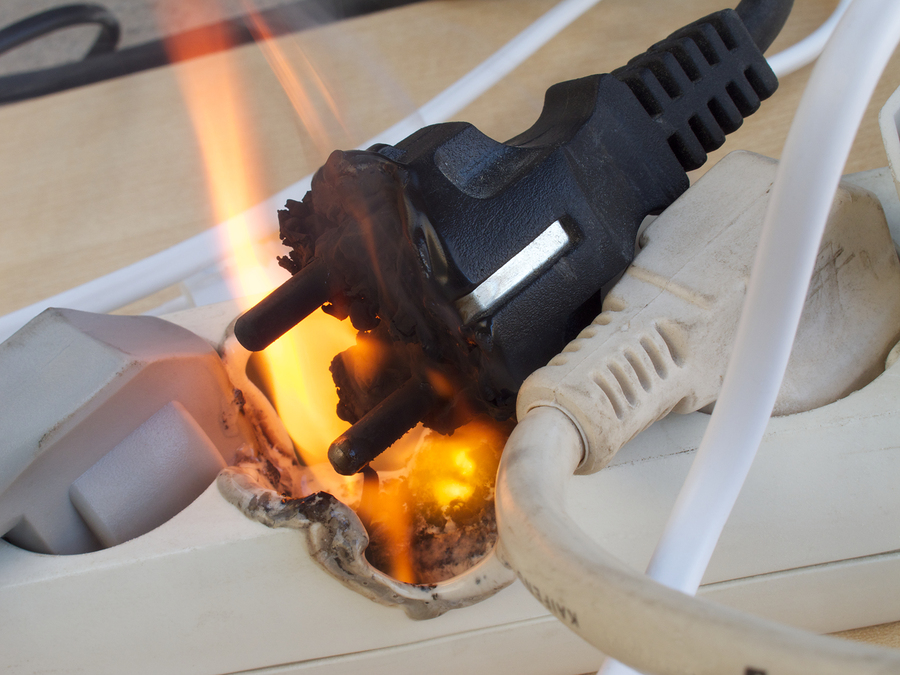
To understand an arc fault, one must look beyond the simple flick of a light switch. In the world of electrical engineering and hardware safety, an arc fault is a high-power discharge of electricity between two or more conductors. This discharge translates into heat, which can exceed temperatures of 10,000 degrees Fahrenheit, easily igniting surrounding materials. Unlike a standard short circuit, which creates a massive spike in current that trips a traditional breaker instantly, an arc fault can be intermittent and low-intensity, “hiding” within the normal electrical noise of a high-tech environment.
How Arc Faults Differ from Standard Surges and Shorts
In the tech world, we often worry about power surges—sudden spikes in voltage that can fry a motherboard or a GPU. However, an arc fault is a different beast entirely. A standard short circuit occurs when a “hot” wire touches a neutral or ground wire, causing an immediate rush of current. An arc fault, conversely, occurs when electricity “leaps” across a gap. This can happen due to frayed laptop chargers, pinched cables behind a server rack, or even aging wiring inside a smart appliance. Because the current flow in an arc might not exceed the breaker’s rating, traditional analog safety systems often fail to recognize the danger, allowing the arc to continue until a fire starts.
The Mechanics of an Unintended Discharge: Series vs. Parallel
Technologists categorize these events into two primary types: series and parallel arcs. A series arc occurs when a single wire is damaged—think of a copper strand in a high-end HDMI or power cable that has been bent too many times. The electricity struggles to cross the break, creating a localized “hot spot.” A parallel arc occurs when the insulation between two different wires breaks down, allowing electricity to jump from one to the other. In both cases, the result is a jagged, erratic waveform of energy that defies the smooth sine wave required by sensitive electronic equipment.
The Evolution of Detection: From Analog Fuses to Smart AFCI Technology
As our devices have become smarter, the systems designed to protect them have had to undergo a digital revolution. The primary defense against these invisible threats is the Arc Fault Circuit Interrupter (AFCI). Unlike the thermal-magnetic breakers of the 20th century, modern AFCI devices are essentially specialized computers. They are designed to monitor the “signature” of the electricity flowing through a circuit in real-time.
Digital Signal Processing (DSP) in Circuit Breakers
The core of modern arc fault protection lies in Digital Signal Processing (DSP). Within an AFCI breaker or outlet, a tiny microprocessor constantly analyzes the current and voltage waveforms. It looks for the specific “noise” associated with an arc. Because everyday devices—like a vacuum cleaner or a high-performance PC power supply—can create small, harmless sparks (brush arcing), the DSP must be sophisticated enough to distinguish between the “good” arcs of a motor and the “bad” arcs of a failing wire. This is a massive leap in tech, moving hardware safety from simple physics into the realm of algorithmic analysis.
Artificial Intelligence and Pattern Recognition in Fire Prevention
The latest frontier in tech-based electrical safety is the integration of machine learning and pattern recognition. Emerging smart breakers use advanced algorithms to build a profile of the devices plugged into a network. By recognizing the specific electrical signature of a MacBook charger versus a smart refrigerator, these systems can reduce “nuisance tripping”—a common complaint with early AFCI tech. As these systems gather more data, they become more adept at identifying the chaotic, high-frequency signatures of a dangerous arc fault before it manifests as heat or flame.

Integrating Arc Fault Protection into the Smart Home Ecosystem
We are living in an era defined by the Internet of Things (IoT). Our homes are no longer just shelters; they are interconnected nodes of data and power. In this context, arc fault protection is shifting from a hidden utility to a visible component of the smart home dashboard. Modern tech enthusiasts are increasingly looking for ways to integrate electrical health monitoring into their broader smart ecosystems.
IoT-Enabled Monitoring and Remote Diagnostics
The most advanced AFCI technology now includes Wi-Fi or Zigbee connectivity. This allows a homeowner or a system administrator to receive a push notification the moment an arc fault is detected. Instead of simply walking to a dark basement to flip a switch, a user can look at an app to see exactly which branch of the circuit failed and why. This digital diagnostic capability is a game-changer for maintaining expensive tech stacks, as it helps identify failing hardware (like a deteriorating power strip) before it causes a catastrophic failure of the connected devices.
The Role of Smart Outlets and Power Strips in Tech Safety
While whole-panel protection is ideal, the “tech-first” approach often involves localized protection. Smart power strips and specialized outlets are now being manufactured with built-in arc fault sensing. For a professional streamer or a remote worker with $10,000 worth of computer equipment, these devices provide an extra layer of granular security. They act as a digital “firewall” for electricity, ensuring that the power entering a sensitive PSU (Power Supply Unit) is not just steady, but structurally sound and free of the erratic signatures that characterize arcing.
Future Trends: The Intersection of Renewable Energy and Arc Safety
As the world transitions toward green energy, the technology behind arc fault detection is facing its biggest challenge yet. The rise of residential solar power and Electric Vehicles (EVs) has introduced High-Voltage Direct Current (DC) systems into our daily lives. This shift represents a significant technological pivot, as DC arc faults are notoriously more difficult to extinguish than the AC (Alternating Current) faults found in standard wall outlets.
Solar Inverters and DC Arc Fault Detection
In a solar array, electricity is generated as DC before being converted by an inverter. If a connection in the solar panels becomes loose or a cable is gnawed by a rodent, a DC arc can form. Unlike AC, which crosses “zero” 120 times a second (effectively self-extinguishing the arc momentarily), DC is a constant stream of energy. This makes the arc much more stable and dangerous. The latest generation of solar inverters incorporates high-speed digital sensors that can detect the specific electromagnetic interference (EMI) created by a DC arc, shutting down the entire array in milliseconds.
Protecting the Next Generation of EV Charging Infrastructure
As EVs become the standard, the “gas station” is moving into the garage. Charging an EV requires a massive amount of sustained current, often for 8 to 12 hours at a time. This puts an unprecedented strain on home wiring. The technology inside EVSE (Electric Vehicle Supply Equipment) now prioritizes arc fault monitoring to ensure that the high-power connection between the car and the home remains stable. As we move toward faster charging tech, the algorithms used to detect faults must become even faster and more precise, representing the cutting edge of power electronics and safety software.
Conclusion: The Future of Safety Tech
The concept of an arc fault serves as a reminder that as our technology becomes more sophisticated, our methods of protection must follow suit. We have moved far beyond the era of simple copper fuses. Today, electrical safety is a discipline of data science, digital signal processing, and real-time hardware monitoring.
For the modern tech user, understanding arc faults is about more than just home maintenance—it is about protecting the digital infrastructure that defines our lives. Whether it is through AI-driven circuit breakers, IoT-enabled power monitoring, or advanced DC detection in renewable energy systems, the “tech” in arc fault protection is what allows us to push the boundaries of innovation safely. As we continue to fill our lives with increasingly powerful gadgets, the invisible digital sentinels monitoring our wires remain the unsung heroes of the technological age.
aViewFromTheCave is a participant in the Amazon Services LLC Associates Program, an affiliate advertising program designed to provide a means for sites to earn advertising fees by advertising and linking to Amazon.com. Amazon, the Amazon logo, AmazonSupply, and the AmazonSupply logo are trademarks of Amazon.com, Inc. or its affiliates. As an Amazon Associate we earn affiliate commissions from qualifying purchases.