
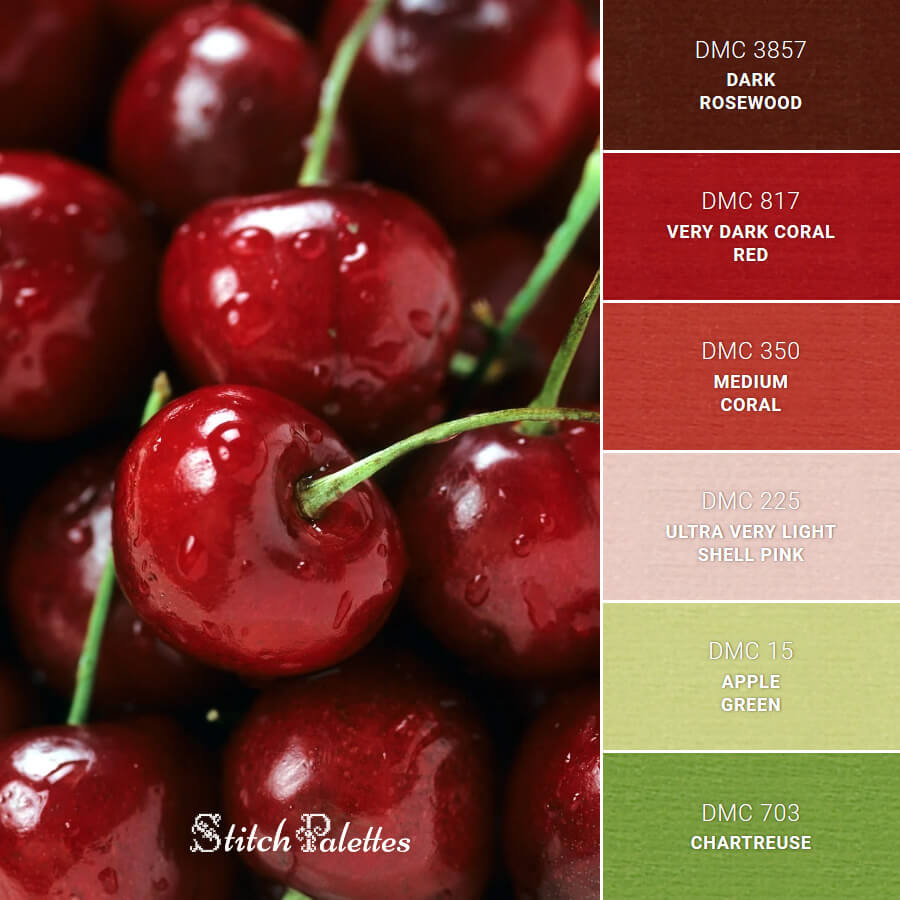
In the world of visual communication, the question “What color is a cherry?” might seem like a simple inquiry into botany. However, for brand strategists, designers, and marketing executives, the answer is far more complex than a mere hexadecimal code or a primary pigment. To a brand, “cherry” represents a specific psychological profile—a vibrant, high-energy red that sits at the intersection of passion, luxury, and urgency.
Color is often the first point of contact between a brand and its audience. Research suggests that up to 90% of snap judgments made about products can be based on color alone. When a brand adopts the “cherry” palette, it is making a definitive statement about its identity and its desired relationship with the consumer. This article explores the strategic application of red in branding, examining how the world’s most successful companies leverage this “cherry” hue to build equity, evoke emotion, and dominate the marketplace.

The Psychology of the “Cherry” Spectrum
Understanding why a brand chooses a cherry-red identity requires a deep dive into the human psyche. Red is one of the most powerful colors in the visible spectrum, possessing the longest wavelength and the unique ability to appear closer to the viewer than it actually is. This physical property translates directly into psychological impact.
Evoking Passion and Urgency
In the lexicon of brand strategy, cherry red is the color of action. It is physiologically proven to increase heart rates and stimulate the adrenal glands. This is why the color is ubiquitous in industries that rely on impulse and excitement. When a brand like Coca-Cola or Red Bull uses a deep cherry-inspired red, they are not just choosing a pretty shade; they are tapping into a biological trigger that encourages consumption and energy.
Furthermore, red is the color of urgency. It demands attention and signals importance. In a crowded retail environment—both physical and digital—the “cherry” pop allows a brand to cut through the visual noise. It is the color of clearance sales, “Buy Now” buttons, and breaking news alerts. For a brand, being “cherry” means being impossible to ignore.
The Visual Dominance of Red
Beyond emotion, red offers a structural advantage in visual hierarchy. Because the human eye is evolutionarily programmed to spot red (likely an ancestral trait for finding ripe fruit among green foliage), brands that utilize this color benefit from immediate “findability.” In a supermarket aisle containing five hundred different products, the human eye will naturally gravitate toward the red packaging first. This inherent biological bias makes red one of the most valuable assets in a brand’s toolkit for securing market share through visual dominance.
Defining a Visual Identity: The “Cherry Red” Case Studies
To see the strategic use of cherry red in action, one must look at the brands that have successfully “owned” the color. In trademark law and brand strategy, “owning” a color is the ultimate goal, where the shade becomes synonymous with the brand itself.
Luxury and Performance: The Ferrari Rosso Corsa
Perhaps no brand is more closely associated with a specific red than Ferrari. Their signature Rosso Corsa (Racing Red) is a deep, saturated cherry that has become shorthand for Italian luxury and high-performance engineering. Interestingly, Ferrari’s use of red was originally a requirement of the International Automobile Federation (FIA) to designate Italian racing teams.
However, Ferrari turned a regulatory requirement into a multibillion-dollar brand asset. Today, the color represents speed, prestige, and exclusivity. When a consumer sees that specific shade of cherry, they aren’t just seeing a car; they are seeing a legacy of victory. This demonstrates how a brand can take a common color and, through decades of consistent application, transform it into a proprietary symbol of excellence.
Retail Dominance: Target and the Power of Saturation
In the retail sector, Target serves as a masterclass in using cherry red to differentiate from competitors. While their largest rival, Walmart, utilizes a calming blue, Target leans into a bright, bold red. This choice is intentional. Target positions itself as “masstige” (mass-prestige)—providing a more curated, design-forward shopping experience than typical big-box retailers.
The Target “Bullseye” is a study in color-blocking. By using a consistent, high-saturation cherry red across every touchpoint—from store signage to shopping carts to employee uniforms—Target creates a cohesive brand universe. This consistency builds psychological comfort; consumers know exactly what to expect when they see that red, fostering brand loyalty through visual familiarity.
Sole Propriety: The Louboutin Red
One of the most fascinating examples of “cherry” as a brand strategy is Christian Louboutin. By painting the outsoles of his high-end shoes a specific shade of vibrant red (Pantone 18-1663 TPX), Louboutin created a “secret handshake” for the fashion elite.
The strategic genius here lies in the placement. Most shoes have black or beige soles. By adding a flash of cherry red to a place where it is least expected, Louboutin ensured that his brand would be recognized from a distance, even without a visible logo. This is the pinnacle of personal branding: a color so distinct and well-applied that it functions as a signature, protected by international trademark laws.
Navigating the Cultural Nuances of the Color Red
While “cherry” is often associated with positive traits in Western marketing, a global brand strategy must account for the diverse cultural interpretations of red. A color is never just a color; it is a cultural vessel.
Eastern vs. Western Brand Perceptions
In Western cultures, red often symbolizes passion, love, or danger. However, in many East Asian cultures, particularly in China, red is the color of prosperity, good luck, and joy. For global brands like KFC or Pizza Hut, their red branding allowed for a seamless entry into the Chinese market because the color was already culturally aligned with celebration and positive experiences.
Conversely, in some contexts, red can be associated with debt (being “in the red”) or political movements. A brand expanding internationally must perform a “color audit” to ensure that their cherry-red identity doesn’t accidentally trigger the wrong associations in a new demographic.
Avoiding the “Danger” Association
The challenge for a cherry-red brand is balancing “excitement” with “warning.” Because red is used globally for stop signs and hazard lights, a brand that overuses the color without sufficient white space or balancing secondary colors can feel aggressive or overwhelming.
The strategy for modern brands is to use cherry as an accent or a primary driver while utilizing “visual breathing room.” For example, Netflix uses a deep red logo against a black background. This choice evokes the feeling of a darkened movie theater, turning the “danger” of red into the “drama” of cinema.
Implementing Red in Modern Digital Branding
As branding shifts more toward digital-first identities, the “color of a cherry” must be optimized for screens as much as for physical products. This introduces a new set of technical and strategic challenges.
UI/UX Considerations: High Contrast and CTA Optimization
In User Interface (UI) design, cherry red is the ultimate “Call to Action” (CTA) color. Because of its high visibility, it is the most effective color for “Sign Up” or “Download” buttons. However, designers must be cautious of “red fatigue.” If every element on a page is cherry red, nothing stands out.
Strategically, red should be used sparingly in digital environments to guide the user’s eye. This is known as the “isolation effect” or the Von Restorff effect, which predicts that when multiple similar objects are present, the one that differs from the rest will be most likely to be remembered. A cherry-red button on a clean, neutral interface is a powerful tool for conversion.
Consistency Across Multichannel Touchpoints
For a brand to maintain its identity, the “cherry” must look the same on an iPhone screen as it does on a cardboard shipping box. This is where brand guidelines become essential. A professional brand strategy will define the color across multiple systems:
- CMYK: For physical printing.
- RGB and Hex: For digital screens.
- Pantone: For manufacturing and international consistency.
Discrepancies in color can lead to a perception of low quality. If a brand’s cherry red looks orange on a website and maroon on a package, the consumer subconsciously loses trust in the brand’s attention to detail.
Future Trends: Beyond the Static Red
The question “What color is a cherry?” is also evolving as technology changes how we perceive color. We are moving into an era of “Adaptive Branding,” where colors may not be static.

Adaptive Color Systems and Dynamic Branding
With the rise of Dark Mode and OLED screens, brands are starting to develop adaptive color palettes. A cherry red that looks vibrant on a white background might need to be slightly shifted in hue or saturation to maintain its “brand feel” on a dark background.
Furthermore, we are seeing the rise of “generative branding,” where AI tools help brands choose the specific shade of red that will perform best for a specific user based on their past interactions. While the core identity remains “cherry,” the specific manifestation of that color may become more fluid and data-driven in the years to come.
In conclusion, the color of a cherry is not just a point on the spectrum; it is a high-octane branding tool. When used with strategic intent, it communicates power, fosters immediate recognition, and drives consumer action. Whether it is the sole of a shoe, the hood of a supercar, or the icon of a streaming service, “cherry red” remains one of the most potent weapons in the arsenal of global brand strategy.
aViewFromTheCave is a participant in the Amazon Services LLC Associates Program, an affiliate advertising program designed to provide a means for sites to earn advertising fees by advertising and linking to Amazon.com. Amazon, the Amazon logo, AmazonSupply, and the AmazonSupply logo are trademarks of Amazon.com, Inc. or its affiliates. As an Amazon Associate we earn affiliate commissions from qualifying purchases.