
When Robert Zemeckis’s The Polar Express arrived in theaters in 2004, it was more than just a holiday film; it was a technological manifesto. At the heart of this digital experiment was Tom Hanks, an actor who undertook a feat rarely seen in cinema history. By playing five distinct physical roles (and providing the voice for a sixth), Hanks didn’t just act; he served as the primary data source for an entire digital ecosystem.
To understand which characters Tom Hanks played in The Polar Express, one must look past the makeup and costumes of traditional filmmaking and into the world of performance capture, high-fidelity sensors, and the computational rendering that paved the way for the modern era of CGI-heavy blockbusters.

The Dawn of Performance Capture: A Paradigm Shift in Digital Filmmaking
Before The Polar Express, the industry standard for digital characters relied heavily on keyframe animation—animators manually manipulating 3D models—or basic motion capture, which only tracked skeletal movement. Zemeckis and his team at Sony Pictures Imageworks sought to push the envelope by capturing “performance,” a holistic data set including facial expressions, eye movements, and body language.
Transitioning from Traditional Animation to Mocap
Traditional 2D and 3D animation often required separate teams to handle voice acting and physical movement. In The Polar Express, the technology allowed Tom Hanks to anchor the digital assets in human reality. This transition represented a significant leap in “Tech-Acting,” where the hardware—infrared cameras and specialized suits—became the bridge between the physical and the virtual.
The Role of ImageMovers Digital
The production led to the refinement of proprietary software and hardware configurations designed to track hundreds of points on an actor’s face. This was the birth of the “volume,” a specialized stage equipped with an array of cameras that captured Hanks’ movements from every conceivable angle, converting his physical presence into a mathematical cloud of coordinates.
Engineering the “Hanks Multi-Verse”: The Technical Execution of Multiple Digital Avatars
The most frequent question regarding the film is: Which characters does Tom Hanks play? Through the lens of technology, the answer is complex. Hanks provided the motion capture and voice for five key characters, demonstrating the versatility of the digital “skeleton” or “rig.”
The Hero Boy: Scaling Human Data
Perhaps the most impressive technical feat was Hanks playing the protagonist, an eight-year-old boy. Because the technology tracks proportions and movement patterns rather than physical size, the engineers were able to “scale” Hanks’ movements.
- The Technical Challenge: An adult moves differently than a child. Hanks had to adjust his center of gravity and stride length to ensure the digital “Hero Boy” avatar didn’t look like a miniature adult.
- Data Mapping: Engineers used the captured data from Hanks and mapped it onto a child-sized digital model, a process that required significant algorithmic adjustment to prevent “sliding” (where the feet don’t appear to touch the ground correctly).
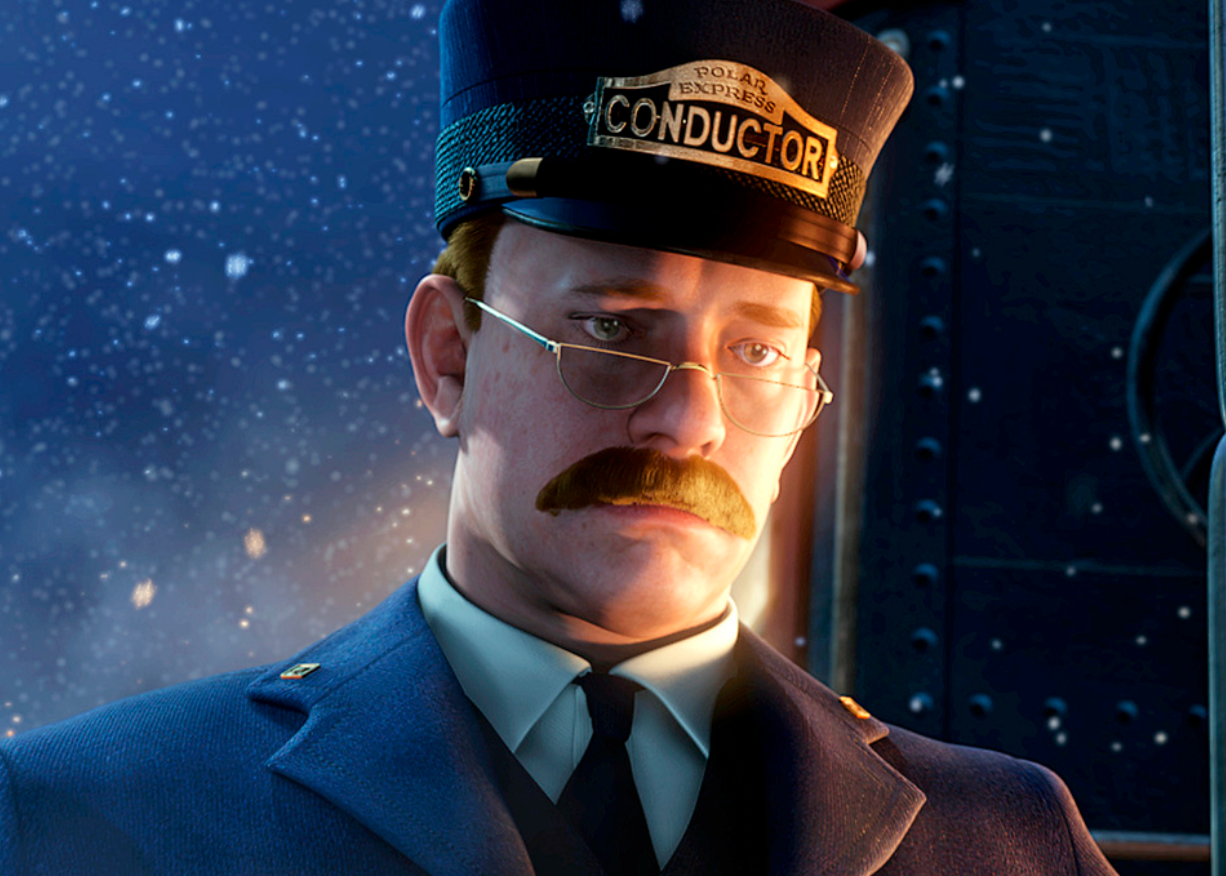
The Conductor: Precision in Facial Geometry
The Conductor is the most recognizable “Hanks” character in the film. For this role, the focus was on high-fidelity facial tracking.
- Facial Marker Sets: Hundreds of reflective markers were placed on Hanks’ face to capture the nuances of his mouth, brow, and cheek movements.
- Voice Integration: Unlike traditional dubbing, the Conductor’s lip-syncing was derived directly from the physical movements of Hanks’ jaw and lips during the recording session, creating a more cohesive audiovisual experience.
The Hobo and Santa Claus: Distinct Biometric Signatures
Hanks also portrayed the mysterious Hobo and Santa Claus. From a technical standpoint, these characters required different “biometric signatures.”
- The Hobo: This character required a more fluid, almost ethereal movement style. The sensors had to capture a sense of weightlessness and erratic motion.
- Santa Claus: To portray the legendary figure, the tech team had to account for a much larger digital “mesh” (the 3D skin of the character). The challenge here was ensuring that the movements Hanks made were translated correctly through the “fat suit” of the digital model without causing clipping or distortion in the textures.

The Father and the Narrator
Hanks rounded out his performance by playing the boy’s father and providing the voice for the adult version of the protagonist (the Narrator). While the Father character used standard capture techniques, the Narrator role highlighted the importance of “vocal branding” in tech-driven films, ensuring the audience felt a psychological connection across the various digital avatars.
The “Uncanny Valley” and the Challenges of 2004 Rendering
While The Polar Express was a landmark in technology, it famously introduced the general public to the concept of the “Uncanny Valley.” This is a hypothesis in aesthetics and robotics where human-like objects that appear almost, but not exactly, like real human beings elicit feelings of eeriness and revulsion among observers.
The Problem of Ocular Realism
In 2004, the hardware and software limitations meant that while body movements were fluid, the “dead eyes” of the characters became a point of contention.
- Subsurface Scattering: The tech at the time struggled with “subsurface scattering”—the way light penetrates and reflects off human skin and eyes.
- The Pupil Reflex: Capturing the subtle, involuntary dilations of the human pupil was beyond the scope of the sensors used during production, leading to the “hollow” look that critics noted.
Computational Limitations and Rendering Power
Rendering a single frame of The Polar Express took hours of processing time on massive server farms. The complexity of the hair, the velvet of the Conductor’s suit, and the particle physics of the snow required a level of computational power that pushed the limits of mid-2000s tech. This movie acted as a stress test for the rendering engines that would eventually power the next two decades of cinema.
From Sensors to Screen: The Legacy of the “Hanks Experiment”
The decision to have one actor play multiple roles was not just a creative choice; it was a demonstration of the power of digital assets. Once a world-class actor’s performance is digitized, it becomes a versatile “asset” that can be applied to any number of virtual skins.
Paving the Way for the “Avatar” Era
James Cameron’s Avatar and the work of Andy Serkis (Gollum, Caesar) owe a direct debt to the groundwork laid by Tom Hanks and Robert Zemeckis. The “Hanks Experiment” proved that a high-caliber actor would be willing to work in a “volume” without sets or costumes, trusting the technology to translate their craft.
The Evolution into Real-Time Rendering and AI
Today, the technology used in The Polar Express has evolved into real-time rendering tools like Unreal Engine 5.
- MetaHumans: We have moved from the “Uncanny Valley” to “MetaHumans,” where digital characters are virtually indistinguishable from real people.
- AI-Driven Animation: Modern systems can now use AI to predict muscle movement and skin tension, solving the very problems that the Polar Express team faced with manual rigging.
Conclusion: The Digital Identity of a Holiday Classic
When we analyze what characters Tom Hanks plays in The Polar Express, we are looking at the first major milestone of the “Digital Human.” Hanks didn’t just play a boy, a conductor, or a king of the North Pole; he provided the foundational data for a new medium of storytelling.
Through the Hero Boy, the Conductor, the Hobo, the Father, and Santa Claus, Tom Hanks demonstrated that in the realm of technology, an actor’s physical limitations are no longer a barrier to the roles they can inhabit. The Polar Express remains a testament to a pivotal moment in tech history—the moment when cinema moved from filming reality to capturing the very essence of human performance and recreating it in a world made of code. As we look forward to the future of AI and deep-learning in film, the six-layered performance of Tom Hanks stands as the original blueprint for the digital future.
aViewFromTheCave is a participant in the Amazon Services LLC Associates Program, an affiliate advertising program designed to provide a means for sites to earn advertising fees by advertising and linking to Amazon.com. Amazon, the Amazon logo, AmazonSupply, and the AmazonSupply logo are trademarks of Amazon.com, Inc. or its affiliates. As an Amazon Associate we earn affiliate commissions from qualifying purchases.